

GREENER JOURNAL OF EPIDEMIOLOGY AND PUBLIC HEALTH
ISSN: 2354-2381
Submitted: 02/05/2017 Accepted: 11/05/2017 Published: 30/05/2017
Research Article (DOI: http://doi.org/10.15580/GJEPH.2017.3.050217056)
Vaginal Candidiasis among Symptomatic Childbearing Age Women in Kaduna, Nigeria
*1Umar FA, 2Kani YA, 1Muhammad Y, and 3Zainab I
1Faculty of Medical Laboratory Science, Usmanu Danfodiyo University Sokoto.
2CollegeOf Medicine and Health Sciences, Federal University Dutse.
3Hematology Unit, Rasheed Shekoni Specialist Hospital Dutse.
*Corresponding Author’s Email: farouqabu @gmail .com
Abstract
Candida albicans is one of the human pathogens with highest prevalence around the globe. The current research aimed at investigating the prevalence of Vaginal Candidiasis is among women of child bearing age presenting with vaginal itching and discharge. A total of Four hundred and eleven (411) consecutive, consenting women of child bearing age attending the gynaecology clinic at Yusuf Dantsoho Memorial Hospital Kaduna with complaint of vaginal discharge and or itching formed the study population. With the help of Swabs,the specimens were collected carefully and aseptically after parting the labia of the vagina. The pathogens were identified by direct microscopic examination and subsequent gram’s staining of cultured high vaginal swabs from the study subjects. All procedures for the test were based on the recommendations of the manufacturer. The results were analysed using SPSS version 18 software. Out of total of Four hundred and eleven (411) subjects who participated in this study, two hundred and seventy one 271 (66%) were positive while 140 (34%) were negative. In conclusion, the prevalence of Vaginal Candidiasis among the women of child bearing age presenting with vaginal itching and discharge was high (66%),therefore empirical treatment for all symptomatic women using topical/vaginal antifungals is recommended.
Key words: Vaginal Candidiasis, Candida albicans, Prevalence, vaginal itching, vaginal discharge.
1. INTRODUCTION
Vulvo Vaginal Candidiasis (VVC) is a mucosal infection caused by heterogeneous group of fungi called Candida spp. The two most common species associated with Candidiasis are Candida albicans sand Candida glabrata. Less commonly, but still able to cause the infection, are Candida tropicalis, Candida parapsilosis, Candida guilliermondi, and Candida krusei. C albicans is a dimorphic commensal organism of the genital and gastrointestinal tracts that accounts for 85% to 90% of Vaginal Candidiasis (Fleury 1977 andHurley, 1981).One of the characteristic features of vulvo Vaginal Candidiasis is the abnormal discharge from the vagina that is seen in more than 13% of child bearing aged women (Thulkaret al., 2010). It has been documented that socio demographic characteristics play a great role in the prevalence of several reproductive tract infections (Patel, et al., 2003).Majority of patients with mucosal candidiasis have normal or elevated levels of anti- Candida antibodies in both serum and mucosal washes (Kirkpatrick,et al., 1971 and Mathur et al., 1977).Demonstrations of humoral immunity in the vaginal mucosa have been limited to the isolation and identification of antibodies in vaginal washes (Parr and Parr. 1991). In fact, few B or plasma cells and minimal levels of secretory component have been identified in the vaginal mucosa of mice although all three have been described in the human and mouse uterus and the human endocervix (Parr,1991 and Wira, 1994).(Ross et al., 1990; Cassone, et al., 1990) suggested that the enzyme aspartate proteinase contributes to the adsorption of c albicans onto human cells there by enhancing vaginitis. The current study reports the prevalence rate of Candidiasis among symptomatic women of child bearing age in Kaduna.
2. MATERIALS AND METHOD
Study Area: The study was carried out in Yusuf Dantsoho Memorial Hospital Tudun Wada, Kaduna South, North-west geographical zone of Nigeria. Kaduna South has an area of 59 square kilometer and a population of 40 2 , 3 9 0 people. The inhabitants are businessmen and women, with a good number of civil servants, other professionals and students.
Study Population: Four hundred and eleven (411) women of childbearing age (16-45)with the complaints of vaginal discharge and/or vaginal itching were recruited in this research.
Eligibility Criteria: symptomatic women of childbearing age (16-45) were included, those below or above this age range were excluded. Also women that were asymptomatic were excluded from the study.
Data Collection and Analysis: All relevant information necessary were collected from each patient using their respective forms as well as information recorded on the register, after which the data was analysed using SPSS computer software program version 18.0.
Laboratory Techniques: High vaginal swabs (HVS) were collected from the vaginas of women with the complaints of vaginal discharge and/or vaginal itching using swab sticks. The patients were prepared for the sample collection. With protective hand gloves the swab stick was removed from the protective plastic transport medium. After exposing the vagina and parting the labia, the swab were carefully inserted into the entrance of vagina (entroitus), rotated for 15 seconds and was replaced back into the protective plastic transport medium. This procedure was replicated in each subject involved in the study.
Culture: 0.5ml of normal saline was placed into the protective plastic wrapper (transport medium), the plates to be inoculated (chocolate and Blood agar) were prepared by proper labeling and drying in an oven to avoid contamination. The transport medium was shaken to soak the swab and pool was made on the media by performing a streaking pattern using a sterilized wire-loop. The plate was covered and incubated at 37 °C in an incubator overnight
Direct Microscopy: A drop of normal saline was placed on a clean grease-free glass slide and was emulsified with the sample on the swab.
 The sample on the swab was emulsified with the drop of normal saline
It was gently covered with cover slip, avoiding air bubbles
It was mounted on a microscope
The emulsified covered sample was viewed with 10x and then 40x objectives
The level of pus cells, yeast cells, epithelial cells, red blood cells, bacteria etc was recorded.
Yeast cells appeared as round to oval cells mostly budded to one another
Gram’s Staining Technique
The sample was emulsified on a clean glass slide with a drop of normal saline
It was allowed to air dry
The dried emulsified sample was heat fixed by passing the slide across a gentle flame for 10 seconds
It was placed on a staining rack
The slide was floated with a crystal violet for 1 minute
It was washed with water
Lugol’s iodine was applied for 1 minute
It was washed with water
The smear was decolorized with acetone for 15 seconds
Water was used to wash the acetone from the smear
Neutral red was applied for 1 minute
It was washed with water and allowed to air dry
Oil immersion was applied on the stained smear
The slide was mounted on a microscope and the smear was viewed with 100x objective
Yeast cells appeared as purple/blue round to oval cells, mostly budded to one another, sometimes the budding creates an elongated cells referred to as pseudohyphae (false hyphae)
Plate Reading: the inoculated plates (Chocolate and Blood agar) were brought out after 24 hours of incubation. The morphology of the growth on the plates was observed and recorded. Candida appeared as creamy colored, raised and smooth colonies on chocolate agar and moist, opaque colonies on blood agar.
4.0 RESULT
5.0 DISCUSION
Vaginal Candidiasis otherwise called vaginal thrush is a yeast infection of vagina’s mucous membrane mostly caused by candida albicans (Holland et al. 2003), which is associated with intense itching, swelling, discharge and irritation (James et al. 2006). Candida is a normal commensal organism in the vagina. Vaginal thrush may be due to hypersensitivity response to the commensal organism in which oestrogen seems to play a vital role (Fischer 2012).
Vaginal Candidiasis is a common disease to women with weakened immune system and second most single cause of vaginal discharge especially those of childbearing age and pregnant women (Monif et al., 2003).
Out of the 411 recruited subjects, 140 were negative to Vaginal Candidiasis (34%) and 271 were tested positive, thus indicating the prevalence level of 66% among the study population. These results are similar to those reported in United States (Sobel, 1985) where 75% of the 145subjects were Vaginal Candidiasis positive. In Nigeria, Jombo et al. (2010), established that the prevalence of Vaginal Candidiasis women of childbearing age was 29.1%
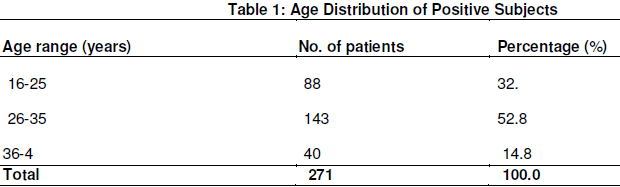
The age group (26-35 years) accounts for 52.8%, representing 143 patients out of the 271 positive subjects, which accounts for the highest number of patients with Vaginal Candidiasis. This is in line with the fact that the age group 26-30 years represents the peak childbearing age of the Nigerian society (Okonkwo and Umeanaeto). It has been observed that the high concentration of oestrogen hormone in women within this group (especially during pregnancy) provides a favourable environment for the growth of candida (Garcia et al., 2006; Gladtthaar et al., 1982). Advance in age on the other hands, reduces the effect of oestrogen hormone in women and this consequently reflects the lowest score of Candidiasis in age group 36-45 (Skaznik-Wikiel, et al., 2016).
6.0 CONCLUSION
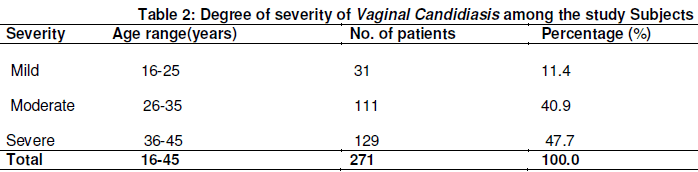
The prevalence rate of Vaginal Candidiasis in the study population is 66%. The age group (26-35 years) has the highest prevalence rate (52.8 %.) of compared to other age groups, while the infection is severest in the older subjects (36-45 years).
7.0 RECOMMENDATION
Since the present study established high prevalence of infection among symptomatic women of child bearing age; empirical, symptomatic treatment with topical and or vaginal antifungal agents is recommended as first line of therapy. This reduces the cost of care and the delay which causes distress to patients while waiting for investigation results..
8.0 REFERENCES
Cassone A., DeBernardis F., Mondello F., Ceddia T., and Agatensi L. (1987). Evidence for a correlation between proteinase secretion and Vulvo vaginal candidiasis. J. Infect. Dis. 156:777–783.
Fischer G; Chronic vulvo Vaginal Candidiasis: what we know and what we have yet to learn. Australas J Dermatol. 2012 53(4):247-254
Fleury, F. J. 1981. Adult vaginitis.Clin. Obstet. Gynecol. 24:407–438.
Galathaar E., Cartwright R.Y., Kunz J. (1982). Vulvo vaginitis-congresses of Vulvo vaginitis Round Table Discussion: conference proceedings, National library Australia:37.
Garcia H.M., Garcia S.D., Copolillo E.F., Cora E.M., Barata A.D., Vay C.A., de Torres R.A., Tiraboschi N. and Famiglietti A.M.R. (2006). Prevalence of Vaginal Candidiasis in pregnant women. Identification of yeasts; and susceptibility to antifungal agents. Revista Agentinade Microbiologia 38(1):9-12
Holland J, Young M. L., Lee O. (2003). Vulvo vaginal carriage of yeasts other than Candida albicans. Sex Transm Infect. 79(3):249-250
Hurley, R. (1977). Trends in candidal vaginitis. Proc. R. Soc. Med. 70(Suppl4):1–8.
James W.D., Berger T.G. (2006). Andrew Diseases of the Skin: clinical Dermatology. Saunders Elsevier. 309.
Kirkpatrick C. H., Rich R. R., and Bennett J. E. (1971). Chronic mucocutaneous candidiasis: model-building in cellular immunity. Ann. Intern. Med. 74:955–978
Mathur, S., Virella G., Koistinen J., Horger E. O., Mahvi T. A., and Fudenberg H. H. (1977). Humoral immunity in Vaginal Candidiasis. Infect. Immun15:287–294.
M. E. Lamm (ed.), Handbook of mucosal immunity. Academic Press, Inc., San Diego, Calif
Monif G.R., Baker D.A., Monif G.R. and Baker D.A. (2003).Candida albicas, infectious disease in obstetrics and gynecology. 5thed. New York Parthenon Press: 405-421
Okonkwo NJ, Umeanaeto PU. Prevalence of Vaginal Candidiasis among pregnant women in Nnewi town of Anambra state. Afr Rsch Rev 2010;4:539-48.
Parr, M. B., and Parr E. L. (1991). Langerhans cells and T lymphocyte subsets in the murine vagina and cervix. Biol. Reprod.44:491–498.
Parr, M. B., and Parr E. L. (1994). Mucosal immunity in the female and male reproductive tracts, p. 677–689. In P. L. Ogra, J. J. Mestecky, and M. E. Lamm (ed.), Handbook of mucosal immunity. Academic Press, Inc., San Diego, Calif.
Patel, D.A., Burnett, N.M., Curtis, K.M. (2003). Reproductive tract infections. Reprod. Health Epidemiol. Series Module, 3: 1 83
Ross, I. K., F. De Bernardis, G. W. Emerson, A. Cassone, and P. A. Sullivan (1990). The secreted aspartate proteinase of Candida albicans: physiology of secretion and virulence of a proteinase-deficient mutant. J. Gen. Microbiol. 136:687–694
Skaznik-Wikiel ME, Traub ML, Santoro N. Menopause. In: Jameson JL, De Groot LJ, de Kretser DM, et al, eds. Endocrinology: Adult and Pediatric. 7th ed. Philadelphia, PA: Elsevier Saunders; 2016:chap 135.
Sobel JD (1985): Management of recurrent vulvo Vaginal Candidiasis with intermittent Ketoconazole prophylasis, American Journal of Obstetrics and Gynecology 65:435-440
Thulkar, J., Kriplani, A., Agarwal, N., Vishnubhatla, S. (2010). Aetiology & risk factors of recurrent vaginitis & its association with various contraceptive methods. Indian J.Med.Res., 131: 83 87.
Wira, C. R., J. Richardson, and Prabhala R. (1994). Endocrine regulation of mucosal immunity: effect of sex hormones and cytokines on the afferent and efferent arms of the immune system in the female reproductive tract, p. 705–718.
Cite this Article: Umar FA, Kani YA, Muhammad Y, and Zainab I (2017). Vaginal Candidiasis among Symptomatic Childbearing Age Women in Kaduna, Nigeria. Greener Journal of Epidemiology and Public Health, 5(3): 021-024, http://doi.org/10.15580/GJEPH.2017.3.050217056