

GREENER JOURNAL OF EPIDEMIOLOGY AND PUBLIC HEALTH
ISSN: 2354-2381
Submitted: 08/08/2017 Accepted: 11/08/2017 Published: 16/09/2017
DOI: http://doi.org/10.15580/GJEPH.2017.5.080817103
Research Article (DOI: http://doi.org/10.15580/GJEPH.2017.5.080817103)
Prevalence of Malaria and Typhoid Co-Infections among Patients who Attended State Specialist Hospital Gombe from May to August 2015 for Malaria and Widal Tests
1Igwe Mike, *2Lynn Maori, 3Attahiru Adamu, 4Seth Gushit Longshit, 5Maryam Garba, 6Florence Sado and
7Abdullfattah Nurein Shittu
1Gombe State College of Health Science and Technology, Kaltungo, Gombe State.
2Microbiology Department, Infectious Diseases Hospital Zambuk, Gombe State.
3Microbiology Department, College of Nursing and Midwifery, Gombe State, Nigeria.
4School of Nursing Plateau State,
5Microbiology Department, State Specialist Hospital Gombe.
6Microbiology Department, State Specialist Hospital Gombe.
7M272T Masallachin Jos, Plateau State.
Emails:1lafiyalab@ yahoo. com, 4sethgushit@ gmail. com, 5Mareomohd@ gmail. com, 6florasado@ yahoo. com,
7Nurein.abdulfattah@yahoo.com
*Corresponding Author’s Email: Lynnmaori09@ gmail. com
ABSTRACT
Malaria and Typhoid fever are two of the leading febrile illness common in sub-Saharan Africa and remain the disease of major public health importance in causing morbidity and mortality especially in countries where poor sanitary habit, poverty and ignorance exist. This study carried out among 627 patients diagnosed for malaria (MP) and Widal test (Typhoid fever) in Gombe State Specialist Hospital (GSSH) between May – August, 2015, shows that the prevalence rate of malaria and typhoid fever co-infection is very high. 136 patients (21.7%) of the study population were discovered to have co-infection, showing a high prevalence rate when compared with the report of Agwu, E. et al (2008) who reported overall co-infection of 5.0% in Ekwulimili in Anambra state. Of the 136 examined, 60.3% are male while 39.7% are female. The study also shows that the prevalence rate of malaria in the study area is higher in male than in female. Male had 60.0% while female had 59.1% confirming the report of Njoku, O. O. et al, 2003 who reported the rate of 76% for male and 62% for female in Azia and Umudioka communities in Anambra state. 196 (52.3%) male reacted positive for typhoid while female is 129 (51.1%). This is in contrast to the work of Onyido, A. E. et al, 2014 who reported 18.2% male and 81.8% females in Ekwulimili community in Anambra state. These observations can be attributed to wrong perceptions about the causes of malaria and typhoid fever in the study area.
KEY WORDS: Febrile, Morbidity, Mortality, Prevalence and Co-infection.
INTRODUCTION
Typhoid and malaria fever are two leading febrile illness affecting humans, especially in sub-Saharan Africa. They remain the diseases of major public health importance and the cause of morbidity and mortality. Both diseases are common in many countries of the world where poor sanitary habit, poverty and ignorance exist.
Typhoid fever is a systemic bacterial infection caused by Salmonella enterica serotype Typhi (S. typhi). It is characterized by acute illness. The first non-specific manifestations include fever, headache, abdominal pain and vomiting. On the other hand, malaria is a protozoan infection caused by Plasmodium species. It is transmitted by female Anopheles mosquito and characterized by intermittent fever, headache, abdominal pain, weakness and vomiting. It could be complicated or uncomplicated.
Salmonellae are Gram-negative, motile, non-sporing, non-capsulate bacilli which exist in nature primarily as parasites of the intestinal tract of man and other animals. On the basis of their pathogenicity the Salmonellae may be divided into two groups:
(i) The enteric fever group comprises the organisms capable of causing enteric fever in man, Salmonella typhi and the paratyphoid bacilli, found only in the intestinal tract of man for whom they have a high degree of pathogenicity and in which they frequently cause invasive disease.
(ii) The food poisoning groups which are essentially parasites of animals from whom man is occasionally infected. Their pathogenicity for man is relatively low, the usual result of infection being the production of gastroenteritis. In this condition they penetrate to the sub-epithelial tissues but rarely invade the blood streams.
Malaria is the most important parasitic diseases of people, affecting over 200 million people and causing more than one million deaths each year. Because of its dependence upon human/vector (mosquito) contact, malaria is considered to be a disease of poverty. Malaria is an important potentially deadly mosquito-borne disease characterized by cyclical bouts of fever with muscle stiffness, shaking and sweating.
Despite decades of control success and a competent network of country-wide health infrastructure, malaria remains an important health threat in rural areas in the tropics. It causes economic loss and impacts social functions.
Four Plasmodium species are responsible for human malaria. These are P. falciparum, P. vivax, P. malariae, P. ovale and P. knwolesi. Plasmodium falciparum which causes malignant tertian malaria and P. malariae which causes quartan malaria are the most common species of malaria parasites and are found in Asia and Africa.
The symptomatology of malaria depends on the parasitaemia, the presence of the organism in different organs and the parasite burden. The incubation period varies generally between 10 – 30 days. As the parasite load becomes significant, the patient develops headache, lassitude, vague pains in the bones and joints, chilly sensations and fever. As the disease progress, the chill and fever become more prominent, follows a cyclic pattern (paroxysm) with the symptomatic period lasting 8 – 12 hours. In between the symptomatic periods, there is a period of relative normalcy, the duration of which depends upon the species of the infecting parasite, but classical tertian paroxysm is rarely seen in P. falciparum.
LITERATURE REVIEW
Malaria is a mosquito-borne infectious disease affecting humans and other animals caused by parasitic protozoans (a group of single-celled microorganisms) belonging to the Plasmodium type("Malaria Fact sheet N°94). Malaria causes symptoms that typically include fever, feeling tired, vomiting, and headaches. In severe cases it can cause yellow skin, seizures, coma, or death (Caraballo H, 2014). The disease is most commonly transmitted by an infected female Anopheles mosquito. The mosquito bite introduces the parasites from the mosquito's saliva into a person's blood("Malaria Fact sheet N°94) The parasites travel to the liver where they mature and reproduce. Five species of Plasmodium can infect and be spread by humans (Caraballo H, 2014). Most deaths are caused by P. falciparum because P. vivax, P. ovale, and P. malariae generally cause a milder form of malaria("Malaria Fact sheet N°94). The species P. knowlesi rarely causes disease in humans ("Malaria Fact sheet N°94). Malaria is typically diagnosed by the microscopic examination of blood using blood films, or with antigen-based rapid diagnostic tests (Caraballo H, 2014). Methods that use the polymerase chain reaction to detect the parasite's DNA have been developed, but are not widely used in areas where malaria is common due to their cost and complexity (Nadjm B and Behrens RH,. 2012). The disease is widespread in the tropical and subtropical regions that exist in a broad band around the equator (Caraballo H, 2014). This includes much of Sub-Saharan Africa, Asia, and Latin America ("Malaria Fact sheet N°94).
In 2015, there were 296 million cases of malaria worldwide resulting in an estimated 731,000 deaths (GBD 2015). Approximately 90% of both cases and deaths occurred in Africa ("Malaria Fact sheet N°94", 2016). Rates of disease have decreased from 2000 to 2015 by 37%, ("Malaria Fact sheet N°94", 2016). But increased from 2014 during which there were 198 million cases WHO, 2014). Malaria is commonly associated with poverty and has a major negative effect on economic development (Gollin D et al, .2007). In Africa, it is estimated to result in losses of US$12 billion a year due to increased healthcare costs, lost ability to work, and negative effects on tourism (Greenwood BM et al, 2005).
Typhoid fever, also known simply as typhoid, is a bacterial infection due to Salmonella typhi that causes symptoms (Wain, J et al ,. 2015) which may vary from mild to severe and usually begin six to thirty days after exposure ("Malaria Fact sheet N°94) . Often there is a gradual onset of a high fever over several days ( Anna E .Newton ,.2014). Weakness, abdominal pain, constipation, and headaches also commonly occur (cdc.gov. 2013). Diarrhea is uncommon and vomiting is not usually severe (cdc.gov. 2013). Some people develop a skin rash with rose colored spots (cdc.gov. 2013). In severe cases there may be confusion (cdc.gov. 2013). Without treatment symptoms may last weeks or months (cdc.gov. 2013). Other people may carry the bacterium without being affected; however, they are still able to spread the disease to others ( WHO,. 2008). Typhoid fever is a type of enteric fever along with paratyphoid fever (Wain, J et al ,. 2015). The cause is the bacterium Salmonella typhi, also known as Salmonella enterica serotype Typhi, growing in the intestines and blood (cdc.gov. 2013). Typhoid is spread by eating or drinking food or water contaminated with the feces of an infected person (WHO, 2008). Risk factors include poor sanitation and poor hygiene (Wain, J et al, 2015). Those who travel to the developing world are also at risk ( CDC, 2013) and only humans can be infected ( WHO,. 2008). Diagnosis is by either culturing the bacteria or detecting the bacterium's DNA in the blood, stool, or bone marrow (Crump, JA and Mintz, ED,. 2010). Culturing the bacterium can be difficult (Cunha BA,. 2004). Bone marrow testing is the most accurate (Crump, JA and Mintz, ED,. 2010). Symptoms are similar to that of many other infectious diseases (cdc.gov. 2013).
MATERIALS AND METHODS
STUDY AREA
The findings were conducted in the Microbiology/Parasitology Unit of Gombe State Specialist Hospital (GSSH) Laboratory, between May – August, 2015. Data was obtained from the record of Malaria and Widal test registers. Permission was obtained from head of Microbiology/Parasitology unit and confirmed by the Medical Laboratory Scientists in-charge of the benches.
STUDY POPULATION
Of 3, 133 patients who attended the GSSH for malaria (MP) and Widal tests from May – August 2015, 627 patients were selected using systematic and stratified sampling method.
LABORATORY ANALYSIS
Microscopic examinations of stained thick and thin blood films for malaria diagnosis were prepared according to technique. Typhoid infection was diagnosed using the patient’s serum and Widal test kits, which contained reactants with attenuated typhoid antigen that reacted specifically with the antibody.
PROCEDURE FOR MP TEST
Thick and thin blood films made from patients’ blood were stained with 10% Giemsa’s stain for 10 minutes. The slides were viewed under x100 oil immersion objective lens to identify the parasites. Positive slides identified on the basis of microscopic examination for the presence of ring forms in the erythrocytic stage of malaria parasite (Cheesbrough, M. 2000).
WIDAL TEST PROCEDURE
Tile Method:
Sample collected by venepuncture in an EDTA container. A drop of antigen is placed in 8-squares of the tile. A drop of the patient’s serum then added and mixed using applicator stick. The tile was then rocked gently for mixing. Observation of agglutination in form of visible crumbs was observed. An agglutination reaction in any of the reactants indicates the presence of Salmonella. The degree of agglutination are recorded in titres as 1:40, 1:80, 1:160, 1:320, etc. (Cheesbrough, M. 2000).
DATA ANALYSIS
The data were analyzed using descriptive statistics into percentages, mean and standard deviation.
RESULTS AND DISCUSSION.
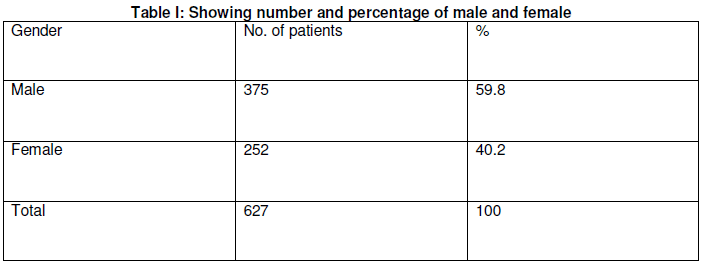
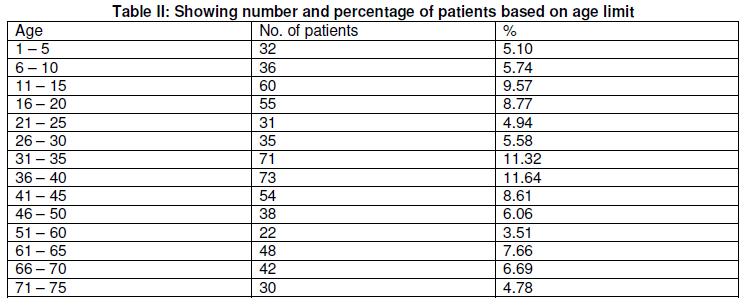
A total of 627 data were selected for malaria and typhoid. Out of the number 375 (59.8%) are male while 252 (40.2%) are female (Table I), within the age range of 1 year and 75 years. The mean age of the patients was 30.6±15.2 (SD) years. Patients’ age 20 -39 years accounted for significantly highest percentage while age ˃60 accounted for least percentage.
Of the number, 233 (37.2%), 185 (29.5%) and 136 (21.7%) were tentatively diagnosed for malaria, typhoid and co-infections respectively. While 63 (11.6%) were negative to both typhoid and malaria (Table III)

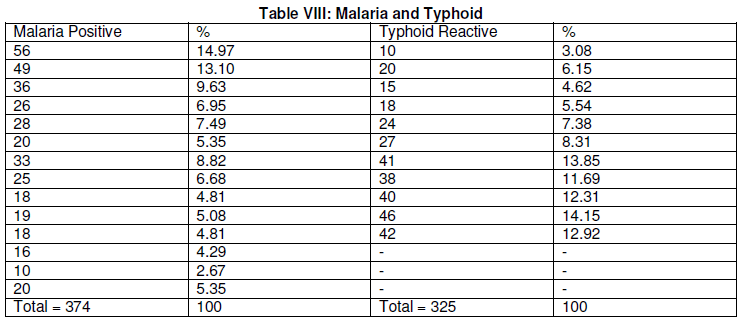
Of the 375 males, 225 (60.0%) are malaria positive while of the 252 females, 149 (59.1%) are malaria positive. The age group ˂5 years had the highest malaria prevalence rate while group ˃50 years had low malaria prevalence rate. 196 (52.3%) of the male and 129 (51.1%) of female were positive typhoid. Age group 41 – 60 years had the highest typhoid prevalence rate. Of the 136 examined for co-infection, 82 (60.3%) are male while 54 (39.7%) were female.




This study carried out among 627 patients diagnosed for malaria (MP) and Widal test (Typhoid fever) in Gombe State Specialist Hospital (GSSH) shows that the prevalence rate of malaria and typhoid fever co-infection is very high. 136 patients (21.7%) of the study population were discovered to have co-infection, showing a high prevalence rate when compared with the report of Agwu, E. et al (2008) who reported overall co-infection of 5.0% in Ekwulimili in Anambra state. Of the 136 examined, 60.3% are male while 39.7% are female. The study also shows that the prevalence rate of malaria in the study area is higher in male than in female. Male had 60.0% while female had 59.1% confirming the report of Njoku, O. O. et al, 2003 who reported the rate of 76% for male and 62% for female in Azia and Umudioka communities in Anambra state. 196 (52.3%) male reacted positive for typhoid while female is 129 (51.1%). This is in contrast to the work of Onyido, A. E. et al, 2014 who reported 18.2% male and 81.8% females in Ekwulimili community in Anambra state. These observations can be attributed to wrong perceptions about the causes of malaria and typhoid fever in the study area.
ACKOWLEDGEMENT
Authors are grateful to the staff of Gombe State Specialist Hospital most especially the department of Medical Microbiology for their support to carry out the work.
REFERENCES
Anna E. Newton (2014). "3 Infectious Diseases Related To Travel". CDC health information for international travel 2014 : the yellow book. ISBN 9780199948499.
Caraballo H (2014). "Emergency department management of mosquito-borne illness: Malaria, dengue, and west nile virus". Emergency Medicine Practice. 16 (5).
Cheesbrough, M. (2000). District Laboratory Practice in Tropical Countries (2nd Ed). Cambridge, Cambridge University Press.
Cunha BA (March 2004). "Osler on typhoid fever: differentiating typhoid from typhus and malaria". Infect. Dis. Clin. North Am. 18 (1): 111–25. PMID 15081508. doi:10.1016/S0891-5520(03)00094-1.
Crump, JA; Mintz, ED (15 January 2010). "Global trends in typhoid and paratyphoid Fever.". Clinical Infectious Diseases. 50 (2): 241–6. PMC 2798017  . PMID 20014951. doi:10.1086/649541.
GBD 2015 Disease and Injury Incidence and Prevalence, Collaborators. (8 October 2016). "Global, regional, and national incidence, prevalence, and years lived with disability for 310 diseases and injuries, 1990-2015: a systematic analysis for the Global Burden of Disease Study 2015.". Lancet. 388 (10053): 1545–1602. PMC 5055577  . PMID 27733282. doi:10.1016/S0140-6736(16)31678-6.
GBD 2015 Mortality and Causes of Death, Collaborators. (8 October 2016). "Global, regional, and national life expectancy, all-cause mortality, and cause-specific mortality for 249 causes of death, 1980-2015: a systematic analysis for the Global Burden of Disease Study 2015.". Lancet. 388 (10053): 1459–1544. PMID 27733281. doi:10.1016/s0140-6736(16)31012-1.
Gollin D, Zimmermann C (August 2007). Malaria: Disease Impacts and Long-Run Income Differences (PDF) (Report). Institute for the Study of Labor.
Greenwood BM, Bojang K, Whitty CJ, Targett GA (2005). "Malaria". Lancet. 365 (9469): 1487–98. l 15850634. doi:10.1016/S0140-6736(05)66420-3.
"Malaria Fact sheet N°94". WHO. March 2014. Archived from the original on 3 September 2014. Retrieved 28 August 2014.
"Malaria Fact sheet N°94". WHO. Retrieved 2 February 2016.
Nadjm B, Behrens RH (2012). "Malaria: An update for physicians". Infectious Disease Clinics of North America. 26 (2): 243–59. PMID 22632637. doi:10.1016/j.idc.2012.03.010.
Organization, World Health (2010). Guidelines for the treatment of malaria (2nd ed.). Geneva: World Health Organization. p. ix. ISBN 978-92-4-154792-5.
"Typhoid Fever". cdc.gov. May 14, 2013. Retrieved 28 March 2015.
"Typhoid vaccines: WHO position paper."(PDF). Wkly Epidemiol Rec. 83 (6): 49–59. February 8, 2008. PMID 18260212.
WHO (2014). World Malaria Report 2014. Geneva, Switzerland: World Health Organization. pp. 32–42. ISBN 978-92-4-156483-0.
Worrall E, Basu S, Hanson K (2005). "Is malaria a disease of poverty? A review of the literature". Tropical Health and Medicine. 10 (10): 1047–59. PMID 16185240. doi:10.1111/j.1365-3156.2005.01476.x. 
Wain, J; Hendriksen, RS; Mikoleit, ML; Keddy, KH; Ochiai, RL (21 March 2015). "Typhoid fever.". Lancet. 385 (9973): 1136–45. PMID 25458731. doi:10.1016/s0140-6736(13)62708-7.
GBD 2015 Disease and Injury Incidence and Prevalence, Collaborators. (8 October 2016). "Global, regional, and national incidence, prevalence, and years lived with disability for 310 diseases and injuries, 1990–2015: a systematic analysis for the Global Burden of Disease Study 2015.". Lancet. 388 (10053): 1545–1602. PMC 5055577  . PMID 27733282. doi:10.1016/S0140-6736(16)31678-6.
Cite this Article: Igwe M, Lynn M, Attahiru A, Seth GL, Maryam G, Florence S and Abdullfattah NS (2017). Prevalence of Malaria and Typhoid Co-Infections among Patients who Attended State Specialist Hospital Gombe from May to August 2015 for Malaria and Widal Tests. Greener Journal of Epidemiology and Public Health, 5(5): 037-043, http://doi.org/10.15580/GJEPH.2017.5.080817103