|
Greener Journal of Agricultural Sciences ISSN: 2276-7770; ICV: 6.15 Vol. 6 (10), pp. 276-284, November 2016 Copyright ©2017, the copyright of this article is retained by the author(s) http://gjournals.org/GJAS |
|
Research Article (DOI: http://doi.org/10.15580/GJAS.2016.10.072716124)
Farmer’s Adoption of Improved Cassava Varieties in the Humid Forest Agro-ecological Zone of Cameroon
Mouafor Boris Igwacho*1, Temegne Nono Carine2,4,
Ngome Ajebesone Francis3, Malaa Dorothy3
1University of Yaoundé II, Faculty of Science Economics and Management P.O. Box 18 Soa, Cameroon.
2University of Yaoundé I, Faculty of Science, Department of Plant Biology, P.O. Box 812 Yaoundé, Cameroon.
3Institute of Agricultural Research for Development (IRAD), P.O. Box 2123 Yaoundé, Cameroon.
4University of Bamenda, Higher Technical Teacher Training College, Department of Civil Engineering and Forestry Techniques, P.O. Box 39 Bambili, Cameroon.
|
ARTICLE INFO |
ABSTRACT |
|
|
Article No.: 072716124 DOI: 10.15580/GJAS.2016.10.072716124 |
Background: Development of high yielding and disease resistant cassava (Manihot esculenta Crantz) varieties, coupled with the promotion of efficient processing technologies, is the principal intervention aimed at changing the cassava sector in Cameroon. National research and extension programs have been spearheading efforts to disseminate these varieties alongside improving farmer’s access to other technologies.
Methods: This paper investigated the rate of adoption of the disseminated cassava varieties and processing technologies on adopting households. Survey of 100 households was done in 5 villages (Mbankomo, Akono, Okola, Ngoumou and Nkoldoum) in the Center Region of Cameroon.
Results: The results showed that in all the study sites 40% of the farmers cultivate improved variety. They process cassava at home using small processing commercial processors. It is noted that the farmers prefer the improved variety because of their high dry matter content and most common processed cassava products were found to be “Baton” and “Fufu”. Moreover, farmers that were able to obtain the improved variety appreciate this variety so much because of its yield and disease tolerant and most of all of because of their high dry matter content which the farmers appreciate a lot. The farmer’s adhesions in community organizations or cooperative organizations have a higher tendency of obtaining credits for their farms seeds and other technical support. Thus the introduction of new cassava varieties would be enhanced by farmers’ access to these facilities and services.
Conclusion: The size of the farm, the availability and the adoption of improved planting material play a critical role on cassava tuber production in Center Region of Cameroon.
|
|
|
Submitted: 27/07/2016 Accepted: 14/08/2016 Published: 10/11/2016 |
||
|
*Corresponding Author Mouafor Boris Igwacho E-mail: ibmouafor@ yahoo.co. uk Phone: (+237) 670 291 871 |
||
|
Keywords: Cassava products, Cassava value chain, improved varieties, Manihot esculenta, Center Region, Cameroon
|
||
|
|
|
INTRODUCTION
Agriculture is the corner stone of the Cameroonian economy. It generates the highest number of employments (more than 60% of both skilled and unskilled), ensures national food security, contributes enormously to Cameroon’s GDP (Gross Domestic Product) and foreign earnings and, above all, provides raw materials to the industrial sector, which is still in its infant stage. The importance of agriculture to the economy of the country was recognized even before independence. The colonial strategy of development at the time revolved on two axes: to discourage industrialization and encourage an agricultural sector based on mono-cultural plantation economy (Azobi, 1988). After independence, the Cameroon government continued to show a lot of concern to the development of agriculture in its five-year development plans. The first five-year development of 1965–1967, for example, was captured “the farmer’s year” and the second plan (1966–1971) was declared as “the farmer’s plan” (Fonjong, 2004). This solid early foundation explains why Cameroon has remained for long the breadbasket of the Central African region.
According to Borlaug (1999), the intensification of food production using modern technologies must be at the heart of any rural development efforts in the years ahead in Sub-Saharan Africa. This means that for agriculture to be able to meet present and future challenges in the sub-region, agricultural modernization must be given adequate attention and priority within the individual countries. Agricultural modernization in this context entails introducing better techniques of production, through the creation of agro-institutions of training, introducing high yield and resistant crop seedlings, making available to farmers better inputs and equipment, creating farm-to-market roads, identifying markets outlets and also the provision of better incentives to farmers so as to encourage high productivity.
The current government strategy for agricultural development revolved around a more intensive-based agricultural sector, which is stimulated by dynamic and growth-generating value chains activities that provide employment within the rural sector and beyond. Centering agricultural development on those value chains seeks to encourage inclusive value chain development at all stages (production, processing, and marketing) up to the end products and markets.
Cassava (Manihot esculenta Crantz, Euphorbiaceae) is the main food crop of Cameroon, having not enough agronomic requirements; it is cultivated in numerous regions of the country (Ngome et al., 2013; Temegne et al., 2016). It constitutes the first food consumed in Cameroon; cassava has several virtues (Njukwe et al., 2014). It’s a crop on which you do not lose anything. The crop is either boiled and eaten, or processed into local delicacies such as Mitumba, Cassava stick, Cassava pufpuf, garri, Ndas and you can transform into cassava powder that comes out during transformation and is also very important. Its branches and stem serve as firewood while its leaves are used as vegetables; residues from cassava are used to fertilize the soil. The root crop has also gained industrial importance with uses in ethanol production, high quality cassava flour in bread production, and glucose syrup production. That’s to say, nothing is loosed; it’s a unique plant.
The cassava value chain is of strong importance with regard to basic food intake of the population, representing 20% of cultivated land and around 46% of national food crop production. Besides, around 90% of producers are rural poor women. National production is estimated to be around 3.1 millions of tons in 2010 and has remained stagnant over the last years (Mvodo and Liang, 2012a). Demand in cassava and it’s by product is a traditional component of Cameroon food consumption most especially southern Cameroon. Cassava tuber production generally relies on small farm holders whose farms are mostly less than 2 ha (Mvodo and Liang, 2012b). It’s important to recall that local cassava varieties in humid areas require a 12-18 months production cycle. However the aim of our study is to investigate to what extend the farmers in the Center Region are using the improved cassava varieties from IRAD and IITA (8034, 8017, 0110, 92/0326 excel, champion and 8061) which have short cyclesn, are high yield, and are equally disease tolerant.
MATERIALS AND METHODS
Study site
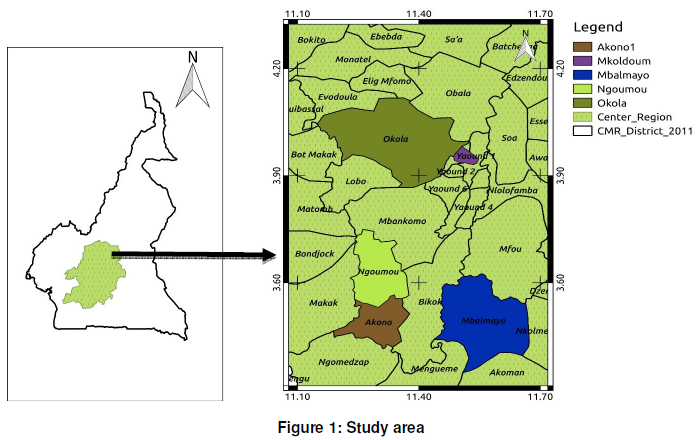
The study area is made up of five villages (Mbankomo, Akono, Okola, Ngoumou and Nkoldoum) belonging to the Center Region of Cameroon (Figure 1). The Center Region has an estimated population of 3.199.828 million inhabitants covering a surface area of 68,953 km2 (26,623 sq mi) (Gwanfogbe et al., 1983). The people here are the Bantu group known as the Beti-Pahuin (Béti-Pahouin), the "Fang-Beti," or simply the "Fang". The Center Region is entirely situated on the south Cameroon plateau with an average climate of 24 °C; the region is highly humid with precipitated rainfall averaging 1.000-2.000 mm each year (Molua and Lambi, 2006). The land varies from 500-1 000 m above sea level except for villages of the Sanaga and its tributes which dip as low as 200 m. The Center Region of Cameroon was chosen for this study view its high level of consumption of the cassava product because it’s consumed in all its forms by almost every household.
Data collection
Data were collected from 5 villages (Mbankomo, Akono, Okola, Ngoumou and Nkoldoum) which were selected based on their proximity to the Yaoundé urban zone. Reasons being that most of the output from cassava and it’s by products are sold to the urban markets. From these 5 villages, we randomly select 20 villagers taking into consideration they are cassava producers. Thus, a total of 100 respondents were interviewed.
Data analysis
Data analysis will be done using a descriptive data analysis method. Descriptive statistics therefore enables us to present the data in a more meaningful way, which allows simpler interpretation of the data. It allows summarizing the group of data using a combination of tabulated description (i.e., tables) and graphical description (i.e., graphs and charts).
RESULTS AND DISCUSSION
Results
Percentage of farmers according to gender
The results show that, 59 of 100 respondents were men and 41 women (Table 1). Data collected, allowed to make the following analysis drawing graphs and giving some side comments.
The Figure 2, shows a percentage of female and male respondents in the different villages. We had a higher number of male respondents as compared to the females in the 5 different villages.
From the data, the average, maximum and minimum ages of the farmers by gender and their standard deviation value were analyzed and compare. Thus the mean age was 39.12 and 36.73 in the male and female respectively (Table 2). Maximum ages of 59 and minimum of 27 in the men, with a standard deviation value of 7.71 were recorded and maximum and minimum ages of 55 and 27 respectively and a standard deviation value of 8.59 in women were found (Table 2).
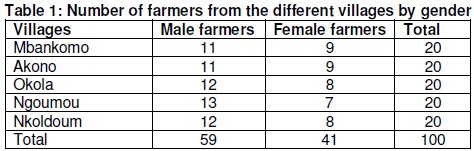
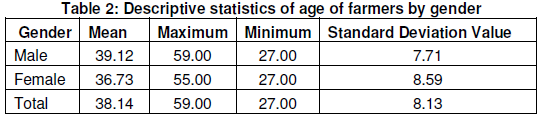
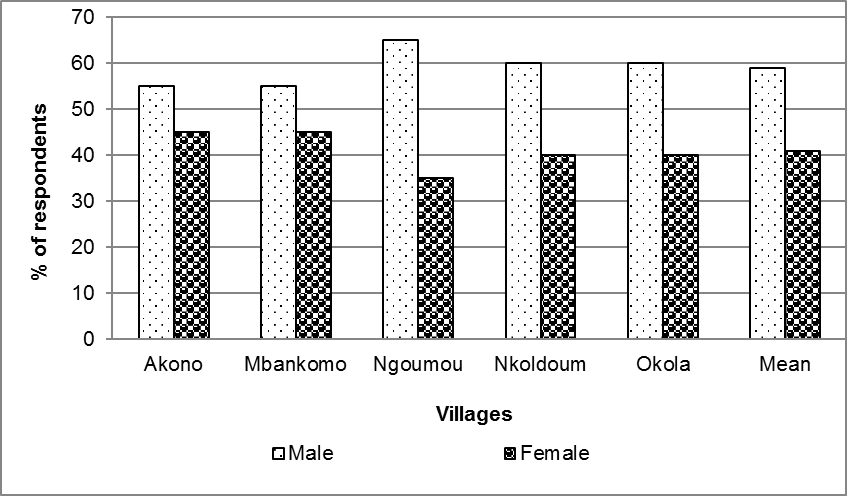
Figure 2: Percentage of respondents by gender
Educational level of the farmers
The Figure 3 shows the level of education of farmers compared to gender. From the Figure 3, most women do attain the primary school as compared to the men and at the level of secondary and high school, their number is almost the same but none of the women in our case did go to the university.
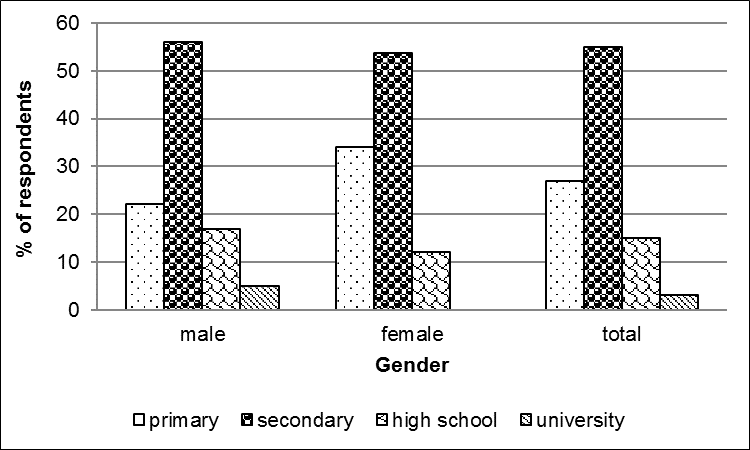
Figure 3: Educational level of farmers by gender
Production and management of surface area
With an average surface area of 1.7 ha in the men and 1.5 ha in women (Table 3), they cultivate mainly the white skin cassava, the red skin and equally the yellow flesh cassava. Since the identity of this cassava by name is not known by this farmers, about 30% are considered to cultivate improved variety depending on their explanation they gave on the yield of this variety and its morphology. Most of the farmers sell their cassava already transformed to "Baton".
Eighty percent (80%) of surveyed farmers cultivate cassava on at least 10.000 m2; i.e. respectively 39 and 41% for 1 and 2 ha (Table 4). A small proportion of farmers (10%) have cassava production area of 3 ha (Table 4).
Thou all of the farmers do practice agriculture, 77% of them have it as their principal activity while 13% have commerce as their primary activity and the other 6% and 3% have craft and rearing respectively as their principal activity (Figure 4). However all of these farmers cultivate cassava followed by maize, ground nut, coco yam plantain and cocoa at percentages of 49, 28, 20, 19 and 14% respectively (Table 5).
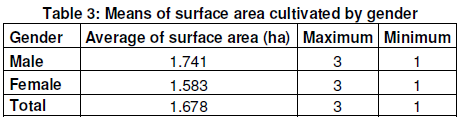
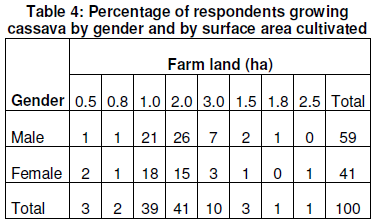
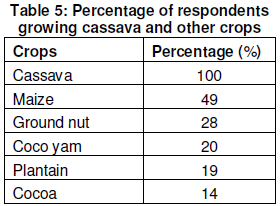
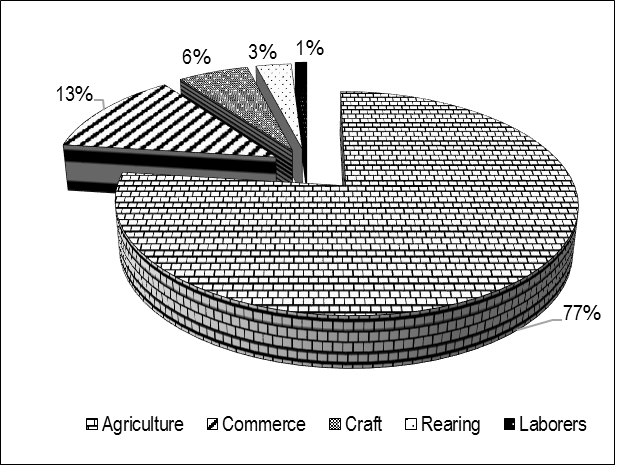
Figure 4: Main activity of surveyed farmers
Cassava variety cultivated by gender
Considering the fact that all the farmers identify the different cassava varieties by the color of the tubers, it was observed that most of the farmers cultivate the white skin cassava, followed by the red variety and then thirdly we have a variety even thou not identified by the farmers (Figure 5). The characteristics they gave for this third variety in terms of its yield and morphology led us to think and to define this variety as an improved variety which was largely cultivated by the men as compared to the women. It was equally noted that this variety was obtain from the Yaoundé urban area by a farmer from his relative. Then lastly, the yellow variety which is less common among the farmers with a percentage of 2% in this area.
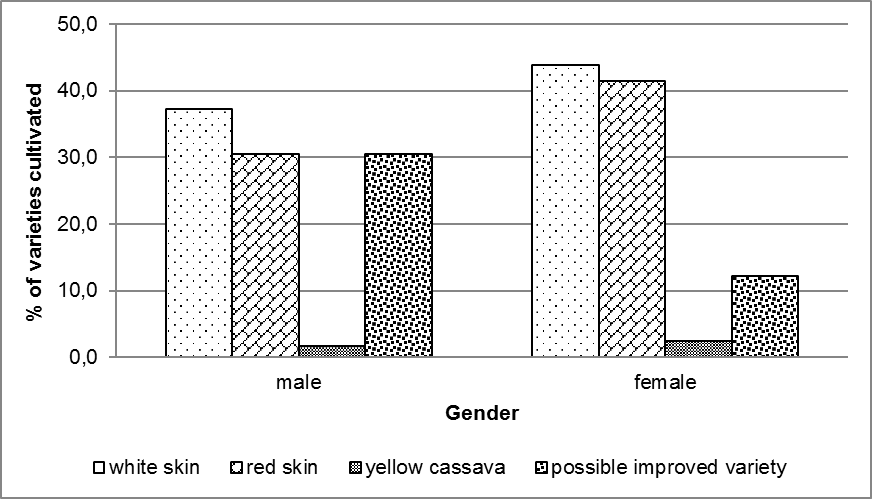
Figure 5: Cassava variety cultivated by gender
Processing
Harvesting and transporting of roots from farm to homestead and subsequent processing are mainly done by women. Most of the steps in processing are carried out manually using simple and inexpensive tools and equipment that are available to small farmers. Cassava processing is labor intensive and productivity is usually very low. Transport of products to markets is made difficult by the poor condition of rural roads. The processing methods include peeling, boiling, steaming, slicing, grating, soaking or seeping, fermenting, pounding, roasting, pressing, drying, and milling. These traditional methods give low product yields which are also of low quality. The farmers have preferences for improved varieties because of its high dry matter content, starch content and quality influence in the output and quality of the processed products.
Marketing
With an average market distance of about 3.9 km from the production sites to the selling point or small village markets, apart from home consumption which represent almost 25% of their production because they don’t only consume the tubers, but equally the leaves. About 51% of this production is transformed to by-products mainly “Baton”, the other 24% is sold in form of tubers (Figure 6). The villagers sell their products in their local markets mainly to “buyam sellams” who come weekly from the urban area buy from these small producers and then take the products back to town and resale it there. These famers as said above sell their cassava mostly in its commonly transformed form which is the “baton”.
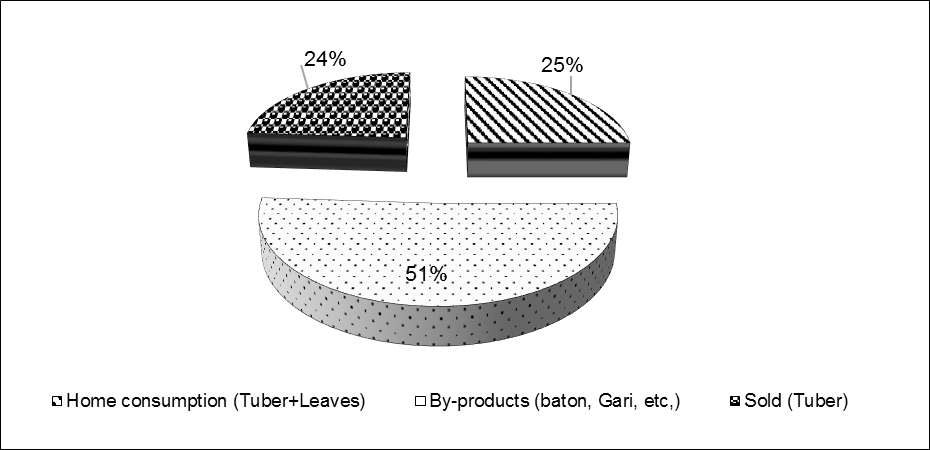
Figure 6: Cassava utilization
DISCUSSION
The Center Region of Cameroon was chosen for this study due to the implication of the farmers of this zone in the cultivation of cassava. Cassava is a product that is widely eaten in this zone and in many forms (baton, mitumba, fufu, leaves as kwem and other by-products from the roots). Cultivation of cassava in this zone is like a tradition. No matter the crop the farmers cultivate principally, they always make sure they have cassava planted in a portion on their farms. Several studies confirm this fact (Temegne et al., 2016; Temegne et al., 2015; Ngome et al., 2013; Tricoche et al., 2008; etc.).
After selecting 5 villages in this zone, we used a structured questionnaire designed for the study to collect information from the field. From each village, we had a total number of 20 respondents which were interviewed meaningless of the sex. Thus a total number of 100 respondents with 59 of which were men and the 49 other women was recorded. The high number of male farmers in this study does not obviously mean there are more men than women involve in the cassava cultivation. Indeed, Moma et al. (2014) point out that women are primarily farmers in the cassava sector in Cameroon. They found that out of the slaughtering (clearing) which is mainly made by men, women participate about 10 times the cassava production activities (processing, harvesting, weeding, sowing, burning and cleaning) in comparison to men. In fact cassava as other indigenous leaf vegetables (ILV) of Cameroon (Nguimkeng et al., 2016) are mainly cultivated by women.
CONCLUSION
Many industries in Cameroon need fresh roots of cassava to incorporate, either natural or in the form of modified starch, in their production process. The development of the sector calls for an effective and efficient supply. Therefore, the production and marketing factors have to be carefully evaluated and improved. This paper confirms that the size of the farm, the availability and the adoption of improved planting material play a critical role on root production. The agricultural sector rests on the hands of rural dwellers who perceive it only as their primary supply source of food, thus practicing it at a subsistent level; they lack adequate agronomy education or training. The cultivated area is reduced due to the non-utilization of tractors, and improved technologies for planting, clearing or harvesting. The un-adapted policies, poor planting materials, pests and diseases, and lack of technology further deteriorate the sector causing the yield to be minimal.
COMPETING INTERESTS
The authors declare that they have no competing interests.
AUTHORS’ CONTRIBUTIONS
The author Mouafor Boris Igwacho collected the data and drafted the manuscript. The author Temegne Nono Carine read and corrected the draft of the manuscript. The author Malaa Dorothy gave advice to guide the work. The author Ngome Ajebesone Francis elaborated the data collection protocol, facilitated fieldwork and corrected the draft of the manuscript.
ACKNOWLEDGEMENTS
The authors appreciate the financial support obtained from C2D PAR project and the Ministry of Scientific Research and Innovation (MINRESI) Cameroon, and also acknowledge the logistical support from IRAD Nkolbisson.
REFERENCES
Azobi MV (1988). A Geographical Appraisal of the North West Development Authority (MINDENO): An agent of Rural Development. Third Cycle Doctorate Thesis in Geography. University of Yaoundé I (Cameroon).
Borlaug N (1992). Small-scale agriculture in Africa: the myths and realities. Feeding the Future (Newsletter of the Sasakawa Africa Association) 4: 2.
Fonjong LN (2004). Changing fortunes of government policies and its implications on the application of agricultural innovations in Cameroon. Nordic Journal of African Studies, 13(1): 13-29. http://www.njas.helsinki.fi/pdf-files/vol13num1/fonjong.
Gwanfogbe M, Meligui A, Moukam J and Nguoghia J (1983). Geography of Cameroon. Hong Kong: Macmillan Education Ltd.
Molua EL and Lambi CM (2006). Climate, Hydrology and Water Resources in Cameroon. CEEPA Discussion Papers, Special Series on Climate Change and Agriculture in Africa. Centre for Environmental Economics and Policy in Africa (CEEPA), University of Pretoria, South Africa. Retrieved from http://www.ceepa.cocza/docs/CDPN°17.pdf. pp. 1-37.
Moma C, Mfoumou C, Zibi M and Lebailly P (2014). Opportunities and challenges of women cassava producers in Bityili (South-Cameroon) and the implications for gender roles. Fifth International Scientific Agricultural Symposium (Agrosym), 1092-1099.
Mvodo MES and Liang D (2012a). Cassava sector development in Cameroon: Production and marketing factors affecting price. Agricultural Sciences, 3(5): 651-657. doi: 10.4236/as.2012.35078.
Mvodo MES and Liang D (2012b). SWOT Analysis of Cassava Sector in Cameroon. World Academy of Science, Engineering and Technology, 71: 236-242.
Ngome AF, Amougou MFC, Tata PI, Ndindeng SA, Mfopou MYC, Mapiemfu-Lamare D and Njeudeng TS (2013). Effects of cassava cultivation on soil quality indicators in the humid forest of Cameroon. Greener J. Agric. Sci., 3: 451-457. www.gjournals.org.
Nguimkeng GED, Zapfack L, Mbogne TJ, Temegne NC, Ntsomboh-Ntsefong G., Tonfack LB and Youmbi E (2016) Agromorphological and organoleptic characterization of Vernonia calvoana and V. amygdalina. J. Chem. Bio. Phy. Sci. Sec. B, 6(4): 1345-1361.
Njukwe E, Onadipe O, Amadou Thierno D, Hanna R, Kirscht H, Maziya-Dixon B, Araki S, Mbairanodji A and Ngue-Bissa T (2014). Cassava processing among small-holder farmers in Cameroon: Opportunities and challenges. Int. J. Agric. Pol. Res., 2(4): 113-124. http://www.journalissues.org/ijapr/
Temegne NC, Ngome AF, Fotso KA (2015). Influence de la composition chimique du sol sur la teneur en éléments nutritifs et le rendement du manioc (Manihot esculenta Crantz, Euphorbiaceae) dans deux zones agro-écologiques du Cameroun. Int. J. Biol. Chem. Sci., 9(6): 2776-2788. DOI: http://dx.doi.org/10.4314/ijbcs.v9i6.21.
Temegne NC, Mouafor BI and Ngome AF (2016). Agro-morphological Characterization of Cassava (Manihot esculenta Crantz) Collected in the Humid Forest and Guinea Savannah Agro-ecological Zones of Cameroon. Greener J. Agric. Sci., 6(7): 209-225. DOI: http://doi.org/10.15580/GJAS.2016.8.062716107.
Tricoche B, David-Benz H and Song J-E (2008). L’organisation de la filière manioc au Cameroun: des modes de coordination pour régir les incertitudes de marché. Atelier REPARAC, Juin 2008, Yaoundé, Cameroun, pp. 13. <hal-00415315>.
|
Cite this Article: Mouafor BI, Temegne NC, Ngome AF, Malaa D (2016). Farmer’s Adoption of Improved Cassava Varieties in the Humid Forest Agro-ecological Zone of Cameroon. Greener Journal of Agricultural Sciences, 6(10): 276-284, http://doi.org/10.15580/GJAS.2016.10.072716124. |