|
Greener Journal of Biological Sciences Vol. 2(2), pp. 020-024, October, 2012 ISSN: 2276-7762; ICV: 5.99 Copyright ©2012, the copyright of this article is retained by the author(s) DOI Link: http://doi.org/10.15580/GJBS.2012.2.08241250 http://gjournals.org/GJBS |
|
Antiplasmodial and Cytotoxic Activities of Flavonoids and Arylbenzofuran Derivatives from Morus mesozygia
Fabien Zelefack1,2,*, David Guilet2,5, Alexis Valentin4,
René C. Soh Fongang3, Blaise Kom6, Séverine Chevalley4, Silvère A. Ngouela3, Etienne Tsamo3,
Nicolas Fabre4, Marie-Geneviève Dijoux-Franca2
Greener Journal of Biological Sciences, vol. 2, no.2, pp. 020-024, october, 2012
1University of Ngaoundere, University Institut of Technology (IUT), Department of basis Sciences. P.O. Box. 455, Ngaoundere Cameroon.
2Université de Lyon, UMR 5557 CNRS, Ecologie microbienne, 8 avenue Rockefeller, 69373 Lyon, France.
3University of Yaoundé 1, Department of Organic Chemistry, P.O. Box 812, Yaoundé, Cameroon.
4Université de Toulouse, UMR 152 IRD-UPS, Laboratoire de Pharmacochimie et Pharmacologie pour le Développement - PHARMA-DEV, 31062 Toulouse, France.
5Université d'Angers, Laboratoire SONAS, IFR QUASAV, 16 Bd Daviers, 49100 Angers, France.
6University of Ngaoundere, Department of Chemistry. P.O. Box 454, Ngaoundere Cameroon
|
ARTICLE INFO |
ABSTRACT |
|
|
Article No.: 08241250 Type: Research DOI: 10.15580/GJBS.2012.2.08241250
|
Morus mesozygia Stapf (Moraceae) is a plant found in many regions and used in treating many diseases including malaria and fever. Fractionation of the methanolic extract of its stem bark, using various chromatographic methods has led to the isolation and identification of 3 flavonoids: artocarpesin, artochamin C and kushenol E. And 4 arylbenzofuran derivatives: moracin M, moracin C, moracin L and mulberofuran F. The methanolic extract and the seven isolated compounds were tested for antiplasmodial activity against the chloroquine-resistant FcB1 Plasmodium falciparum strain and cytotoxicity on MCF-7 human breast cancer cells. Relating to the antiplasmodial activity, it was found that all compounds were active against the FcB1 strain of Plasmodium with artocarpesin, koushenol E and mulberrofuran F showing particular potency (with the median inhibitory concentrations IC50 = 2.5-2.6 µg/ml). Cytotoxicity tests performed on MCF-7 cells revealed all the IC50 varying from <1.0 to 5.0 ± 0.6 µg/mL. A structure – activity relationship is discussed. |
|
|
Submitted: 24/08/2012 Accepted: 01/10/2012 Published: 10/10/2012 |
||
|
*Corresponding Author Fabien Zelefack E-mail: fzelef@ yahoo.fr
|
||
|
Keywords: Morus mesozygia; Antimalarial; Arylbenzofurans; Flavonoids; Antiplasmodial; Cytotoxicity |
||
|
|
|
INTRODUCTION
Malaria remains the one of the most infectious diseases in the world. It constitutes a public health problem in more than 90 countries, inhabited by about 40% of the world’s population. The World Health Organization estimates that there are 300—500 million malaria cases annually, causing 2—3 million deaths, mostly in children under five years old (Who, 2002). Africa accounts for over 90% of malaria mortality (Who 2002).
The tide of Malaria has had significant economic impacts in endemic countries, costing Africa $ 12 billion in lost gross domestic product every year and consuming 40% of all public health spending (Sachs et al., 2002).
It is well documented that several plant species have been used in Africa and elsewhere for varieties of ailments including microbial infections of man. (Soforowa,1993; Adjanohoun et al., 1991). Consequently, African plant species appear to be a natural resource of secondary metabolites, which constitute a source of potentially bioactive compounds. (Soh et al., 2007). In Cameroon, the use of plants in traditional medicine has also been documented to some extent. (Soh et al., 2007) Nowadays, the scientific interest on these metabolites has increased, due to the urgency in the availability of new drugs. The great potential of Cameroon in terms of biodiversity, traditional knowledge and practice, has led many researchers to undertake an ethnopharmacological investigation on medicinal plants.( Zelefack et al, 2009; Ngouamegne et al, 2008). Several active secondary metabolites have been isolated from number of these plants, amongst which can be cited flavonoids, alkaloids, coumarins, chromenes, triterpenes and arylbenzofurans. (Baumgartner et al., 1990; Singab et al., 2005). Plants of the family Moraceae (Morus mongolica, Morus alba, Ficus septica, Ficus formosana…) are known to be very good sources of such compounds.( Sheu et al., 2005; Kang et al., 2006)
Morus mesozygia Stapf (Moraceae) is a shrub growing in the tropical and subtropical regions of the world. In many of the regions where it is found, the local population use the roots, the stem and the leaves to treat traditionally: syphilis, dermatitis, rheumatism, asthenias, fever and malaria. (Berhaut, 1979, Burkill, 1997) Investigations on plants of the Moraceae family have been of great interest due to its numerous biological compounds. It is reported in the literature that previous studies carried out on Morus mesozygia reveled antimicrobial activity of the methanol crude extract and isolated compounds, (Kuete et al 2009) and isolation of prenylated arylbenzofuranes with antioxidant activity. (Kapche et al 2009).
As a part of a large project seeking new anti-malaria lead compounds, we investigated the antiplasmodial and cytotoxic activity of this plant. We were precisely interested on the phytochemical studies, antiplasmodial and cytotoxic activities of the crude methanolic extract and of purified compounds obtained from Morus mesozygia Stapf.
MATERIALS AND METHODS
General
NMR spectra were recorded on Bruker DRX 500 (500 MHz for 1H and 125 MHz for 13C) and DRX 300 (300 MHz for 1H) instruments. Chemical shifts were reported with TMS as internal standard. Mass spectra (EI and CI) were recorded with a GC/MS Nermag R10-10 mass spectrometer. HRCI/MS were recorded with a Thermo Finnigan Mat 95XL mass spectrometer. TLC was carried out using Merck silica gel Si 60 F254 20 × 20 cm aluminum sheets and RP-18 F254S 20 × 20 cm aluminum sheets. and 50% H2SO4 spray reagent Analytical HPLC was carried out on a Thermo Separation Products system equipped with a P-4000 quaternary gradient pump, a UV-6000LP photodiode array detector, using analytical 125-4 mm columns packed with Merck Lichrospher 100 RP-18 (5 μm), and Macherey-Nagel Nucleosil 100-5 C6H6 (end capped). HPLC purifications were performed with a gradient solvent system (water-acetonitrile) and a flow rate of 1 mL/min. This yielded products with chemical purity greater than 93%. Medium pressure liquid chromatography was carried out using Merck silica gel 60 (40-63 μm) or Lichroprep 60 RP-18 (40-63 μm) with UV detection at 254 and 366 nm. The structures of the compounds were confirmed by comparison with reference data from available literature.
Plant material
The stem bark of Morus mesozygia Stapf was collected in august 2006 in the Centre province of Cameroon. M. Nana Victor, botanist at the National Herbarium of Cameroon (NHC), performed the botanical identification of the plant and a voucher specimen was conserved under the reference number 1391/SRFK.
Preparation of extract and isolation
Air-dried material of the above plant was grounded. 2.0 Kg of the obtained powder was macerated in 10 L of methanol, overnight, at room temperature. The macerate was filtered using filter paper whatman No.1. The filtrate was concentrated under vacuum to a paste, which constituted the crude extract (262 g).
The crude extract (83g) was subjected to silica gel (230-400 mesh) vacuum liquid chromatography (VLC), using hexane, hexane-ethyl acetate and ethyl acetate-methanol of increasing polarity and finally methanol as eluents. Fractions of 500 mL each were collected, concentrated under vacuum and grouped on the basis of TLC analysis, to yield four main fractions A, B, C and D. Fraction B (8.5g) was subjected to medium pressure liquid chromatography (MPLC) over Silica gel, eluting with a gradient of n-hexane-ethyl acetate, of increasing polarity to yield 57 main fractions of 50 mL each, which were combined on the basis of TLC analysis to 8 fractions (F1-F8). Fraction F3 (1.5 g) was submitted to column chromatography over the Sephadex (LH-20) eluted with methanol to give compounds 3 (11.0 mg) and 4 (63.0 mg). Fraction F4 (2.5 g) was treated as fraction F3 to yield 2 (30.0 mg), 5 (25.0 mg), 6 (39.0 mg), and 7 (11.8 mg). Fraction C (12g) was purified on a silica gel column with a continuous gradient of methylene chloride - methanol (95-5) to give compound 1 (50.0 mg).
Antiplasmodial activity testing
Parasites were cultured according to the method described by Trager and Jensen (Trager et al., 1976) with modifications described by Munoz. (Muñoz et al., 1999) Briefly, parasites (FcB1-Columbia strain, considered to be chloroquine-resistant with an IC50 of 145 nM for chloroquine), were maintained on human red blood cells in RPMI 1640 medium (Cambrex, Belgium) supplemented with 7.5% human AB+ serum and grown in a 5% CO2 atmosphere. Cultures were synchronized every 48 h by magnetic concentration of old stages followed by 5% D-sorbitol lysis. (Ribaut et al 2008, Lambroset al.1979). For in vitro antiplasmodial activity evaluation, we took the stock solutions of extracts and drugs firstly in DMSO and then in culture medium and added to parasite culture (1% parasitaemia, 2% haematocrit) in 96-well plates. Parasite in vitro growth was followed by [3H]-hypoxanthine (Perkin Ellmer, France) incorporation. The positive control was chloroquine (Sigma). Inhibition values were plotted versus extract concentrations (average of three independent experiments) and the 50% inhibitory concentration (IC50) was graphically determined by interpolation. The [3H]-hypoxanthine incorporation, in the presence of extracts, was compared with that of control cultures without extract.
Cytotoxicity evaluation
For the most active extracts (on P. falciparum culture), cytotoxicity was estimated on human breast cancer cells (MCF7, ATCC n°: HTB-22). The cells were cultured in the same conditions as those used for P. falciparum, except the replacement of human serum by 5% foetal calf serum (Cambrex). Cells were distributed in 96-well plates at 2 x 10⁴ cells/well in 100 µL of culture medium added to 100 µL of the same medium containing the extracts or drugs at various concentrations. Positive control was doxorubicin (Sigma). Cell growth was estimated by [3H]-hypoxanthine incorporation after a 48h incubation. The [3H]-hypoxanthine incorporation, in the presence of extracts, was compared with that of control cultures without extract. (Roumy et al., 2007)
RESULTS AND DISCUSSION
The structural identification of the isolated compounds was established by comparing the 1H NMR and 13C NMR spectral data with reference data from available literature. These compounds were found to be flavonoids and arylbenzofurans (Fig. 1). Flavonoids 1-3 were identified as Artocarpesin (Kijjoa et al., 1996), Artochamin C (Wang et al., 2004) and Kushenol E (Mizuno et al., 1990) respectively; compounds 4-7, all arylbenzofurans, were respectively found to be Moracin C, Moracin M, Moracin L, and Mulberrofuran F (Mizuno et al., 1990; Takasugi et al. 1979; McAllister et al., 1998; Singab et al., 2005; Kang et al., 2006).
Due to its wide use in folk medicine in the treatment of Malaria and other microbial infections (Berhaut et al., 1976), the methanolic crude extract of M. mesozygia as well as its compounds Artocarpesin, Artocamin, Kushenol E, Moracin C, Moracin M, Moracin L and Mulberrofuran F were tested for antiplasmodial activity against the FcB1-Columbia strain of P. falciparum and cytotoxicity on MCF-7 human breast cancer cells. From the results of the antiplasmodial activity and cytotoxicity assays presented on Table 1, it can be seen that the MeOH extract of Morus mesozygia had a lower antiplasmodial activity (IC50 >10 µg/ml). Its cytotoxic activity indicated a less toxic drug (IC50 =26 µg/ml) compared to pure isolated compounds. Artocarpesin (1), Kushenol E (3), two flavonoids and mulberrofuran F (7) have exhibited the highest activity with an identical IC50 of 2.5 ± 0.4 µg/mL. Apart from Moracin C (4) with an IC50 = 7.5 μg/mL, the two other arylbenzofurans (5 and 6) were potentially inactive (IC50>10 μg/mL). According to Kuypers et al. (Kuypers et al., 2006), a compound is classified as an active potential anti malaria drug when its IC50 is less than 8 μg/mL. From these results, we could argue that compounds 1, 3, 4 and 7 might be interesting sources of potential antimalaria drugs. But these conclusions should be modulated by the cytotoxic effect exhibited by all the compounds against MCF-7 cells. Table 1 showed that all the isolated compounds were more toxic than the methanolic crude extract. Their IC50 varying from <1.0 to 5.0 ± 0.6 µg/mL; with regards to the threshold of toxic compounds stipulated by Kuypers et al., “for a compound to be considered cytotoxic, its IC50 should be less than 32 μg/mL”
On the subject of the structure activity relationships, it can be found that, in artocarpesin (1) and artochamin C (2), the presence of the second prenyl group at position 8 reduced considerably the cytoxic and antiplasmodial activities. Meanwhile, the prenylation of the arylbenzofuran ring at position 4’ contributed to an increase in the cytotoxicity with the reduction of antiplasmodial activity when regarding moracin M (4) and moracin C (5). The presence of the other cycles on the benzofuran ring increases the cytotoxic activity (compounds 6 and 7). As it concerns the other compounds, it seemed that the cytotoxic and antiplasmodial activities cannot be correlated with the presence or absence of a specific functional group, and it is probably influenced by a combination of factors.
CONCLUSION
Three flavonoids and four arylbenzofufuran derivatives were isolated from the stem bark of Morus mesozygia and characterized. From the results presented above it appears that flavonoids: artocarpesin (1) and koushenol E (3) are potentially good antiplasmodial and antimicrobial agents; they presented the best IC50 indicating that they could be possible sources of drugs. Their relative low cytotoxicity compared to other molecules, was an indicator of their therapeutic potential. Mulberrofuran F (7) developed an antiplasmodial activity, but its exploitation could be limited due to its high cytotoxicty. The MeOH extract of M. mesozygia had a lower antiplasmodial activity (IC50 >10 µg/ml). Its cytotoxic activity indicated a less toxic drug (IC50 =26 µg/ml) compared to pure isolated compounds. These results could be a preliminary explanation concerning the traditional use of this plant as antimalarial drug in the African traditional folk medicine. Nevertheless, these data need to be complemented by additional experiments in particular to evaluate the cytotoxic effect on other cell lines of usual preparations.
Table1: Antiplasmodial and Cytotoxicity Assays of compounds and MeOH extract of Morus mesozygia
|
|
Antiplasmodial activity IC50 (µg/mL) |
Cytotoxic activity IC50 (µg/mL) |
|
|
Artocarpesin (1) |
2.5 ± 0.4 |
3.8 ± 0.6 |
|
|
Artocamin (2) |
8.6 ± 0.1 |
5.0 ± 0.9 |
|
|
Koushenol E (3) |
2.6 ± 0.4 |
2.5 ± 0.9 |
|
|
Moracin C (4) |
7.5 ± 0.1 |
3.3 ± 0.5 |
|
|
Moracin M (5) |
>10 |
2.7 ± 0.3 |
|
|
Moracin L (6) |
>10 |
<1 |
|
|
Mulberrofuran F (7) |
2.6 ± 0.1 |
1.4 ± 0.2 |
|
|
MeOH extract |
>10 |
26 |
|
|
Chloroquinine a |
0.19 |
> 100 |
|
|
Doxorubicin a |
ND |
4.5 |
|
Results are means ± SD deviations of triplicates, ND not determined, a Positive controls
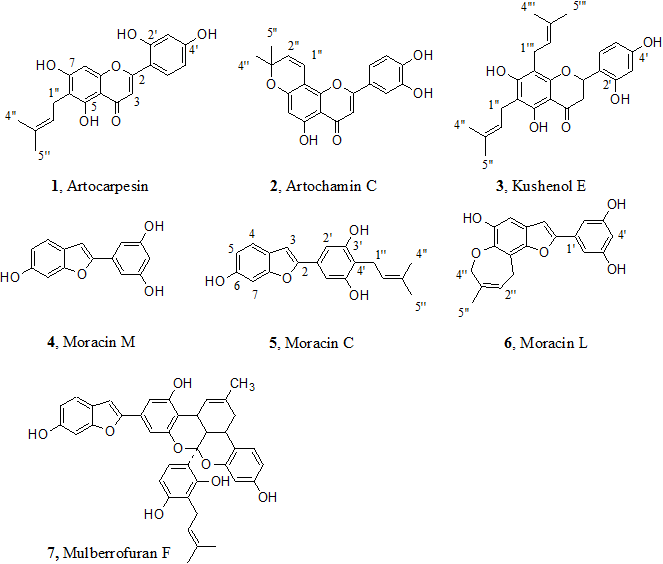
Fig.1. Structures of the compounds isolated from Morus mesozygia
ACKNOWLEDGEMENTS
This investigation was supported by a grant from the Agence Universitaire de la Francophonie (A.U.F.). We gratefully acknowledge the practical help of Mr. NANA Victor of the National Herbarium of Cameroon for his assistance for the identification and collection of plant material.
REFERENCES
Adjanohoun E, Ahyi MRA, Ake-Assi L, Elewude JA, Dramane K, Fadoju SO, Gbile ZO, Goudole E, Johnson CLA, Keita A, Morakinyo O, Ojewole JAO, Olatunji AO, Sofowora EA (1991). Traditional Medicine and Pharmacopoeia. Contribution to Ethnobotanical Floristic Studies in Western Nigeria. Organization of African Unity, Scientific Technical and Research Commission Lagos, Nigeria..
Baumgartner B, Clemens AJ, Wright AD, Rali T, Sticher O (1990) An Antimicrobial alkloid from Ficus septica. Phytochemistry. 29: 3327-3330.
Berhaut J (1979). Flore Illustrée du Sénégal. Gouvernement du Sénégal, Ministère du développement rural (Ed.), Dakar.
Burkill HM (1997). The useful plants of west tropical Africa. 2nd Ed., Families M-R. Royal Botanic Gardens Kew 4.
Kang J, Chen RY, Yu DQ (2006). Five new Diels-Alder type adducts from the stem and root bark of Morus mongolica. Planta Medica. 72: 52-59.
Kapche WGDF, Fozing CD, Donfack JH, Fotso WG, Amadou D, Tchana NA, Bezabih M, Moundipa FP, Ngadjui TB, Abegaz BM (2009). Prenylated arylbenzofuran derivatives from Morus mesozygia with antioxidant activity. Phytochemistry. 70: 216-221.
Kijjoa A, Cidade M H, Pinto MMM, Gonzalez TGM, Anantachoke C, Gedris T E, Herz W (1996). Prenylflavonoids from artocarpus elasticus. Phytochemistry. 43: 691-694.
Kuete V, Fozing DC, Kapche WFGD, Mbaveng AT, Kuiate JR, Ngadjui BT, Abegaz BM (2009). Antimicrobial activity of the methanolic extract and compounds from Morus mesozygia stem bark. Journal of Ethnopharmacology. 124: 551-555.
Kuypers K, Cos P, Ortega-Barria E, Van den Berghe D, Maes L (2006). Bioassays for some Parasitic Protozoa: Screening Concepts and Standard in Vitro and in Vivo Laboratory Models, in Gupta, M.P., (ed.), Biological screening of plant constituents: training manual, International Centre for Science and High Technology Trieste. 7-18.
Lambros, C., Vanderberg, JP (1979). Synchronization of Plasmodium falciparum erythrocytic stages in culture. Journal of parasitology.: 65 : 418-420.
McAllister GD, Hartley RC, Dawson MJ, Knaggs AR (1998). Total synthesis of Moracin C. Journal of the Chemical Society. 1: 3453-3457.
Mizuno M, Tanaka T, Tamura KI, Matsuura N, Iinuma M, Phengklai C (1990). Flavonoids in the roots of Euchresta horsfieldii in Thailand. Phytochemistry. 29: 2663-2665.
Muñoz V, Sauvain M, Mollinedo P, Callapa J, Rojas I, Gimenez A, Valentin A, Mallié M (1999). Antimalarial activity and cytotoxicity of (-)-roemrefidine isolated from the stem bark of Sparattanthelium amazonum. Planta Medica. 65: 448-449.
Ngouamegne TE, Soh FR, Ngouela S, Boyom FF, Rohmer M, Tsamo E, Gut J,Rosenthal JP (2008) Endodesmadiol, a friedelane triterpenoid, and other Antiplamodial compounds from Endodesmia calophylloides. Chemical and Pharmaceutical Bulletin. 56: 374-377.
Ribaut C, Berry A, Chevalley S, Reybier K, Morlais I, Parzy D, Nepveu F, Benoit-Vical F, Valentin A (2008). Concentration and purification by magnetic separation of the erythrocytic stages of all human Plasmodium species. Malarial Journal. 5: 7-45.
Roumy V, Garcia-Pizango G, Gutierrez-Choquevilca AL, Ruiz L, Jullian V, Winterton P, Fabre N, Moulis C, Valentin A (2007). Amazonian plants from Peru used by Quechua and Mestizo to treat malaria with evaluation of their activity. J. Ethnopharmacol. 112: 482–489.
Sachs J., Malaney P., (2002). Nature (London). 415: 680—685
Sheu YW, Chiang LC, Chen IS, Chen YC, Tsai IL (2005). Cytotoxic flavonoid and chromenes from Ficus formosana. Planta Medica. 71: 1165-1167.
Singab ANB, El-Beshbishy HA, Makiko Y, Taro N, Toshio F (2005). Hypoglicemic effect of Egyptian Morus alba root bark extract: Effect on diabetes and lipid peroxidation of streptozocin-induced diabetic rats. Journal of Ethnopharmacology. 100: 333-338.
Soforowa EA (1983) Medicinal plants and traditional medicine in Africa. John Wiley and Sons Ltd., London.
Soh PN, Benoit-Vical F (2007). Are West African plants a source of future antimalarial drugs?. Journal of Ethnopharmacology. 114: 130-140.
Takasugi M, Nagao S, Masamune T, Shirata A, Takahashi K. Structures of Moracins E, F, G and H (1979). New phytoalexins from diseased Mulberry. Tetrahedron Letters. 48: 4675-4678.
Trager W, Jensen JB (1976). Human malaria parasites in continuous culture Science. 193: 673–675.
Wang YH, Hou AJ, Chen L, Chen DF, Sun HD, Zhao QS, Bastow KF, Nakanish Y, Wang XH, Lee KH (2004). New isoprenylated flavones, Artochamins A-E, and cytotoxic principles from Artocarpus chama. Journal of Natural Products. 67: 757-761.
WHO, (2002). Report on infectious diseases, removing obstacles to healthy development, World Health Organization, Geneva, Switzerland.
Zelefack F, Guilet D, Fabre N, Bayet C, Chevalley S, Ngouela S, Lenta DB, Valenti A, Tsamo E, Dijoux-Franca MG (2009). Cytotoxic and antiplasmodial xanthones from Pentadesma butyracea. Journal of Natural Products. 72: 954-957.
|
Cite this Article: Zelefack F, Guilet D, Alexis V, René CSF, Blaise K, Séverine C, Ngouela SA, Tsamo E, Fabre N, Marie-Geneviève DF (2012). Antiplasmodial and cytotoxic activities of flavonoids and arylbenzofuran derivatives from Morus mesozygia. Greener Journal of Biological Sciences, 2(2): 020-024, http://doi.org/10.15580/GJBS.2012.2.08241250. |