|
Greener Journal of Epidemiology and Public Health
Vol. 8(1),
pp. 24-30, 2020
ISSN: 2354-2381
Copyright ©2020, the copyright of this article is
retained by the author(s)
https://gjournals.org/GJEPH
|

|
Knowledge, Attitudes and Behaviors of Healthcare
Workers on COVID 19 in State Specialist Hospital Gombe
(SSHG)
1Lynn Maori; 1Maikudi Haruna; 2Kabilis D.E; 3Emmanuel Peter;
4Dr. Lamingo John; 5Zainab Agabus; 6Dr Japhet
Joel Kalang; 7Grace Audu;
8Zainab Umar
1. Microbiology Department, State Specialist Hospital Gombe
2. General Outpatient Department, State Specialist Hospital Gombe
3. Gombe State College of Health
Sciences and Technology, Kaltungo.
4. State Specialist Hospital, Gombe
5. General Hospital Talasse, Balanga,
Gombe State
6. Department
of Veterinary Medicine, Surgery and Radiology, University of Jos Plateau State
7. Snakebite Treatment and Research Hospital Kaltungo,
Gombe State
8. General Hospital Talasse, Microbiology Department
|
ARTICLE INFO
|
ABSTRACT
|
|
Article No.: 052620076
Type: Research
|
Background:
Healthcare workers (HCWs) form a significant risk group for infection of
Corona virus. Objectives: The aim of this survey was to assess
the knowledge, attitude and behavior of HCWs in the State Specialist Hospital
Gombe on coronavirus. Methods: 44
HCWs from different department in the State Specialist Hospital Gombe were randomly invited to fill a questionnaire
developed to cover the survey objectives from 23rd March to 6th
April 2020. The response rate was 100%. Descriptive statistics was used to
summarize the responses. Results: A total of 38.6% were Medical
Laboratory Scientist, 36.6% were Nurses and 9.09% were Pharmacists. The most
common sources of Coronavirus (COVID-19) information were the Main stream
Media (TV) which have 20.5% and 18.2% of Social media (Facebook, WhatsApp etc.). Only 59.1% of HCWs are aware of the
Infection Prevention and Control program in the Hospital. About 97.7% agreed
that HCWs are at greater risks of been infected by the novel corona virus.
95.5% of HCWs reported that they are worried that one of their family members
may get infected. Conclusions: The knowledge about emerging
infectious diseases was poor and there is need for further education and
re-training programs particularly in the use of personal protective
equipment, the operations of the quarantine and isolation unit and infection
control measures. The self-reported infection control practices were
sub-optimal and seem to be overestimated.
|
|
Accepted: 27/05/2020
Published: 27/06/2020
|
|
*Corresponding Author
Lynn Maori
E-mail: lynnmaori@ gmail. com
|
|
Keywords: Corona Virus; Attitudes; Behaviors;
Emerging Infectious Diseases; Health Care Workers; Knowledge; Practice
|
|
|
|
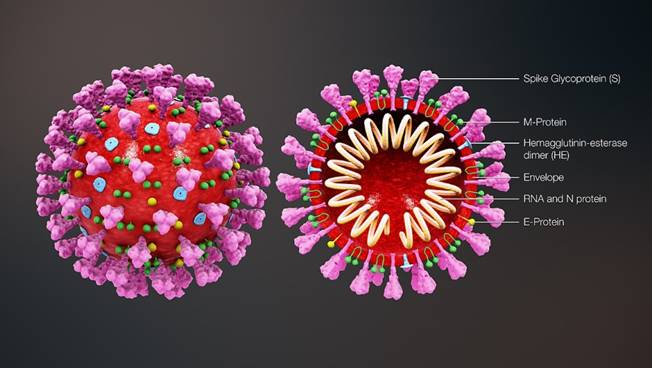
Human
coronaviruses were discovered in the 1960s [5]. The earliest ones studied were
from human patients with the common cold, which were later named human coronavirus 229E and human coronavirus OC43 [6]. They were first imaged by Scottish virologist June Almeida at St. Thomas Hospital in London [7]. Other human coronaviruses had since
been identified, including SARS-CoV in 2003, HCoV NL63 in 2004, HKU1 in 2005, MERS-CoV in 2012, and SARS-CoV-2 in 2019. Most of these have involved serious respiratory tract infections [8], [9].
Multiple
epidemic outbreaks occurred during 2002 (SARS) with ~800 deaths and 2012
(Middle East Respiratory Syndrome: MERS-CoV) with 860
deaths [10], [11]. Approximately eight years after the MERS-CoV
epidemic, the current outbreak of novel coronavirus (COVID-19) in Wuhan City,
Hubei Province of China, has emerged as a global outbreak and significant
public health issue [12]. On 30 January 2020, the World Health Organization
(WHO) declared COVID-19 as a public health emergency of international concern
(PHEIC) [13]. Astonishingly, in the first week of March, a devastating number
of new cases have been reported globally, emerging as a pandemic. As of 9 March
2020, more than 110,000 confirmed cases across 105 countries and more than 3800
deaths have been reported [14].
The
COVID-19 is spread by human-to-human through droplets, feco-oral,
and direct contact, with an incubation period of 2-14 days [14]. So far, no
antiviral treatment or vaccine has been recommended explicitly for COVID-19.
Therefore, applying the preventive measure to control COVID-19 infection is the
utmost critical intervention. Healthcare workers (HCWs) are the primary section
in contact with patients and are an important source of exposure to the
infected cases in the healthcare settings, thus, expected to be at a high risk
of infections. By the end of January, the WHO and CDC (Centers for Disease
Control and Prevention) published recommendations for the prevention and
control of COVID-19 for HCWs [15], [16].
METHODOLOGY
Sample
This cross-sectional, descriptive study of a representative
sample of HCWs (Medical Laboratory Staff, Pharmacists and Nurses) in State
specialist Hospital Gombe. The survey was conducted between 23rd
March to 6th April 2020. The sample size for the study is 44.
The factors taken into consideration were the age, sex, department,
source of information and relative number and sufficient knowledge of corona
virus.
The
study followed the principles of the Helsinki Declaration and ethical approval
was obtained and written consent was obtained from all participants.
Questionnaire interview
A
standardized questionnaire was developed, distributed and completed by all
participants inside their department during the period of study. [16],[17].
The
questionnaire comprised of 2 parts addressing knowledge and attitude of HCWs
regarding COVID 19. The first part covered demographic data such as age, sex,
department and participants’ source of knowledge on COVID 19. The second part
assessed the knowledge of HCWs by asking questions about the viral infection,
mode of transmission, symptoms, incubation period, hand hygiene and risk of
infection. The third part of the questionnaire assessed the attitude of HCWs
regarding COVID 19 using a set of 5 yes/no questions.
Statistical analysis
Data
were coded, validated and analyzed using SPSS, version 23. Frequencies and
proportions were used to present the data obtained.
93.2%
of the HCW are of the opinion that the prevalence of COVID 19 can be reduced by
actively participating in the hospital infection control program. 42(95.5%) of
HCWs are worried that a family of theirs may be infected with COVID 19. All the
respondents 44(100%) agreed that transmission of COVID 19 can be prevented
using standard and isolation precaution. 26(59.1%) of HCWs are not aware of the
presence of infection control program in Gombe State
while 18(40.9%) agreed to the fact that they are aware of the infection control
program in the State. All the correspondents have also agreed that they would
have taken vaccine for COVID 19 had it been is available as shown in Table 4
DISCUSSION
The
findings in our study showed that HCWs had a high level of knowledge and a
positive attitude towards the COVID-19 outbreak. We found that the majority of
the respondents know the COVID19 is a global issue and gathered their
information through a variety of media such as television (79.2%), social media
(91.1%), the website of hospital/Health Ministry
(82.6%). Currently, COVID-19 is a global discussion
topic in the media and among the public, especially among HCWs and patients.
With current mounting of COVID-19 transition raised tensions on everyone,
including health officials and health system. For this reason, we investigated
HCWs knowledge, attitude and knowledge towards the prevention and control of
COVID-19 during a global epidemic.
Knowledge of COVID-19 varied across different categories of
HCWs. Our study revealed that HCWs have insufficient knowledge about COVID-19
but showed positive perceptions to prevent COVID-19 transmission. We also found
that more than 33% of the HCWs use official government websites as a primary
source of information about COVID19. This indicates that COVID-19 related
updates posted online by the official government health authorities had shown
to have a positive implication for improving HCWs knowledge levels. Relying on
authentic sources is a key factor to believe the transparent information about
the emerging COVID-19 infection and is essential for HCWs preparedness and
response. However, a finding of considerable concern is that most HCWs (60%)
used social media as the major source of information. The health authorities
and scientists particularly warned on the wide-spread misinformation of
COVID-19 as a serious concern causing xenophobia across the world [12], [17], [18].
In this regard, HCWs are expected to practice with careful evaluation of
COVID-19 related information and should use scientific and authentic
information sources.
The findings of this study suggest significant knowledge gaps
between the amount of information available about COVID-19 and the depth of
knowledge among HCWs, particularly about the mode of transmission and
incubation period of COVID-19. Also, many allied health workers had inadequate
knowledge. This is unfortunate, as the surge of COVID-19 is devastating
globally, and a large number of resources are provided to the healthcare
authorities to educate HCWs to improve their knowledge about COVID-19 was
immense.
Generally, most
participants had no idea about the existence of infection prevention and
control program of COVID19. However, discrepancies were identified across
different categories of HCWs in their perceptions. For instance, only half
(52%) of the HCWs aged between 45-65 years old perceived that the symptoms of COVID-19 appear as early as 2 to 14 days (p<0.05) and more than a quarter of
the medical students though that eating meat during the outbreak is not safe.
Around 20% of the allied health workers believed that the flu
vaccine is sufficient for COVID-19 prevention. Finally, a vast majority of HCWs
strongly agreed that maintaining hygiene activities, reporting the recent
travel history when individuals are sick, and cleaning the equipment used in
the wet markets are strongly recommended in the control and prevention of
COVID-19.
LIMITATIONS
We
used WHO training material for detection, prevention, response, and control of
COVID19 to develop a validated questionnaire. The developed questionnaire
used was not an open-ended question.
However, the study
has some limitations that should be considered. This is a cross-sectional study
conducted online among HCWs during alarming cases reported globally in the
first week of March 2020. Besides, the data presented in this study are
self-reported partly depending on respondents' honesty and ability to recall.
CONCLUSION
We
identified a significant gap constituting the source of information, poor
knowledge levels, and discrepancies in the perceptions about COVID-19 among our
study participants. As the global threat of
COVID-19 continues to emerge, greater efforts through educational campaigns
targeting HCWs and a wide reach population beyond the borders are urgently
needed.
The authors declare no conflict of interest. This work is self-funded and
there is no competing financial interest of the authors.
ACKNOWLEDGMENT
We thank all the study participants for their
voluntary participation and providing the essential information.
REFERENCES
1
"Il était une fois
les coronavirus".
Réalités Biomédicales (in
French). 2020-03-27. Retrieved 2020-04-18.
2
Kahn
JS, McIntosh K (November 2005). "History and recent advances in
coronavirus discovery". The Pediatric Infectious Disease Journal. 24 (11 Suppl): S223–7,
discussion S226. doi:10.1097/01.inf.0000188166.17324.60. PMID 16378050.
3
World Health Organization. Infection
prevention and control during health care when novel coronavirus (nCoV) infection
is suspected: interim guidance, January 2020. World Health Organization; 2020.
Available: https://www.who.int/publications-detail/infectionprevention-and-control-during-health-care-when-novel-coronavirus-(ncov)-infection-issuspected-20200125
(Accessed on 12 February 2020).
4
Lai CC, Shih TP, Ko
WC, Tang HJ, Hsueh PR. Severe acute respiratory
syndrome coronavirus 2 (SARS-CoV-2) and corona virus disease-2019 (COVID-19):
the epidemic and the challenges. Int J Antimicrob Agent. 2020:105924.
Doi:10.1016/j.ijantimicag.2020.105924
5
Sturman LS, Holmes KV (1983-01-01). Lauffer
MA, Maramorosch K (eds.). "The
molecular biology of coronaviruses". Advances in Virus Research. 28: 35–112. doi:10.1016/s0065-3527(08)60721-6. ISBN 9780120398287. PMC 7131312. PMID 6362367. [T]hese viruses displayed a
characteristic fringe of large, distinctive, petal-shaped peplomers
or spikes which resembled a crown, like the corona spinarum
in religious art; hence the name coronaviruses.
6
Estola T (1970). "Coronaviruses, a New Group of Animal RNA
Viruses". Avian Diseases. 14 (2): 330–336. doi:10.2307/1588476. ISSN 0005-2086. JSTOR 1588476.
7
Fabricant
J (1998). "The Early History of Infectious Bronchitis". Avian Diseases. 42
(4): 648–650. doi:10.2307/1592697. ISSN 0005-2086. JSTOR 1592697.
8
Decaro N (2011). "Gammacoronavirus".
In Tidona C, Darai G (eds.). Gammacoronavirus‡: Coronaviridae. The Springer Index of Viruses. Springer.
pp. 403–413. doi:10.1007/978-0-387-95919-1_58. ISBN 978-0-387-95919-1. PMC 7176155.
9
McIntosh
K (1974). "Coronaviruses: A Comparative Review". In Arber W, Haas R, Henle W, Hofschneider PH, Jerne
NK, Koldovský P, Koprowski
H, Maaløe O, Rott R (eds.).
Current Topics in Microbiology and Immunology / Ergebnisse
der Mikrobiologie und Immunitätsforschung.
Current Topics in Microbiology and Immunology / Ergebnisse
der Mikrobiologie und Immunitätsforschung.
Berlin, Heidelberg: Springer. p. 87. doi:10.1007/978-3-642-65775-7_3. ISBN 978-3-642-65775-7.
10
Li Q, Guan X, Wu P, Wang X, Zhou L, Tong Y, Ren R, Leung KS, Lau EH, Wong JY, Xing X. Early
transmission dynamics in Wuhan, China, of novel coronavirus–infected pneumonia.
New Engl J Medi.
2020 Jan 29. Doi: 10.1056/NEJMoa2001316.
11
Bhagavathula AS, Shehab A. The
story of mysterious pneumonia and the response to deadly novel coronavirus (2019-nCoV): So far!. Emirates Med J 2020;1:7-10.
12
Lai CC, Shih TP, Ko
WC, Tang HJ, Hsueh PR. Severe acute respiratory
syndrome coronavirus 2 (SARS-CoV-2) and corona virus disease-2019 (COVID-19):
the epidemic and the challenges. Int J Antimicrob Agent. 2020:105924.
Doi:10.1016/j.ijantimicag.2020.105924.
13
Eurosurveillance Editorial
Team. Note from the editors: World Health Organization declares novel
coronavirus (2019-nCoV) sixth public health emergency of international concern.
Euro Surveill. 2020 Feb;25(5):200131e.
14
World Health Organization. Novel coronavirus
(COVID-19) situation. Available online:https://https://experience.arcgis.com/experience/685d0ace521648f8a5beeeee1b9125cd
15
Chapter 24 - Coronaviridae". Fenner's Veterinary Virology
(Fifth ed.). Academic Press. 2017. pp. 435–461. doi:10.1016/B978-0-12-800946-8.00024-6. ISBN 978-0-12-800946-8.
16
Centers for disease control and prevention.
Update and interim guidelines on outbreak of 2019 Novel coronavirus
(2019-nCoV). Available online: https://emergency.cdc.gov/han/han00427.asp.
17
Thomas Z.
Misinformation on coronavirus
causing 'infodemic'. https://www.bbc.com/news/technology-51497800
(Accessed 09 March 2020).
18
Mejova Y, Kalimeri K. Advertisers Jump on Coronavirus Bandwagon:
Politics, News, and Business. arXiv
preprint arXiv 2020:2003.00923.