|
Greener Journal of Education and Training Studies
Vol. 6(1), pp. 1-13, 2020
ISSN: 2276-7789
Copyright ©2020, the copyright of this article is
retained by the author(s)
https://gjournals.org/GJETS
|

|
Education of Internally Displaced People
(IDPS) and Refugees: The Need for the Development of a National Relief
Education Pedagogy in Cameroon
Brenda Nachuah Lawyer (PhD)
Faculty of Letters and Social Sciences, University of
Douala, Douala Cameroon.
|
ARTICLE INFO
|
ABSTRACT
|
|
Article No.: 0531200776
Type: Research
|
Whether local, national, or international in
scope, times of crisis can have a significant impact on the college
classroom. The students need not be directly related or personally involved
to experience anxiety or trauma. Over 17 million children were estimated to
be living in internal displacement and refugees as a result of conflict and
violence at the end of 2018, among them more than 6.2 million girls and 6.4
million boys of primary or secondary school age. In many countries affected
by conflict such as Cameroon, internal displacement and refugees places huge
strains on the already inadequate education facilities and many displaced
children miss out on their schooling. Internally displaced children face
significant challenges in exercising their right to education, from
infrastructure, capacity and resource constraints to persistent insecurity,
social tensions and discrimination. This creates a foundation for the
conscription of young school dropouts and inhibits efforts towards
sustainable peace. Therefore, an urgent need for more proactive steps by
education authorities to develop national pedagogic plans for relief or
emergency education is required. In Cameroon, the recent escalation of the sociopolitical crisis in the North West and South West
Regions, the Boko Haram conflict in the Far North Region and the spill over
of the conflict in the Central African Republic in the East Region of the
country, have created a state of emergency in the education of young
children which exposes the pedagogic weakness of state educational
authorities towards the effective provision of relief education to
Internally Displaced Persons (IDPs) and Refugees. It would appear the state
has often been largely missing in action, as mostly humanitarian
organizations have been seen active in such educational intervention roles.
This paper therefore examines government's current pedagogic approach
towards providing emergency education for IDPs and Refugees and the need for
a sustainable national pedagogic plan for relief/emergency education
interventions in the country.
|
|
Accepted: 01/06/2020
Published: 28/07/2020
|
|
*Corresponding Author
Brenda Nachuah Lawyer
E-mail: bdiangha@ gmail.
com
|
|
Keywords: Relief
Education; IDPs; Refugees and Relief Education Pedagogy
|
|
|
|
INTRODUCTION
The predicaments that lead to displacement are generally
complex. They result from a range of factors, including political instability,
conflict, violence, inequality, and poverty, and are often exacerbated by
natural disasters, health emergencies, and environmental instability (FAO
2016). Many such emergencies are protracted: long-term, and characterised
by recurrent conflict and/or natural disaster, weak governance capacity,
chronic food crises, etc. (FAO 2016). Crawford et al. (2015) define ‘protracted
displacement’ broadly as “a situation in which refugees and/or IDPs have been
in exile for three years or more, and where the process for finding durable
solutions, such as repatriation, absorption in host communities or settlement
in third locations, has stalled”; they note that it can be difficult to
determine a cut-off date for when displacement can be considered protracted,
resulting in some disagreements between international agencies and
scholars.
An essential tenet underlying the guiding principles on
Internal Displacement is that the state obligation to protect and assist the
internally displaced is based on existing international law, including settled
rules of international human rights law and, in situations of armed conflict
such as the current “Anglophone crisis” in Cameroon, international humanitarian
law. Human rights law sets out basic standards of protection and each state
owes to all citizens and persons living under its jurisdiction. These
obligations go beyond the protection of life and physical security to encompass
well-established and interrelated categories of civil, educational, political,
economic, social, and cultural rights. State authorities are required to
respect these rights by not interfering with their exercise; to protect them by
preventing foreseeable violations by private parties; and to fulfill them
through positive measures facilitating their exercise. In cases in which states
fail to meet these obligations, they are required to provide effective remedies
that serve to rehabilitate those adversely affected, guarantee that such
violations will not recur, and hold accountable those responsible.
Internal displacement is a growing phenomenon
particularly in Sub-Saharan Africa, the result of wars; instability, human
rights violations, disasters and climate change constitute the main trend of
events. According to Global Report on Internal Displacement (2019), more than
41 million people were internally displaced as a result of conflict and violence
as of the end of 2018. Disasters such as storms, floods and earthquakes
triggered more than 17 million new displacements during the year, with China
and the Philippines each accounting for 3.8 million. Over 17 million children
were estimated to be living in internal displacement as a result of conflict
and violence as of the end of 2018, among them more than 6.2 million girls and
6.4 million boys of primary or secondary school age. Millions more were thought
to be displaced by disasters.
In many countries affected by conflict such as Cameroon,
internal displacement places huge strains on already inadequate education
infrastructure and many displaced children miss out on their schooling. For
example, Global Report on Internal Displacement (2019) indicates that In Iraq,
only 32 per cent of internally displaced children and adolescents had access to
some form of education in 2015. In Yemen, only one third of internally
displaced school-age children in Lahj governorate were
enrolled in school in 2014. Much of the displacement associated with disasters
takes place in the form of pre-emptive evacuations that last a matter of days,
but events that cause significant damage and destruction may trigger
displacement that lasts for years while communities and infrastructure are
rebuilt, disrupting education in process. The potential for disruption is also
high in areas prone to repeated or cyclical disasters. In Bangladesh, disasters
such as storms and floods damage about 900 schools each year. When sea-level
rise or other slow-onset climate change impacts force families from their
homes, their displacement may be permanent, and such phenomena are expected to
become one of the main drivers of displacement in the coming decades. The World
Bank estimates that 140 million people will be internally displaced by
slow-onset climate change impacts by 2050.
Since 2017, violent clashes in Cameroon between the
military and armed separatists have driven thousands of Cameroonians into
internal displacement and over the border into Nigeria. The displaced, most of
whom are women and children, face a grave humanitarian situation in both
countries. Having fled with very little, their presence in impoverished host
communities is straining food resources and already limited health, education
and washes facilities in these areas. As of October 2018, OCHA estimated there
were 437,000 internally displaced people (IDPs) in Cameroon, 246,000 of them in
the Southwest Region, 105,000 in the Northwest Region, and 86,000 in the
Littoral and West Regions. In addition to triggering internal displacement in
the Northwest and Southwest Regions of Cameroon, the ongoing conflict has also
forced over 35,000 Cameroonians to seek asylum in Nigeria. As the conflict
persists in Cameroon, UNHCR anticipates that the influx into Southeast Nigeria
will continue, with 20,000 refugees projected to flee in the coming months.
This would result in an increase in the overall number of Cameroonian refugees
to more than 50,000 by the end of 2019.
The different humanitarian crises in Cameroon, in
particular the repeated and violent attacks by armed separatist in the North
west and South west regions and Boko Haram in the Northern regions, have
exerted a harsh price on the provision of education for the country’s youths
(aged 5-18 years), as well as those who were forced to flee their homes and
cross the border. Today, only one in five refugees or internally-displaced
children has access to education. In the Far North, no less than 144 schools
have been closed, forcing 40,000 pupils to seek education outside of their
communities. In 2017, around 450, 000 children of school age (3 to 17 years)
will require humanitarian assistance in the East, Adamaoua,
North and Far North regions. This
paper therefore is a culminated effort to develop national relief education
pedagogy in Cameroon
Situating
the statement of the problem
Education was recognised as a human right by the global community in the
Universal Declaration of Human Rights in 1948. Since then, education researchers
and practitioners have advocated for education as a key element of development,
citing evidence of the value of quality education as an enabling right or an
effective mechanism through which other rights can be accessed. Universal
Primary Education (UPE) is now an international priority, enshrined in former
and current global agendas, including the Education for All (EFA) movement, the
Millennium Development Goals (MDGs), and, most recently, the Sustainable
Development Goals (SDGs). While rapid and significant progress has been made
towards primary enrolment, it has flat-lined at around 90 per cent in low and
middle income countries (LMICs) such as Cameroon. The last 10 per cent of
primary school-age children are proving very hard to reach. Further, half of
the world’s children who have not mastered basic literacy or numeracy are
actually in school, which suggests there are major problems with educational
quality (UNESCO 2014).
These problems with
access and quality disproportionately affect children from mobile populations,
including internally displaced persons (IDPs) as a result of conflict or
natural disaster, and refugees. Such children are often invisible in national
and global data (UNESCO 2010) and largely unaccounted for in development policies,
which are implicitly designed for people who are mostly sedentary and/or who
have a legal, permanent residential claim to the area in which they live
(Danaher et al. 2009).
The ambitious SDG
agenda, with its 17 goals, explicitly pledges in its framing documents to
‘leave no one behind’ and to attempt to ‘reach the furthest behind first’ (UN
2015). Within education, this requires a concerted effort to understand the
many challenges faced by internally displaced and refugees in accessing
education, and to develop innovative, relevant, cost-effective and sustainable
strategies and interventions to provide high-quality primary education
opportunities for these children. Such efforts are imperative in order to
prevent the emergence of so-called ‘lost generations’ or children who miss out
on an entire formal school cycle. While efforts to extend educational services
to IDPs and refugees have expanded during the EFA period, there remains a
paucity of analysis on the effectiveness of past and current programmes and methodologies used to deliver education
services to IDPs and refugees in Cameroon. Without an extensive survey of
existing and emerging research and detailed analysis, there is a gap in the
evidence, which prevents the identification of quality and cost-effective
approaches that are worth investment in terms of time, money and human
resources, and that can be modified and/or scaled up to meet specific demands
from IDPs and refugees in Cameroon.
Understanding Cameroon as A Triple
Humanitarian Crisis context
Cameroon today suffers from a complex and unprecedented
triple humanitarian crisis. Firstly, violence perpetrated by Boko Haram in
North-Eastern Nigeria, as well as cross-border raids and suicide bombing
attacks in Cameroon, have resulted in the mass influx of Nigerian refugees, as
well as the displacement of hundreds of thousands of Cameroonians who have been
forced to flee their homes. Secondly, the ongoing crisis in the Central African
Republic had at the outset prompted an influx of refugees seeking protection
and assistance in the East, Adamaoua and North
regions of Cameroon. Thirdly, In the South-West and North-West regions, the
escalation of fighting between non-state armed groups and defense and security
forces has also led to major destructions of villages, infrastructure and
instilled a climate of insecurity with negative impact on the civilian
population and the enjoyment of all of the human rights. As a result, about
350, 0002 people are estimated displaced across the South-West and North-West
regions of Cameroon, living mostly in surrounding forests and villages in
search of safer areas. Others are living in host communities scattered in other
parts of the country including urban areas. An additional 26, 8913 have been
forced to flee into neighbouring Nigeria. These
populations are in dire need of humanitarian assistance and protection. Their
deteriorating living conditions, including inability for children to attend
schools, difficulties to access food, water, health and other basic needs and
services coupled with reports of gender-based violence faced by women IDPs, and
other abuses and human rights violations require robust action to address their
situation.
In 2016, the UN
facilitated access to educational establishments for 53,174 refugee children,
including 23,790 from the Central African Republic, 14,384 from Nigeria and
15,000 internally displaced Cameroonians. In addition, 96,675 children (of whom
54, 852 were girls) benefited from learning materials distributed by the UN
across 327 schools, while 40 teachers working in temporary learning and
protection spaces for children in the refugee camps of the East and Adamawa
regions received further training. In the East region, 70 young pairs of
educators and counselors received training within secondary teaching
establishments with the help of UN agencies. A programme
entitled ‘Children of Peace’ targeting refugees, IDPs and children from the
host communities in the Far North region was also launched.
This programme aims at improving security, training teachers on
psycho-social support (PSS) and providing children who have experienced
violence with access to a range of services, from counseling to re-integration
assistance. An estimated total of 400 teachers so far have been trained in the
provision of PSS services and conflict and disaster risk reduction (C/DRR)
strategies. In the East and Center regions, the UN trained 70 coaches and
teachers and 405 peer educators in Comprehensive Sexuality Education which in
turn benefited 18,240 adolescents and young people. 14 multifunctional centers
for youth promotion in the same regions integrated comprehensive sexuality
education into trade skills programming, thereby preparing youth simultaneously
for responsible parenthood and economic independence.
1n 2019,
the UN, together with ECHO, and the Ministry of Education, joined hands in
training hundreds of teachers and supervisors in child-centered pedagogy and
supportive supervision and monitoring in
the Minawao refugee camp in the Far North region.
While some of the teachers are Cameroonians, others are themselves refugees
from Nigeria or internally displaced Cameroonians who fled their homes to
escape the Boko Haram insurgency. One of them, Aïcha,
was the head teacher of a nursery school in Nigeria, where she taught for nine
years. “Boko Haram entered our area. They killed many people. We heard there
was peace in Cameroon. So I told my husband: ‘let’s just run from this area’.
As part of their training, the teachers are taught how to deal with children
who had undergone severe trauma and who may be experiencing difficulties in
school as a result. “The challenge is to show these teachers that they are not
like other teachers who are in yaounde,
Douala, Garoua or Maroua,”
says Ousmanou Adamou Garga,
from the Regional Delegation for Basic Education
“These
teachers need specific skills. They need to adapt their teaching methods,
because they have in front of them children who have particular needs. They need
to have specific skills to allow all the children in the camp to be in school. Because the place for children is not in the market or in the
refugee camp but at school.” In the town of Maroua,
Martin, a Cameroonian IDP who had himself fled the violence, says that
sensitivity is of the utmost importance when dealing with children who had
experienced displacement and violence. In training, “we were taught how to
welcome these children, who are chased out by Boko Haram. We should not rush
them: when they arrive, they feel unhappy.
We must do everything to put them in a state of mind in which they won’t
think about what they have experienced.” As part of the ‘Children of Peace’
project, the UN is supporting the Ministry of Basic Education in Cameroon to
provide a safe learning environment and quality education to more than 31,000
children.
Trajectories and duration of forced
displacement
Most displacement crises last for years, if not decades.
According to recent studies, once displaced for six months, refugees are highly
likely to end up in a state of protracted displacement. Over the past decade,
two fifths of all refugees were displaced for three or more years at any one
time (Crawford et al. 2015). Further, in two thirds of all countries monitored for
conflict-induced displacement in 2014, at least half of all internally
displaced persons (IDPs) had been displaced for over three years. It is often
assumed that forced displacement due to disasters will be short term; however,
although the data is limited, IDMC evidence suggests that disasters can also
lead to protracted displacement, such as in Haiti,4
where conflict and disasters overlap (Hyndman 2011).
Most forcibly displaced people in protracted exile are
unlikely to see what is known as a ‘durable’ solution to their displacement
(i.e. returning ‘home’, integrating into the place of exile, or resettling
elsewhere) (Crawford et al. 2015). It is often difficult for refugees to return
to their country of origin;5 only small numbers of
refugees are successful in integrating in the countries that do accept refugees
(McCarthy and Vickers 2012), and only 1% of refugees globally are resettled to
a third country (UNHCR 2014b). Many refugees and IDPs have experienced multiple
displacements, such as the IDPs in Kivu provinces in DRC (IDMC 2015a), and
Palestinian refugees living in Syria who have been further displaced by the
conflict there.
Education and forced displacement
Forced displacement inevitably leads to a temporary or
permanent halt in a child’s school career. Education opportunities in
situations of displacement are often very limited, and refugees and IDPs face
numerous additional barriers to accessing education (see Sects. 3 and 4). In
general, forcibly displaced persons are less likely to access education than
their non-migrant peers (Dryden-Peterson 2011).
However, forced displacement does not universally lead to a reduction in
access to education; where families are forced to flee from areas with very few
schools to urban areas or organised camps with more
schools, displacement can in fact increase access to education (Ferris and
Winthrop 2010).
Research suggests that non-formal and formal education
opportunities of a reasonably high standard can provide a certain level of
psychosocial protection and support for forcibly displaced peoples, as regular
education activities can help to restore a sense of stability and hope among
affected populations (Dryden-Peterson 2015, Shah 2015a). High-quality education
that emphasises learning and pays particular
attention to the varied needs of forcibly displaced peoples has the potential
for societal benefits, including community cohesion, in addition to individual
benefits (Dryden-Peterson 2015, McCorriston 2012).
The EiE community of practice emphasises
that education has lifesaving (short-term) and life-sustaining (longer-term)
aims (INEE 2016). However, research also indicates that the education generally
available for forcibly displaced persons is of such low quality that it
commonly fails to exercise this protective dimension (Dryden-Peterson 2011).
As a result of displacement, IDPs lose access to
educational facilities and services. Schools and training facilities in places
of origin are no longer safely accessible and may be destroyed, while teachers
and administrators are often dispersed. Arranging for education where IDPs find
themselves displaced is often complicated. If IDPs are located in camps or
grouped shelter that is remote or inaccessible to local population centers,
then primary education facilities (at least) must be built up from scratch
within the camp, an undertaking which is often complicated by lack of resources
and expertise. On the other hand, where IDPs do enjoy access to local school
systems, a number of other problems typically arise:
§
IDPs may suffer from discrimination because they do not
belong to the local ethnic, linguistic or religious majority group, or may
simply not understand the local language of instruction.
§
IDPs may have no other shelter options than collective
centers normally used by the local community as schools, presenting an obstacle
to education for both displaced and non-displaced children.
§
Where local schools are available, the arrival of large
groups of displaced children can lead to overcrowded classrooms, straining the
relationship with host communities.
§
Where local schools are located at a distance from IDP
settlements, traveling to school may be dangerous where the route goes via
mined areas or security checkpoints where children may be subject to harassment,
forced recruitment, or abduction.
§
IDPs often lack personal documentation; lack of
identification or records attesting to prior enrollment or the level of studies
that displaced children have completed can prevent them from registering
locally for education; such bureaucratic obstacles can also prevent displaced
teachers without access to proof of their qualifications from providing badly
needed instruction.
§
In some cases, local residency requirements and other
bureaucratic requirements can prevent enrollment of IDPs in local educational
facilities.
§
School fees, other costs such as books and uniforms, or
in some cases the need to pay bribes to teachers and administrators can render
education unaffordable for IDPs, in light of the impoverishment risk that
typically accompanies displacement.
§
Displaced children may find themselves either required to
abandon school in order to contribute to their family’s economic survival, or
to work so hard outside of school hours that their education suffers.
§
Displacement is often accompanied by physical or
psychological trauma in cases when children have been recruited as child
soldiers, witnessed atrocities, or been separated from family members. Under
such circumstances, displaced children’s ability to learn may be limited in the
absence of psycho-social care.
Table 1: Comparing education for IDPs and
Refugees
|
|
Refugees
|
IDPs
|
|
Causes of
displacement (according to UN definition)
|
Persecution
|
Armed conflict,
internal strife, systematic violations of human rights, or natural or man-
made disasters
|
|
Place of refuge
|
Outside their own
country
|
Within their own
country
|
|
Global numbers
(2015)
|
21.3 million
refugees
3.2 million asylum
seekers
|
40.8 million Displaced
by conflict, persecution, generalised violence, or
human rights violations (including 8.6 million newly displaced in 2015). This
figure does not include those displaced by natural disasters.
|
|
Bodies responsible
for ensuring the right to education
|
UNHCR, host
governments,
|
National governments
UNICEF for
returnees (UNHCR 1997)
|
|
Global legal
frameworks and conventions
|
1951 Convention and
1967 Protocol Relating to the Status of Refugees
|
1998 UN Guiding
Principles on IDPs (not legally binding)
|
|
Regional Instruments
|
1969 OAU convention
governing the specific aspects of refugee problems in Africa 1984 Cartagena
Declaration on Refugees
|
2009 African Union
Convention for the Protection and Assistance of Internally Displaced Persons
in Africa (Kampala Convention)6
|
|
Durable solutions
|
· voluntary repatriation
· integration into the asylum country,
· resettlement to a third country
|
ü
return and
reintegration in place of origin
ü
integration in the
area of displacement
ü
integration in
another part of the country
|
|
Monitoring
|
UNHCR/UNRWA
|
Responsibility of
national governments, collected by national governments and humanitarian organisations (e.g. UNICEF), collated by IDMC
|
|
Implementing bodies
|
UNHCR, host
governments, UNICEF, INGOs, NGOs, FBOs, UNRWA
|
National
governments, FBOs, UNICEF, UNHCR, INGOs
|
|
Coordinating bodies
|
UNHCR UNRWA
|
Cluster (global and
national), UN OCHA
|
Sources: UNHCR 2015a, UNHCR 2016i, IDMC 2015a, IDMC
2015b, Ferris and Winthrop 2011)
The educational trajectories experienced by displaced people
are generally interrupted, diverted, and/or stalled (Dryden-Peterson 2015).
Education is often planned as a temporary stop-gap measure in camps or urban
settlements; yet the reality is that many individuals will remain displaced for
a period equivalent to a complete schooling cycle. The likelihood that forcibly
displaced peoples are able to develop key literacy, numeracy, socio-emotional,
and vocational skills in makeshift learning environments is low. Individuals
who do return ‘home’, or resettle in a new place, are often not prepared to
(re)integrate into the formal schooling system, or do not have relevant or recognised education credentials, or face barriers to
school participation, including the language of the curriculum, discrimination,
past trauma, bullying, and exclusion (Dryden-Peterson 2015).
Table 1 compares refugees and IDPs according to global
numbers, legal frameworks and bodies involved with the monitoring and provision
of education. While there is a strong international legal framework for the
protection of refugees’ right to education, and two UN bodies mandated to
ensure that these rights are upheld, there is no equivalent legally binding
agreement or set of UN structures dedicated to upholding the rights of IDPs.
In order to ensure that IDPs can exercise their right
to education during and after displacement, domestic laws and policies should:
§
Guarantee
IDP children free and compulsory primary education and non-discriminatory
access to secondary education. Where free primary education has not yet been
introduced, education should be provided on at least as favorable a basis as it
would be for poor members of the host community.
§
Anchor
the right of IDPs to education during displacement in the general legal
framework for education as well as IDP laws and policies;
§
Integrate
education issues into a coordinated response to internal displacement;
§
Encourage
IDPs to participate in the design of education services and facilities;
§
Build
on the understanding of IDPs’ pre-displacement literacy rates and educational
practices;
§
Permit
IDPs, whenever possible, to enroll in local educational facilities in the
communities where they are displaced;
§
provide
IDPs with dedicated educational facilities without delay in cases where local
enrollment is not possible;
§
Provide
IDPs with separate instruction in their own language if they do not understand
the local language of education and if there is an immediate prospect that they
may be able to return. Otherwise, the possibility of local integration should
be facilitated through the availability of instruction in the local language.
§
Waive
formal documentation and local registration requirements that constitute an
obstacle to the education of internally displaced children or to the
recognition and recruitment of internally displaced teachers;
§
Waive
or subsidize fees and costs for equipment for IDPs on the basis of need on at
least as favorable a basis as they would be for poor members of the host
community;
§
Take
all necessary measures to ensure equal access to education for disadvantaged
groups, and particularly for women and girls as well as former child soldiers;
§
Adapt
school curricula for IDPs to provide information relevant to both their safety
security while displaced and their long-term reintegration;
§
Include
into school curricula the teaching of the principles of international human
rights and humanitarian law with a view to familiarize young people with the
notion of human dignity as an inviolable quality that must be respected, both
in times of peace and in times of armed conflict;
§
Take
into account the effect of psychological trauma and interrupted education
experienced in the course of displacement in the ways in which IDPs are placed
in classes and evaluated; where necessary, provide “bridging programs” to allow
displaced children to catch up with their peers;
§
Recruit
qualified teachers from among the IDP community, and encourage women to become
educators along with men;
§
In
the context of durable solutions, integrate IDPs into local school systems
wherever they choose to reside, guarantee access to education in all
situations, and take steps to prevent discrimination in relation to
surrounding, non-displaced communities.
Quality
of Refugee Education And Learning Outcomes
The
issue of education quality has increasingly become a global priority. While
access significantly improved between 1990 and 2015, many students who had been
in school for four to five years had still not acquired basic literacy (UNESCO
2015). Subsequently, the international community has adopted a goal to “ensure
inclusive and equitable quality education and promote lifelong learning
opportunities for all” as SDG 4 in the sustainable development agenda (UN
2016).
Increase
in education access for refugees often comes at the cost of quality
(Dryden-Peterson 2011). This is particularly evident where there is a choice
between educating refugees in camp schools versus national mainstream schools:
refugee camp schools may have spaces available, but they often lack a qualified
teaching force; national schools, on the other hand, present access challenges
associated with high costs and non-mother-tongue instruction leading to grade
repetition (Dryden- Peterson 2003). Such is the importance of quality that
UNHCR focused on learning in its latest Education Strategy 2012-2016.
Education quality can be considered across
three key interrelated dimensions of education: (1) curriculum (what is
taught), (2) pedagogy (how it is taught), and (3) assessment (how teaching and
learning is measured) (Wyse, Hayward and Pandya 2015). These dimensions are
discussed below in more detail, in relation to refugee education.
Curriculum Issues
A key question concerns whether refugees
should follow the curriculum of the host country or their country of origin. On
the one hand, voluntarily returning to the country of origin is generally
considered to be the preferred durable solution (as set out by the UNHCR),
which would suggest that the country of origin curriculum should be taught. On
the other hand, the reality is that the average time refugees spend in
displacement is longer than a completed cycle of schooling (primary and
secondary), which would suggest that it is better to teach the host country
curriculum. At the heart of this curriculum paradox is a complex problem: how
to ensure that what refugees learn is meaningful, and linked to officially recognised forms of accreditation and certification. A
recent trend has been towards integration/mainstreaming into stable national
systems (and consequently use of the host country curriculum), as the education
is perceived to be of higher quality there than in camp schools. Further, an
increasing number of educators and organisations are
attempting to “enrich” the curriculum, by bringing in elements from the country
of origin curricula to teach alongside host country curricula (and vice versa),
and including supplementary curricula on human rights, life skills, conflict
resolution, peace building, etc. (INEE 2010).
Curriculum
is a contested term in educational research. Some define it narrowly, as the
plan or syllabus followed by teachers for a given course of study; others
define it broadly, as everything that is
learned in an educational context, be it intentional or unintentional, explicit
or implicit (Moore 2014). Questions around selection of content can be
politically charged, and have important implications for what refugees learned.
For example, if no mother tongue curriculum materials are available, young
refugee learners find it difficult to learn basic literacy and numeracy, and
also come to believe that their language is not as valued as the language of instruction.
In other words, alongside academic knowledge and skills, the curriculum also
transmits to children lessons about social structures and power relations
(Dryden-Peterson 2015, p. 12). For this reason, the Inter-Agency Network
for Education in Emergencies (INEE) Guidance Notes on Teaching and
Learning and
additional materials on conflict-sensitive education highlight the importance
of “context-specific curriculum choices” (INEE 2010, p. 1).
Dryden-Peterson
(2015) traces the educational histories of learners from the DRC in Uganda and
Burundi, Somali refugees in Kenya, Rohingya refugees in Bangladesh and
Malaysia, and Syrian refugees in Egypt before their resettlement to the United
States. One major barrier faced by many refugees is curriculum language and
language learning. There was rarely a single language within a class of
refugees, meaning that instructional content had/has to be translated multiple
times, impeding educational progress. As an added complication, both the
UNHCR’s and host countries’ policies on whether to teach children in host
country or origin country language have changed over time. At the local level,
this has meant that many students are exposed to different languages but are
not supported to attain mastery of any of them. In some situations, language is
not as much of a problem, for example for Congolese and CAR refugees in Cameroon,
and Somali refugees in the Somali region of Ethiopia. Another example is
described by UNHCR Chad (2015) which carried out a participatory assessment
among Sudanese refugees in 12 camps in 2012 on transitioning to the Chadian
system, and as a result worked with the Government of Chad to adopt the
bilingual national curriculum (French and Arabic) for use with Sudanese
refugees, without compromising the language of instruction the refugees were
used to, and to train teachers. Finally, it is worth recalling that barriers to
language acquisition vary from individual to individual, depending on age,
academic level, opportunities for practice,
etc.
Pedagogy Issues
Regardless
of the quality of the curriculum, if teachers lack the pedagogical capacity to
implement that curriculum, the quality of the learning experience will suffer.
Dryden-Peterson
(2015) found that national resources for teaching are limited, as reflected in
high student–teacher ratios and low-level teaching qualifications. This means
that national systems are often below current UNHCR standards. However, these
trends vary strongly according to context; for example, student–teacher ratios
ranged from 18:1 in Ghana to 70:1 in Pakistan according to 2009 data
(Dryden-Peterson 2015), while the proportion of trained teachers ranged from 0%
in Djibouti to 100% in Eritrea (ibid.). According to the Commonwealth
Secretariat (2013), in Kenya, Cameroon, South Africa, South Sudan, and Uganda,
teachers of refugees were under-qualified and did not have sufficient
experience. While there has been a global rise in the percentage of
professionally qualified teachers overall, according to UNHCR data this trend
is uneven for teachers of refugees, with some areas showing no or little
progress. Research shows that teachers of refugees commonly find it difficult
to implement instruction and to build inclusive classroom environments, and end
up using teacher-centered rather than learner-centered methodologies; quality
pedagogy is constrained by factors including limited resources (low funding,
overcrowding, and lack of educational materials), a lack of pedagogical
training and content knowledge, and curriculum and language policies
(Mendenhall et al. 2015).
Assessment Issues
In
addition to problems of weakness in ongoing informal assessment (i.e.
assessment carried out by the teacher day-to-day to ensure learning is taking
place), refugees particularly in Cameroon Camps face a
number of challenges concerning assessment. These include a lack of access to
formal assessment opportunities such as national examinations, a lack of
recognition of certain credentials and qualifications, and no recognition of
prior learning (Kirk 2009). Refugees themselves priorities
the need for official recognition of their qualifications (Dippo
2016). A recent study of refugees in Thailand shows that while the
education provided through refugee camps in Thailand was perceived to be higher
quality than in Myanmar, it was only seen to hold currency within the refugee
context, and the education was not accredited (Oh 2012).
Current
Gaps and Challenges
Review
of the state of research, policy, and practice in refugee and IDP education has
uncovered a number of gaps and challenges which include but not limited to: .
a)
There is a gap in the
research when it comes to understanding and responding to the protracted nature
of refugee crises and to the individual and community educational trajectories
and experiences of refugees. Robust longitudinal data on these trajectories and
experiences are lacking. On a related note, there is a need for a strengthening
of pathways for research to inform policy and practice by building partnerships
and improving coordination between researchers, governments, IPs (Implementing
Partners), NGOs, and affected communities.
b)
There is a gap in the
evidence about increasing access to and beyond primary school and addressing
lack of space. Since mainstreaming of refugees into national education systems
has become a preferred option among key stakeholders, there is an urgent need
for relevant and meaningful curriculum and assessment systems and a better
understanding of how to meet specific learning needs, including those to do
with language of instruction and assessment, disabilities, gender, and
ethnicity.
c)
Since education is
thought to lose its protective dimension if it is of low quality, more research
is required on how best to build teacher capacity, support teacher wellbeing,
and facilitate compensation for teachers of refugees. The quality of United
Nations Relief and Works Agency schools relative to
other schools in the region has been attributed in part to United
Nations Relief and Works Agency (UNRWA’ teacher
training programmes and ongoing support mechanisms.
However, standards in these schools are falling, thus there is an urgent need
to determine how to recover and maintain the previous standards and how to
transfer lessons learned from the Cameroon context to DRC or CAR contexts.
d)
Since an increasing
number of refugees go to urban settlements rather than camps, there is a need
for more effective data collection with these urban populations, who are often
not documented and/or are dispersed across contexts rather than grouped
together in a camp setting.
e)
Despite progress made
by the Cameroon government and her partners, education provision for IDPs and
refugees remains impeded by the perception of a humanitarian/development divide
within the international donor community. The international donor community
needs to develop medium- to long-term flexible funding and implementation mechanisms
to support IDP education in situations of protracted displacement.
f)
Improved
national-level planning and longer-term, more flexible funding from the
international community is needed in order to improve teacher recruitment and
compensation strategies in IDP situations, including consideration of
strategies to attract and retain qualified teachers (especially female
teachers).
g)
Provision of
post-primary education and training opportunities for adolescent and youth IDPs
remains a major gap, requiring increased support from national and
international actors, and exploration of innovative means of providing
cost-effective access to education for this group.
h)
Finally, given the
increasingly protracted nature of refugee crises, more sophisticated funding
mechanisms are required to respond to more immediate short-term educational
needs and longer- term educational needs.
Development of a National Relief Education Pedagogy in
Cameroon: Opportunities, Innovations, and Best Practice in
Education for IDPs and Refugees
The range of approaches described in
this paper, summarized here in table 2, represents a menu of potentially
productive strategies, rather than a definitive list of “what works”.
Table 2:
Potentially productive strategies
|
Issue addressed
|
Strategies and
interventions
|
|
Supporting impacted communities
|
·
Support to
education interventions initiated by displaced people themselves
·
Cash transfers
|
|
Ensuring protection, psychosocial support, and safe
spaces, and building resilience
|
·
Training teachers
and parents to cope with traumatized children, alongside self-regulation
exercises for children
·
After-school programmes providing academic support, problem-solving
skills and nurturing positive peer relationships.
·
Using schools as a
site for delivering mental health interventions
|
|
Addressing disruptions in learning
|
·
Accelerated
learning programmes (ALPs) support overage children
to catch up on missed learning time.
·
The Youth Education Pack, which provides training
in literacy and numeracy, livelihood skills training and life-skills for
youth aged 15-24, who have missed
out on schooling should be promoted
|
|
Addressing problems of space
|
·
Using mobile money
transfers to pay teachers
·
Using mobiles for
real-time school data collection
·
Using radio to
deliver lesson content
·
Using mobile phones
and tablets to enable interactive learning
·
Mobile schools
(e.g. schools in a boat or bus)
|
|
Building teaching capacity and wellbeing
|
·
The Teacher
Emergency Package: a package of self-study materials, on- going training and
school materials
·
Deploying female
teaching assistants to support girls
·
Interagency
collaboration in the sharing and development of new teacher training and
management resources
|
|
Improving higher education
|
·
Learning hubs in
refugee camps, offering blended higher education courses including
humanitarian interpreter training
·
Borderless Higher Education for Refugees (BHER) which provides
modular certificated courses that build
incrementally to a degree
|
|
Strengthening capacity for accreditation and
certification
|
·
Cross-border and
regional examinations
·
Accreditation of
distance-learning by universities in the country of origin
·
Development of
recognition agreements between governments
·
Use of placement
tests to enable students lacking documentation to enroll in the most
appropriate grade
·
Working with
governments to enable IDPs to sit examinations (e.g.
logistical support, changing examination dates to accommodate
IDPs)
|
|
Improving data and monitoring
|
·
Use of GPS
technology to access school data in remote
areas
·
Satellite and drone
imagery to identify IDP settlements and shelters in hard-to-access areas
|
RECOMMENDATIONS FOR THE DEVELOPMENT OF A NATIONAL
RELIEF EDUCATION PEDAGOGY FOR INTENALLY DISPLACED AND REFUGEES
Even in countries
with stretched resources, it is possible to implement policies and services
that support internally displaced children’s education. Education can be
adapted to meet the needs of displaced children and their hosts alike, and it
can be leveraged to improve social cohesion, as set out in the following
recommendations.
§ Understand
and adapt to the education needs of internally displaced children. Capturing
data on displaced populations in management information systems is essential to
plan and budget accordingly. This means ensuring displacement data is age
disaggregated, as well as applying a displacement lens when collecting
child-specific data, where relevant and feasible.
§ Ensure
access to national education systems for internally displaced children. This
means all internally displaced children are accepted by all schools and
alternative education programmes without
discrimination in accordance with their rights as citizens or habitual
residents. Displaced children should receive additional support when necessary,
including language and catch-up classes and teachers should be trained in
working with multilingual classes and traumatised
children.
§ Strengthen
education systems so they are able to provide high-quality learning
opportunities for host community children, and to absorb displaced children and
cater for their specific needs. This means addressing operational challenges
such as teachers’ pay, infrastructure issues, data management and quality
assurance; and developing curricula, methods and materials that help children
overcome language and cultural barriers.
§ Prioritize
schooling for internally displaced children at the earliest stages of emergencies
to minimize the disruption to their education and maximize the potential
protection and support that school offer by re-establishing a daily routine and
helping them restore sense of normalcy. Schools can also serve as effective
means of achieving other objectives in emergency situations, such as
distributing food, supporting income-generating activities for youth and adults
as school staff and disseminating key messages on security, health and other
issues. When feasible and safe, the first option should be to integrate
internally displaced children into local schools. In other cases, or for
transition purposes, it may also include the provision of interim services such
as “school in a box” kits and mobile educational programming.
§ Ensure
adequate measures are in place to keep students safe. This may include
organizing escorts to accompany displaced children on their walk to and from
school, marking schools as “zones of peace” in an effort to ensure education
can continue unaffected by violence, preventing school closures as a result of
political activities, reducing the presence of armed forces in and around
schools, and preventing the misuse of school grounds and buildings.
§ Take
specific measures to ensure displaced girls are able to attend school. This may
include supplying them with clothing, soap and sanitary materials, building
separate latrines, providing childcare opportunities for adolescent mothers and
hiring female teachers. Education must be designed to support girls’ education,
including by tackling gender-based stereotypes, combatting discriminatory
practices and protecting the education rights of pregnant girls.
§ Remove
legal and administrative barriers to internally displaced children attending
school. This may include waiving certain registration requirements in terms of
documentation.
§ Remove
financial barriers by abolishing school fees and establishing scholarship programmes to help fund education, including higher
education, for internally displaced children, building on examples of such
initiatives for refugees.
§ Develop
child-centered adaptation and resilience strategies for sudden and slow-onset
crises to better address and respond to their adverse effects on education.
Sector plans need to take into account the risk of loss of life, infrastructure
damage and displacement to ensure that disasters and emergencies disrupt
education services as little as possible.
§ Invest in
high-quality education opportunities tailored to the needs of internally
displaced children, including accelerated learning. This means dedicating more
of the funding earmarked for humanitarian crises worldwide to the provision of
education in emergencies, including services such as psychosocial counselling,
language instruction and integration support.
§ Prepare
teachers to address adversity and hardship. Aspiring and experienced teachers
and school leaders should be given the tools to confront stereotypes, prejudice
and discrimination in the classroom, playground and wider community, and to
strengthen displaced children’ self-esteem and sense of belonging. Teachers in
displacement situations also need to be sensitive to the particular
difficulties internally displaced children and parents face and reach out to
them.
§ Adapt
school curricula to promote diversity and challenge prejudices. This means
creating content that recognises the causes of
tension and conflict, and the legacy of internally displaced populations.
Approaches should promote openness to different perspectives and encourage
critical thinking.
§ Provide
alternative schooling or training programmes for
internally displaced children whose household or economic obligations prevent
them from attending school
CONCLUSION
This paper presented
evidence about a range of issues around IDP and refugee education. One of the
key recommendations arising from it is to focus resources on supporting the
generation of strong, country-specific evidence that is missing and/or poorly
accessible. This is an urgent priority to support more effective, strategic
policy initiatives that build on past experience and develop insights into the
impact of innovative practices. At present, the refugee crisis is receiving
more attention than internal displacement and the situation of pastoralist
children and children from seasonally migrating families. While international
conflict and displacement can be powerful triggers to action, many of the
populations in Cameroon remain relatively invisible in policy, and are dealing
with exclusion or attendance in poor-quality schooling in situations that do
not grab resources and headlines in the same way. This is troubling, not only
because these overlooked groups risk being left further behind, but also
because, in a globalising world, there are few
situations which can be viewed as ‘refugee-only’, or ‘IDP-only’ or
‘nomad-only’. The importance of inclusive, flexible, responsive mechanisms,
networks and relationships for effective education responses cannot be
underestimated. In Cameroon, it has been difficult to attract direct support
from the government because it faces significant capacity constraints, where
many local Cameroonian children, including pastoralists, are still not able to
access quality education.
REFERENCES
Dryden-Peterson,
S. & Adelman, E. (2016). Inside Syrian
refugee schools: Making room for refugees in second shifts. Brookings
Institute blog. Available at: http://www.brookings.edu/blogs/education-plus-development/posts/2016/02/17-inside- syrian-refugee-schools-dryden-peterson-adelman
Dryden-Peterson,
S. & Dahya, N. (March 2016). Pathways to educational success among refugees: Connecting local and
global resources in the Dadaab camps of Kenya. Comparative International
Education Society, Vancouver.
Dryden-Peterson,
S. (2003). Education of refugees in Uganda: Relationships between setting and
access. Kampala: Refugee Law Project.
Dryden-Peterson,
S. (2011). Refugee Education: A Global
Review. UNHCR. Available at: http://www.unhcr.org/4fe317589.html
Dryden-Peterson,
S. (2015). The educational experiences of refugee children in
countries of first asylum. Washington, D.C.: Migration Policy Institute
(MPI). Retrieved from: http://www.migrationpolicy.org/research/educational-experiences-refugee-children-countries-
first-asylum.
Ferris, E. & Stark, C. (2012). Educational challenges of conflict and flood-related displacement in
Pakistan. In Smith Ellison, C. & Smith, A. (eds.), Education and Internally Displaced Persons.
London: Bloomsbury Academic.
INEE (2010). INEE Guidance Notes on
Teaching and Learning. Available at: http://toolkit.ineesite.org/guidance_notes_on_teaching_and_learning
INEE (2013). Guidance Note on
Conflict-Sensitive Education. Available at: http://www.ineesite.org/en/resources/inee-guidance-note-on-conflict-sensitive-education
INEE (2016). Education in Emergencies.
Available at: http://www.ineesite.org/en/education-in- emergencies
Mendenhall, M., Dryden-Peterson, S., Bartlett, L., Ndirangu,
C., Imonje, R., Gakunga,
D., Gichuhi, L., Nyagah,
G., Okoth, U. and Tangelder, M. (2015). Quality
Education for Refugees in Kenya: Instruction in Urban Nairobi and Kakuma
Refugee Camp Settings. Journal of
Education in Emergencies, 1 (1),
92-130. Available at: http://s3.amazonaws.com/inee- assets/resources/Journal_on_EiE_Vol1_Num1_Oct2015.pdf
Nicolai, S. (2004). Learning independence: Education in
emergency and transition in Timor-Leste since 1999. Paris: UNESCO
International Institute of Educational Planning.
Nicolai, S., Hine, S. & Wales, J. (2015). Education in Emergencies and
Protracted Crises: Toward a Strengthened Response. Background
paper for the Oslo Summit on Education for Development. ODI. Available at: http://s3.amazonaws.com/inee- assets/resources/ODI_Oslo_Summit_EiEPC_paper June_2015_-_Final.pdf
No Lost Generation (2016). No Lost Generation 2015 Syria Crisis Update,
15 February 2016. http://childrenofsyria.info/2016/02/15/no-lost-generation-2015-syria-crisis-update/
ODI (2015). Education in
emergencies and protracted crises: Technical analysis of creation of a common
platform. Research Brief. Available at: https://www.odi.org/sites/odi.org.uk/files/odi- assets/publications-opinion-files/9714.pdf
Sesnan, B. (2012) Where
have all the teachers gone? Why there are never any teachers in Africa’s
refugee camps and what can we do about it? In Managing teacher migration: papers of the sixth Commonwealth research symposium
on teacher mobility, recruitment and migration. London & Paris:
Commonwealth Secretariat & UNESCO-IICBA. Pp 88-93
Shabaneh, G. (2012). Education and identity:
The role of UNRWA’s education programmes in the
reconstruction of Palestinian nationalism. Journal
of Refugee Studies, 25 (4): 491-513.
Smith Ellison, C. & Smith, A. (eds.) (2012). Education and
Internally Displaced Persons. London: Bloomsbury Academic.
Smith, A.
(2012). Challenges for the international aid system.
In Smith Ellison, C. & Smith, A. (eds.),Education and Internally Displaced Persons. London: Bloomsbury Academic.
Sphere Project
& INEE (2009). Integrating quality education with
humanitarian response for humanitarian accountability: The Sphere-INEE
companionship. Available at: http://s3.amazonaws.com/inee-assets/resources/Sphere_INEE_paper_FINAL.pdf
UN (2014).
Secretary-General says migrants ‘best and brightest’ in some countries,
issues call in General Assembly to ‘harness their unstoppable force’. 19 May
2011. General Assembly.Meetings
Coverage GA/11080. http://www.un.org/press/en/2011/ga11080.doc.htm.
Accessed 19 January 2016.
UN (2016). Sustainable Development Goals. Available at: https://sustainabledevelopment.un.org/topics/sustainabledevelopmentgoals
UNESCO (2011). Education for
All Global Monitoring Report 2011: The hidden crisis: Armed conflict and
education. Paris, UNESCO. Available at: http://unesdoc.unesco.org/images/0019/001907/190743e.pdf
UNESCO (2015). Education for All 2000-2015: Achievements
and Challenges. EFA Global Monitoring Report.
Paris: UNESCO. Available at: http://unesdoc.unesco.org/images/0023/002322/232205e.pdf
UNESCO (2016). Refoulement. Learning to Live Together. UNESCO.
Available at: http://www.unesco.org/new/en/social-and-human-sciences/themes/international- migration/glossary/refoulement/
UNHCR (1997). Memoranda of Understanding. Standing
Committee. EC/47/SC/CRP.51. Available at: http://www.unhcr.org/3ae68d068.html
UNHCR (2006). UNHCR Master Glossary of Terms.
Geneva: UNHCR. Available at: http://www.refworld.org/docid/42ce7d444.html
UNHCR (2009). UNHCR Policy on
Refugee Protection and Solutions in Urban Areas. Available at: http://www.unhcr.org/4ab356ab6.pdf
UNHCR (2010). Improving asylum procedures: Comparative
analysis and recommendations for law and practice. Detailed research on key
Asylum Procedures Directive provisions.
Geneva: UNHCR. Available at: http://www.unhcr.org/4c7b71039.pdf
UNHCR (2011). Handbook and Guidelines on Procedures and
Criteria for Determining Refugee Status under the 1951 Convention and the 1967
Protocol Relating to the Status of Refugees. Reissued December 2011,
HCR/1P/4/ENG/REV.3, para.44. Available at: http://www.unhcr.org/3d58e13b4.html
UNHCR (2012). 2012-2016
Education Strategy. Available at: http://www.unhcr.org/5149ba349.html UNHCR (2012). Finding
Durable Solutions. UNHCR
Global report 2012. UNHCR. Available at:http://www.unhcr.org/51b1d61d0.html
UNHCR (2014a). World at War. UNHCR Global Trends: Forced Displacement in 2014. UNHCR. Retrieved from: http://unhcr.org/556725e69.html
UNHCR (2014b). Resettlement: A New Beginning in a
Third Country. Available at: http://www.unhcr.org/pages/4a16b1676.html
UNHCR (2014c). Statistical Yearbook. Available
at: http://www.unhcr.org/uk/statistics/country/566584fc9/unhcr-statistical-yearbook-2014-14th-
edition.html
UNHCR (2015a). Out-of-School Children in
Refugee Settings. Education:
Issue Brief 2. UNHCR. Available at: http://www.unhcr.org/560be1049.html
UNHCR (2015b). Age, Gender and Diversity. Accountability Report
2014. Geneva: UNHCR.
Available at: http://www.unhcr.org/548180b69.pdf
UNHCR (2015c). Education and Protection. Education: Issue Brief 1. UNHCR. Available at: http://www.unhcr.org/560be0dd6.html
UNHCR (2015d). Secondary Education for Refugee Adolescents. Education: Issue Brief 6. UNHCR. Available at: http://www.unhcr.org/560be1759.html
UNHCR (2016a). 2015 UNHCR country operations
profile – Jordan. Available at: http://www.unhcr.org/pages/49e486566.html
UNHCR (2016b). DAFI Scholarships.
UNHCR. Available at: http://www.unhcr.org/pages/49e4a2dd6.html
UNHCR (2016c). How UNHCR is run and structured. Governance and Organization. Available at: http://www.unhcr.org/pages/49c3646c80.html
UNHCR (2016d). What
is Statelessness? Geneva: UNHCR. Available at: http://www.unhcr.org/pages/49c3646c158.html
UNHCR (2016e). The Challenge of
Education. The future of Syria. Refugee Children in Crisis. Available at: http://unhcr.org/FutureOfSyria/the-challenge-of-education.html
UNHCR (2016f). Needs and Funding Requirements. UNHCR Global Appeal
2016-2017. Available at: http://www.unhcr.org/564da0e20.html
UNHCR Chad (2015). Chad: Curriculum Transition
Overview. Available at: http://www.unhcr.org/56a0a0e49.pdf
UNICEF (2011). Progress evaluation of the UNICEF
Education in Emergencies and Post-Crisis Transition Programme
(EEPCT): Sri Lanka Case Study. Evaluation Report.
Available at: http://www.unicef.org/evaluation/files/SriLanka-USA-2011-003-1.pdf
UNICEF (2015). Curriculum, Accreditation and Certification for Syrian Children in
Syria, Turkey, Lebanon, Jordan, Iraq and Egypt. Regional
Study. Available at: http://www.oosci- mena.org/uploads/1/wysiwyg/150527_CAC_for_Syrian_children_report_final.pdf
UNICEF (2016). In Sudan,
recently displaced Grade 8 students battle the odds. Press Release 9 March
2016. Available at: http://reliefweb.int/report/sudan/sudan-recently-displaced-grade-8- students-battle-odds
University of Birmingham (2015). Independent report into conditions in Calais migrant camps outlines
failure to meet recommended standards. University of Birmingham,
supported by Doctors of the World and funded by the Economic and Social
Research Council (ESRC). http://www.birmingham.ac.uk/news/latest/2015/10/calais-migrant-camps-.aspx.
Accessed 22October 2015.
UNRWA (2011). UNRWA Education Reform Strategy 2011-2015.
Available at: http://www.unrwa.org/userfiles/2012042913344.pdf
UNRWA (2012). Assuring quality
curriculum in UNRWA schools. Available at: http://www.unrwa.org/sites/default/files/2012080242736.pdf
UNRWA (2012). School Based
Teacher Development: Transforming Teaching Practice. Available at: http://www.unrwa.org/sites/default/files/201208024350.pdf
UNRWA (2012). UNRWA’s Ten Youth Commitments. Available
at: http://www.unrwa.org/sites/default/files/2012042914138.pdf
UNRWA (2013). UNRWA Policy on Education for Human Rights, Conflict Resolution and
Tolerance (HRCRT). Simplified version.
Available at: http://www.unrwa.org/sites/default/files/2013060632316.pdf
UNRWA (2016). Gaza Situation
Report 132. 25 February 2016. Available at: http://www.unrwa.org/newsroom/emergency-reports/gaza-situation-report-132
UNRWA (n.d.-a) Education in the Gaza Strip. Available at: http://www.unrwa.org/activity/education- gaza-strip
UNRWA (n.d.-c) What we do. Available at: http://www.unrwa.org/what-we-doUNRWA (n.d.-b). Education Reform Strategy.
Available at: http://www.unrwa.org/resources/strategy- policy/education-reform-strategy
UNRWA Education Department (2015). Reform Strategy. 2014 Progress Report.
Available at: http://www.unrwa.org/sites/default/files/education_reform_progress_report_2014.pdf
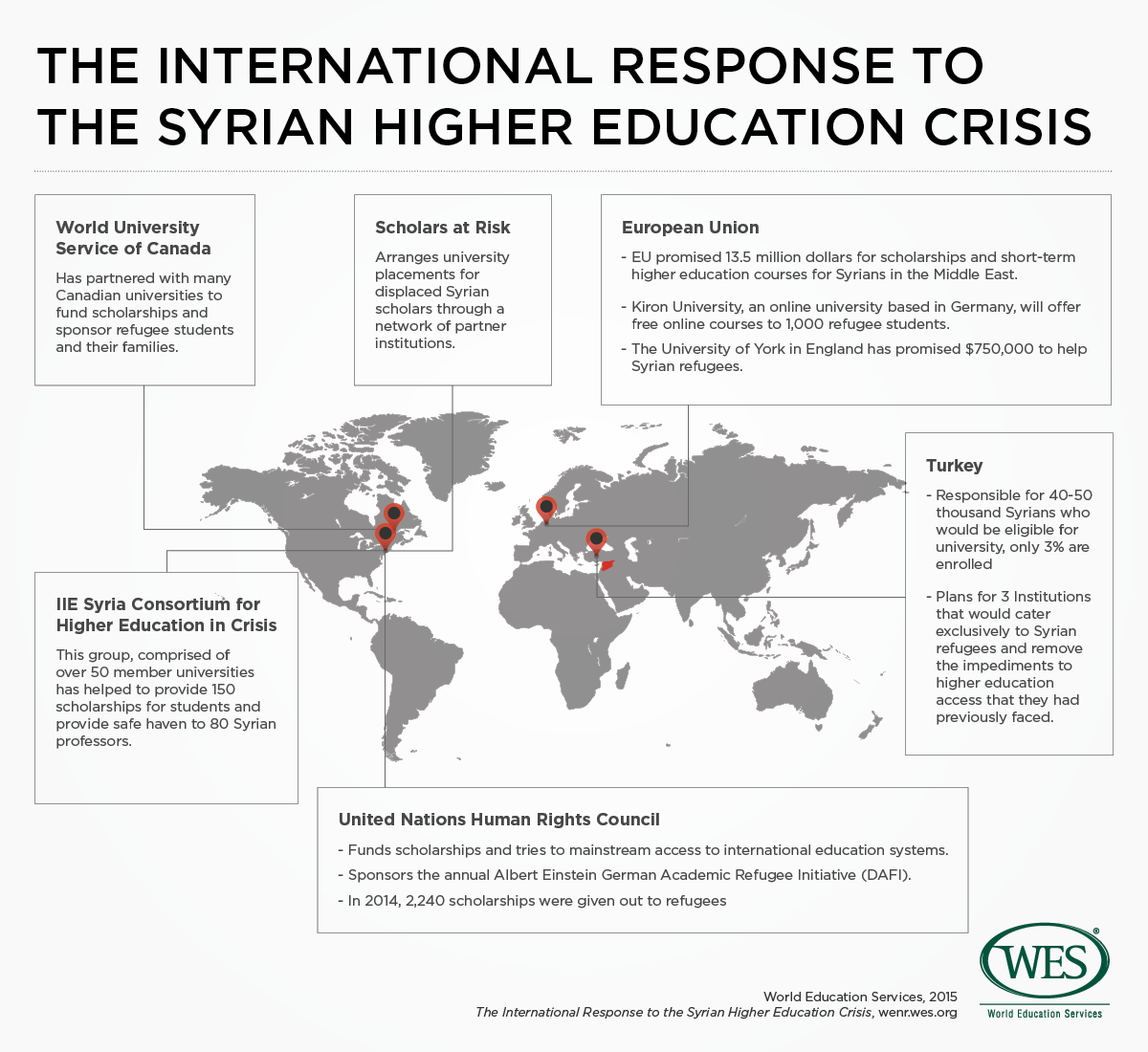
WES [World Education Services] (2015). The international response to the Syrian higher
education crisis. Available at: http://wenr.wes.org/wp-content/uploads/2015/12/WENR-1215-Syria- v2b.png
World Bank (2014). Learning in the face of adversity: the UNRWA
education program for Palestine refugees. Washington, DC: World Bank Group.
Available at: http://documents.worldbank.org/curated/en/2014/10/20356650/learning-face-adversity- unrwa-education-program-palestine-refugees
Wyse, D., Hayward, L. & Pandya, J. (eds.).
(2015). The SAGE Handbook of Curriculum, Pedagogy and
Assessment. London: SAGE.