1.0
INTRODUCTION
Man’s generation and disposal of waste has a
long and hybrid pedigree. From time immemorial, wherever man found himself and
embarked on his daily activities, he generates waste. As such, he is no closer
to eradicating waste generation now than he was when he huddled around an open
fire every night and lived in caves, because the production (and consequent
disposal) of waste is an essential characteristic of man. Therefore, Barbalace (2003) wrote, “there has been a problem of trash
from man’s earliest time…it is not a trait of the 20th (and 21st)
century”. The challenge of managing solid waste
generally in developing countries like Nigeria has shifted from ensuring
minimum damage to public health and environment to the manner in which
discarded resources are to be handled such that future generations are not
deprived of its value (Chandak, 2010).
Nigeria today, having experienced a great
increase in population rate and economic strength facilitated especially by the
Industrial Revolution and the development of medical science and health care
delivery system, rapid urbanization and rise in communities’ living standard, has
witnessed waste generation in cataclysmic proportions. This problem is further
compounded by the deterioration of the Nigerian urban environment vis-à-vis the
indiscriminate dumping of wastes as apparent in our growing cities. In Calabar, the Cross River State Capital, for instance, the
disposal of wastes was critically disturbing as huge piles of dirt were found
littering public places in unprecedented proportions. With the Calabar Urban Development Authority (CUDA) responsible for
general sanitation and waste management, three levels of waste management
techniques were introduced. First, it became mandatory for each household to
have a standard rubber bin to store refuse at the primary level. At the
secondary level, flash points or transfer stations were established with
dumpsters to prevent indiscriminate dumping of refuse brought from the
household. And lastly, the personnel of CUDA dispersed into twenty-six (26)
cells with supervisors, trucks, and workers in Calabar
would, at regular intervals (usually between 2-3 times a week depending on how
densely populated the areas are) and preferably in the evening, transfer the
refuse from the dumpsters at the 366 flash points in Calabar
to the final disposal sites at the Lemna Road in Calabar Municipal Council. The final disposal of refuse is
by land-filling.
It is against this background that this
research work undertook an objective assessment of CUDA’s impact on the
management and disposal of waste in Calabar
Metropolis between 2008 and 2016; to know whether wastes have actually been
effectively cleared off the streets and disposed properly or whether the wastes
have been allowed to constitute a nuisance and an aesthetic disorder; to
determine the adverse effects of indiscriminately dumped waste on the environment,
the health and aesthetic conditions of Calabar
Metropolis; to identify the framework for waste management (especially waste
separation) in Calabar Metropolis; and to identify
the factors that impede on the performance of CUDA.
1.1
Statement of the problem
It has been observed that there are waste
dumps by the road sides, open drains and open spaces, and paper and vegetable
wastes in markets and residential areas throughout Calabar
metropolis despite the efforts of CUDA to keep the town clean and green. These
untended dumps constitute an aesthetic disaster and have strategically reduced
the city’s long standing status as the cleanest in Nigeria. Also, ground water
studies have ascertained that large chunks of garbage are buried in landfills
where leachates which are often toxic substances that were disposed-off, found
among solid waste migrate into the earth in the direction of ground water flow
to contaminate the underground sources of water (Eni,
Ubi & Digha, 2014).
This makes boreholes located close to the Lemna
dumpsite in Calabar Municipality and other flash
points vulnerable to toxic contamination.
Further, as solid waste decomposes, chemical vapours
are discharged into the atmosphere resulting to air pollution since the stench
oozing out from them are unbearable and this has serious health implications
like suffocation, asthmatic disorder and other respiratory conditions. These
open and untended dumps which provide the perfect breeding sites for vectors
such as, inter alia, rats, cockroaches, ants, dung beetles, mosquitoes,
houseflies, spiders, centipedes, millipedes, snakes, scorpions, and stray dogs,
are usually close to residential areas, and put the residents at high risk of diseases
such as cholera, yellow fever, dengue fever, typhoid fever, Lassa fever,
dysentery, malaria, microfilariae, etc., which accounts for high morbidity and
mortality in developing countries. More so, when it rains, the dumped wastes
are usually washed into open drains and this does not allow for the proper
passage of water which will serve as breeding sites for disease-bearing
organisms such as mosquitoes, tsetse flies, houseflies, etc., and causing
flooding which could carry in dangerous animals such as snakes and crocodiles
into residential areas, which are inimical to the well-being of human beings.
2.0
Conceptual and
theoretical analysis
2.1
Waste
The menacing effects of indiscriminately
generated and disposed waste attracted widespread fame globally which made
scholars, institutions, and (delegates to) international conventions attempt at
explaining the phenomenon in order to arrive at a sound and well developed
understanding of waste. However, waste, as it pertains to the Social Sciences
means different things to different people at different times and places,
unlike the universalistic meaning of concepts in the Pure Sciences. For
instance, waste, as Isirimah (2002) conceived it,
could be explained to mean leftovers, used products whether liquid or solid
having no economic value or demand and which must be disposed or thrown away. Ogban and Akuruju (2016) are of
the view that waste is any solid or liquid substance which have been thrown
away by its original owner, which may be or may not be found useful by any
other person but constitute nuisance to people’s health and the environment
when left untreated.
More so, wastes, according to the Department of
the Environment of Her Majesty’s Stationery Office (HMSO) (1992) cited in the
Chartered Institute of Purchasing and Supply (CIPS) (2007), are “those
substances or objects which fall out of the commercial cycle or chain of
utility”. For example, glass bottles that are returned or reused in their
original form are not waste, while glass bottles banked by the public and
dispatched for remoulding are waste “until they have been recovered”
(Environment Information Bulletin, 1995, in CIPS, 2007). In view of the
foregoing, it is safe to infer that the term is often subjective and sometimes
objectively inaccurate, e.g., to send scrap metals to a landfill is to
inaccurately classify them as waste, because they can be recycled.
For
the purpose of this study, we conceive waste to be any material (gaseous,
liquid or solid) that has been used and is no longer wanted because it has been
rid of its valuable or useful parts, and if left untended will constitute a
noxious influence in the society, thereby, hampering on the health of the
environment and human beings.
There are many waste types defined
by modern system of waste management, notably including: solid waste (our
focus); hazardous waste; biomedical waste; special hazardous waste; waste
water; etc. (Uwadiegwu & Chukwu,
2003; Adewole, 2009; Metz, Dandson,
Bosch, Dave & Meyers, 2007). For Olaniran, Akpan, Ikpeme and Udofia (1995) cited in Udoakah
and Akpan (2013) solid waste refers to domestic
refuse and other discarded solid materials such as those from commercial, industrial
and agricultural operations. Solid waste can contain cider, vegetables and
putrescible matters, papers, leaves, metals, food product, garden waste, rags,
leather, synthetic waste and rubber; and Cointreau (1982) added construction
and demolition debris, dead animals, and abandoned vehicles and electronics (in
Udoakah & Akpan, 2013).
For Okonkwo and Eboatu
(1999) solid waste is classified vis-à-vis its sources: Domestic or Residential
waste; Municipal (both Residential and Commercial) waste; and Industrial waste.
Adewole (2009) presented a slightly different four
scale classification: Residential; Commercial; Industrial; and Institutional
wastes. However, Metz et al (2007) gave theirs comprising Municipal Solid
waste, Industrial waste, Agricultural waste, and Hazardous waste.
2.2
Waste management
The need to control the increasing generation
of waste in society gave rise to waste management. Sometimes called waste
administration, Gilpin (1996) defined waste management as purposeful, systematic
control of the generation, storage, collection, transportation, separation,
processing, recycling, recovery and disposal of solid waste in a sanitary,
aesthetically acceptable and economical manner (in Adeniran
& Oyemade, 2016). Similarly, waste management refers to
the strategic combination of methods – generation, storage, collection,
transportation, treatment and final disposal (landfills, recycling,
incinerating etc.) – employed to efficiently regulate waste from source of
generation up to the final disposal point (Igbinomwanhia,
2011, in Agbesola, 2013; Oyeniyi,
2011).
It can
be deduced from these definitions that waste management is the practice of
protecting the environment from the polluting effects of waste materials in
order to protect public health and the natural environment. Thus, the priority
of a waste management system must always be the provision of a cleansing
service which helps to maintain the health and safety of citizens and their
environment.
It must, therefore, be added here that waste management also encompasses “preparing
waste policies, monitoring, advice to stakeholders (government, industries, and
the public), and regulations” (Adeniran & Oyemade, 2016:28-29).
2.3
Waste management
system
For there to be an effective waste management
regime, the regime’s activities and plans must be strategized into a system of
interdependent functions. Clark (1978) cited in Seadon
(2010:1640-1641) captured this best by opining that:
“The
conventional waste management approach is that waste generation, collection and
disposal systems are planned as independent operations. However, all three are
very closely interlinked and each component can influence the other. The
planning required for these operations require a balance between the subsystems
of manufacturing, transport systems, land use patterns, urban growth and
development, and public health considerations.”
Little wonder Clark (1978) defined that
system as a set of interacting units or elements that form an integral whole
intended to perform some function. In this vein, for Max-Neef
(2005) waste management system involves the coordination of management between
all levels and all waste streams (in Seadon, 2010).
For waste management to attain its
desired end, it must possess many of the features of a living system whose
parts function sequentially and harmoniously for the survival of the whole
system. The system must consist of agents (people) and schema (interpretive and
behavioural rules), self-organization and emergence, and connectivity and
dimensionality (feedback mechanisms) all of which must be in constant
interaction with their environment and be dynamic and flexible enough to change
in response to environmental change (Clayton & Radcliffe, 1996).
The uncharted volume of wastes that are
visible along almost all the roads and streets of our urban neighbourhoods is
an indication that the adopted strategies to cope with the inevitable
by-products of development are ineffective. This has inspired scholars to
research on and to identify factors influencing the elements or frameworks of
the waste management system which comprise waste generation, waste
separation/segregation, waste storage, waste collection and transportation, and
waste treatment and disposal. In fact, it may be safe to infer here that the
adherence to the waste management system will increase the potential for
greater sustainability of the waste management operations.
2.3.1
Waste generation
Waste generation has been described by Australian
Laboratory Services Environmental (2014) as the weight or volume of materials
and products that enter the waste stream before recycling, composting,
land-filling, or combustion. It can also represent the amount of waste
generated by a given source or category of sources. More so, waste generation
can be seen as the total quantity of all discarded materials and substances
into the waste stream from homes, businesses, and from the constructive and
manufacturing sectors of society.
Some scholars have attempted to determine
what constitutes the parameters for the measurement of waste generation.
According to Sujauddin, Huda and Rafiqul-Hoque
(2008), the generation of waste is inspired by family size, their education
level, and monthly income; Shekdar (2009) suggests
that the quantity of solid waste generation is lower in countries with lower
Gross Domestic Product (GDP). For Bogner and Matthews
(2003), it includes gross domestic product, energy consumption and private
final consumption (cited in Bogner, Ahmed, Diaz, Faayi, Geo, Hashimoto, Mareckowa,
Pipati & Zhang, 2007). The latter is closely
linked with Rosenbaum’s (1974) view that solid waste is an unofficial measure
of prosperity since wealthy nations produce more waste than poor ones. However,
this relation is analytically fraught as opined by Uwadiegwu
and Chukwu (2013). Omuta
(1988) corroborated this when he wrote that what causes waste problem is not
the volume produced vis-à-vis affluence but the degree of effectiveness of
solid waste management. This explains why, although Americans have been quoted
to be the most prolific producers of waste on earth, yet they have not produced
the filthiest cities on earth (in Uwadiegwu & Chukwu, 2013).
It is needful to note that from the
observational studies carried out by the researchers, family size plays little
role in the generation of waste as compared to the existence and functionality
of businesses (especially bars and restaurants). A case in point was the
comparison between the flash points at Mary Slessor
Avenue and State Housing Estate, both in Calabar
Municipality. It was recorded by the researcher that first, while the
residential buildings at Mary Slessor Avenue were scanty,
Government parastatals and others institutions (both
private and public) like banks, a high court, a government general hospital,
and so on as well as bars, restaurants and eateries like H2O, Paladium, Potomas, De-Choice, Crunchies+plus, Bogobiri
suya joints, and suchlike, constituted a large
portion of Mary Slessor Avenue.
On the other hand, the reverse was the case
at State Housing Estate, where residential buildings flooded the area. Second,
it was discovered that more wastes were generated at Mary Slessor
Avenue than at State Housing Estate. This information was gotten from the
observation of the amount of times wastes were evacuated from their flash
points at both locations. At Mary Slessor Avenue,
wastes were evacuated three to four times a week, usually on Mondays,
Thursdays, and Saturdays, while at State Housing Estate, waste were evacuated
between two and three times weekly especially on Sundays and Thursdays. Also, in
a conversation between the researchers and one of the denizens of Mary Slessor Avenue, the latter stated that:
“The amount of waste generated within the
area especially owing to the weekend activities at bars and restaurants and the
suya joints at Bogobiri, is
so massive in volume. I basically believe that it is no coincidence that most
of the flash points at the area are proximate to the bar and restaurants within
the area.”
In another conversation with two residents (all
inhabitants of State Housing Estate) it was deduced from the duo that the
wastes generated within the Estate are large (but not comparable to that generated
at Mary Slessor) and are largely biodegradable
comprising garden waste, left-over food, clothes, and such alike.
Added to this is the fact that many
households do not have the waste bins distributed by CUDA for temporary storage
of wastes at the homes or primary level. Also, it was observed that even those
who have the bins did not use them for the purpose they were meant to serve.
Some households have converted their waste bins to water receptacles.
2.3.2
Waste
separation/segregation
Waste separation or segregation in simple
terms refers to the breakup of waste (into its different compositions and/or
into dry and wet or biodegradable and non-biodegradable) so that it is easier
to handle, transport, process, treat, recycle and dispose (Wikipedia, org, 2018). For Lardinois and Furedy
(1999), it can be seen as the
practice of setting aside post-consumer materials and household goods so that they do not
enter mixed waste streams. The
concept was coined in affluent societies during the 1980s in contradistinction to the recovery of
resources for recycling from mixed post-consumer waste in plants called materials recovery
facilities (MRFs) (see Lardinois & Furedy, 1999).
The above mentioned indices that inspire the
generation of waste also influence the composition and separation of waste
which Guerrero, Maas and Hogland (2013) categorized
into paper, plastic, glass, food, metals, batteries, and electric and
electronic waste. The importance of reliable data on both the composition and
separation of solid waste for the effective planning of waste handling
infrastructure has long been recognized. However, there are varied data on
waste separation due to poor information management but notable of use for this
study is the research carried out by Afangideh,
Joseph & Atu (2012) in Calabar.
For them, the different types of solid waste generated in Calabar
compose of vegetables (23.33%), garbage (18.66%), paper/glass (16%), cans
(15.33%), plastics (14.7%), and wood/bone (12%). It is conspicuous from their
study that a majority of the waste generated in the area are biodegradable
(63.97%) as against the relatively smaller amount of non-biodegradable waste
(46.03%).
Despite the amount of write-ups on
waste management systems, it is worth noting that deficiencies were spotted
regarding the separation or segregation of waste in Calabar
Metropolis. Afangideh et al (2012) attempted a categorization
by forming a classificatory scheme for the different types of waste generated
in Calabar: vegetables; garbage; paper/glass; cans;
plastics; and wood/bone. However, it was realized that this categorization is
quite vague. Certain issues arose like: what constituted garbage? If it meant
biodegradable waste, were vegetables, woods and bones not biodegradable? If it
meant non-biodegradable waste, should it not have been wise to classify
plastics, cans and glass within garbage? Before any categorization was adopted
for this study, it was needful to bear in mind that waste separation or segregation
was an inherent process in the entire waste management hierarchy; from
generation in the households to the final disposal.
In this vein, based on the flash points
observed by the researchers and from the responses of the Director,
Waste/Maintenance, CUDA (as at the time of this study), it can be
authoritatively stated that “there is no waste separation in Calabar metropolis”. At the various flash points that were
observed, all manner of waste products from vegetable waste, food, cans,
nylons, plastic containers, papers, metals, syringes, leather, construction
debris, and even faeces, were gathered there for collection and disposal. He
further opined that:
“CUDA
officials, divided into cells, with each cell having a supervisor, truck and
workers, go to their designated transfer stations, collect the wastes and
transport them to the dumpsite at the Lemna Road.
Scavengers do the separation of waste at the dumpsite and after that, food
wastes are being pushed into a ravine because of lack of hands to turn these
food wastes into fertilizer and manure.”
Also, a majority of the residents the
researchers discussed with affirmed that they do not separate their wastes
before taking them to the flash points. While conversing with them, the
researcher discovered that quite a number of them knew not what waste
separation was. There is the need to separate the biodegradable wastes from the
non-biodegradable wastes (most of which can easily be recycled). Little wonder
the recycling industry in Calabar is absent.
This means an inherent systemic failure
exists, especially that of poorly designed and produced public enlightenment
campaigns (of the activities of CUDA, especially on collection schedules). This
failure is bound to affect the entire waste administration system, especially
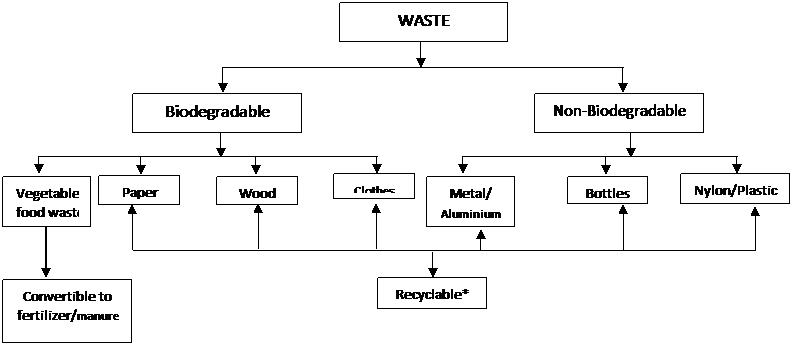
waste disposal. Therefore, from the cumulative observation of the researcher,
this study adopted this classification which if understood and used by the
Government-cum-CUDA will help in the separation of waste since different waste
bins will be provided for each of the variables categorized below:
Recyclable*: What use?
These
products can be recycled to make;
i.
Paper:
notebooks, textbooks, newsprints, cardboards, white office printer paper, etc.;
ii.
Wood:
wooden flooring, sawdust (which can also be used to make plywood), fuel
(firewood), laminates, doors/windows (frames), etc.;
iii.
Clothes:
processed to harden/brighten the fabric for reuse, fuel, etc.;
iv.
Metal/Aluminium:
food/drink cans, windows/doors (frames), cutleries, plates, molten aluminium,
etc.,
v.
Bottles/Glasses:
new food/drink bottles, jars, louvers, flower vases, plates, cups, etc.;
vi.
Nylon/Plastic:
plastic pipes, rubber beads, textile insulation (for thermal/fleece jackets and
sleeping bags), spoons, cups, etc.
2.3.3
Waste storage
In order to avoid people discarding waste in
poorly defined heaps close to dwelling areas, improved storage facilities
should be provided fairly quickly. Uchegbu (2002)
corroborating this added that the waste generated should be well stored for
easy collection and disposal by the appropriate authority concerned. On-site
storage is of primary importance because of public health concerns and
aesthetic consideration (in Wokekoro & Inyang, 2007).
Waste storage can be seen as the transfer or
assemblage of wastes from their point(s) of generation to available mapped out
bins or small collection vehicles where they will be kept over a period of
several days before they are collected and transported to be recycled or to the
final disposal site(s). These available mapped out bins or small collection
vehicles are called “transfer stations” or “flash points”.
Guerrero et al (2013) analysed the factors
that influence household waste disposal decision-making. Their study results
show that supply of waste facilities significantly affect waste
storage/disposal choice. For them, inadequate supply of waste containers and
long distance to these containers increase the probability of waste dumping in
open areas and road sides relative to the use of communal containers.
This premise was discovered to be quite true
because from the study carried out by the researcher, residents of Atamunu Street, off Mayne Avenue
Street, complained of the long distance of the only available waste bin on the
street which resulted to why they burnt their waste while some other residents
threw theirs into gutters whenever it rained. This practice, it was also
observed, led to the blockage of the drainages on the street. As a matter of fact,
whenever it rained the street and compounds become flooded making denizens and
commuters experience difficulty accessing the road.
Also, as Metz et al (2007) wrote, in
determining the size, quantity and distribution of the storage facilities the
number of users, type of waste, maximum walking distance (or city parameters)
and their safety from theft or vandalism must be considered. Since CUDA was
created, it became mandatory for each house hold to have a standard rubber bin
to store refuse at the primary level. At the secondary level, flash points were
established with dumpsters to prevent indiscriminate dumping of refuse brought
by the household (Samson-Akpan, 2009). The Director,
Waste/Maintenance, CUDA, stated that there are 366 flash points in the Calabar waste map, dispersed along 26 cells.
2.3.4
Waste collection and
transportation
Waste collection and transportation is one of
the essential elements of the waste management process. As a matter of fact, it
is one of the most expensive (if not the most expensive) aspect of the waste
management framework as it takes a remarkable share of waste management cost.
According to Ogwueleka (2003), local authorities in developing
countries spend between 77% and 95% of their revenue on collection and
disposal, but can only collect between 50% and 70% of Municipal Solid Waste
(MSW) (in Hammed, Sridhar & Wahab, 2016). To
corroborate this, the Urban Development Bank of Nigeria (UDBN) (1998) noted that
the collection and transportation of waste is labour and capital intensive and
accounts for between 70% and 80% of total cost of waste management in Nigeria
(in Imam, Mohammed, Wilson & Cheeseman, 2008).
Waste collection and transportation simply
means the retrieval and movement of wastes stored at the available transfer
stations to the point of treatment, recycling, or final disposal. Waste
collection and transport practices are affected by improper bin collection
systems, poor route planning, lack of information about collection schedule (Hazra & Goel, 2009),
insufficient infrastructure (Moghadam, Mokhtarani & Mokhtarani,
2009), poor roads and number of vehicles for waste collection (Henry, Yongsheng & Jun, 2006) (cited in Murali,
Vijayakumar, Ramesh & Baskaran,
2017). In Calabar, three categories of dumpsters are
used for the collection and transfer of refuse at the flash points (Samson-Akpan, 2009). Additionally, the vehicles used for
transferring refuse from the dumpsters are named after the dumpsters; Skid
dumpsters use skid dumpster vehicle; Roll-on Roll-off dumpsters use roll-on
roll-off dumpster vehicles; and Side-roll dumpsters use side-roll dumpster
vehicles (Samson-Akpan, 2009). Added to these vehicles
are compactor trucks and tippers.
The availability of these waste
collection and transport vehicles nevertheless, from the cumulative observation
of the researchers it was deciphered that a significant number of people in Calabar metropolis are unaware of the waste collection
schedule of CUDA and that they do not have the waste bins distributed by CUDA
for temporary storage of wastes, and these issues affect waste collection,
transport practices and the final disposal of waste at the landfill at Lemna road. Little wonder, huge piles of refuse are found
littering flashpoints in unprecedented proportions.
2.3.5
Waste treatment and
disposal
Disposal
is the “no alternative” option because it is the last functional element in the
solid waste management system and the ultimate fate of all wastes that are of
no further value (Guangyu, 2011). Waste treatment and
disposal can be seen as the activities involved in the recovery of useful
materials in the waste stream and the elimination of the quantity of produced waste
components vis-à-vis the standards of environmental protection without being
insulated from the natural environment. For the treatment and disposal of
waste, Scarpitti and Anderson (1989) had this to say:
“…garbage is typically disposed of by burying it in landfills, burning it and
sometimes even recycling it. In some cases, it is dumped into the ocean.”
Waste disposal differ from country to
country. For meeting the specifications of disposal, some treatment processes
modifying the physical, chemical, thermal and biological characteristics of
solid wastes would be introduced like filtration, recycling, incineration,
pyrolysis, open dumping, land-filling, enzymatic systems, composting, and
aerobic and anaerobic treatment (Murali et al., 2017;
Guangyu, 2011) In developed countries, recycling
incinerators plants and recycling are rampant; though landfills are available.
In urban cities of developing countries wastes are disposed in dumpsites at
designated lands or ravines either government or private owned. For instance, Calabar uses the Lemna dumpsite
at Calabar Municipality. Fears have aggravated among
people because the dumpsite is an open dump, to borrow the words of Guerrero et
al. (2013), “without leachate treatment, protection at the bottom by a geo-membrane
or clay-lined layer, gases treatment nor other infrastructures needed”. There
were claims that aside being an open dump, posing its own health hazards, the
dumpsite had reached its maximum carrying capacity that was why piles of dirt
extended to the road and blocked a section of the road leading into the area.
Also, there were complaints by some residents
around the area of the coloration, odour, and taste of the water which showed
that something was wrong since the test for clean and pure water were
tastelessness, colourlessness, and odourlessness. In
this wise, it is worthy to note the study by Eni et
al (2014). According to them, “groundwater studies have ascertained that
leachates from landfills migrate into groundwater (which flows from North to
South) to contaminate the underlying aquifer”. Thus, as Scarpitti
and Andersen (1989) opined, “…except for recycling, all of the traditional
disposal methods create potential public health risks, and spoil the beauty of
the land and seascape”. This recovery and recycling of resources are usually
carried out by the informal sector which usually includes door to door
itinerant buying of paper, metals, glass and plastics, and from scavenging.
2.4
Theoretical framework
The theory adopted for this study was the
Structural-Functional approach. The basic assumptions of the
structural-functional approach are that all systems have structures which can
be identified, and those structures perform specific set of tasks if they are
to remain in existence and maintain their relevance to the system. This goes to
say that political systems as Eminue (2001) opined,
“have parts and each part performs specific functions all of which contributes
towards the functionality of the overall system. The non-performance of a
specific function may contribute in some way to the malfunctioning of the
system as a whole” (in Ebegbulem, 2010).
The structural-functional approach was an
introduction to the study of political analysis propounded by David Almond and
Bingham Powell. According to Eminue (2001) cited in Ebegbulem (2010), the approach “emphasizes the role of
structures and functions in understanding politics and political processes and
the conditions under which structures can perform and the functions could be
fulfilled”. So, as Ebegbulem (2010) wrote “…in order
to understand a political system, it was necessary to understand, not only the
institutions but also their respective functions”.
Structural-functionalism as a theoretical
framework is intended to explain the basis for the maintenance of order and
stability in society and the relevant arrangements within the society, which
maintain the said order and stability. Within this structural-functional
framework, social processes and social mechanisms are intervening variables.
Thus, as Holt (1967) wrote, ”a complete description of a social system will
include, therefore, a treatment of the social structures, and various functions
of these structures, and of the social processes and mechanisms that must be in
operation of the structures are to satisfy certain functions” (cited in Nwagwu, 2012). Thus, four concepts – structures, processes,
mechanisms, functions - via which structural-functionalism seeks to describe
social realities, are of particular importance.
Almond (1966) in his analysis of
structural-functionalism drew on to two sources: the Parsonian
Social Theory (1960); and David Easton’s Political System Analysis (1965).
Hence, it was Almond’s initial idea to elaborate what Easton had called the
“conversion functions”, i.e., the way in which the political system converts
inputs into outputs, and like Talcott Parsons, to investigate the relationship
between these functions and structures (Randall & Theobald,1998). For
Almond and Powell, on the input side are the functions of (1) interest
articulation and (2) interest aggregation; while on the output side are the
functions of (3) role making (4) rule application, (5) rule adjudication. They
also added the functions of (6) political communication, and (7) systems
maintenance and adaptation (Almond & Powell, 1966, cited in Enemuo, 1999). According to Almond, the functioning of any
political system may also be viewed in terms of its capabilities defined as
“the way it performs as a unit in its environment, how it is shaping its
environment, and how it is being shaped by the environment” (Nwagwu, 2012; Enemuo, 1999).
The relevance of this theory for this study
is best appreciated when viewed against the backdrop of the fact that the Cross
River State Government created the Calabar Urban
Development Authority (CUDA) with the aim that this structure will perform the
functions of managing waste generation and disposal, and general sanitation, so
as to keep the state clean and green. The focus on waste management at various
levels of societal life has always been a point of consideration and with
deficiencies spotted in the performances of the functions of the social
structure, CUDA, a breakdown of the political system, Cross River State,
vis-à-vis the debilitating effects of untended wastes on the environments and
human’s health, is eminent.
Another relevance of this theory is that it
relates us to the processes and conditions under which CUDA operates. The
government’s non-payment of CUDA workers for months, the employment of
contractors to clear refuse in the state while the CUDA is still in existence,
and its subsequent termination of the contracts owing to the contractors’
inability to evacuate refuse in the Metropolis, places CUDA in a position of
low motivation, incapacitation and/or incompetence. This does not secure the
system’s maintenance and adaptation function as stipulated by Almond and Powell
(1966), and it results in the loss of funds which should have been put into
CUDA to aid effectiveness/efficiency.
Basically, structural-functionalism as a
broad perspective in political analysis which addresses the social structure,
CUDA, vis-à-vis the functions of its constituent elements (i.e., norms,
customs, objectives, roles, institutions/departments), when applied, helps in
the analysis and establishment of the effectiveness and/or ineffectiveness of
CUDA, and the government’s application of double-standards in the management of
waste in Calabar Metropolis.
3.0
The Calabar Urban Development Authority (CUDA) and Calabar metropolis
3.1
Calabar metropolis
The history of Calabar
provides an insight into one of Nigeria’s most progressive cities. Calabar is the capital of Cross River State located at the
South-South region of Nigeria, which has enjoyed a very long and continuous
urban history. Fondly referred to as “Canaan City”; the biblical land flowing
with milk and honey, perhaps because of the aesthetic features and the warmth
and hospitality of the people of the enchanting and alluring city. Calabar had the privilege of becoming the first Capital of
Nigeria between 1882 and 1902 before losing that status to Lagos when the
Southern and Northern protectorates were amalgamated in 1914 (Eni & Abua, 2014).
For the purpose of administration, the city
was divided into Calabar Municipal and Calabar South Local Government Councils, with 10 and 12
Council Wards respectively, totalling 22 as at present. It has an area of 406km2
(157sq. mi.) and a population of 371,022 (Ottong, Ering & Akpan, 2010) as at
the 2006 Census. Also, it is located along the GPS coordinates of 405710”N
8019’30” E and between longitude 8.3250000 E and latitude
4.9500000 E (Longitude, Latitude, GPS Coordinates of Calabar, 2016). The city lies along the Calabar
River, (8km) upstream from that river entrance into the Cross River estuary; it
is watered by the Calabar River, the Great Kwa River and the Creeks of the Cross River.
Most historical records indicate
towards Calabar gaining prominence in the early 17th
Century. This was largely due to increasing trading relations between the
African tribes like the Efik and Ibibio people. Calabar turned into a major trade hub with fish, banana,
cassava, palm oil and palm kernels, and other farm produce being traded around
the surrounding communities and traded for European manufactured goods. Also,
during this time, Calabar emerged as one of the
busiest slave trading depots in Africa. However, the increasing trade
eventually caught the attention of the colonial powers which were aggressively
increasing their presence in Africa during this time. The city’s earliest
colonial rulers were the Portuguese who coined the name “old Calabar”. It is worth noting that Calabar
was originally known by the Efik name “Akwa-Akpa” (Afigbo, 1987) before
the Portuguese and British invaded the area.
Calabar,
today, is a large metropolis, covering several districts/towns like Big-Qua
Town, Akim, Ikot Ansa, Ikot Ishie,
Ekpo Abasi, Henshaw Town, Afukang, Mbukpa, State and Federal Housing Estates, Bakassi, Akamkpa, Ikot Omin, Obutong,
Duke Town, Odukpani, Biase,
etc (Andrew-Essien & Akintoye, 2012). The city has been undergoing rapid
economic growth and spatial development since 1999 and the current rate of
population growth has by far exceeded the 2006 census figures. The major
socio-economic activity in Calabar is largely service
provision, especially in a market economy. This is aptly seen in the availability
of several standard hotels, resorts and amusement parks, and the city’s hosting
of thousands of tourists every year especially via its annual Calabar Carnival.
Presently, the city boasts of an
International Museum, Botanical Garden, a Free Trade Zone, Calabar
International Conference Centre (CCIC), Two Military Barracks (Eburutu and Akim), Zonal Police Headquarters (Zone 6), Margaret Ekpo International Airport and Seaport, University of Calabar (UNICAL), Cross River University of Technology
(CRUTECH), Integrated Sports Stadium Complex, Cultural Centre Complex, and a
Slave history which has formed parts of the several historical and cultural
landmarks of the city. It also boasts of several standard Hotels, resort and
amusement parks. The Tinapa Resort, a development of
the Cross River State Government, lies in the north of the city besides the Calabar Free Trade Zone. The City also plays host to
tourists every year via its annual carnival, which boosts the economy of the
people, and showcases the cultural, political systems and location of the
State. These have generated a lot of business activities which have impacted on
the local economy (Esu, Arrey,
Basil & Eyo, 2011). The economic growth of the
city has in turn attracted a large number of persons both inside and outside
Nigeria. The recently growing industrial manufacturing opportunities offered a
suitable environment for the establishment of the Calabar
Free Trade zone (CFTZ) and the migration of people to Calabar.
Civil service and private institutions provide employment opportunities for a
considerable proportion of the population (Andrew-Essien
& Akintoye, 2012).
From the foregoing, Calabar, as Sule (1981) discussed,
is a unique city in terms of its high degree of urbanism – preference for urban
life, western-type dress, parties, and non-agricultural interests. In fact,
with its dense population, massive influx of tourists, and huge rural-urban
migrant population, all yearning for sophisticated consumption, which is the very prerequisite for waste generation, Calabar experiences gargantuan levels of waste generation
into the waste stream. An average individual in Nigeria generates 0.5 kg
of waste per day (Oyediran, 1997 in Ekpoh, Ekpoh & Bassey, 2008). Therefore, it may be safe to infer that with
a population of over 370,000 denizens and with over 1.6 million tourists as
recorded during the 2016 Calabar carnival and
reported by the Chairman of the Carnival Calabar
Commission (New Telegraph, 2017), Calabar generates
an estimated 203.9 tons of waste per day; revealing its high waste generation
potentials.
In this vein, according to Afangideh, et al (2012), the rate of waste generation in
Cross River and Calabar in particular is quite
similar to the Nigerian figure which is placed at 70% as compared to the 30%
rate of waste disposal. Little wonder different administrations within the State
have tried to take the issue of waste seriously. How successful their attempts
have been is an entirely different issue. In fact, anything less than this will
be appalling and surprising because as Matsunaga and Themelis (2002:27) purported, “between two affluent
communities, the one that possesses less land per person is bound to be more
careful regarding the use of land for sites for municipal solid waste
generation and disposal.”
3.2 Historical
background of CUDA
Statutorily, waste management was the
responsibility of the Local Government Authorities as established in the 1999
Constitution. Therefore, Calabar South and Municipal
Local Governments used to manage the waste generated in their jurisdictions.
The Environmental Health Departments in the two Local Government Secretariats
were responsible for refuse clearance and disposal assisted by the Calabar Capital City Development Authority and
Environmental Task Force (Samson-Akpan, 2009). A new
challenge ensued. This was the existence of the Environmental Health
Departments and Laws in addition to the State Ministry that resulted in
co-ordination being a challenge. As Samson-Akpan
(2009) wrote, “the Environmental Health Departments and the Environmental Task
Force were permitted to charge defaulters to Sanitation Court and fine them for
any sanitation offenses committed based on the Military Administration
Environment Sanitation Decree No. 6, Section 82 of 1984”. This showed the
powers of the above mentioned bodies.
Owing to this, the Cross River State
Government based on the passage of the Environmental Sanitation Law of 2000 and
the concomitant agreement of existing stakeholders, took over waste management
from the Local Governments, and by extension, established the Calabar Urban Development Authority (CUDA). Decree No. 4 of
1990 established the Calabar Capital City Development
Authority; and the Urban (Environmental) Sanitation Law No. 8 of 2000 amended
this Decree and the Authority was renamed Calabar Urban
Development Authority (Samson-Akpan, 2009) Thereafter
in 2004, CUDA was mandated to manage urban sanitation and waste disposal,
because it was realized that the Local Government Authorities could not manage
urban generated wastes because of increased waste generation owing to huge
population density, lack of clear-cut policies and structures for waste
management, and so on (see Samson-Akpan, 2009).
CUDA has the responsibilities of
refuse evacuation and collection, sweeping of the streets and roadways, mowing
of grasses in publicly owned parks and open spaces and roadways verges. The
Authority planted ornamental trees and shrubs along the City streets and
highways, conducted house-to-house inspections to ensure the sanitary
conditions of residential, commercial and industrial areas. The Authority also
embarked on public awareness campaigns to educate and inform the residents on
the essence of good sanitation habits and enforces the Urban Sanitation Laws
(Coker, Obo & Ugwu, 2013).
3.3 Objectives of CUDA
The objectives of the Calabar
Urban Development Authority (CUDA) are divided along two continua: medium term
goals/objectives; and short term strategic goals/objectives. So as to keep Calabar clean and green, CUDA also came up with the
following policies:
3.3.1 Medium Terms Goals/objectives;
a)
Develop
and establish programs to achieve sustainable living in an urbanized and
tourism driven state;
b)
Develop an effective and efficient strategy
for waste collection and evacuation, sweeping of streets and maintenance of
open spaces; and
c)
Ensure
compliance with urban sanitation laws and regulations for the protection of the
environment and aesthetics of the city.
3.3.2 Short Term Goals/objectives;
a)
Maintain
a clean, green and serene environment in Calabar
metropolis;
b)
Promote
a healthy living environment through public awareness campaigns; and
c)
Ensure
a clean and healthy environment through the enforcement of the Urban Sanitation
Laws (Coker, Obo & Ugwu, 2013).
4.0
The Calabar Urban Development Authority (CUDA) and solid waste
management in Calabar metropolis between 2008 and
2017.
4.1 Role of CUDA in the administration and
disposal of solid waste in Calabar metropolis
The vision of CUDA is to transform Calabar to be the cleanest and visually aesthetic city in
Nigeria and the West African sub-region. Its mission is to promote a healthy
environment to achieve sustainable living through efficient management of the
environment; to ensure the cleanliness of the City, its streets, roadways and
sidewalks, prompt maintenance of all open spaces, and ensure prompt evacuation
of waste at flash points and designated places (Coker et al., 2013). To
effectively undertake the above listed responsibilities the Authority is
empowered to perform its functions as listed in section 8 & 9 of the Urban
(Environmental) Sanitation Laws of 2000. Accordingly, the laws:
a)
Provides
for the Authority to be a corporate body with perpetual power of success,
common seal and shall have power to sue and be sued in its corporate name;
b)
The
area of jurisdiction of Authority as specified in schedule 1 of the Law
comprised Calabar Municipality and Calabar South Local Government Areas, which comprised 50
towns and villages (see Coker et al., 2013).
Subject to the provision of the enabling
laws, the Authority has the power to carry out acts that facilitates the
performances of its functions in fulfilling the above consent, CUDA is
empowered to mobilize facilities that will enhance the attainment of its goals
and objectives on such terms and conditions as may be determined from time to
time.
Essentially the main thrust of Calabar Urban Development Authority (CUDA), is enhancing
the aesthetic of Calabar Metropolitan Area through
the timely and daily collection and evacuation of refuse, de-silting of major
waterways canals and drainages. The Authority beautifies major streets,
roundabouts, state owned parks and open spaces by planting ornamental trees and
re-grassing of streets verges. Its functions also includes; the maintenance of
infrastructure in public places, roundabouts and recreational areas (Coker et
al., 2013).
4.2 The challenges of CUDA in Calabar metropolis
One of the challenges
to waste management and disposal in Calabar
Metropolis is the wrong attitude of people towards waste disposal. The
awareness in Calabar is existent, though not very
effective and efficient, but some persons or households still portray poor
attitude to waste management, which has often resulted in wastes being
indiscriminately dumped on open spaces, channels of drainages and even streets
and roads, converting them into unsightly junk yards, unsuitable for almost any
use and promoting destructive flooding especially in areas like Goldie, Mayne Avenue, MCC Road, and Barracks Road, among others
Another is financing and/or servicing
requirements. Cost recovery is low owing to none or late payment of fees by
households which leads to poor funding. It is worth reiterating that the Urban
Development Bank of Nigeria (UDBN) (1998) noted that the collection and
transportation of waste is labour and capital intensive and accounts for
between 70% and 80% of total cost of waste management in Nigeria (in Imam et
al., 2008). In Calabar, the then Director,
Waste/Maintenance, CUDA, pointed out in a conversation with him, solid waste
management costs, amounting to three hundred naira, are covered in the Urban
Development Tax. A staff of the Environmental Health/Sanitation and Education
unit, CUDA, corroborated this and added that:
“Though
inhabitants of residential areas do not pay for solid waste management cost as
this is already covered within the Urban Development Tax, commercial areas like
markets and motor parks are levied the sum of fifty naira (per shop/vehicle),
and these monies are collected by the market/motor park sanitation unit which
clears the wastes generated within the market/motor park and dumps them in
wastes bins closest to the market/motor parks as well as liaise with CUDA
officials who go to evacuate the wastes.”
It is, thus, the researchers’ belief that the
inadequacies of individuals to pay their Urban Development Taxes (via evasion
or avoidance) from which the sanitation fees are extracted, results to a low
financial base to cover salaries and running cost associated with solid waste
management in Calabar Metropolis.
The road condition is also a threat. Calabar has many unplanned, haphazardly constructed, narrow
and uneven roads which are usually inaccessible to collection vehicles. Some of
the many paved roads are devastated by pot-holes which contribute to the
breakdown and high maintenance rate of waste collection vehicles. At times,
these vehicles may not be properly maintained because of continuous use and
wearing out of parts (Samson-Akpan, 2009). Poor
funding and the lack of adequate number of trucks are at the apex of CUDA's
plights. The available trucks are inadequate and easily breakdown because they
are overworked.
Likewise, inadequate and/or untrained human
capacity for technical issues is another issue. This may be as a result of how
stressful the job is which at times leave workers stricken with severe body
pains and offensive odour. To borrow from Guerrero, et al (2013), related to this is the fact that waste workers
are associated to low socio-economic status situations that result to low
motivation among the solid waste employees. The government gives low priority
to solid waste compared to other municipal activities with the end result of
limited trained and skilled personnel being present in the midst of a vast
number of highly untrained and/or unskilled personnel (Guerrero, et al., 2013).
Another challenge identified is the failure
of stakeholders such as NGOs, Banks, and other corporate bodies to partner with
CUDA in its waste management/disposal activities. This has resulted in a
situation where the Agency is left on its own, stranded, without adequate
support or motivation.
Limited space availability at the dump site
at Lemna Road is another challenge confronting CUDA.
Soon there will be no more space to dump refuse because the dump-site is almost
full. Also, aside the fact that the dump-site has limited space available and
that the roads in Calabar are in very bad shape, a
major challenge plaguing CUDA is the non-payment of workers' salaries. A case
in point was when the women who sweep the streets and roadsides protested
against the government because they had nothing to eat since salaries were not
paid and this was the primary reason CUDA officials embarked on their strike in
2016.
4.3 The impact of CUDA in the administration
of waste in Calabar metropolis
The Calabar Urban
Development Authority (CUDA), created by the Cross River State Government in
the early 2000s, has the mandate to ensure the general sanitation and
management of waste in Calabar Metropolis. The
administration was both enterprising and waste conscious because there was no
way rapid industrialization would not have yielded gargantuan amounts of waste.
Within this period (2000-2007), the Calabar Urban
Development Authority (CUDA) faired pretty well and its activities regarding
the sweeping of streets and roads, waste management, and the planting of
ornamented trees, earned for Calabar Metropolis the
status of the cleanest and greenest City in Nigeria (Kalu,
2014). The question now is “how has the Authority faired in service delivery
and government support following the end of 2007?"
Between 2008 and 2017, Cross River State
witnessed two administrative eras. Within these periods, as the researchers’
observational studies showed, it is believed that the Calabar
Urban Development Authority (CUDA) has not fared well especially vis-à-vis
service delivery and Government's support. Why are we suddenly talking of a
“golden age” of the administration of waste in Calabar?
Why are there lacunae of waste management in Calabar?
Yes, it is true that CUDA, as the Authority’s
Charter stipulates is the fundamental waste management regime in Calabar with other stakeholders like the Local Government,
City Corporations (e.g., Bread of Life Development Foundation, a Nigerian Water
and Sanitation Consultancy firm commissioned in February 2010 by the European
Union Water Supply and Sanitation Sector Reform Program (EU-WSSRP) and geared
to assist the Cross River State water (and waste) sector reform team to develop
the Cross River State Water Supply and Sanitation policy), Municipal
Authorities, Non-Governmental Organizations (NGO’s), households, private
contractors, and the Ministries of Health, Environment and Finance (Bogner et al, 2007) serving
as backup and rendering as much support as can be rendered to CUDA, but
it is also true that more emphasis have been placed on waste disposal which is
just an element of the waste management framework in Calabar
Metropolis. Even the emphasized waste disposal has been very ineffective and
inefficient in recent times. The squalid
state of the town is one that is unheard of, where its inhabitants now live
amidst mountains of refuse that have virtually taken over roads and the
streets and making a mockery of the town that once prided itself and was
acclaimed the cleanest and greenest City in Nigeria during the 2000 – 2007 (Inyang, 2016). With Egyptian pyramids kind of garbage heaps
standing akimbo in most of the road-sides and open dumps and their repulsive
stench capable of deforming a developing foetus, Calabar
can effortlessly win an award as the dirtiest City in Nigeria (Inyang, 2016).
This problem of waste administration
was relatively less than it is now but conspicuous between 2007 and 2015.
However, the era after 2015 was challenged by the myriad of evidentially
increasing pyramids of refuse within the metropolis (Inyang,
2016). Nine years on and the problem of waste disposal is still a thorn in the
flesh of the aesthetic grandeur and environmental health of Calabar. The general feeling in Calabar
and its environs is that CUDA and the Cross River State Government are not
doing enough to address the debilitating situation, which may metamorphose into
a major threat to the health and wellbeing of the people.
Basically, wastes are disposed in
dumpsites in Cross River State at designated areas which are either owned by
Government or private individuals. In Calabar, the
final disposal point is the Lemna dumpsite at Calabar Municipality (an open dumpsite) with little or no
recycling as a means of waste treatment and disposal. Now with the Lemna dumpsite reaching its maximum carrying capacity, the
plights of the people have increased as wastes are being left for weeks
unattended to or collected because the authority has little or no more space to
dispose collected wastes at the Lemna dumpsite. This
has resulted in wastes often being disposed in an unsustainable manner in “open
dumps, streets, ravines and in other cases into drainages…” (Udoakah & Akpan, 2013)
The unregulated and indiscriminate waste
disposal pattern continues to pose serious health and environmental hazards,
and fears have aggravated among people. As Eni, et al
(2014) wrote in their study which accessed the vulnerability of boreholes located
close to Lemna dumpsite in Calabar
Municipality and other indiscriminately converted flash points to dumpsites.
Borehole samples were collected from 10 designated boreholes and their
physiochemical parameters were analysed and the analysis revealed that
groundwater flow from the North to South, carrying along with it dissolved
waste materials and leachates which infiltrates into the borehole water and
contaminates it, thus, rendering it unsuitable for drinking and domestic use,
and when used may cause diseases such as diarrhoea, cholera, dysentery
etc. Thus, as Inyang
(2016) wrote, “a recent medical report stating the treatment of at least 300
persons for diarrhoea at the University of Calabar Teaching Hospital (UCTH), might well be an
indication that an outbreak of epidemic is very imminent”.
Also, decomposing organic wastes in the
dumpsites in Calabar attracts a vast array of
animals, vermin’s and flies. Flies play a major role in the transmission of faecal-oral
diseases, gastro-enteritis, particularly where domestic waste contains faeces
(often those of infants). For instance, at the various dumpsites as observed by
the researcher in the course of this project study, houseflies, mosquitoes
(which could cause yellow fever and dengue fever, malaria and microfilariae),
ants, termites and dung beetles were some of the insects that were spotted.
Others included spiders, centipedes, millipedes, earthworms, maggots and
scorpions. The dumpsites also played host to lizards, rats, snakes and stray
dogs. Thus, the transmission of a vast array of diseases is the associated
risks of the indiscriminate disposal of waste in Calabar
Metropolis.
5.0
CONCLUSION AND
RECOMMENDATIONS
This study has discussed the issues of
waste generation (which is an essential, characteristic of man), and the role
of the Calabar Urban Development Authority (CUDA) in
the administration of indiscriminately dumped wastes, situating these within
the context of Calabar metropolis, comprising both Calabar Municipality and Calabar
South Local Government Areas. It has been a much reiterated fact within this
study that the presence of indiscriminately dumped waste especially by road
sides, open drains and waterways, and open spaces in Calabar
metropolis constitute an aesthetic disaster, facilitate flooding, the spread of
diseases, and has strategically reduced the city’s long standing status as the
cleanest in Nigeria. As a matter of fact, it may not be out of place to opine
that untended refuse dumps have assumed a defining character of Calabar metropolis in recent times, presenting cataclysmic
reactions and huge socio-environmental problems within the polity, and the near
destruction of what is held as cherished Calabar
value, i.e., maintaining a clean and green city.
In view of this, is there still light at the
end of the tunnel? One can choose to find solace in the activities of CUDA.
However, it has been observed in the course of this study that CUDA has been
bastardized by a number of factors, making the agency less efficient and
effective in carrying out its duty of waste management. This will continue to
be the case as long as poor funding, the non-payment of worker’s salaries, poor
public attitude towards waste management, bad roads, bad and/or inadequate
equipment, trucks and personnel to evacuate wastes, and lack of partnership
from the private sector towards improving the activities of CUDA, is unchanged.
Also this study concludes that a lot of
people in Calabar metropolis are unaware of the waste
collection schedule of CUDA and that they do not have the waste bins
distributed by CUDA for temporary storage of wastes, and these issues affect
waste collection, transport practices and the final disposal of waste at the
landfill at Lemna road. Little wonder, huge piles of
refuse are found littering flashpoints in unprecedented proportions. Added to
this is the unhealthy nature of the “open” waste landfill site at Lemna road and other flashpoints which presents grave
dangers to residents who are in close proximity to the landfills and
flashpoints. It is understood that these residents’ underground sources of
water like boreholes and wells are contaminated by toxic leachates or waste-water
which dissolves into the ground at the landfill site. Consequently, the need
arises for the implementation of a new waste disposal technique with the utmost
sanitary concerns.
To that extent, therefore, since the findings
of this research work shows that the activities of CUDA have been inefficient
and ineffective in addressing the indiscriminate dumping and disposal of wastes
in Calabar metropolis, the following recommendations
are proposed:
i.
There
is the need to increase public awareness of the activities of CUDA, its duties,
collection schedules and bin collection system and the consequences of their
actions regarding the indiscriminate dumping of refuses into drainages, road sides
and open states. This can be done through rallies, seminars, and more
effectively, through the introduction of political, environmental, or civic
courses in the curricula of schools from the primary and secondary schools, up
to the tertiary institutions, persistent television and radio adverts. This
would ensure the social and intellectual re-engineering Calabar
metropolis needs to curb the challenges faced by CUDA.
ii.
The
State government needs to ensure that the Calabar
Urban Development Authority (CUDA) is adequately funded and CUDA’s employees
are duly paid their salaries, so that it, CUDA, will work effectively and efficiently
in the administration of waste.
iii.
To
avert the loss of lives and properties and the carrying of dangerous animals
like snakes and crocodiles into residential areas owing to flooding which
accompany heavy rainfall in Calabar metropolis, the
government and residents need to ensure that wastes are evacuated on time and
that refuses are not thrown into waterways because the drainages will be
blocked.
iv.
As
the sayings go, “a clean environment breeds healthy beings” and “health is
wealth.” So, there is the need for the civil society’s (families, NGO’s, the
media, trade unions, religious organisations, academia, civil societies, etc.)
via their broad based support to increase their momentum in the quest to keep Calabar metropolis clean and green by generating demand for
effective measures to reduce the generation of wastes and the effective
administration of the generated wastes, playing the role of whistle blower, and
partnering with CUDA either via the provision of financial assistances,
materials or ideas.
v.
The
State government should ensure it repairs and maintain existing bad roads since
a major cause of the breakdown of waste trucks is the bad road.
vi.
The
creation of incentives for advanced researches, by the government and private
sector, into a society for effective and efficient waste administration system
and for the socio-economic and environmental development of Calabar
metropolis, is necessary.
vii.
Since
the majority of wastes generated in Calabar are
largely biodegradable and recyclable, the government needs to provide a recycle
plant as this will not only increase effective and sanitary waste disposal but
will also help the government create jobs and accrue financial gains from the
sales of the recycled products. Also, the food/vegetable wastes can be
converted into fertilizers/manures which can be sold or given for free to
farmers to boost their farm yields.
viii.
Owing
to the fact that not all wastes can be recycled, it will be very useful for the
State government to adopt waste incineration as a probable mechanism for waste
management. The mechanism generates steam which can be used to create
electricity.
ix.
CUDA
needs to ensure that every household has the waste bins for temporary storage
of waste, and it can do this via having a data base of houses in Calabar metropolis that already have the waste bins and
those that do not. Also, those that have the bins should ensure that they use
it for the purpose they were meant to serve (since it was observed that some
households have converted their waste bins to water vessels).
REFERENCES
Adeniran, A.O. and Oyemade,
H. (2016). Inventory
analysis of solid waste management in Ikorodu
community. Civil
and Environmental Research, 8(9),
26-38.
Adewole, A.T. (2009). Waste management towards sustainable
development in Nigeria: A case study of Lagos State. International NGO Journal, 4(4), 173-179.
Afangideh, A.I,
Joseph, K.U., and Atu, J.E. (2012). Attitude
of urban dwellers to waste disposal and management in Calabar,
Nigeria. European Journal of
Sustainable Development, 1(1), 22-34.
Afigbo, A.E. (1987). The Igbo and their neighbours: Inter-group
relations in south-eastern Nigeria to 1953. Ibadan: University Press
Limited.
Agbesola, O.Y. (2013). Sustainability of municipal solid waste
management in Nigeria: A case study of Lagos (Unpublished Master’s thesis,
Linkoping University). Retrieved
from http://www.ep.liu.se/
Andrew-Essien, E.E. and Akintoye, O.A.
(2012).Urban poverty and residential environment degradation in Calabar area of Cross River State, Nigeria. Global Journal of Human Social Science, 12(6), 49-55.
Australian
Laboratory Services Environmental. (2014). Waste generation: Meaning, term, and
glossary definition – What is waste generation? Retrieved from http://www.caslab.com/Waste_Generation_Meaning/
Barbalace, R.C. (2003,
August). The History of waste: Do you want to be a garbologist?
Retrieved on from http://environmentalchemistry.com/yogi/environmental/wastechemistry.html/
Bogner,
J., Ahmed M.A. Diaz, C.C., Faayi, A., Geo, Q,
Hashimoto, S., Mareckowa, K., Pipati,
R, and Zhang, T. (2007). Waste management. In B. Metz,
D.R. Dandson, P.R. Bosch, R. Dave, and L.A. Meyers
(Eds.), Climate change (2007):
Mitigation. Contribution of Working Group III to the Fourth Assessment Report
of the Intergovernmental Panel on Climate Change (IPCC) (pp. 585-618).Cambridge,
Unite Kingdom and New York, USA: Cambridge University Press.
Chandak, S.P. (2010). Trends in
solid waste management: issues, challenges and opportunities. International
consultative meeting on expanding waste management services in developing
countries UNEP, 1-22.
Chartered Institute
of Purchasing and Supply (CIPS). (2007). How to develop a waste management and
disposal strategy. Pp.
1-27. Retrieved from https://www.google.com.ng/url?sa=t&rct=j&q=&esrc=s&source=web&cd=1&cad=rja&uact=8&ved=0ahUKEwjT-7Tf5bLYAhUBuhQKHbhIDBIQFggnMAA&url=https%3A%2F%2Fwww.cips.org%2FDocuments%2FAbout%2520CIPS%2FDevelop%2520Waste%2520v3%2520-%252020.11.07.pdf&usg=AOvVaw3oyFbJHiOrqlGtbcDmRS_5/
Clayton,
A. and Radcliffe, N. (1996). Sustainability
– A systems approach. London, UK: Earthscan
Publications Ltd.
Coker,
M.A., Obo, U.B., and Ugwu U. (2013). Managing sustainable
development in our modern cities: Issues and challenges of implementing Calabar urban renewal programmes, 1999-2011. Asian Social Science, 9(13), 74-84.
Ebegbulem, J. (2010). Government and politics of the modern state (Enlarged Edition).
Cross River, Nigeria: Kings View Publishing House.
Ekpoh,
I.J., Ekpoh, U.I. and Bassey,
N.U. (2008).
The role of environmental education and public enlightenment
in urban waste management in Calabar, Cross River
State of Nigeria. African Journal
of Environmental Pollution and Health, 6(1), 7-12.
Enemuo, F.C. (1999). Approaches and Methods to the study of politics, in R. Anifowose and F. C. Enemuo
(Eds.), Elements of Politics. Akoka-Yaba, Lagos: Sam Iroanusi
Publications.
Eni, D
and Abua C. (2014).The impact of Urban renewal on
quality of life (QOL) in Calabar, Calabar,
Nigeria.
Research on Humanities and Social
Sciences, 4(17)129-135.
Eni,
D.I., Ubi, A.E. and Digha,
N. (2014).
Vulnerability assessment of boreholes located close to Lemna
landfill in Calabar metropolis, Nigeria. International Journal of Physical and Human
Geography, 2(2), 6-15.
Ottong,
J.G., Ering, S.O., and Akpan,
F.U. (2010).
The population situation in Cross River State of Nigeria and its implication
for socio-economic development: Observations from the 1991 and 2006 censuses. Journal of Emerging Trends in
Educational Research and Policy Studies (JETERAPS), 1(1), 36-42.
Esu,
B.B., Arrey, V.M., Basil, G., and Eyo,
E.E. (2011).
Analysis of the economic impacts of cultural festivals: The case of the Calabar Carnival in Nigeria. Tourismo: An International Multidisciplinary Journal of Tourism, 6(2),
333-352.
Guangyu, Y. (2011). Disposal of solid waste. Point Sources of Pollution: Local
Effects and its Control. Encyclopaedia
of Life Support Systems (EOLSS) (Vol. 1). Retrieved from http://www.eolss.net/sample-chapters/c09/e4-11-03-03.pdf/
Guerrero, L.A., Maas, G. and Hogland,
W. (2013).
Solid waste management challenges for cities in developing countries. Elsevier, Waste Management, 33, 220-232.
Hammed, T.B., Sridhar, M.K.C. and Wahab,
B. (2016).
Enhancing solid waste collection and transportation for
sustainable development in the Ibadan metropolis, Nigeria. European Journal of Research in Social
Sciences, 4(7), 23-32.
Imam, A., Mohammed, B., Wilson, D.C., and Cheeseman, C.R. (2008). Solid
waste management in Abuja, Nigeria. Elsevier,
Waste Management, 28, 468-472.
Inyang, B. (2016, June 20). Calabar succumbs to refuse. This Day Newspaper. Retrieved from
http://www.thisdaylive.com/index.php/2016/06/20/calabar-succumbs-to-refuse/
Isirimah, N.O. (2002). Understanding the Nature, Properties, and Sources of Waste for Quality
Environment. Port Harcourt: Tom and Harry Publications Ltd.
Kalu, N. (2014, September 19). Calabar’s burden
as Nigeria’s cleanest city. The Nation Newspaper. Retrieved from http://thenationonlineng.net/calabars-burden-as-nigerias-cleanest-city/
Lardinois, I., and Furedy, C. (1999). Source separation of household
waste materials: Analysis of case studies from Pakistan, the Philippines, India, Brazil, Argentina and the
Netherlands. Gouda, Urban
Waste Series, 7.
Longitude, Latitude,
GPS Coordinates of Calabar. (2016). Retrieved
from http://www.gps-latitude-longitude.com/gps-coordinates-of-Calabar/
Matsunaga,
K. and Themelis, N.J. (2002). Effects
of affluence and population density on waste generation and disposal of
municipal solid wastes.
Metz, B., Dandson, D.R., Bosch,
P.R., Dave, R., and Meyers, L.A. (Eds.). (2007).Climate change (2007): Mitigation. Contribution of
Working Group III to the Fourth Assessment Report of the Intergovernmental
Panel on Climate Change (IPCC).
Cambridge, United Kingdom and New York, USA: Cambridge University Press.
Murali,
U., Vijayakumar, C., Ramesh, M., and Baskaran, M. (2017). An overview of
hazardous waste management in India. International
Journal of Engineering and Management Research, 7(4), 355-368.
New Telegraph. (2017, October 14).
Carnival Calabar target 2 million tourists for 2017.
Retrieved from https://newtelegraphonline.com/2017/10/carnival-calabar-targets-2-million-tourists-2017/
Nwagwu, E.J. (2012). An appraisal of Economic and Financial crimes
commission (EFCC): The war as giant corruption in Nigeria (1999-2007).
Retrieved on August 30, 2017, from http://www.academicexcellencesociety.com/an_appraisal_of_economic_and_financial_crimes_commission.html/
Ogban,
M.E. and Akuruju, V.A. (2016). The
stigmatization of residential properties due to proximity to waste dump.
IMPACT: International Journal of Research
in Business Management, 4(11), 37-46.
Okonkwo E.M. and Eboatu A.N.
(1999).Environmental pollution and
degradation. Palladan
Zaria, Kaduna State, Nigeria: Onis Excel Creations
Publication Ltd
Oyeniyi, B.A. (2011). Waste management in
contemporary Nigeria: The Abuja example. International
Journal of Politics and Good Governance, 2(2.2), 1-18.
Randall, V. and Theobald, R. (1998). Political change and underdevelopment: A critical introduction to third
world politics (2nded.). London: Macmillan Press Ltd.
Samson-Akpan, P.E. (2009, September). Solid
waste management in Calabar, Cross River State.
Researchgate. Retrieved from http://www.researchgate.net/publication/247773973_solid_waste_management_in_Calabar_Cross_River-State/
Scarpitti,
R.F. and Anderson, L.M. (1989). Social problem. New York, USA: Harper & Row publishers,
Inc.
Seadon, J.K. (2010). Sustainable
waste management systems. Journal
of Cleaner Production, 18, 1639-1651.
Sule, R.A.O. (1981). Environmental
pollution in an urban center: Waste disposal in Calabar. Third World Planning Review, 3(4).
Sujauddin,
M., Huda S. M. S. and Rafiqul-Hoque, A. T. M. (2008). Household solid
waste characteristics and management in Chittagong, Bangladesh, Waste Management, 28(9), 1688-1695.
Udoakah,
Y. and Akpan, U. (2013, October).A sustainable approach to municipal solid waste management in Southern
Nigeria.
Paper presented at the Institute Of Electrical, Electronics Engineers (IEEE), Global Humanitarian Technology Conference (GHTC) Silicon
Valley-San Jose, California USA.
Uwadiegwu,
B.O. and Chukwu, K.E. (2013).Strategies for effective
urban solid waste management in Nigeria. European
Scientific Journal, 9(8) 296-308.
Wikipedia.org (2018). Waste sorting.
Retrieved on 10 May, 2018, from https://en.m.wikipedia.org/wiki/Waste_sorting/
Wokekoro,
E. and Inyang, M.P. (2007). Waste disposal in low-income neighbourhood and its impact on health:
The case of Port Harcourt, Nigeria. International Conference “Waste
Management, Environmental Geotechnology and Global
Sustainable Development (ICWMEGGSD'07 - GzO'07)” Ljubljana, SLOVENIA, August
28-30.