Livestock is an important component of
agriculture, accounting for 35 to 49 percent of agricultural GDP, 37 to 87
percent of household income, and 15 to 17 percent of the country's foreign
exchange revenues (Endalew and Ayalew,
2016). In Ethiopia, there are approximately 57 million chicken heads, with
78.85 percent, 12.02 percent, and 9.11 percent of the total chicken being
indigenous, hybrid, and exotic, respectively (CSA, 2021). Indigenous chickens
are found in practically every rural and peri-urban part of the country, and
they serve a variety of purposes including religious/cultural considerations,
money generating, and egg and meat provision (Moreki et al., 2010; Bekerie,
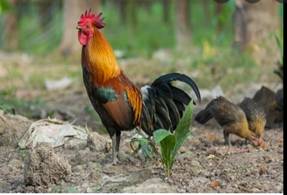
2015). Local ecotypes or native chickens are the most common indigenous chicken
types raised in Ethiopia, with a wide range of body size, plumage color, comb
type, and production (Halima, 2007).
In the traditional
village poultry production system, the rural sector accounts for nearly all of
the overall chicken population (Halima, 2007). Due to low feed costs, area
requirements, and animal prices, their production fits well with the
circumstances of rural homes (Dessie et
al., 2013). Due to feed shortages, predators, disease, veterinary service
and health management, marketing, genetic quality (breed), and extension
service, they are known for their low production performance (Waktole et al.,
2018; Kejela et
al., 2019).
Indigenous chickens,
on the other hand, are noted for their disease resistance, good egg and meat
flavor, hard egg shells, high fertility, and hatchability (Melesse,
2000). As a result, most Ethiopian consumers prefer to buy indigenous chicken
from village producers, as it is believed to be more flavorful and better
suited for making traditional chicken sauce (Dana et al., 2010). However, because to the presence of multiple
productions, reproductive, and infrastructure constraints, the sector's
economic contribution is still not proportional to the large number of chickens
(Halima, 2007). As a result, the goal is to assess the current state of
indigenous chicken production performance, opportunities, problems, and provide
a summary of information for beneficiaries and readers.
2. REVIEW OF THE LITERATURE
2.1.
Ethiopian Indigenous chicken production
Chicken production is
primarily based on conventional vast production systems with local chicken
ecotypes and low purchased-inputs in many developing nations (Garcia et al., 2007). In Sub-Saharan Africa, 85
percent of all families raise chickens on a free range system, with women
owning 70% of them, and their production serves as a valuable supply of animal
protein in the form of meat and eggs, as well as a reliable source of monetary
revenue in rural and urban areas (Abubakar et
al., 2007; Asgedom, 2007). They are disease
resistant, have a low feed utilization rate, are non-selective to feeds,
require little management, can be kept in simple shade, do more scavenging, are
locally available, and are inexpensive to buy.
Indigenous chickens
in Ethiopia are found in huge numbers distributed across different agro
ecological zones under a traditional family-based scavenging management
system. Indigenous chicken productivity
is low as compared to exotic breeds with average annual egg production of 60
eggs. Low productivity is also due to
low hatchability about (70%) and high mortality of indigenous chicken
(Getachew, 2016). Farmers in the Amhara (Farta) and Oromia (Horro) regions give the highest emphasis for plumage color
while in the southern region (Konso and Sheka) live weight is used as the most important selection
criteria. The emphasis given to each trait category is largely similar across
the sexes except that, unlike for males Getu and Birhan (2014). Ethiopian indigenous chickens have a variety
of morphological appearances. They vary in color, comb type, body conformation and weight and may or may not possess shank
feather. Eggs have thick shells
and deep yellow colored yolk. The production performance of indigenous local
scavenging chickens of Ethiopia is low because of their low egg production
potential, high chick mortality, longer reproductive cycle, the low genetic potential (slow growth rate, late sexual maturity and
broodiness for an extended period) (Besbes,
2009).
Indigenous chickens
are generally dominated by flock size and have a high capacity for adapting to
various agro-ecologies through routine management strategies (Dessie et al., 2003). Rural populations keep
indigenous chickens for a variety of reasons, including animal protein,
additional financial income, replacement breeding, and religious/cultural
considerations (Alders et al., 2009; Moges et al.,
2010). Many characteristics distinguish their product, including good egg and
meat flavor, hard shells, high dressing percentages, and especially inexpensive
cost. The importance of indigenous chicken breeds for subsistence farmers in
many developing nations, as well as the preference of many consumers for their
eggs and meat, suggests that these genetic resources are not in immediate
danger (Farrell, 2013). The majority of native birds are sold live, and buyers
take great care to ensure that they are purchasing healthy birds (Moreda et al., 2016).
2.2. Egg production
and Age at first age
lying of female chicken
The production
performance of Ethiopian indigenous chicken reported by different authors. According to Melkamu, (2014) an
average of 65 eggs is laid per hen per year. Indigenous chickens, have low
productivity average annual egg production is estimated at 60 eggs (average 38
g). According
to Kidane (1980) the average annual egg production potential of indigenous
chicken at Wolita agricultural development unit was
ranged between 30-60 eggs under village free range production systems. (FAO, 2004)
report, the average egg production of native chicken was 34 eggs per year under
village condition annually. Similarly At Asela, Brannang and Pearson
(1990) discovered that the average egg production of local birds was 34
eggs/hen/year with average egg weight of 38g.
The study conducted
in Bench Maji Zone, South Western Ethiopia, indicates the average age at first
lay of village chicken ranges from
5.82 to 5.92 months for mean age months (Getachew, 2016). This is
shorter than the report of Mekonnen (2007)
age at first egg of 7.07 months from indigenous pullets of Dale woreda the
value of which is longer than that of the Gomma Woreda of Jimma by 0.73 months (Meseret, 2010). In North West Ethiopia 31.92 % of the
pullets reached maturity at 28 weeks late
sexual maturity. In Mid-rift valley of
Ethiopia, the age at first egg is 6-7 months indicating late maturity (Halima,
2007)..
According to (Alem, 2014) Average age at first egg was
27.2 weeks for local breeds ranged from 24 to 28 weeks. Clutch number also had highly significant effect on average egg
production/hen/clutch. According to Bogale (2008) a hen
lays about 36 eggs in three clutches and 12 to 13 eggs per each clutch per
year. Report of CSA (2010/11), indicated
the average length egg-laying period/hen estimated 23 days. Mean annual egg production/hen the
average eggs laid/clutch/hens is 16.88, 14.23 and 11.9 eggs for Quara, Alefa and Tach Armachiho districts,
respectively (Addisu et al (2013). Numbers of
eggs per clutch per hen per year for indigenous were 11(Habte et al
(2013). According to (Alem , 2014) average number of
eggs laid per hen per clutch was 13.6 for local hens and ranged from 9 to 18
eggs, in lowland and midland agro ecological zones of central Tigray, in
northern Ethiopia. Fisseha et al (2010) reported that the
average number of eggs/hen per clutch is 15.7, 13.2 and 14.9 in Bure, Fogera and Dale Woredas,
respectively.
2.3. Major challenges of
indigenous chicken production in Ethiopia
2.3.1. Diseases
Diseases are the most significant restrictions to the production of
scavenging chickens in the chicken production system (Guteta
and Ameha, 2020). According to Melesse
and Negesse (2009), the major diseases of chicken
production in the southern regional state were fowl cholera, newcastle disease, coccidiosis, fowl influenza (Infectious Bronchitis), fowl
pox, and salmonella, with the most and least important chicken diseases. The
greatest health constraint to chicken production in the country was Newcastle
Disease (also known as "fengil") (Waktole et al., 2018).
2.3.2. Feed Availability
The
traditional and improved family poultry production systems target smallholder
farmers who can utilize potential feed resources locally. Most poultry products
(88.5%) are obtained from the conventional family poultry production system
(CSA, 2019). Therefore, interventions that increase traditional and improved
family poultry production and productivity through improved feed technologies
are critically important. The strategy targets to implement potential plant and
animal source feeds like insects and worms. In addition, establishing
small-scale micro-enterprise feed processing associations to produce and
deliver formulated feed for improved family poultry producers designed. The
scavenging feed resource base (SFRB) in the lowland, midland, and highlands was
assessed to quantify and design an appropriate supplementary feeding scheme for
traditional poultry production (DZARC, unpublished). The national-level
non-conventional feed resources are also being evaluated indirectly from
different universities and research outlets finding compilation to make the
information/document in one desk for users (DZARC, unpublished).
2.3.3. Predatory
The most important constraint to chicken
productivity is predators, which are caused by insufficient housing and a
scavenging feeding system (Assefa et al.,
2015). Alemayehu et al. (2015)
revealed that wild cat (locally called as "shelemetmat"),
eagle, and foxes were the most common chicken predators recognized by the
chicken owners in the research locations in Benishangul-Gumuz,
Western Ethiopia. During the dry season, eagles are a severe concern, but
during the rainy season, the rest of the birds are more likely to attack
chicken. According to chicken owners, the scavenging grounds are hidden by
vegetation during the rainy season, making it easier for wild cats and foxes to
attack hens. During dry seasons, scavenging sites' foliage is sparser, making
hens more exposed to eagles.
2.3.4. Weak Agricultural Extension Services:
The
Ethiopian poultry production system is undeveloped and remains traditional. Of
all reasons, the provision of inputs (improved breed, feed source, medicaments,
equipment, etc.) is very limited and rudimentary. In addition to the shortage
of information, its supply faces challenges from illegal brokers who make the
supply complex and unreachable. Health services, credit, extension, and other
similar services also face the same problem.
2.3.5. Genetic quality
Animal genetic resources are being eroded in developing
countries in general as a result of rapid agricultural system transformations,
with the main cause of the loss of indigenous animal genetic resources being
the indiscriminate introduction of exotic genetic resources prior to proper
characterization, utilization, and conservation of indigenous genetic resources
(FAO, 1999). Most of the chickens
used in Ethiopia are poor-performing indigenous and have contributed to most of
the poultry products. According to many
authors, there is a low productivity of local chicken breed and increment of
demand of poultry, poultry product and by product in Ethiopia. To improve this
problem, there are research activities on the breeding improvement in the
poultry sub sector of the livestock development. Efforts have recently been made to boost the productivity of Ethiopian
indigenous chickens through selective breeding (Dana et al., 2010). According
to (Wondmeneh et al., 2015) a breeding program
to increase production level in indigenous chickens was initiated in 2008 at
the Debre Zeit Agricultural Research Center in Ethiopia. The author further
stated that the breeding program of Horro chickens at
the Debre Zeit Research Centre in Addis has been very successful in increasing
cumulative egg number in 24 weeks after onset
of lying, as well as body weight at 16 weeks of age.
2.3.6. Marketing
The color of the
plumage, the weight of the chicken, and the type of comb were some of the
criteria that influenced the market price of chickens (Molla, 2010).
2.4.
Opportunity of indigenous chicken production in Ethiopia
Disease resistance,
thermo tolerance, good egg and meat flavor, hard eggshells, high fertility, and
hatchability are all attributes of indigenous chickens (Melesse,
2000). The majority of Ethiopian consumers prefer to buy local chicken from
village producers because it is considered to be more flavorful and better
suited for making traditional chicken sauce. As a result, free-range local
chicken is in higher demand in urban markets, fetching higher market prices
(Dana et al., 2010). Due to low feed
costs, area requirements, and animal prices, their production fits well with
the circumstances of rural homes (Dessie et
al., 2013). Local chickens are superior health status and survival rate,
well adapted to the local environment (Solomon, 2003).
2.5.
Forward direction of local poultry production in Ethiopia
Before
beginning any local poultry production program, farmers must be encouraged to
adjust their attitudes regarding poultry keeping, which involves regular
watering and feeding, supplementation with high-quality foods, cleaning the
birds' night housing, and caring for the young chicks. Changes in the
management of the local chicken production system could inhibit brooding and
result in large increases in local bird productivity. For resource-strapped
farmers, identifying ways that reduce input, allow chickens to wander freely,
and ensure the use of other improved approaches such as improved housing,
health care, and management at cheap costs is critical.
Another
way to boost output is to "upgrade" native birds, which is commonly
done by introducing cocks, pullets, and/or viable eggs from high-egg-laying
strains. In order to undertake these upgrading projects,
a number of husbandry issues have arisen, most notably the need to ensure that
all native male birds are culled, as well as the fact that the introduced
high-grade birds are unable to deal with the village's tough climate. Efforts
have been made to improve the productivity of Ethiopian indigenous chickens
through selective breeding (Dana et al.,
2010). Selection within and/or upgrading
with exotic breeds have been used to boost the genetic potential of the local
chicken (exchange of cockerels from selected strain or breed could improve the
performance of local chickens).
Because the village hens' system is
primarily based on scavenging, one of the most pressing issues to be addressed
is feeding. Using up all of the available feed resources does not result in
efficient local chicken production. There is an increase in production when
complete diets are available, but rural farmers may not be able to invest, or
local chicken production may not be high enough to recover such investments. The
manufacture and usage of a hay-box brooder reduced chick mortality, and there
was no significant difference in survival between the hay-box and the
significantly more expensive and intricate (and unreliable) electric brooders (Demeke, 2000).
3. CONCLUSION AND
RECOMMENDATION
3.1.
Conclusion
Based on
the comprehensive research finding obtained from different researchers, it is
possible to come up with a concrete conclusion that Ethiopia is blessed with vast poultry resources. However,
the country is unable to meet the ever-increasing demand for poultry and
poultry products from domestic sources due to diverse productions,
reproductive, and infrastructure constraints in Ethiopia. Local chicken are
characterized by low production and productivity. This is mainly attributed to the poor genetic
makeup, huge disease burden and poor veterinary services, lack of quality and
affordable feeds. Therefore, the government must address the challenges facing
the poultry sub-sector, a holistic approach to solving the bottlenecks along
the poultry value chain is necessary.
4.2.
Recommendation
The following
recommendations are made based on the aforementioned conclusion:-
v There
is a strong need for adequate intervention in disease and predator control
actions. Disease control, particularly NCD, might be achieved by immunization
and improved veterinary and advising services.
v Efforts
to improve productivity through better health, nutrition, housing, and daily
exercise should be supported because they will lead to higher economic returns.
v
Breed improvement initiatives must be designed properly
in order to maximize genetic potential through selective breeding and the
preservation of the vast genetic diversity of indigenous chicken populations.
v Disease control, improved housing, and
feeding training for both farmers and extension employees could assist boost
local chicken productivity.
v Design and implement a research
program to gather, conserve, and develop native chickens in order to boost
poultry production and productivity in the country.
5. REFERENCES
Abubakar, M.
B., Ambali, A. G., and Tamjdo,
T. (2007). Rural chicken production: Effects of gender on
ownership, and management responsibilities in some parts of Nigeria and
Cameroon. International Journal of Poultry Science, 6(6),
413-416.
Addisu H, Hailu M, Zewdu พ (2013) Indigenous Chicken Production System and Breeding
Practice in North Wollo, Amhara
Region, Ethiopia.
Alders, R. G., and Pym, R. A. E. (2009). Village poultry: still
important to millions, eight thousand years after domestication. World's
Poultry Science Journal, 65(2), 181-190.
Alem, T., 2014. Production and reproduction performance
of rural poultry in lowland and midland agro-ecological zones of central
Tigray, Northern Ethiopia. African Journal of
Agricultural Research, 9(49), pp.3531-3539.
Alemayehu, A., Yilma, T., Shibeshi, Z., and Workneh, T.
(2015). Village chicken production systems in selected areas of Benishangul-Gumuz, Western Ethiopia. Asian Journal
of Poultry Science, 9(3), 123-132.
Asgedom, A.
H. (2007). Village poultry in
Ethiopia: socio-technical analysis and learning with farmers. Ph.D Thesis.
Wageningen
University, Wageningen, the Netherlands.
Assefa, F., Tadesse, T., and Dancho, A. (2015).Challenges and Opportunities of Village
Poultry Production in Arbegona Woreda,
Sidama Zone, Southern Ethiopia. Wolaita
Sodo University, Sodo,
Ethiopia.
Bekerie, E.
M. (2015). Phenotypic and genetic characterization of indigenous
chicken in southwest Showa and Gurage zones of Ethiopia (Doctoral dissertation,
PhD Thesis, Addis Abeba University, Ethiopia).
Besbes, B., 2009. Genotype
evaluation and breeding of poultry for performance under sub-optimal village
conditions. World's Poultry Science Journal, 65(2),
pp.260-271.
Bogale, K.
(2008). In situ characterization of local chicken eco-type for functional
traits and production system in Fogera district, Amahara regional state, M.Sc. Thesis submitted to the
department of animal science school of graduate studies, Haramaya
University, pp: 107.
Brannang, E. and
Person, S. (1990). Ethiopian animal husbandry and Breeding in the tropics and
sub- tropics, Humboldt University of Berlin, Germany. Uppsala, Sweden, pp: 127.
CSA. Agricultural sample survey (2010/11). Volume 2: Report on
livestock and livestock characteristics (prevent peasant holdings), Statistical
Bulletin 505, Addis Ababa, February 2011, pp: 1-21.
2011.
CSA, 2019. Livestock and Livestock
Characteristics (Private Peasant Holdings). Statistical
Bulletin 589, Addis Ababa, Ethiopia.
CSA(2021).Federal Democratic
Republic of Ethiopia,
Central Statistical Agency
(CSA) Agricultural sample
survey, Volume II, report
on livestock and
livestock characteristics (private
peasant holdings).Statistical
bulletin, 589, March 2021, Addis Ababa, Ethiopia.
Dana, N., Van der Waaij,
L. H., Dessie, T., and van Arendonk, J. A. (2010).
Production objectives and trait preferences of village poultry producers of
Ethiopia: implications for designing breeding schemes utilizing indigenous
chicken genetic resources. Tropical animal health and production, 42(7), 1519-1529.
Demeke, S. (2000).Suitability of homemade hay-box
chick brooder to the Ethiopian household poultry production system.
Demeke, S. (2003).Growth performance and survival
of Local and White Leghorn chickens under scavenging and intensive systems of
management in Ethiopia. Livestock
Research for Rural Development, 15(11).
Dessie, T., Tadesse, M., Yami, A., and
Peters, K. J. (2003). Village chicken
production systems in Ethiopia: 2. Use patterns and performance valuation and
chicken products and socio-economic functions of chicken. Livestock Research for Rural Development.
Dessie, T., Esatu,
W., Waaij, L. V., Zegeye,
F., Gizaw, S., Mwai, O., and Arendonk,
J. V. (2013). Village chicken production in the central
and western highlands of Ethiopia: Characteristics and strategies for
improvement. ILRI (aka ILCA and ILRAD).
Endalew, B., and Ayalew,
Z. (2016). Assessment of the role of livestock in
Ethiopia: A review. American-Eurasian Journal of Scientific Research, 11(5),
405-410.
Farrell, D. (2013). The
role of poultry in human nutrition. Poultry Development Review. Rome: Food and Agriculture Organization,
2-9.
Fisseha, M., Abera, M. and Tadelle, D., 2010. Assessment of village chicken production
system and evaluation of the productive and reproductive performance of local
chicken ecotype in Bure district, North West Ethiopia. African Journal of Agricultural Research, 5(13),
pp.1739-1748.
Food and Agriculture Organization (FAO)
(1999).Animal genetic resources information, No. 25, Rome, Italy.
Food and Agriculture Organization
(FAO) (2004). Small- Scale
Poultry Production: Animal Production and Health technical Livestock sector
brief: Ethiopia. No. 1, FAO Rome Italy http://dad.fao.org.
García-López, J. C., Suárez-Oporta,
M. E., Pinos-Rodriguez, J. M., and Álvarez-Fuentes, G. (2007). Egg components, lipid fraction and fatty acid
composition of Creole and Plymouth Rock× Rhode Island Red cross
hens fed with three diets. World's Poultry Science Journal, 63(3),
473-479.
Getachew, T., 2016. A review article of
artificial insemination in poultry. World, 6(1),
pp.25-33.
Getu, A. and Birhan, M., 2014. Chicken production systems, performance
and associated constraints in North Gondar Zone, Ethiopia. Journal of Fisheries and Livestock Production, 2(2),
p.115.
Guteta, A., and Ameha, N. (2020).Characterization of scavenging and
intensive chicken production system in Lume District,
East Showa Zone, Oromia Regional State, Ethiopia. International Journal
of Livestock Production, 11(1), 8-20.
Habte M, Ameha N, Demeke
S (2013). Production performance of local and exotic breeds
of chicken at rural household level in Nole Kabba Woreda, Western Wollega, Ethiopia. African Journal of Agricultural
Research 8(11):1014-1021.
Halima,
H. (2007). Phenotypic and genetic characterization of
indigenous chicken populations in Northwest Ethiopia. University
of the Free State, Bloemfontein, South Africa, PhD.
Kejela, Y., Banerjee, S.,
Taye, M., and Beyan, M. (2019). Urban poultry
production systems and constraints of local and exotic chickens reared in Yirgalem and Hawassa Towns,
Ethiopia. International Journal of Livestock Production, 10(2), 62-69.
Kidane, H. M. (1980). Performance of F1cross breeds, Wolaita agricultural development unit. Animal
husbandry and breeding. Wolaita Sodo, Ethiopia. Bulletin No., 4: 33.
Mekonnen GM (2007). Characterization
of smallholder poultry production and marketing system of Dale, Wonsho and Loka Abaya weredas of Southern
Ethiopia. A Thesis submitted to the department of animal and range sciences, Awassa College of
agriculture, school of graduate studies
Hawassa University Awassa, Ethiopia.
Melesse, A. (2000). Comparative studies on performance and physiological responses of
Ethiopian indigenous naked neck (Angete-Melata)
chickens and their F1 crosses to long-term heat exposure. Logos Verlag.
Melesse,
A., and Negesse, T. (2009). Study on the characterization
of local chickens found in Southern Ethiopia. In Proceedings of Annual
Research Review Workshop, Awassa University, Awassa, Ethiopia, May (pp.
16-17).
Melkamu (2014). Performance evaluation of local chicken at Enebsie Sar
Midir woreda, Eastern Gojjam, Ethiopia. Global Journal Agriculture and Food
Science Research 1(2):1-8.
Meseret M (2010). Characterization
of Village Chicken Production and Marketing System. M.Sc. Thesis
Submitted to the Department of Animal Science, Jimma
University, College of Agriculture and Veterinary Medicine, School of Graduate
Studies. P 110.
Moges, F., Mellesse, A., and Dessie, T. (2010).Assessment of village
chicken production system and evaluation of the productive and reproductive
performance of local chicken ecotype in Bure district, North West
Ethiopia. African Journal of Agricultural Research, 5(13),
1739-1748.
Molla,
M. (2010). Characterization of
village chicken production and marketing system in Gomma
Wereda, Jimma Zone,
Ethiopia.
Moreda,
E., and Mesekel, Kidane. G. (2016). Importance of Traditional, Small Scale and
Commercial Poultry Production in Ethiopia: A Review. British Journal of
Poultry Sciences, 5(1), 01-08.
Moreki JC, Dikeme R, Poroga B
(2010).The role of
village poultry in food
security and HIV/AIDS
mitigation in Chobe District
of Botswana. Livestock Research for
Rural Development
22(55).Retrieved August 10, 2016. From http://www.lrrd.org/lrrd22/3/more22055.htm
Solomon, D. (2003). Growth Performance of Local
and White Leg Horne chicken under scavenging and intensive System of management
in Ethiopia, Jimma College of Agriculture, Jimma, Ethiopia.
Waktole,
H., Almaw, M., and Taweya,
D. (2018).
Opportunities and challenges of indigenous chicken in Asella
district, Arsi zone, Oromia, Ethiopia: implications
for designing improved productivity schemes. Journal Bacteriology and Mycology:
Open Access, 6(3), 229-235.
Wondmeneh, E.,
Van der Waaij, E.H., Dessie,
T., Okeyo Mwai, A. and van Arendonk, J.A., 2014, August. A running breeding program
for indigenous chickens in Ethiopia: evaluation of success. American
Society of Animal Science.