Effect
of Cultivar on the Incidence and Severity of Yellow Vein Mosaic Disease on Okra
(Abelmoschusesculentus(L.)Moench) in Wukari, Taraba
State, Nigeria.
Jakada, M.A.;Adepoju, I.O.
Department of Crop Production and Protection, Faculty of
Agriculture and Life Sciences.
The management of Yellow
Vein Mosaic Disease on Okra (Abelmoschusesculentus) is
a problem in Nigeria. Studies on the Effects of Cultivar on the Incidence and
Severity of Yellow Vein Mosaic Disease on Okra in Wukari
Local Government Area of Taraba State Nigeria, was
carried out in 2021 cropping season. The experiment was conducted in a screen
house, at Federal University Wukari Teaching and
Research Farm. Fresh okra leaves infected with the okra vain mosaic disease
were collected and pounded into jelly-like form using mortar and pistil,
which were used to inoculate the experimented plants. The objectives of the
study were: to determine the effect of cultivars on the incidence and
severity of vein mosaic disease on okra and to determine the yield potential
of these cultivars under vein mosaic disease infestation. The experiment was
laid out in Complete Randomized Design (CRD). Data were taken on growth and
yield parameter. The data collected were subjected to Analysis Of Variance
(ANOVA) and the means were separated using Least Significant Difference (LSD)
at 5% level of probability. Perkins long and Gobig
had the highest incidence of the disease (7.44), (5.22) respectively and Basanti 447 shows high level of resistance (2.00) to the
disease. Base on the finding of this research it is recommended that farmers
should adapt Basanti 447 cultivation in the study
area because of its ability to resist the disease and give the expected yield
potential.
Okra (Abelmoschusesculentus (L.)Moench)
was originated around Ethopia during the 12th
century and was cultivated by the ancient Egyptians. (Adetuyi, 2008). Currently the crop is grown as a
popular vegetable and its cultivation has spread throughout the iddle East and North Africa. (Akhtaret al.,
2014). The crop is grown in many part of the world especially tropical
and subtropical countries (Ali and Serkern, 2000). In Africa, the crop is mostly cultivated in
the western part of the continent, this region account for 75% of okra produced
in Africa, (Asare,
et al., 2000).
Okra has been found industrially and
medically useful, its mucilage is useful as an agent
in some pharmaceutical industries for blood volume expander and plasma
replacement (Aziz et al., 2011). Its fruits have high dietary nutritive value
with up to 20% protein (Asare, et al., 2000). It plays a vital role in human diet, the fruits can
also be consumed fresh, boiled, fried or cooked (Ali et al., 2005). The leaves are eaten as vegetables and also
considered as a good cattle feed (Anjorinet al., 2013).
Despite been an important crop, it production
is faced with challenges ranging from pest and diseases infestation, the major
disease of okra is okra yellow vein mosaic (OYVM), it is a viral disease caused
by the virus; okra yellow vein mosaic virus (Appiah, et al., 2020). This disease is
responsible for global yield losses in the production of the crop,
infected plants produced poor quality pods (Asareet al., 2014). Yield loss due to this
disease is up to 80-90 % under heavy infection particularly when infection occurred early (Benchasri,
2012).In view of this, the research was
conducted to evaluate the effect of cultivars on the incidence and severity of
yellow vein mosaic disease on okra, in Wukari, Taraba State Nigeria. The objectives of the study were to
determine the effects of cultivars on the incidence and severity of yellow vein
mosaic disease on okra and to
determine the yield potential of these cultivars under okra yellow vein mosaic
disease infestation.
MATERIAL AND METHOD
The experiment was carried out in the Teaching
and Research Farm of Federal University Wukari. Wukari is situated on latitude 70 52’17.000N
and longitude 90 46’40.300E. It falls within the guinea
savannah of North-east Nigeria with annual rainfall of 1058mm-1300mm and the
relative humidity dropping to about 15% alongside with the annual temperature
of 280C and 300C. Its characteristic alfisol
soil is clay enriched with subsoil that has relatively high native fertility
suitable for the cultivation of many crops such as yam, soybean, sorghum,
maize, rice and other fruits and vegetables (Adepojuet al., 2021). The experiment was
carried out at the Green House of Federal University Wukari
Teaching and Research Farm of Faculty of Agriculture and Life Science Wukari, Taraba State.
Experimental Design and Treatment
The design used for this experiment was
Complete Randomized Design [CRD] with spacing of 2m x 2m inter and intra row
spacing. Four local cultivars and one improve cultivar of okra seed were used.
Source of Seed
The seeds were of four different local
cultivars and one hybrid or improved cultivar. The four local cultivars were
purchased from Wukari main Market and the hybrid seed
was purchased from Agro shop in Wukari main Market.
Description of seeds
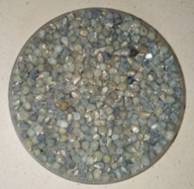
Clemson spineless
Is the most popular variety of okra in the market. The plants produce uniform, straight pods that are
spineless, making harvest easier. It can be served fried, cooked, or pickled.
This variety is very prolific and high yielding, maturing in about 55 days.
Plate
1: Clemson Spinlet
Ladies
Finger
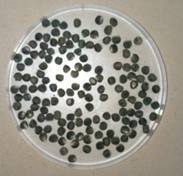
Ladies finger seed, is one of the okra that
is a mouthwatering vegetable, due to it its green palatability to make tasty
sub. It is a green vegetable with long fingerlike, having a small tip at the
tapering end. Its head shows a bulge, lighter green in shade, which is often
removed as inedible portion. When prepared, the taste is very specific to the
vegetable and generally like by children.
Plate
2: Ladies fingers seed
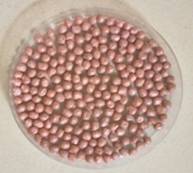
Basanti 447
This is an improved cultivar seed that
produces erect plant with very good vigor and good branching tendency. It is an
early hybrid with good maturity. The harvesting stage for best eating quality
is when pods reach a length of 15 – 17 cm pods. The pod is slender, and the colour is dark green. Specimen or both, plants are tall,
topping out at up to seven feet with a diameter of up to five feet.
Plate
3: Basanti 447 seed
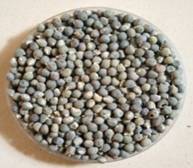
Perkins
long pod:
This heirloom is an early variety suitable
for growing in northern and southern climates. It may grow to five feet in
height, and bear straight green pods that are about four inches long.
Plate
4: Perkins
long pod seed
Go big
This is a good pick if you’re looking for a
wealth of edible fruit, a striking ornamental specimen or both, plant are tall,
topping out at up to seven feet with a diameter of up to five feet.
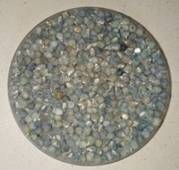
Plate
5: Go
bigseed
Planting / Sowing and Agronomic Practices
Planting operations
15 Seeds pot was used in planting; it was
filled with soil mixed with cow dung.
The soil was watered and allow for some time
and three okra seeds per pot were sown. Weeding was done at interval.
The thinning of the plant was carried down to
one plant per stand at two (2) weeks.
Experiment: Process for Collection and Inoculation of
Okra Vain Mosaic Disease.
A
fresh okra leaves infected with the okra vain mosaic disease were collected and
pounded into jelly-like form using mortar and pistil, which were used to
inoculate the experimented plant. The inoculation process was carried out by
dusting on each plant at early stage of germination.
Data collection
Plant height
The
plant height was measured and recorded from the ground level to the plant apex
starting from week two after sowing (2WAS) to week four respectively.
Number of leaves
Each
plant leaves were counted and recorded from week two to week four after sowing.
Number of flowers
At
flowering, plant flowers was also counted and recorded, starting from week two
to week four.
Number of fruits
Each
fruit on each plant were also counted at week two to week four.
Fruit weight per pot
The
fruit were harvested and measured using a sensitive measuring scale in gram (g)
and were
Recorded.
Disease incidence and
severity
The
disease incidence and severity was determined and recorded, using the scale
below adopted by Jakadaet al., 2021.
1.= No symptoms
2.= Very slight symptoms
3.= Slight symptom but still negligible
4.= 50% symptoms
5.= All plants present symptoms of chlorosis
6.= 25% stunted
7.= 50% stunted without fruits
8.= > 50% stunted with few fruits
9.= No fruit were observed
Data Analysis
All
the data collected were subjected to Analysis of variance (ANOVA) appropriate
to randomize complete design using Statistical Analysis software (SAS) Version
14.00 and the means were separated using Least Significance Difference (LSD) at
5% level of significance.
RESULTS
Effect of Cultivar on Plant Height of Okra (cm) infected
with YVMD in Wukari in 2021 cropping season.
Effect
of cultivar of plant height of okra infected with YVMD is presented in table 1:
The result revealed that there was highly significant (p≤ 0.01)
difference among the cultivars at 2WAS. Basanti 447
recorded the tallest plant with (23.5) followed by Ladies finger with (17.65)
and the least was observed in Go Big with (10.44). Similarly at 3 WAS the result
revealed that there was highly significant (p≤ 0.01) difference. At 3 WAS
Basanti 447 recorded the tallest plant, (38.12)
followed by Ladies Fingers with (22.41) and the least was recorded in Perkins
Long Pod with (10.50). At 4 WAS, similar trend was observed, the result
revealed that there was highly significant (p≤ 0.01) difference at 4 WAS.
Basanti 447 recorded the tallest plant with (55.52)
followed by Ladies finger with (47.42) and the least was observed in Clemson
spineless with (45.12).
Table 1: Effect of Cultivar on Plant Height
of Okra (cm) infected with YVMD in Wukari in 2021
cropping season.
Plant heights
Treatment2WAS3WAS4WAS
Clemson
spineless14.5720.3145.12
Ladies
finger 17.6522.4147.42
Basanti 447 23.5238.1255.52
Perkins long pod8.3410.5020.15
Go big10.4415.3030.15
LSD2.284.134.19
Significance******
KEYS
YVMD = Yellow Vein Mosaic Disease
LSD=Least Significance Difference
**=Highly significant
WAS=Week After sowing
Effect of cultivar on number of Flower of Okra infected
with YVMD in 2021 cropping season.
Effect
of cultivar on number of Flower of okra infected with YVMD is presented in
table 2: The result revealed that there was highly significant (p≤ 0.01)
difference at 3WAS. Basanti 447 recorded the highest
number of Flower with (17.42) followed by Ladies Finger with (13.54) and the least
were observed in Perkins Long Podwith
(8.32). Similar trend was observed at 4 WAS. The results revealed that there
was highly significant (p≤ 0.01) difference at 4 WAS. Basanti
447 recorded the highest number of flower with (25.48) followed by Ladies
Fingers with flawers number of (16.71) and the least
was recorded in Perkins Long Pod with (10.44).
Table 2: Effect of Cultivar on number of
Flowers of okra infected with YVMD in Wukari in 2021
cropping season.
Plant
Flowers
Treatment3WAS4WAS
Clemson
spineless11.2113.31
Ladies finger13.5416.71
Basanti 44717.4225.48
Perkins long pod8.3210.44
Go big10.4412.42
LSD1.142.53
Significance****
KEYS
YVMD
= Yellow Vein Mosaic Disease
LSD=Least Significance Difference
**=Highly significant
WAS=Week After sowing
Effect of Cultivar on number of Fruits of Okra infected
with YVMD in Wukari in 2021 cropping season.
Effect
of cultivar on number of Fruits of okra infected with YVMD is presented in
table 3: The result revealed that there was highly significant (p≤ 0.01)
difference at 3WAS. Basanti 447 recorded the highest
number of Fruit with (15.31) followed by Ladies Finger with (10.54) and the
least were observed in Go big with (8.33). At 4WAS the results revealed that there
was highly significant (p≤ 0.01) difference among the cultivars. At 4 WAS
Basanti 447 recorded the highest fruits with (18.51)
followed by Ladies Fingers with (11.52) and the least was recorded in Perkins
Long Pod with (10.00).
Table 3: Effect of Cultivar on number of
Fruit of okra infected with YVMD in Wukari in 2021
cropping season.
Number of Fruits
Treatment3WAS4WAS
Clemson
spineless9.3110.32
Ladies finger10.511.52
Basanti 44715.3118.51
Perkins long pod7.008.22
Go big8.3310.00
LSD 1.122.49
Significance****
KEYS
YVMD
= Yellow Vein Mosaic Disease
LSD=Least Significance
Difference
**=Highly significant
WAS=Week After sowing
Effect of Cultivar on Fruit Weigh of
Okra (g) infected with YVMD in Wukari in 2021
cropping season.
Effect of cultivar on
fruit weigh of okra infected with YVMD is presented in table 4: The result
revealed that there was highly significant (p≤ 0.01) difference. Basanti 447 recorded the highest fruit weigh with (30.66)
followed by Ladies Finger with (25.00) and the least fruit weigh was observed in Perkins Long Pod with (10.21).
Table 4: Effect of
Cultivar on Fruit weigh of okra infected with YVMD in Wukari
in 2021 cropping season.
TreatmentFruit weigh (g)
Clemson
spineless19.25
Ladies finger25.00
Basanti 44730.66
Perkins long pod10.21
Go
big15.21
LSD at 5%3.13
Significance**
KEYS
YVMD
= Yellow Vein Mosaic Disease
LSD=Least Significance Difference
**=Highly significant
Effect of Cultivar on Disease Incidence infected with
YVMD in Wukari in 2021 cropping season.
The result of effect of cultivar on disease
incidence infected with YVMD is presented in table 5: The result revealed that,
there was highly significant (p≤ 0.01) difference among the cultivar on
disease incidence. The highest incidence of the disease was observed or
recorded in Perkins long pod with (7.44) followed by Go big which had the
disease incidence of (5.22) and the least was recorded in Basanti
447 with (2.00)
Table 5: Effect of Cultivar on Disease Incidence and
severity on okra infected with YVMD in Wukari in 2021
cropping season.
TreatmentDisease Incidence
Clemson
spineless4.33
Ladies finger3.11
Basanti 4472.00
Perkins
long pod7.44
Go
big5.22
LSD0.18
Significance**
DISCUSSION
Effect of cultivar
on growth and yield parameters of okra on the incidence and severity of Yellow
Vein Mosaic Disease of Okra in wukari in 2021
cropping season.
The result of the experiment showed that
growth parameter was affected by cultivars. Cultivar has highly significant
(p≤ 0.01) influence on plant height. The result revealed that taller
plant was observed in Basanti 447 consistently. This
shows that Basanti 447 has high level of resistance
to Yellow Vein Mosaic Disease (YVMD) hence growing vigorously than other
variety. This finding is in line with Bhyan, et al., (2007) that Basanti
447, Ladies Finger, Clemson Spineless have high level of resistance to YVMD
compared to Perkins Long pod and Go big.
The result showed that there was highly
significant effect among the cultivars in yield and yield parameters. Basanti 447 has the highest number of flower, fruit and
fruit weight. The significantly highest numbers of yield parameters indicate
that Basanti is more resistant to YVMD than ladies
Fingers, Clemson Spineless, Perkins Long Pod and Go big. This finding is in
agreement with Biswas, et al., (2013) That Basanti 447, Ladies
Fingers and Clemson spinless are found to be more
resistant than Perkins Long pod and Go Big but less resistance to Basanti 447 on okra vein mosaic disease of okra.
Effect of cultivars on disease incidence
of okra infested with Vein mosaic Disease of Okra on okra in Wukari in 2021 cropping season
The
results obtained showed that cultivars had highly significant effect on the
disease incidence of YVMD. Perkins long pod had the highest incidence of the
disease followed by Go big and the least incidence was noted in Basanti 447. The highest incidence recorded in Perkins long
pod and Go big may be due to their inability to resist the disease while Basanti 447 emerge with less incidence because it was not
susceptible to the YVMD. This research is in line with the findings of Asare, et al., (2014) that Perkins long pod, Go big are
susceptible to YVMD while Basanti 447 is highly
resistance to YVMD.
CONCLUSION
From
the research conducted, it shows that, the effect of cultivars on the incidence
and severity of vein mosaic disease on okra is high in local cultivar than in
improved cultivar, which shows that, farmers should go for the improved
cultivar more, than local cultivar, and the yield potential of improved
cultivars under vein mosaic disease infestation is high when compared to local
cultivar.
ACKNOWLEDGEMENTS
We
acknowledge the management of Department of Crop Production and Protection,
Federal University Wukari for providing their
Teaching and Research Farms as well as Laboratories for the conduction of this research.
REFERENCES
Adepoju,
O. I., Jakada, M. A., Oluwatayo,
J. I. and Yohanna A. D. (2021).Nematicidal
Toxicity of Selected Plant Extract In The Control Of
Root-Knot Nematodes (Meloidogyne incognita) in WukariTaraba. Lapai International Journal of Agriculture.
Volume 2, Issue 2 Pp473-486
.
Adetuyi, F. O. (2008). Antioxidant
Degradation in Six Indigenous Okra Abelmoschusesculentus(L.)Moench Varieties during Storage in
Nigeria.Journal
of Food Technology.6
(5):227-23
Akhtar,
S. Khan, A. J. Singh, A. S. and Briddon, R. W.
(2014).
Identification of a disease complex involving a novel monopartitebegomoviruswith beta-and alphasatellites associated with
okra leaf curl disease in Oman. Archives of virology, 159(5), 1199-1205.
Ali, M. Hossain, M. Z. and Sarkern, N. C. (2000).Inheritance of Yellow Vein Mosaic Virus
(YVMV) tolerance in a cultivar of okra (Abelmoschusesculentus (L.)Moench). 111(3):205-209.
Ali, S. Khan, M. A. Habib, A. Rasheed, S. & Iftikhar, Y.
(2005).Management of yellow vein mosaic disease of okra through
pesticide/bio-pesticide and suitable cultivars.International journal of agriculture and biology,
7(1), 145-147.
Anjorin,
T. S. Jolaoso, M. A. & Golu,
M. T. (2013).A survey of incidence and severity of pests and diseases of
okra (Abelmoschusesculentus L.
Moench) and eggplant (Solanummelongena L.) in Abuja, Nigeria.American Journal of Research Communication,
1(11), 333-349.
Appiah, A. S., Amiteye,
S., Boateng, F. & Amoatey,
H. M (2020), Evaluation of okra (Abelmoschusesculentus L. Moench) cultivars
for resistance to okra mosaic virus an okra yellow vein mosaic virus. DOI
10.1007/s13313-020-00727-3
Asare-Bediako,
E., Addo-Quaye, A., & Bi-Kusi,
A. (2014).
Comparative efficacy of plan extracts in managing whitefly (Bemisiatabaci Gen.) and leaf curl disease in
okra (Abelmoschusesculentus
L.). American Journal Agricultural
Science Technol, 2(1), 31-41.
Benchasri S. (2012). Okra (Abelmoschusesculentus (L.)Moench) as a valuable vegetable of
the world.Ratarstvopovrtarstvo,
49(1), 105-112.
Bhyan, S. B., Alam,
M. M., & Ali, M. S. (2007). Effect of plant extracts on Okra mosaic virus
incidence and yield related parameters of okra. Asian Journal of Agricultural Research,1(3),
112-118.
Jakada,
M.A., Jada, M.Y; Usman, H.J; Yakubu,
U. and Nwokah, T.J. (2021). Effect of
RosetteDisease Incidence on Growth of
Groundnut (Arachishypogeae L.)
as influenced by spacing and cultivar types in North East Nigeria. Nigerian Journal of Tropical Agriculture,
Vol. 21, pp 57-71
Cite this
Article: Jakada, M.A., and Adepoju I.O. (2023). Effect of Cultivar on the Incidence
and Severity of Yellow Vein Mosaic Disease on Okra (Abelmoschusesculentus (L.) Moench)
in Wukari, Taraba State,
Nigeria. Greener Journal of
Agricultural Sciences, 13(3): 146-153.