Greener Journal of Agricultural Sciences
ISSN: 2276-7770
Vol. 16(1), pp. 1-8, 2025
Copyright ©2026, Creative Commons Attribution 4.0 International.

|
Greener Journal of Agricultural Sciences ISSN: 2276-7770 Vol. 16(1), pp. 1-8, 2025 Copyright ©2026, Creative Commons Attribution 4.0 International. |
|
Practices of plantain production and suitability for regeneration using the PIF method for suckers among producers in the villages of Ossiba, Bihoua et Kikondé, located on the Sibiti-Loudima road
A. E. Issali1,2,3, W.R.J. Ngamouyi1, A.H. Mouelet Kitsoukou1*, B.W. Nzobadila Kindiela2, E.R. Kongo Kikabou1, J. Mpika1
1Laboratory of Biotechnology and Plant Production, Faculty of Science and Technology, Marien N’GOUABI University, Brazzaville, Republic of Congo
2National Agronomic Research Institute, Ministry of Scientific Research and Technological Innovation, Brazzaville, Republic of Congo
3Laboratory of Plant Production, National Higher Education School of Agronomy and Forestry
|
ABSTRACT |
|||
|
The study aimed to regenerate, using the PIF technique, in vivo plants collected from fields in the villages of Ossiba, Bihoua, and Kikondé. Surveys were conducted, and the collected plant material was subjected to the PIF method using three substrates (sawdust, clay, and peanut shell). Sphinx Plus V5 and SPSS 26.0 softwares were used to generate cross-tabulation tables associated with the chi-square homogeneity tests, respectively. The Kruskal-Wallis’ unidirectional ANOVA on rank was applied. Medians were separated at the 95% confidence level. The results showed that plantain producers in the villages of Ossiba, Bihoua, and Kikondé are men of all ages with varying levels of education. They practice monoculture in forested areas. The tested cultivars express comparable regeneration potential. However, the type of substrate may have an effect on the production of leafy shoots.
|
|||
|
ARTICLE’S INFO |
|||
|
Article No.: 010326003 Type: Research Full Text: PDF, PHP, HTML, EPUB, MP3 DOI: 10.15580/gjas.2026.1.010326003
Accepted: 12/01/2026 Published: 13/02/2026
Keywords: Production practice, plantain, PIF, Loudima, regeneration.
|
*Corresponding Author
A.H. Mouelet Kitsoukou
E-mail: hmouelet1@gmail.com |
Article’s QR code
|
|
|
|
|
|
|
1. INTRODUCTION
Plantain (Musa paradisica L.) is a giant herb belonging to the Musaceae family (Guyot, 1992). Native to the hot and humid tropical jungles of Southeast Asia, the plantain banana tree is known in many countries where it plays an important nutritional role (Thiemele et al., 2023). Globally, plantain ranks fourth as a food crop after rice, wheat, and corn (Anonymous 1). Dessert bananas and plantains are grown in more than 100 countries in tropical and subtropical regions (Mialoundama et al., 2016). In Central and West Africa, sweet bananas and plantains make a vital contribution to food security, job creation, income diversification in rural and urban areas, gross domestic product (GDP) consolidation and, in doing so, poverty reduction (Mialoundama et al., 2016). In the Republic of Congo, banana cultivation, particularly plantain, ranks second as a staple food after cassava (Anonymous 6). In the Sibiti District, plantain cultivation, which was once practiced mainly by producers, is in constant decline due to declining soil fertility on the one hand and the unavailability of healthy planting material on the other.
Still relatively unknown, plants grown from fragmentation can, among other things, help to solve the problem of seed shortages. Very few studies (Ongagna, 2010) have assessed the proliferation potential of banana plants using the PIF technic; however, no study has reported on the analysis of the germination potential of cultivars in the Sibiti district, particularly those used in the villages of Ossiba, Bihoua and Kikondé. This work aimed to regenerate, using the PIF technic, live plants from suckers collected in the fields of the villages of Ossiba, Bihoua and Kikondé on the Sibiti-Loudima axis. In particular, it set out to analyze the suckering practices of plantain producers in the above-mentioned villages and to test the regeneration capacity of the plantain cultivars collected in relation to the influence of the cultivar and the substrate.
2. MATERIAL AND METHODS
2.1. Experimental site: The study was conducted in the villages of Ossiba, Bihoua, Kikondé and the Loudima Agricultural Research Zone (formerly CRAL). The trial was conducted from 8 August to 12 November 2023. The geographical coordinates of the experimental site are: longitude 013°04.210' East; latitude 04°09.696' South and 150 m above sea level.
2.2. Plants Material: The plant material consisted mainly of bayonet-type suckers collected from the fields of producers in the villages of Ossiba, Bihoua, and Kikondé.
2.3. Methods:
A participatory survey was conducted from 21 to 25 August 2023 in the department of Lékoumou. Three villages known to be major plantain producers in the region were selected to analyze the production practices of plantain growers. Data was collected using a survey form and direct observations in the fields. Five (05) plantain farmers per village were surveyed. Only shoots from false horn cultivars were sampled.
The collected false horn-type rejects were transported to the Loudima agricultural research area (CRAL) where PIF method were applied to test the regeneration capacity of the collected plantain cultivars, relative to the influence of the cultivar and substrate. The protocol defined by Kwa, 2003 was applied.
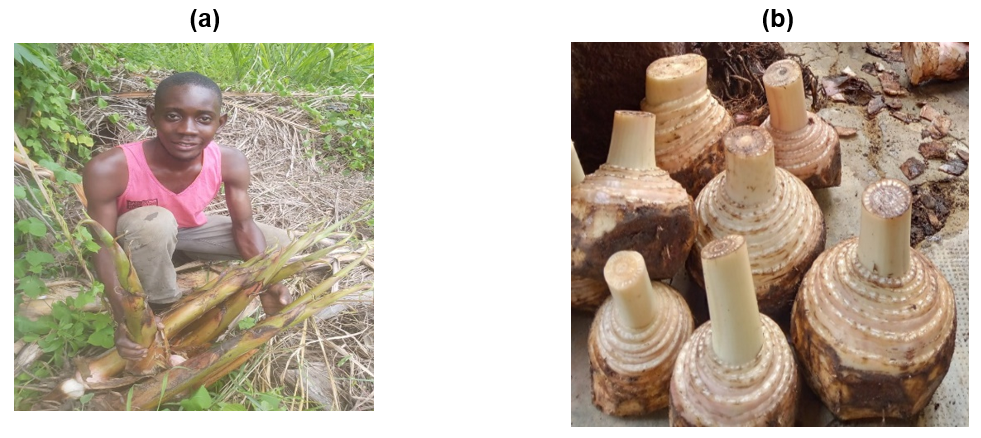
Figure 1 : a, collected waste. b, trimmed and shelled waste
A two-factor design represented by cultivar and substrate was used in a completely randomised arrangement with three germination trays. Two trays were made of wood and one was made of cement brick, all covered with transparent plastic film. Each germinator had three compartments for explants for the three cultivars. Each cultivar had six explants, for a total of 18 per germinator and 54 in all germinators.
Three cultivars (vernacular names: Abièleh, Mbongo, Wera) were sown in three substrates (sawdust, coarse peanut shells, clay). Three to six (3 to 6) weeks after germination, seedlings with at least two fully expanded leaves were transplanted into polyethylene containers filled with approximately 1 kg of sterilised potting soil.
• Distribution of producers surveyed by gender, age and level of education: Gender, age group and level of education.
• Characterization of the plantain cultivation system: cultivation method, location, type of seed, seed supply location, month of soil preparation before planting in the first and second cycles.
• Regeneration of collected cultivars in the germinator and greenhouse: duration of explant recovery, number of plants obtained after 1 month, number of plants obtained per explant, number of plants obtained per cultivar per m².
• Vegetative parameters of regenerated plants: height of weaned plant, diameter at plant collar, plant weight.
2.4. Analysis of data collected:
The survey data were analyzed using Sphinx Plus V5 and SPSS softwares 26.0. Descriptive statistics and non-parametrical methods were applied. Regarding the former, they were used to analyze the counts of identified categories while the latter were it, first, to test differences between the theorical counts and the observed ones under hypothesis of the equality of the theorical counts among all implied categories, second, to compare medians. This one was used after verifying the normality of distribution of the measured variables. For that, the Kruskal-Wallis’ unidirectional ANOVA on rank was applied. The medians were separated based on the eponymous test at the 5% risk threshold.
3. RESULTS & DISCUSSION
3.1. RESULTS
3.1.1. Analyze of waste practices production of plantain producers in the villages of Ossiba, Bihoua and Kikondé
To analyze the distribution of the producers surveyed according to gender, age and level of education, interview forms were completed. The results showed that 100% of men grow plantains, compared to 0% of women. There is a highly significant difference between the theoretical numbers of men and women growing plantains.
Table I : Distribution of plantain producers by gender
|
Gender |
Total |
Confidence intervals (%) |
2 |
df |
p-valeur |
|
Men |
15 |
100 ˂ 100 ˂ 100 |
15,00 |
1 |
0,0001 |
|
Women |
0 |
0 % |
|
|
|
|
Total |
15 |
100 |
|
|
|
Regard the distribution of producers by age group, three age groups were identified with insignificant frequencies at a 5% probability threshold. The first group is that of 15–35-year-olds, which accounts for 33.3% of producers. The second group, aged 36-59, accounts for 40%, and the last group, aged 60 and over, accounts for 26.7% of producers.
Table II : Distribution of producers by age group
|
Age group |
Total |
Confidence intervals (%) |
2 |
df |
p-valeur |
|
15- 35 |
5 |
9,5% < 33,3 < 57,2% |
|
|
|
|
36-59 |
6 |
15,2% < 40,0 < 64,8% |
0,40 |
2 |
0,8187 |
|
60 and over |
4 |
4,3% < 26,7 <49,0% |
|
|
|
|
Total. |
15 |
100 |
|
|
|
Three levels of education were identified at frequencies that were not significant at the 5% probability threshold. The first level is primary education, which accounts for 46.7% of producers. The second level is secondary education, which accounts for 40%, and the last level of education is university education, which accounts for 13.3% of producers.
Table III : Distribution of banana producers by level of education
|
Education level |
Total |
Confidence intervals (%) |
2 |
df |
p-valeur |
|
Primary |
7 |
21,4% < 46,7 < 71,9% |
|
|
|
|
secondary education |
6 |
15,2% < 40,0 < 64,8% |
2,80
|
2 |
0,2466 |
|
Academic |
2 |
0 % < 13,3 < 30,5% |
|
|
|
|
Total |
15 |
100 |
|
|
|
Characterization of the plantain cultivation system
To characterize the plantain cultivation system, cultivation type questionnaires were completed. The results revealed that 13 producers practice monoculture exclusively. This indicates a highly significant (p-value < 0.001) imbalance in cultivation methods. Monoculture has the highest frequency among producers, at 100%.
Table IV : Distribution of producers by cultivation method
|
Cultural trends |
Total |
Confidence intervals (%) |
2 |
df |
p-valeur |
|
Monoculture |
13 |
100 % < 100 < 100 % |
13,00 |
1 |
0,0003 |
|
Cultural association |
0 |
0 % |
|
|
|
|
Total |
13 |
100 |
|
|
|
No response = 2
For the cultivation area of plantain bananas in the Sibiti district, a very significant inequality of distribution (p-value < 0.05) was recorded among producers. The forest has the highest frequency among producers, at 100%.
Table V : Distribution of producers by cultivation location
|
Place of cultivation |
Total |
Confidence intervals (%) |
2 |
df |
p-valeur |
|
Forest |
13 |
100 % < 100 < 100 % |
13,00 |
1 |
0,0003 |
|
Savannah |
0 |
0 % |
|
|
|
|
Total |
13 |
100 |
|
|
|
No response = 2
Type of plantain seed used by producers, are highly significant inequality in distribution (p-value < 0.01) was noted. Rejection was the most common response among producers, at 100% (Table VIII).
Table VI : Type of seed used
|
Seed used |
Total |
Confidence intervals (%) |
2 |
df |
p-valeur |
|
Rejet |
13 |
100 % < 100 < 100 % |
26,00 |
2 |
0,0001 |
|
Plant PIF |
0 |
0 % |
|
|
|
|
Vitro plants |
0 |
0 % |
|
|
|
|
Total |
13 |
100 |
|
|
|
No response = 2
About source of plantain seed supply based on the price of suckers, two sources were identified at frequencies that were not significant at the 5% probability threshold. The first source of supply is the producer's own field, from which 52.4% of producers obtain their supply at prices ranging from 200 to 300 CFA francs. The second is other producers' fields (47.6%), with the majority sourcing at prices between 200 and 300 CFA francs and the minority between 100 and 200 CFA francs.
Table VII : Seed supply location and price
|
Price of rejected seeds/ Place of supply |
100-200 FCFA |
200-300 FCFA |
Total |
2 |
df |
p-valeur |
|
Previous field |
0 |
11 |
11 |
1,16 |
1 |
0,2825 |
|
Other producers |
1 |
9 |
10 |
|
|
|
|
Total |
1 |
20 |
21 |
|
|
|
No response = 2
Months of soil preparation
With regard to soil preparation prior to planting in the first cycle, significant frequencies were revealed at a probability threshold of 5%. Five months of preparation were identified, the first of which, in May, accounts for 6.5%. The second month, June, accounts for 13.3%, July accounts for 20%, August accounts for 6.5% and finally September accounts for 53.3% (Figure 16). These results are confirmed by the chi-square test, which highlights the existence of a significant difference between the observed and theoretical numbers for the five categories mentioned above (Chi-2 = 11.33, df = 4, p-value = 0.0231).
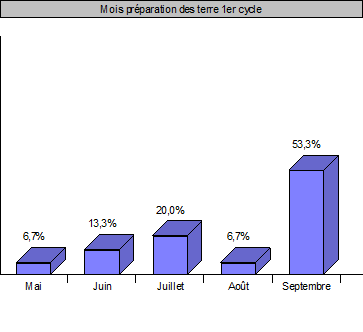
Figure 4: Months of land preparation in the first cycle before planting
With regard to soil preparation prior to planting in the second cycle, significant frequencies were revealed at a probability threshold of 5% (p-value < 0.05). To this end, two months of preparation were identified. The first, consisting of the month of January, accounted for 62.5% of favourable responses, compared with 37.5% for the month of February (Figure 17). These results are confirmed by the chi-square test, which highlights the existence of significant differences between the observed and theoretical numbers for the two classes mentioned above (Chi2 = 11.33, df = 4, p-value = 0.0231).
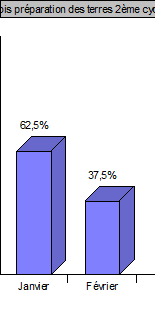
Figure 3: Months of land preparation in the second cycle before planting
Regeneration capacity of plantain cultivars collected in the three villages in relation to the influence of cultivar and substrate
Table VIII: Classification of medians relating to recovery time (RT) according to: (a) cultivar (b) substrate
|
Dependent variable (a) |
Cultivar |
Median |
Dependent variable (b) |
Substrate |
Median |
|
DR |
C3 |
25,5a |
DR |
S1 |
29a |
|
|
C2 |
30a |
|
S3 |
34a |
|
|
C1 |
34a |
|
S2 |
44,5a |
Key: values in a column followed by the same letter belong to the same statistical group.
Table X: Classification of medians relating to the number of plants weaned after 1 month (NPS-1 month) according to (a) cultivar and (b) substrate.
|
Dependent variable (a) |
Cultivar |
Median |
Dependent variable (b) |
Substrate |
Median |
|
NPS-1 month |
C3 |
0,5a |
NPS-1 month |
S1 |
0,00a |
|
|
C2 |
1a |
|
S2 |
0,5a |
|
|
C1 |
2a |
|
S3 |
2,00b |
Key: values in a column followed by the same letter belong to the same statistical group.
Table XII: Classification of medians relating to the total number of plants obtained per explant according to (a) cultivar and (b) substrate.
|
Dependent variable |
Cultivar |
Median |
Dependent Variable |
Substrate |
Median |
|
NTPOE |
C3 |
2a |
NTPOE |
S2 |
2a |
|
|
C2 |
5b |
|
S1 |
4,50b |
|
|
C1 |
5b |
|
S3 |
7,00c |
Key: values in a column followed by the same letter belong to the same statistical class.
For the total number of plants obtained per explant (NTPOE), three median classes are identified. Firstly, class 1, composed of substrate 2, is distinguished by a low median total number of plants obtained per explant. Secondly, class 2, composed of substrate 1, is characterized by an average median total number of plants obtained per explant. Thirdly, class 3, including substrate 3, is distinguished by a high median total number of plants obtained per explant.
The total number of plants obtained per explant (NTPOE) allows two groups of medians to be identified according to cultivar. The first, composed of cultivar 3, is distinguished by a low median total number of plants obtained per explant. The second, consisting of cultivars 2 and 1, is characterized by a high median total number of plants obtained per explant (Table XII).
Table XIV: Classification of medians relating to the total number of plants obtained per cultivar according to (a) the cultivar and (b) the substrate.
|
Dependent Variable |
Cultivar |
Median |
Dependent Variable |
Substrate |
Median |
|
NTPOC/m² |
C2 |
10a |
NTPOC/m2 |
S2 |
4a |
|
|
C1 |
24a |
|
S3 |
32a |
|
|
C3 |
32a |
|
S1 |
36a |
Key: values in a column followed by the same letter belong to the same statistical class.
Vegetative parameters of regenerated plants
Table XVI: Classification of medians relating to the height of the weaned plant (HautS), the diameter at the collar of the weaned plant (DiamS), and the weight of the weaned plant (PoidS)
|
|
|
Substrate factor |
|
|
|
|
Dependent Variable |
substrate |
Median |
dependent variable |
substrate |
Median |
|
HautS |
S3 |
26,500a |
DiamS |
S3 |
1,5412a |
|
|
S1 |
31,750a |
|
S1 |
1,5675a |
|
|
S2 |
38,000a |
|
S2 |
1,690a |
|
Dependent variable |
substrate |
Median |
|
|
|
|
PoidS |
S3 |
27,500a |
|
|
|
|
|
S1 |
33,000a |
|
|
|
|
|
S2 |
53,000a |
|
|
|
|
|
|
cultivar Factor |
|
|
|
|
Dependent variable |
Cultivar |
Median |
Dependent variable |
Cultivar |
Median |
|
HautS |
C3 |
28,750a |
DiamS |
C2 |
1,4350a |
|
|
C2 |
30,750a |
|
C3 |
1,6200a |
|
|
C1 |
34,000a |
|
C1 |
1,9370a |
|
Dependent variable |
Cultivar |
Median |
|
|
|
|
PoidS |
C2 |
19,000a |
|
|
|
|
|
C3 |
35,500a |
|
|
|
|
|
C1 |
50,000a |
|
|
|
3.2. DISCUSSION
3.2.1. Analyzis of plantain production practices in the villages of Ossiba, Bihoua and Kikondé
Analysis of plantain production practices reveals that men of varying educational levels and aged over 15 are the main producers of plantains in the villages of Ossiba, Bihoua and Kikondé. This is due to the intense physical effort required to carry out cultivation operations such as soil preparation, including clearing, felling, etc. Despite the intense physical effort involved, the profitability of the crop and the current economic situation are forcing people of all ages to take up plantain cultivation. Mialoundama et al. (2016) and Coffi et al. (2021) have shown the predominance of midfe-aged men (50 years and older) in the ownership, establishment and management of banana farms in the Mouyondzi district and at the Marc DELORME Station in the Abidjan district, respectively. Nevertheless, it should be noted that these men employ labour of both sexes. Awareness-raising among rural social groups of various ages should be carried out to improve national production.
Monoculture in forest areas is the practice applied in the villages of Ossiba, Bihoua and Kikondé. Monoculture is an ancestral practice that is deeply rooted in the collective unconscious of the populations of the Lékoumou department. The establishment of banana plantations solely in forest ecosystems would act as a windbreak and facilitate better root fixation. In addition, the high fertility of forest soils due to litter decomposition would reinforce this choice. Contrary to Mialoundama et al. (2016) and Coffi et al. (2021), our results revealed the prevalence of a single plantain cropping system. However, such a cropping system has some disadvantages, notably its itinerant nature, which requires greater land use and long periods of fallow to restore soil fertility. The use of forest landscapes would involve high costs for storage and transport of production to the city. As an alternative, it would be desirable to consider the development of wooded savannahs, hydromorphic soils adjacent to savannahs and forest edges. It is therefore important to raise awareness among rural communities about the practice of crop combinations in order to ration land use and apply the proposed innovations. Our results are similar to those of Skiredj et al. (2005) and Lassoudière (2012).
Our study showed that September and January are dedicated to preparing the land for sowing. These periods are justified by the rainfall calendar, as rainfall slows down during these months. Producers use only suckers, either from other producers or from their own fields. This result suggests weaknesses in the national seed system and a lack of knowledge of techniques for producing seedlings from stem fragments (PIF) or vitroplants through in vitro culture. Our results are comparable to those of Coffi et al. (2021), who showed that 92.2% of producers at the Marc DELORME station and surrounding localities use suckers as planting material. Consequently, raising awareness of rapid plantain propagation techniques and the implementation of seed legislation (PIF and/or MSD) is desirable in the villages of Ossiba, Bihoua and Kikondé in order to resolve the issue of seed unavailability in these villages.
3.2.2. Regeneration capacity of plantain cultivars collected in the three villages in relation to the influence of cultivar and substrate
All cultivars recorded the same recovery time, any number of plants weaned after 1 month (NPS-1 month), the number of plants obtained per cultivar and comparable vegetative parameters. Recovery time could be genotype-dependent. All cultivars appear to have comparable regeneration potential. However, our results differ from those of Paka et al. (2021) and Kouakou (2021), who obtained a recovery time of around 3 weeks using sawdust as a substrate. Late recovery seems to characterize the cultivars evaluated in terms of recovery time.
In terms of substrate effect, substrate 3 (sawdust) recorded the highest number of plants weaned after 1 month (NPS-1month) and the highest total number of plants produced per explant. Sawdust promotes better water retention and release, facilitating root emergence and elongation, which is a precursor to the emergence of the plant's aerial parts. The forest species that provided the sawdust may influence plant regeneration. Bangata et al. (2018) reported averages of 6 weaned plants after 1 month and 34 plants per explant of plantain sown on sawdust. Kwa (2003; 2009) highlighted the effect of cultivar on the number of plants produced per explant.
In summary, the production of leafy shoots depends on the genotype, substrate and volume of the explant. This is an interaction effect that could be physiologically translated into inhibition, competition between different substrates for different sites of enzymes involved in morphogenesis. Consequently, to optimise the production of plantlets from explants, it would be beneficial to make a judicious triple choice regarding the genotype, substrate and volume of the explant to be used.
CONCLUSION
Plantain producers in the villages of Ossiba, Bihoua and Kikondé have varying levels of education and ages. However, they use the same plantain production practices, based on monoculture in forest areas with rudimentary planting equipment. There is a lack of knowledge about new approaches to plantain production and a stability in the cultivars used. However, the substrate influences the regeneration capacity of explants seeded using the PIF technique, with sawdust being the most commonly used. Efforts to raise awareness and promote the use of innovative practices would improve plantain production in the Republic of Congo.
Acknowledgements/Funding
The authors would like to thank the National Institute for Agricultural Research (IRA) of Congo, which funded this work. They would also like to thank the Loudima Agricultural Sector Office under the supervision of the MAEP, which provided information on the plantain-producing villages.
Conflict of Interest
The authors declare that there are no conflicts of interest.
Author Contributions
A.E.I. and J.M. carried out this project and edited the manuscript. W.R.J.N. and A.H.M.K. drafted the manuscript and conducted the fieldwork. E.R.K.K. processed the data.
REFERENCES
Anonyme 1 : Faostat. (2020). Organisation des Nations Unies pour l’Alimentation et Agriculture (2020), Division de la statistique. Faostat. Récupéré sur http://www.faostat3.fao.org/.
Anonyme 6 : https://www.lefondsbleu.africa/projets/r-congo-la-chaine-de-la-banane-et-duplantain/ , consulté le 12/01/2025
Bangata B. N., Mobambo K,N., & Munyinga K., Shungu D., Vuru K., Vangu P., Omondi A. & Staver C. (2018). "Évaluation du potentiel prolifératif de six cultivars de bananier (cv. AAB, ABB, et AAA) par macropropagation en République Démocratique du Congo". Journal of Applied Biosciences, 127: 12770-12784.
Baouamio E. (2019). Etat des lieux en vue de la production des semences de bonne qualité pour les groupes de producteurs et les micros, petites moyennes entreprises agroindustrielles. Brazzaville: Ministère de l'agriculture de l'élevage et de la pêche, 50p.
Coffi J, M., Lekadou T., Ama J., Traoré S., Yao D., Agoh F. C., & Koffi Z., (2021). État des lieux des bananeraies (Musa sp.) en zone de culture du cocotier, sur le littoral en Côte d’Ivoire : cas de la station Marc DELORME et des villages aux alentours. International journal of Biological and Chemical Sciences, 2438-2455.
Guyot M., 1992. Systématique des angiospermes. Référence à la flore du Togo. Achevé d'imprimer sur les presses de l'EdiTogo, 203 p.
Kouakou K . (2021). Évaluation de la productivité de deux vivométhodes (plants issus de fragments de tige et multiplication sur souches décortiquées) et étude biochimique de la formation des vivoplants de bananier plantain [Musa paradisiaca L. (Musaceae)].Thèse de doctorat à Université de Nangui Abrogoua UFR, Science de la Nature, 155 p.
Kwa M (2003). Activation de bourgeons latents et utilisation de fragments de tige du bananier pour la propagation en masse de plants en conditions horticoles in vivo. Cirad/EDP Sciences All rights reserved, 58: 315-328.
Lassoudière A (2012). Le bananier. Un siècle d’innovations techniques. Editions. Quae, 352p.
Mialoundama G., Boukoulou1 H., Tchouamo I., Mbemba F., Koussafoula E., Petit S., & Mboungou Z. (2016). Production de la banane (Musa sp.) dans le district de Mouyondzi, République du Congo. Journal of Animal &Plant Sciences, Vol.30,, 4714-4726.
Ondhobame. (2021). Variabilité de la sensibilité vis-à-vis du Banana Bunchy Top Virus (BBTV) des espèces de Musa spp. cultivées dans le Grand Libreville. International journal of scientific research, 61 p.
Ongagna A. (2010). Production des plants de bananiers et plantains (Musa spp.) Par la technique des PIF : Effets des substrats sur la croissance et le dévéloppement des plants en pépinière. Université Marien Ngouabi. Brazzaville: Sciences biologiques.
Paka G, V., Mobambo P, K., Omondi B, A., Staver C., (2021). Evaluation de l’efficacité de la macro-propagation des cultivars de bananiers les plus préférés au Kongo Central, en RD Congo. Afrique Science, 19(6):76 - 88.
Skiredj A. (2005). La culture sous serre au Maroc. Consulté le 12 03, 2024, sur www.legume-fruit-maroc.com
Thiemele D, E, F., Kone D., Kone M, T., & Diarrasouba N. (2023). Effet des substrats sur la croissance et le développement de vivoplants de bananiers plantain (Musa sp.) en zone marginale de production au Nord de la Côte d’Ivoire (Korhogo). Afrique Science, 23(4): 72-85.
|
Cite this Article: Issali, AE; Ngamouyi, WRJ; Kitsoukou, AHM; Kindiela, BWN; Kikabou, ERK; Mpika, J (2026). Practices of plantain production and suitability for regeneration using the PIF method for suckers among producers in the villages of Ossiba, Bihoua et Kikondé, located on the Sibiti-Loudima road. Greener Journal of Agricultural Sciences, 16(1): 1-8, https://doi.org/10.15580/gjas.2026.1.010326003. |