Greener Journal of Agricultural Sciences
ISSN: 2276-7770
Vol. 16(3), pp. 123-140, 2026
Copyright ©2026, Creative Commons Attribution 4.0 International.

|
Greener Journal of Agricultural Sciences ISSN: 2276-7770 Vol. 16(3), pp. 123-140, 2026 Copyright ©2026, Creative Commons Attribution 4.0 International. |
|
Title in English
Contribution to the ecological study of orchids in the Comoros archipelago: floristic diversity, biogeography, ecological status, and conservation challenges
Title in French
Contribution à l’étude écologique des orchidées de l’archipel des Comores : diversité floristique, biogéographie, statut écologique et enjeux de conservation
Maoulida Mohamed ABDILLAHI1,2,4*; Frédéric BIORET2; Vincent BOULLET2; Étienne VENNETIER3
1. Laboratory of Geobotany and Phytosociology, INRAPE, National Research Institute for Agriculture, Fisheries and the Environment, P.O.Box 404, M'dé, Ex-CEFADER, Comoros
2. University of Brest, EA 7462 Geoarchitecture Territories, Urbanization, Biodiversity, Environment, Brest, France
3. Teacher, LPO Gustave Eiffel, Kahani, 97680 Ouangani, Mayotte
4. BP. 906. Specialization in Plant Biology and Ecology, Faculty of Sciences, University of Antananarivo
|
ARTICLE’S INFO |
||||
|
Article No.: 062426095 Type: Research Full Text: PDF, PHP, HTML, EPUB, MP3 DOI: 10.15580/gjas.2026.3.062426095
Accepted: 03//07/2026 Published: 04/08/2026
Keywords: Biogeography, conservation, IUCN status, orchids, Comoros Archipelago
Mots clés : Inventaire, biogéographie, Conservation, statut UICN, Orchidées, Archipel des Comores
|
*Corresponding Author
ABDILLAHI Maoulida Mohamedi
Laboratory of Geobotany and Phytosociology, INRAPE, National Research Institute for Agriculture, Fisheries and the Environment, P.O.Box 404, M'dé, Ex-CEFADER, Comoros
E-mail: abdillahimaoulida@yahoo.fr; abdillahifsrp@gmail.com |
Article’s QR code |
||
|
|
|
|
|
|
|
ABSTRACT |
||||
|
|
The Malagasy biogeographical region, which includes the Comoros archipelago, is known worldwide for its natural wealth and as a biodiversity hotspot. The degradation of natural ecosystems threatens certain specialized species, including orchids. The aim of this study was to determine the diversity, assess the biogeography, and evaluate the ecological status of orchid species in the Comoros archipelago based on literature reviews, supplemented by field surveys and the application of IUCN criteria (version 4.0). The results of this study identified 148 species, subspecies, and varieties distributed across 33 genera. The endemism rate is 47%, with 63% being native. Grande Comore is the island with the highest number of endemic species (7 strictly endemic species). This flora has a closer affinity with Madagascar (47%) than with other neighboring countries: (3%) with the African continent, (1%) with Asia, or (2%) with the Mascarene Islands. Fifteen species are critically endangered (CR) (8%), seven are endangered (EN) (5%), 27 are vulnerable (VU) (16%), nine are near threatened (NT) (6%), 27 are of least concern (LC) (18%), and 68 are data deficient (DD) (46%). As part of the implementation of a biodiversity conservation management policy, measures must be taken quickly by local authorities to ensure the conservation of these species, some of which are endangered.
In French
La région biogéographique malgache dont fait partie l’archipel des Comores est connue mondialement par sa richesse naturelle mais aussi comme un “ hotspot ” pour la conservation de la biodiversité. La dégradation des écosystèmes naturels met en danger certaines espèces spécialisées dont les orchidées. L’objet de cette étude est de déterminer la diversité, d’évaluer la biogéographie et le statut écologique des espèces d’orchidées de l’archipel des Comores sur la base d’inventaires bibliographiques, complétés par des inventaires de terrains et l’application des critères de l’UICN (version 4.0). Les résultats de cette étude ont permis d’inventorier 148 espèces, sous-espèces et variétés réparties dans 33 genres. Le taux d’endémisme est de 47% et avec 63% d’indigénat. La Grande Comore est l’île la plus riche en espèces endémiques (avec 7 espèces endémiques strictes) pour cette ile. Cette flore possède une affinité plus proche de Madagascar (47%) qu’avec les autres pays voisins : (3%) avec le continent Africain, (1%) avec l’Asie ou (2%) avec les Mascareignes. 15 espèces sont en danger critique (CR) (8%), 7 espèces en danger (EN) (5%), 27 espèces vulnérables (VU) (16%), 9 espèces quasi-menacées (NT) (6%), 27 espèces en préoccupation mineure (LC) (18 %) et 68 espèces en données insuffisantes (DD) (46%). Dans le cadre de la mise en place d’une politique de gestion conservatoire de la biodiversité, des mesures devront être prise rapidement par les autorités locales, afin d’assurer la conservation de ces espèces dont certaines sont en danger d’extinction.
|
|||
|
|
|
|||
INTRODUCTION
Located in the Indian Ocean, the Comoros archipelago consists of four volcanic islands: Grande Comoros, Anjouan, Mohéli, and Mayotte (Figure 1). The first three are under Comorian authority, while Mayotte is under French administration. It has undergone several biological migrations, generally originating from the East African coast and neighboring islands (Madagascar, the Mascarene Islands, etc.).
This archipelago and all the islands of the southwestern Indian Ocean are among the world's biodiversity hotspots (Dorr, L. J., 1997; Labat J. et al., 2010), particularly for orchids. Orchids form the royal family of the plant kingdom (Stewart and Griffiths, 1995; Gravendeel et al., 2004), with over 25,000 species, of which approximately 1,000 are found in the Indian Ocean region. More than 1,000 species, distributed among 65 genera, are native to Madagascar and the surrounding islands: the Comoros, Mascarene Islands, and Seychelles (Benny et al., 2019), and are found in numerous climatic zones around the globe. These entomophilous flowering plants are highly evolved. For example, in the genus Aerangis, a total of 58 species, including three natural hybrids, are currently recognized. They are distributed throughout tropical and southern Africa, Madagascar, the Comoros, Réunion, and Sri Lanka. Thirty-one species and two varieties are found in continental Africa, none of which are present in the islands of the Indian Ocean. Most sub-Saharan African countries are home to at least one species, with the largest number found in Tanzania, where 19 species have been recorded, followed by Kenya and Malawi, with 10 species each (La Croix 2022). In addition, 27 species have been identified in the western Indian Ocean region, namely Madagascar, the Comoros, and Réunion; all are endemic.
Twenty of these are endemic to Madagascar, three to the Comoros only, three to both the Comoros and Madagascar, and one, Aerangis punctata, to both Madagascar and Réunion. No species have been reported on the other islands of the western Indian Ocean. The orchids of the Comoros archipelago include endemic, native, and threatened species. The La Grille and Karthala massifs are home to the majority of Comorian endemic species (more than 50% of orchids including 45 endemic species) (Rakotoarivelo F. et al., 2011).
However, knowledge of this flora has many gaps. No complete and up-to-date list of orchids from the entire archipelago exists to date. Works on the orchids of the Comoros Islands are old and partial: the work of Schlechter, R. (1915) in "Kritische Aufzählung der bisher von Madagaskar, den Maskarenen, Komoren und Seychellen bekanntgewordenen Orchidaceen", that of PERRIER DE LA BÂTHIE (1939-1941) in the Flore de Madagascar et des Comores, and concern a small amount of material from old collections by Boivin & Humblot. The only recent work available to date is quite fragmentary and concerns only the study of a single genus (e.g., Jumellea) or a single species (e.g., Jumellea bosseri, Jumellea pailleri) (Bosser, J., 2002; Cribb, P. & Hermans, J., 2009; Neirynck and Herremans, 2006; Pailler et al., 2008; Pailler, 2009). Few studies have been conducted on the taxonomy of the genera. Since the last comprehensive revision by Perrier de la Bâthie (1939), eight new species of Jumellea have been legitimately described (Summerhayes 1952; Senghas 1964, Senghas 1967; Bosser 1970; Wood 1982; Cribb 2009; Herremans 2001; La Croix 2000; Pailler 2009).
Currently, only two orchid species (Jumellea anjouanensis and Angraecum humblotianum) are listed as threatened by the IUCN for Grande Comore, Anjouan, and Mohéli, both categorized as "endangered" (EN). All orchids are partially protected, without species specificity, on the list of protected species published in decree no. 01/031/MPE/CAB of May 14, 2001, concerning the protection of wild fauna and flora species in the Comoros (Louette, 2004).
On Grande Comore and Anjouan, terrestrial and marine protected areas are being developed, and Mohéli has a protected area, the Mohéli National Park. In Mayotte, a preliminary list of orchids already exists, categorized according to the IUCN (Barthelat et al., 2006; IUCN French Committee, 2013; Hervouet & Barthelat, 2014). Although the marine natural park was created in 2010 and protects the lagoon, its area is limited by the high tide mark (the upper limit of the public maritime domain) and therefore does not include terrestrial habitats. The existing species on the islet of Mbouzi have been protected since the creation of this 82-hectare islet as a nature reserve in 2007. To address this, this work consists of taking stock of the diversity and biogeography of orchids in the Comoros archipelago and determining the ecological status of each species.
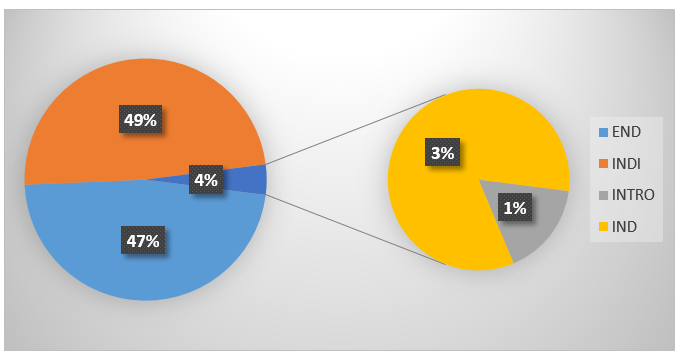
Figure 1: Category (Endemism, Indigenous and Introduction)
MATERIALS AND METHODS
Three main methods were used in this work: literature reviews, ecological surveys, personal observations, and conservation status assessment:
- The literature reviews consisted of consulting all documents relating to our topic held in the libraries of national institutions (INRAPE library, CNDRS library) and international databases: the IRNAPE herbarium, the University of the Comoros herbarium, and international herbaria (National Museum of Natural History in Paris, Sonnerat, Tropicos-Misouri Botanical Garden, National Botanical Conservatory of the Mascarene Islands in Réunion and Mayotte).
- The spot ecological surveys and personal observations were carried out in two phases: June and July 2018 (first phase); January and March 2019 (second phase), during which field observations were made using the linear survey method (Duvigneaud, 1980) as well as the collection of samples and their placement in a herbarium at INRAPE.
- The assessment of the conservation status of the species was carried out according to the IUCN criteria and categories described in the two guides: the categories and criteria of the IUCN Red List, Version 3.1 (2012) (www.uicn.fr/La-Liste-rouge-des-especes.html) and the guidelines for the application of the IUCN Red List criteria at the regional and national levels, Version 4.0 (2012) (www.uicn.fr/La-Liste-rouge-des-especes.html); but also based on the Red List of the Flora of Mayotte (Barthelat et al., 2006; IUCN France, 2018; Hervouet & Barthelat, 2014).
RESULTS AND DISCUSSION
A-Results
1- Floristic Diversity and Biological Spectrum
a- Floristic Diversity
A total of 148 orchid species were recorded throughout the Comoros archipelago, distributed across 33 genera (Table 1).
The most represented genera are Angraecum (21 species and subspecies), Eulophia (17 species), Cynorkis (16 species and varieties), Bulbophyllum (14 species), Habenaria (9 species), Jumellea (8 species), Aerangis (7 species), Polystachya (6 species), Aeranthes, Disperis, Nervilia, and Liparis (5 species each) (Figure 2). In contrast, the other genera Angraecopsis, Benthamia, Bolusiella, Calanthe, Cheirostylis, Corymborkis, Cymbidiella, Didymoplexis, Galeola, Goodyera, Graphorkis, Hetaeria, Lemurella, Malaxis, Microcoelia, Microterangis, Neobathiea, Oberonia, Oeoniella, Platylepis, Satyrium, Vanilla, and Zeuxine are less represented, with one to three species each. Furthermore, the genera Acampe, Benthamia, Bolusiella, Calanthe, Corymborkis, Didymoplexis, Galeola, Graphorkis, Lemurella, Neobathiea, Oberonia, Oeoniella, Platylepis, and Stichorkis are monospecific.
Table 1: List of orchid species recorded in the Comoros archipelago (endemic species in bold) in the biography and some field observations
|
N° |
Espèce |
Biogéographie |
GC |
AN |
MO |
MA |
COM |
|
1 |
Acampe pachyglossa |
INDI : COM, MADA, AFR & MAS (Reunion & Somalia) |
X |
X |
X |
X |
|
|
2 |
Aerangis bursiculata sp. nov |
END GC strict |
X |
|
|
|
|
|
3 |
Aerangis divitiflora |
END COM & MADA (centre ouest) |
X |
|
|
X |
X |
|
4 |
Aerangis hildebrandtii |
END COM |
X |
X |
X |
X |
X |
|
5 |
Aerangis modesta |
END COM (GC & AN) &MADA |
X |
X |
|
|
X |
|
6 |
Aerangis polyura sp. nov |
END COM |
X |
X |
|
|
|
|
7 |
Aerangis rostellaris |
END COM (GC) & MADA |
X |
|
|
|
X |
|
8 |
Aerangis spiculata |
END COM (GC, AN &MA) et MADA |
X |
X |
|
X |
|
|
9 |
Aeranthes campbelliae |
END GC strict |
X |
|
|
|
|
|
10 |
Aeranthes caudata |
END COM & MADA |
|
|
|
|
X |
|
11 |
Aeranthes dentiens |
END COM & MADA |
|
|
|
|
X |
|
12 |
Aeranthes grandiflora |
END COM &MADA |
|
|
|
|
X |
|
13 |
Aeranthes virginalis |
END COM & MADA |
|
|
|
|
X |
|
14 |
Angraecopsis pobeguinii |
END GC strict |
X |
|
|
|
|
|
15 |
Angraecopsis trifurca |
END COM & AFR (Ethiopia, Zimbabwe) |
X |
|
|
|
|
|
16 |
Angraecum arachnites |
MADA |
X |
|
|
|
|
|
17 |
Angraecum baronii |
MADA |
X |
|
|
|
X |
|
18 |
Angraecum calceolus |
INDI : MOZA in Western India (COM, MADA & MASC (MAU, ROD, REU, SEY) |
X |
X |
X |
|
|
|
19 |
Angraecum caulescens |
END COM & MASC |
X |
|
X |
X |
|
|
20 |
Angraecum conchoglossum |
MADA, REU |
|
|
|
|
X |
|
21 |
Angraecum dendrobiopsis |
MADA |
|
|
|
|
X? |
|
22 |
Angraecum eburneum |
COM, AFR (Southe-ast Kenya to eastern Tanzania, Pemba and Zanzibar), MADA et MASC (MAU, REU, SEY) |
X |
|
|
|
|
|
23 |
Angraecum eburneum subsp. superbum |
INDI : COM, MADA & SEY |
X |
|
X |
X |
|
|
24 |
Angraecum florulentum |
END COM |
X |
X? |
|
|
|
|
25 |
Angraecum germinyanum |
END COM & REU |
X |
X |
|
X |
X |
|
26 |
Angraecum humbertii |
MADA |
|
|
|
|
X |
|
27 |
Angraecum humblotianum |
MADA |
|
|
|
|
X |
|
28 |
Angraecum leonis |
END COM & MADA |
X |
|
X |
X |
X |
|
29 |
Angraecum mauritianum |
MADA, MASC |
X |
X? |
|
|
|
|
30 |
Angraecum meirax |
END COM et MADA |
|
|
|
|
X |
|
31 |
Angraecum multiflorum |
MADA, MASC (MAU, REU, SEY) & COM |
|
|
|
|
X |
|
32 |
Angraecum pectinatum |
INDI : COM, MADA & MASC (MAU, REU) |
|
|
X |
|
X |
|
33 |
Angraecum sp |
IND |
X |
|
|
|
|
|
34 |
Angraecum scottianum |
END COM |
X |
X |
|
|
|
|
35 |
Angraecum xylopus |
END COM |
X |
|
|
|
X |
|
36 |
IND |
X |
|
|
|
|
|
|
37 |
Bolusiella iridifolia |
INDI : COM &AFR |
|
|
|
|
X |
|
38 |
Bulbophyllum alexandrae |
MADA & COM |
|
|
|
|
X |
|
39 |
Bulbophyllum comorianum |
END COM |
X |
|
|
|
|
|
40 |
Bulbophyllum coriophorum |
END COM &MADA |
X ? |
|
X |
X |
|
|
41 |
Bulbophyllum densum |
MASC (MAU &REU) |
|
|
|
|
X |
|
42 |
Bulbophyllum humblotii |
MADA, SEY & AFR (Tanzania, Zimbabwe), Malawi et COM |
X |
|
|
|
|
|
43 |
Bulbophyllum hyalinum |
END GC &MADA |
X |
|
|
|
|
|
44 |
Bulbophyllum intertextum |
AFR, MADA, SEY |
X |
|
|
|
X |
|
45 |
Bulbophyllum leonii |
END COM |
X |
X |
X |
|
|
|
46 |
Bulbophyllum longiflorum |
Uganda, northeast of KwaZulu-Natal, west of the Indian Ocean, from Bhutan to the Pacific. |
X |
|
X |
X |
|
|
47 |
Bulbophyllum megalonyx |
END COM |
|
X |
|
|
|
|
48 |
Bulbophyllum nutans |
INDI : COM, MADA &MASC (MAU, REU) |
X |
|
|
|
|
|
49 |
Bulbophyllum occlusum |
MADA, REU & COM |
|
|
|
|
X |
|
50 |
Bulbophyllum occultum |
INDI : COM, MADA & MASC (MAU, REU) |
X |
|
X |
|
|
|
51 |
Bulbophyllum sp |
IND |
X |
X |
|
|
|
|
52 |
Calanthe sylvatica |
INDI : COM, AFR et west OI (MADA & REU) |
X |
X |
X |
X |
|
|
53 |
Cheirostylis nuda |
MAU, REU |
|
|
X |
|
|
|
54 |
Cheirostylis gymnochiloides |
END COM (AN & MA) &MADA |
|
|
X |
X |
|
|
55 |
Corymborkis corymbis |
AFR, MADA et REU |
|
|
|
|
X |
|
56 |
Cynorkis benaraensis sp. nv. |
END COM (MA) |
|
|
|
X |
|
|
57 |
Cynorkis comorensis |
END GC strict |
X |
|
|
|
|
|
58 |
Cynorkis fastigiata |
INDI : COM, MADA &MASC (MAU, REU & SEY) |
X |
X |
X |
X |
|
|
59 |
Cynorkis flexuosa |
END MA & MADA |
|
|
|
X |
|
|
60 |
Cynorkis nutans |
COM, MADA & REU |
X |
|
|
|
|
|
61 |
Cynorkis humblotiana |
END COM |
|
|
|
|
X |
|
62 |
Cynorkis lilacina |
INDI : COM, MADA & REU |
X |
X |
|
|
|
|
63 |
Cynorkis lilacina var. boiviniana |
END COM |
X |
|
|
|
|
|
64 |
Cynorkis lilacina var. comorensis |
END COM |
X |
X |
|
|
|
|
65 |
Cynorkis parvula |
END COM |
|
|
|
|
X |
|
66 |
Cynorkis purpurascens |
INDI : COM (MA), MADA & MASC |
|
|
|
X |
|
|
67 |
Cynorkis ridleyi |
COM, MADA & REU |
X |
|
|
|
X |
|
68 |
Cynorkis schmidtii |
END GC Strict |
X |
|
|
|
|
|
69 |
Cynorkis sigmoidea |
END GC strict |
X |
|
|
|
|
|
70 |
Cynorkis speciosa |
MADA |
|
|
|
X |
|
|
71 |
Cynorkis tenella |
END COM & MADA |
X |
|
|
|
|
|
72 |
Didymoplexis avaratraensis |
Madagascar |
|
|
|
X |
|
|
73 |
Disperis hildebrandtii |
END COM & MADA |
|
|
|
X |
|
|
74 |
Disperis humblotii |
END COM & MADA |
X |
X |
|
|
X |
|
75 |
Disperis oppositifolia |
INDI : Comoros, Madagascar, Mauritius, Réunion |
X |
|
X |
X |
|
|
76 |
Disperis trinileata |
END COM & MADA |
|
X |
|
X |
|
|
77 |
Disperis tripetaloides |
IND |
|
X |
|
X |
X |
|
78 |
Eulophia alismatophylla |
END COM & MADA (N.E) |
|
|
|
|
X |
|
79 |
Eulophia angornensis |
END COM |
|
|
|
|
X |
|
80 |
Eulophia bosseriana M.W.Chase & Schuit. |
MADA (SW. & S. Central) |
|
|
|
X |
|
|
81 |
Eulophia cordylinophylla |
END COM |
X |
|
X |
X |
|
|
82 |
Eulophia cucullata |
INDI : COM, AFR &MADA |
X |
|
|
X |
|
|
83 |
Eulophia decaryana |
INDI : COM, AFR (Kenya, KwaZulu-Natal, MOZ, Zimbabwe) & MADA, |
|
|
|
X ? |
X ?
|
|
84 |
Eulophia falcigera |
MADA |
|
|
|
|
X ? |
|
85 |
Eulophia furcata |
END COM et MADA (NW) |
|
|
|
X |
|
|
86 |
Eulophia livingstoneana |
INDI : COM, AFR (Ethiopia to Limpopo) & MADA |
X |
|
|
X |
|
|
87 |
Eulophia lonchophylla |
END COM et AFR (KwaZulu-Natal, MOZ, Tanzania) |
X |
|
X |
X |
|
|
88 |
Eulophia maculata |
IND : COM, AFR, MADA & MAU |
|
|
|
X |
X |
|
89 |
Eulophia petiolata |
END COM &MADA (N.W) |
|
|
|
X |
X |
|
90 |
Eulophia pileata |
END COM & MADA |
|
|
|
|
X |
|
91 |
Eulophia plantaginea |
IND |
X |
|
|
X |
|
|
92 |
Eulophia pulchra |
INDI : COM, AFR (Tanzania à MOZ), MADA, MAU and W. Pacific. |
|
|
|
X |
X |
|
93 |
Eulophia sclerophylla |
END COM et MAD (SE) |
|
|
|
|
X |
|
94 |
Eulophia spathulifera H. Perrier |
N. & W. MADA |
|
|
|
X |
X |
|
95 |
Eulophia sp |
END COM |
|
|
|
X |
|
|
96 |
END COM (GC) et MADA |
X |
|
|
|
|
|
|
97 |
Goodyera afzelii |
MADA, MOZ, Vietnam |
X |
|
X |
|
|
|
98 |
Goodyera procera |
Tropical and Subtropical Asia |
|
|
X |
|
X |
|
99 |
INDI : COM, MADA, MASC (MAU, REU, SEY) |
|
|
|
|
X |
|
|
100 |
Graphorkis concolor var. alphabetica |
INDI : COM, MADA, MADA (MAU, REU, SEY) |
|
|
|
X |
|
|
101 |
Habenaria boiviniana |
INDI : COM, AFR (Kenya, Tanzania,) &MADA |
X |
|
X |
X |
|
|
102 |
Habenaria cirrhata |
INDI : COM, Tropical AFR and MADA |
|
|
|
|
X |
|
103 |
Habenaria clareae |
MADA, Malawi, Zimbabwe |
|
|
|
X |
|
|
104 |
Habenaria comorensis |
END COM |
|
|
|
|
X |
|
105 |
Habenaria incarnata |
END COM &MADA |
X |
X ? |
X |
|
X |
|
106 |
Habenaria johannae |
END COM |
|
X |
|
|
|
|
107 |
Habenaria sp |
IND |
X |
X |
X |
|
|
|
108 |
Habenaria tomentella |
END COM |
|
|
|
|
X |
|
109 |
Hetaeria vaginalis |
END COM |
|
|
|
|
X |
|
110 |
Jumellea anjouanensis |
END COM |
X |
X |
X |
|
X |
|
111 |
Jumellea arachnantha |
END COM |
X |
X |
X |
X ? |
|
|
112 |
Jumellea arborescens |
END COM & MADA |
X |
|
X |
X |
|
|
113 |
Jumellea comorensis |
END COM |
X |
X |
|
|
X |
|
114 |
Jumellea confusa |
END COM & MADA |
|
|
|
|
X |
|
115 |
Jumellea maxillarioides |
END COM & MADA |
X |
|
|
|
|
|
116 |
Jumellea pailleri |
END COM |
X |
X |
|
|
|
|
117 |
Jumellea sp |
IND |
X |
X |
X |
|
|
|
118 |
INDI : COM, MADA, MAU |
X |
X |
|
X |
|
|
|
119 |
Liparis caulescens |
REU |
X |
|
|
|
X |
|
120 |
Liparis cespitosa |
INDI : COM, Tanzania to MOZ & S. Pacific |
X |
|
|
|
X |
|
121 |
Liparis salassia |
INDI : COM, MADA, MAU, REU |
|
|
|
|
X |
|
122 |
Liparis sambiranoensis |
END COM et MADA |
|
X |
X |
X |
X |
|
123 |
Liparis sp |
IND |
|
X |
X |
|
|
|
124 |
Malaxis cardiophylla |
END COM |
X |
|
|
X |
X |
|
125 |
Microcoelia aphylla |
INDI : COM, AFR (Kenya, KwaZulu-Natal, MOZ, Tanzania, Uganda, Zimbabwe), MADA et MASC (REU et MAU) |
|
|
|
X |
X |
|
126 |
Microcoelia cornuta |
END COM et MADA (N.O) |
|
|
|
X |
X |
|
127 |
Microcoelia macrantha |
MADA |
X |
|
|
X |
|
|
128 |
END COM et MADA |
X |
X |
|
|
X |
|
|
129 |
Nervilia bicarinata |
INDI : COM, AFR, MAD et Arabian Peninsula |
X |
|
|
X |
|
|
130 |
Nervilia hirsuta |
IND |
|
|
|
X |
X |
|
131 |
Nervilia kotschyi |
INDI : COM, AFR et MADA |
X |
|
|
X |
|
|
132 |
Nervilia petraea |
Tropical AFR |
|
|
|
X |
|
|
133 |
Nervilia renschiana |
AFR (Tanzania to South Africa) & MADA |
|
|
|
X |
|
|
134 |
INDI : Tropical AFR &S. Africa & West OI |
X |
X |
X |
|
|
|
|
135 |
INDI : COM, MADA & MASC (MAU, REU) |
X |
|
|
|
X |
|
|
136 |
INDI : COM, MADA, MASC (MAU, REU, SEY) |
X |
|
X |
X |
X |
|
|
137 |
Polystachya anceps |
END COM et MADA |
X |
X |
|
X |
|
|
138 |
Polystachya concreta |
INDI : Tropical & Subtropical America. |
X |
X |
X |
X |
|
|
139 |
Polystachya cultriformis |
INDI : COM, Tropical et S. Africa et west OI |
X |
X ? |
|
|
X |
|
140 |
Polystachya rosea |
END COM, MADA & SEY |
X |
|
|
|
X
|
|
141 |
Polystachya sp |
IND |
X |
X |
|
|
|
|
142 |
Polystachya waterlotii |
END COM & MADA (Centrale) |
|
X |
|
|
X |
|
143 |
Satyrium amoenum |
INDI : COM, MADA, REU |
X |
|
|
|
|
|
144 |
Satyrium trinerve |
IND : COM, AFR (Tropical et S. Afrique) & MADA |
X |
|
|
|
|
|
145 |
END COM, MASC (MAU et REU) |
X |
|
|
|
|
|
|
146 |
Vanilla humblotii |
END COM & MADA (N) |
X |
X |
|
X |
|
|
147 |
Vanilla planifolia |
INTR : S. Mexico to N. Brazil |
X |
X |
X |
X |
|
|
148 |
Zeuxine ballii |
Malawi to Zimbabwe |
|
|
|
X |
|
Indication :
GC: Grand Comoros (Ngazidja); AN: Anjouan (Ndzuani); MO: Moheli (Mwali); MA: Mayotte (Maoré). MADA: Madagascar; AFR: Africa; REU: Reunion; MAU: Mauritius; SEY: Seychelles; MOZ: Mozambique.
END: Endemic; INDI: Native; INTR: Introduced; IND: Undetermined; ?: Presence doubtful.
b- Biological spectrum, epiphyte substrate, and habitat
Three biological forms can be distinguished according to Raunkiaer's (1906) biological spectrum in the orchids of the Comoros Archipelago (Table 2): epiphytes (on tree trunks, lithophytes, or saxicolous) represent approximately 54%, geophytes (terrestrial orchids) approximately 46%, and lianas only 1%.
It should also be noted that, depending on the climate and vegetation type, most of the recorded orchids are found primarily in humid and transitional forests or savannas (151 species), compared to 5 species in dry areas (forest, scrubland, and savanna). The humid climate and vegetation type of the sites play very important roles in the establishment of these species, most of which are epiphytes. However, some species with very high ecological plasticity in these islands can be found in both humid and dry forests (examples: Angraecum humblotianum, Bulbophyllum hyalinum, etc.). The Comoros, located in the tropics, boasts a wide diversity of flowers, including orchids. Most often, they grow on trees, but some also grow on rocks.
Several species of trees and shrubs are used as supports by epiphytic orchid species in the vegetation formations of the archipelago. In humid forests and mesophyll forests, the species found are Weinmannia comorensis (Cunoniaceae), Ophiocolea comorensis (Bignoniaceae), Aphloia theaeformis (Flacourtiaceae), and Tambourissa leptphylla (Monimiaceae). In dry forests, thickets, and fields, the species found are Vitex doniana (Verbenaceae) and Mangifera indica (Anacardiaceae).
2-Table : Biological spectra of orchids
|
Biological spectra |
Epiphyt |
Geophyt |
Liana |
Total |
|
Number of species |
80 |
68 |
2 |
148 |
|
Biological form rate (%) |
54 |
46 |
1,28 |
100 |
2- Biogeographical Affinity of Species and Endemism
The flora of these islands shares similarities due to their origin (islands of the Indian Ocean). However, there is a disparity in the distribution of endemic species and their presence on each island (Table 3). Grande Comore has the highest proportion of endemic species despite its relatively young age.
Table 3 : Distribution of endemic species and their presence on each island
|
N° |
Specie |
Biogeography |
GC |
AN |
MO |
MA |
COM |
|
1 |
Aerangis bursiculata sp. nov |
END GC strict |
X |
|
|
|
|
|
2 |
Aerangis divitiflora |
END COM &MADA (West-Center) |
X |
|
|
X |
X |
|
3 |
Aerangis hildebrandtii |
END COM |
X |
X |
X |
X |
X |
|
4 |
Aerangis modesta |
END COM (GC et AN) & MADA |
X |
X |
|
|
X |
|
5 |
Aerangis polyura sp. nov |
END COM |
X |
X |
|
|
|
|
6 |
Aerangis rostellaris |
END COM (GC) & MADA |
X |
|
|
|
X |
|
7 |
Aerangis spiculata |
END COM (GC, AN et MA) & MADA |
X |
X |
|
X |
|
|
8 |
Aeranthes campbelliae |
END GC strict |
X |
|
|
|
|
|
9 |
Aeranthes caudata |
END COM & MADA |
|
|
|
|
X |
|
10 |
Aeranthes dentiens |
END COM & MADA |
|
|
|
|
X |
|
11 |
Aeranthes grandiflora |
END COM & MADA |
|
|
|
|
X |
|
12 |
Aeranthes virginalis |
END COM & MADA |
|
|
|
|
X |
|
13 |
Angraecopsis pobeguinii |
END GC strict |
X |
|
|
|
|
|
14 |
Angraecopsis trifurca |
END COM &AFR (Ethiopia, Zimbabwe) |
X |
|
|
|
|
|
15 |
Angraecum caulescens |
END COM & MASC |
X |
|
X |
X |
|
|
16 |
Angraecum florulentum |
END COM |
X |
X? |
|
|
|
|
17 |
Angraecum germinyanum |
END COM & REU |
X |
X |
|
X |
X |
|
18 |
Angraecum leonis |
END COM & MADA |
X |
|
X |
X |
X |
|
19 |
Angraecum meirax |
END COM & MADA |
|
|
|
|
X |
|
20 |
Angraecum scottianum |
END COM |
X |
X |
|
|
|
|
21 |
Angraecum xylopus |
END COM |
X |
|
|
|
X |
|
22 |
Bulbophyllum comorianum |
END COM |
X |
|
|
|
|
|
23 |
Bulbophyllum coriophorum |
END COM & MADA |
X ? |
|
X |
X |
|
|
24 |
Bulbophyllum hyalinum |
END GC & MADA |
X |
|
|
|
|
|
25 |
Bulbophyllum leonii |
END COM |
X |
X |
X |
|
|
|
26 |
Bulbophyllum megalonyx |
END COM |
|
X |
|
|
|
|
27 |
Cheirostylis gymnochiloides |
END COM (AN, MA), MADA |
|
|
X |
X |
|
|
28 |
Cynorkis benaraensis sp. nv. |
END COM (MA) |
|
|
|
X |
|
|
29 |
Cynorkis comorensis |
END GC strict |
X |
|
|
|
|
|
30 |
Cynorkis flexuosa |
END MA et MADA |
|
|
|
X |
|
|
31 |
Cynorkis humblotiana |
END COM |
|
|
|
|
X |
|
32 |
Cynorkis lilacina var. boiviniana |
END COM |
X |
|
|
|
|
|
33 |
Cynorkis lilacina var. comorensis |
END COM |
X |
X |
|
|
|
|
34 |
Cynorkis parvula |
END COM |
|
|
|
|
X |
|
35 |
Cynorkis ridleyi |
|
|
|
|
|
|
|
36 |
Cynorkis schmidtii |
END GC Strict |
X |
|
|
|
|
|
37 |
Cynorkis sigmoidea |
END GC strict |
X |
|
|
|
|
|
38 |
Cynorkis tenella |
END COM &MADA |
X |
|
|
|
|
|
39 |
Disperis hildebrandtii |
END COM &MADA |
|
|
|
X |
|
|
40 |
Disperis humblotii |
END COM & MADA |
X |
X |
|
|
X |
|
41 |
Disperis trinileata |
END COM &MADA |
|
X |
|
X |
|
|
42 |
Eulophia alismatophylla |
END COM &MADA (N.E) |
|
|
|
|
X |
|
43 |
Eulophia angornensis |
END COM |
|
|
|
|
X |
|
44 |
Eulophia cordylinophylla |
END COM |
X |
|
X |
X |
|
|
45 |
Eulophia furcata |
END COM & MADA (NW) |
|
|
|
X |
|
|
46 |
Eulophia lonchophylla |
END COM & AFR (KwaZulu-Natal, MOZ, Tanzania) |
X |
|
X |
X |
|
|
47 |
Eulophia petiolata |
END COM & MADA (N.W) |
|
|
|
X |
X |
|
48 |
Eulophia sclerophylla |
END COM &MAD (SE) |
|
|
|
|
X |
|
49 |
Eulophia sp |
END COM |
|
|
|
X |
|
|
50 |
Galeola humblotii |
END COM (GC) & MADA |
X |
|
|
|
|
|
51 |
Habenaria comorensis |
END COM |
|
|
|
|
X |
|
52 |
Habenaria incarnata |
END COM & MADA |
X |
X ? |
X |
|
X |
|
53 |
Habenaria johannae |
END COM |
|
X |
|
|
|
|
54 |
Habenaria tomentella |
END COM |
|
|
|
|
X |
|
55 |
Hetaeria vaginalis |
END COM |
|
|
|
|
X |
|
56 |
Jumellea anjouanensis |
END COM |
X |
X |
X |
|
X |
|
57 |
Jumellea arachnantha |
END COM |
X |
X |
X |
X ? |
|
|
58 |
Jumellea comorensis |
END COM |
X |
X |
|
|
X |
|
59 |
Jumellea confusa |
END COM et MADA |
|
|
|
|
X |
|
60 |
Jumellea maxillarioides |
END COM & MADA |
X |
|
|
|
|
|
61 |
Jumellea pailleri |
END COM |
X |
X |
|
|
|
|
62 |
Liparis sambiranoensis |
END COM & MADA |
|
X |
X |
X |
X |
|
63 |
Malaxis cardiophylla |
END COM |
X |
|
|
X |
X |
|
64 |
Microcoelia cornuta |
END COM &MADA (N.O) |
|
|
|
X |
X |
|
65 |
Neobathiea grandidieriana |
END COM &MADA |
X |
X |
|
|
X |
|
66 |
Polystachya anceps |
END COM &MADA |
X |
X |
|
X |
|
|
67 |
Polystachya rosea |
END COM, MADA & SEY |
X |
|
|
|
X
|
|
68 |
Polystachya waterlotii |
END COM & MADA (Center) |
|
X |
|
|
X |
|
69 |
Stichorkis disticha |
END COM, MASC (MAU & REU) |
X |
|
|
|
|
|
70 |
Vanilla humblotii |
END COM & MADA (N) |
X |
X |
|
X |
|
Figure 1 shows that of the 148 orchid species inventoried for all 4 islands of the archipelago, 70 species (i.e. 47%) are endemic, 72 are native or naturalized (i.e. 49%), 5 are undetermined (i.e. 3%) and only one introduced species (i.e. 1%).
Endemic species are distributed as follows:
- 34 species are endemic to the Comoros and Madagascar (i.e., 92%), 2 species are endemic to the Comoros and the Mascarene Islands (i.e., 5%), and only one species is endemic to the Comoros and Africa (i.e., 3%) (Fig. 2). Thus, the species are much more closely related between the Comoros and Madagascar than with Africa and the Mascarene Islands.
- 31 are endemic to the Comoros, of which seven (7) are strictly endemic to Grande Comore and two (2) strictly endemic to Anjouan.
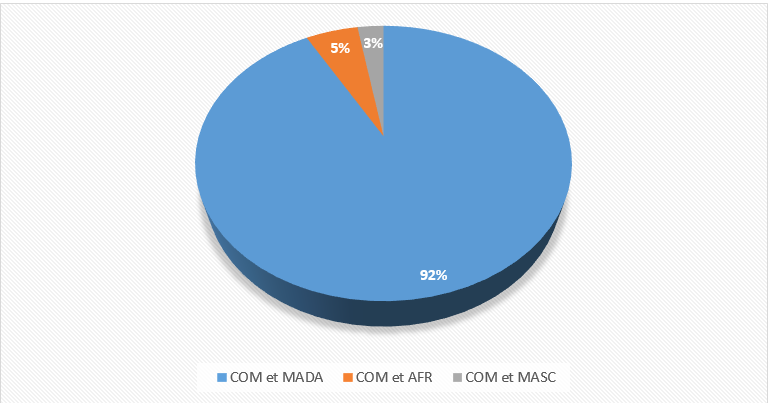
Figure 2: Affinity of the Comoros endemic species with Madagascar, Africa, and the Mascarene Island
3- Ecological status of the species
The threats to the habitats of the studied species are both anthropogenic and natural in origin; however, it is the anthropogenic threat that contributes most to the destruction of these species' habitats and leads to a reduction in forest area, as the majority of the species are forest dwellers. Indeed, the IUCN classification takes into account relationships with neighboring populations to avoid inappropriate estimates, for example, estimates that could be overestimated for populations at the edge of their range (Feldmann, 2008). Literature reviews, field data, analysis of the distribution map of selected species, and the threats and pressures exerted on species and habitats allowed for an estimation of extinction risks for all selected species, given the lack of well-defined and structured terrestrial Protected Areas in the archipelago. The area of occurrence is less than 400 km² and the area of occupancy is less than 80 km². Fifteen (15) species are categorized as Critically Endangered (CR) (10%), 7 species as Endangered (5%), 24 as Vulnerable (VU) (16%), 9 as Near Threatened (NT) (6%), 27 as Least Concern (LC) (18%), and 68 species do not allow for a threat category to be proposed according to the Red List criteria due to a lack of data (DD) (46%) (Table 4). This does not mean that they are not threatened or of special interest, but rather that particular attention must be paid to them to better assess their status.
4-Table : Ecological status of orchids according to IUCN criteria
|
N° |
Species - Author - Publication Date |
Statut |
|
1 |
Aerangis bursiculata Hermans sp. nov |
CR |
|
2 |
Aerangis polyura sp. nov |
CR |
|
3 |
Bulbophyllum hyalinum Schltr., 1924 |
CR |
|
4 |
Bulbophyllum intertextum Lindl., 1862 |
CR |
|
5 |
Cynorkis comorensis Bosser., 2002 |
CR |
|
6 |
Cynorkis lilacina Ridl. |
CR |
|
7 |
Cynorkis lilacina Ridl. var. boiviniana (Kraenzl.) H. Perrier |
CR |
|
8 |
Graphorkis concolor (Thouars) Kuntze.,1891 |
CR |
|
9 |
Graphorkis concolor (Thouars) Kuntze var. alphabetica F. N. Rasm.,1979 |
CR |
|
10 |
Habenaria clareae Hermans., 2007 |
CR |
|
11 |
Eulophia maculata (Lindl.) Rchb.f.1863 |
CR |
|
12 |
Liparis caulescens Cordem., 1895 |
CR |
|
13 |
Liparis cespitosa (Lam.) Lindl., 1825 |
CR |
|
14 |
Nervilia renschiana Rchb.f., 1881 |
CR |
|
15 |
Stichorkis disticha (Thouars) Pfitzer., 1897 |
CR |
|
1 |
Didymoplexis avaratraensis P. J. Cribb, Nusb. & L. Gaut., 2012 |
EN |
|
2 |
Eulophia livingstoneana (Rchb. f.) Summerh., 1948 |
EN |
|
3 |
Goodyera afzelii Schltr., 1918 |
EN |
|
4 |
Jumellea pailleri F.Rakotoar., 2011 |
EN |
|
5 |
Malaxis cardiophylla (Rchb.f.) Kuntze., 1891 |
EN |
|
6 |
Microcoelia macrantha (H. Perrier) Summerh., 1943 |
EN |
|
7 |
Nervilia petraea (Afzel. Ex.Sw) Summerth., 1945 |
EN |
|
1 |
Aerangis modesta (Hook. f.) Schltr., 1914 |
VU |
|
2 |
Angraecopsis trifurca (Rchb. f.) Schltr., 1915 |
VU |
|
3 |
Angraecum calceolus Thouars., 1822 |
VU |
|
4 |
Angraecum caulescens Thouars., 1822 |
VU |
|
5 |
Angraecum eburneum Bory., 1804 |
VU |
|
6 |
Angraecum florulentum Rchb. F., 1885 |
VU |
|
7 |
Angraecum germinyanum Hook. f., 1889 |
VU |
|
8 |
Angraecum scottianum Rchb. f.,1878 |
VU |
|
9 |
Angraecum leonis (Rchb. f.) André., 1885 |
VU |
|
10 |
Bulbophyllum nutans Thouars., 1822 |
VU |
|
11 |
Bulbophyllum occultum Thouars., 1822 |
VU |
|
12 |
Cynorkis benaraensis sp. nv. |
VU |
|
13 |
Cynorkis sigmoidea Kraenzl.,1898 |
VU |
|
14 |
Galeola humblotii Rchb.f., 1885 |
VU |
|
15 |
Jumellea maxillarioides (Ridl.) Schltr.,1925 |
VU |
|
16 |
Jumellea arborescens H. Perrier., 1938 |
VU |
|
17 |
Microcoelia aphylla (Thouars) Summerh., 1936 |
VU |
|
18 |
Microcoelia cornuta (Ridl.) Carlsward., 2007 |
VU |
|
19 |
Nervilia bicarinata (Blume) Schltr., 1911 |
VU |
|
20 |
Nervilia kotschyi (Rchb. f.) Schltr., 1911 |
VU |
|
21 |
Eulophia cordylinophylla Rchb.f. 1885 |
VU |
|
22 |
Platylepis polyadenia Rchb. f., 1885 |
VU |
|
23 |
Satyrium trinerve Lindl., 1838 |
VU |
|
24 |
Vanilla humblotii Rchb. f., 1885 |
VU |
|
1 |
Angraecum eburneum subsp. superbum |
NT |
|
2 |
Bulbophyllum comorianum H. Perrier., 1838 |
NT |
|
3 |
Calanthe sylvatica (Thouars) Lindl., 1883 |
NT |
|
4 |
Cynorkis fastigiata Thouars., 1822 |
NT |
|
5 |
Cynorkis purpurascens Thouars., 1822 |
NT |
|
6 |
Disperis oppositifolia Sm., 1809 |
NT |
|
7 |
Eulophia pulchra Eulophia pulchra (Thouars) Lindl.1883 |
NT |
|
8 |
Eulophia furcata furcata (Bosser & Morat) MWChase & Schuit.2021 |
NT |
|
9 |
Polystachya cultriformis (Thouars) Lindl. ex Spreng., 1826 |
NT |
|
1 |
Acampe pachyglossa Reichb. f. 1881 |
LC |
|
2 |
Aerangis hildebrandtii (Rchb.f.) P.J.Cribb & Carlsward., 2012 |
LC |
|
3 |
Angraecopsis trifurca (Rchb. f.) Schltr., 1915 |
LC |
|
4 |
Bulbophyllum coriophorum Ridl., 1886 |
LC |
|
5 |
Bulbophyllum leonii Kraenzl. 1900 |
LC |
|
6 |
Bulbophyllum longiflorum Thouars., 1822 |
LC |
|
7 |
Bulbophyllum nutans Thouars., 1822 |
LC |
|
8 |
Bulbophyllum occultum Thouars., 1822 |
LC |
|
9 |
Cheirostylis gymnochiloides (Ridl.) Rchb.f., 1885 |
LC |
|
10 |
Cynorkis flexuosa Lindl., 1835 |
LC |
|
11 |
Disperis hildebrandtii Rchb. f., 1881 |
LC |
|
12 |
Disperis tripetaloides (Thouars) Lindl., 1839 |
LC |
|
13 |
Eulophia alismatophylla Rchb.f.,1885 |
LC |
|
14 |
Eulophia lonchophylla (Rchb. f.) Garay et Taylor., 1976 |
LC |
|
15 |
Habenaria boiviniana Kraenzl. & Schltr., 1898/1897 |
LC |
|
16 |
Habenaria incarnata (Lyall ex Lindl.) Rchb. f., 1865 |
LC |
|
17 |
Jumellea anjouanensis (Finet) H. Perrier., 1941 |
LC |
|
18 |
Jumellea arachnantha (Rchb. f.) Schlecht., 1915 |
LC |
|
19 |
Jumellea comorensis (Rchb. f.) Schltr., 1915 |
LC |
|
20 |
Lemurella culicifera (Rchb.f.) H. Perrier., 1941 |
LC |
|
21 |
Liparis sambiranoensis Schltr., 1924 |
LC |
|
22 |
Oberonia disticha (Lam.) Schltr., 1924 |
LC |
|
23 |
Oeceoclades sp. |
LC |
|
24 |
Oeoniella polystachys (Thouars) Schltr.1918 |
LC |
|
25 |
Polystachya anceps Ridl., 1885 |
LC |
|
26 |
Vanilla planifolia B. D. Jacks. ex Andrews., 1808 |
LC |
|
27 |
Zeuxine ballii P.J.Cribb., 1977 |
LC |
|
1 |
Aerangis divitiflora (Schltr.) P.J.Cribb & Carlsward.2012 |
DD |
|
2 |
Aerangis rostellaris (Rchb.f.) H.Perrier.,1941 |
DD |
|
3 |
Aerangis spiculata (Finet) Senghas., 1972 |
DD |
|
4 |
Aeranthes campbelliae Hermans & Bosser., 2003 |
DD |
|
5 |
Aeranthes caudata Rolfe ., 1901 |
DD |
|
6 |
Aeranthes dentiens Rchb.f., 1885 |
DD |
|
7 |
Aeranthes grandiflora Lindl., 1824 |
DD |
|
8 |
Aeranthes virginalis D.L.Roberts., 2005 |
DD |
|
9 |
Angraecopsis pobeguinii (Finet) H. Perrier., 1941 |
DD |
|
10 |
Angraecum arachnites Schltr., 1925 |
DD |
|
11 |
Angraecum baronii (Finet) Shltr., 1905 |
DD |
|
12 |
Angraecum conchoglossum Schltr.,1918 |
DD |
|
13 |
Angraecum dendrobiopsis Schltr., 1925 |
DD |
|
14 |
Angraecum humbertii H.Perrier.,1939 |
DD |
|
15 |
Angraecum humblotianum Schltr., 1915 |
DD |
|
16 |
Angraecum mauritianum (Poir.) Frappier., 1880 |
DD |
|
17 |
Angraecum meirax (Rchb.f.) H.Perrier.,1938 |
DD |
|
18 |
Angraecum multiflorum Thouars., 1822 |
DD |
|
19 |
Angraecum pectinatum Thouars., 1822 |
DD |
|
20 |
Angraecum ramosum Thouars., 1822 |
DD |
|
21 |
Angraecum sp |
DD |
|
22 |
Angraecum xylopus Rchb.f., 1885 |
DD |
|
23 |
DD |
|
|
24 |
Bolusiella iridifolia (Rolfe) Schltr. Beih.,1918 |
DD |
|
25 |
Bulbophyllum alexandrae Schltr., 1925 |
DD |
|
26 |
Bulbophyllum humblotii Rolfe., 1891 |
DD |
|
27 |
Bulbophyllum densum Thouar., 1822 |
DD |
|
28 |
Bulbophyllum occlusum Ridl., 1885 |
DD |
|
29 |
Bulbophyllum megalonyx Rchb.f., 1881 |
DD |
|
30 |
Bulbophyllum sp. |
DD |
|
31 |
Cheirostylis nuda Thouars., 1822 |
DD |
|
32 |
Corymborkis corymbis Thouars., 1822 |
DD |
|
33 |
Cynorkis humblotiana Kranszl., 1901 |
DD |
|
34 |
Cynorkis lilacina Ridl. Var. comorensis H. Perrier |
DD |
|
35 |
Cynorkis parvula Schltr., 1915 |
DD |
|
36 |
Cynorkis ridleyi T. Durand & Schinz., 1895 |
DD |
|
37 |
Cynorkis speciosa Ridl., 1885 |
DD |
|
38 |
Cynorkis tenella Ridl., 1886 |
DD |
|
39 |
Disperis humblotii Rchb. f., 1885 |
DD |
|
40 |
Disperis trinileata Schltr., 1924 |
DD |
|
41 |
Eulophia alismatophylla Rchb.f.1885 |
DD |
|
42 |
Eulophia angornensis (Rchb.f.) P.J.Cribb., 1998 |
DD |
|
43 |
Eulophia bosseriana M.W. Chase & Schuit.2021 |
DD |
|
44 |
Eulophia decaryana H.Perrier. 1935 |
DD |
|
45 |
Eulophia falcigera (Rchb.f.) MWChase, Kumar et Schuit. |
DD |
|
46 |
Eulophia pileata Ridl., J. Linn., 1885 |
DD |
|
47 |
Eulophia plantaginea (Thouars) Rolfe ex Hochr., 1908 |
DD |
|
48 |
Eulophia sclerophylla Rchb.f.1885 |
DD |
|
49 |
Eulophia spathulifera H.Perrier. 1935 |
DD |
|
50 |
Eulophia sp |
DD |
|
51 |
Goodyera procera (Ker Gawl.) Hook., 1923 |
DD |
|
52 |
Habenaria cirrhata (Lindl.) Rchb.f., 1865 |
DD |
|
53 |
Habenaria comorensis H. Perrier., 1951 |
DD |
|
54 |
Habenaria johannae Kranze., 1893 |
DD |
|
55 |
Habenaria sp |
DD |
|
56 |
Habenaria tomentella Rchb., 1885 |
DD |
|
57 |
Hetaeria vaginalis Rchb.f., 1885 |
DD |
|
58 |
Jumellea confusa (Schltr.) Schltr., 1915 |
DD |
|
59 |
Jumellea sp |
DD |
|
60 |
Liparis salassia (Pers.) Summerh., 1953 |
DD |
|
61 |
Liparis sp |
DD |
|
62 |
Neobathiea grandidieriana (Rchb.f.) Garay., 1972 |
DD |
|
63 |
Nervilia hirsuta(Blume) Schltr., 1911 |
DD |
|
64 |
Oeoniella polystachys (Thouars) Schltr., 1918 |
DD |
|
65 |
Polystachya rosea Ridl., 1885 |
DD |
|
66 |
Polystachya sp |
DD |
|
67 |
Polystachya waterlotii Guillaumin., 1928 |
DD |
|
68 |
Satyrium amoenum (Thouars) A. Rich., 1828 |
DD |
Discussion
1- Floristic Diversity and Endemism
The terrestrial ecosystems of the Comoros archipelago include rainforests in the mountainous regions of each island and dry forests. Altitude and soil have contributed to a high level of diversity, including several endemic and threatened species, among them many orchids. The number of orchid species inventoried during this study is very high (33 genera, 144 species, 1 subspecies, and 3 varieties of orchids, with 70 endemic taxa), compared to previous studies, as shown in Tables 1 and 4. It should be noted that Moulaert (1998) adopted the number of species from Perrier de la Bathie (1939, 1941), adding 3 species, and Pailler et al. (2018) cited 28 endemic species (Table 5). Since 1915, inventories carried out mainly in Mayotte, to a lesser extent in Grande Comore, and very little in Anjouan and Mohéli, have led to the discovery of several species, some of which are new to science. Revision by genus has also contributed to finding more and more new species. In addition, other species have been synonymized (e.g., Microterangis hariotiana, Solenangis cornuta, etc.), as mentioned by Kaith et al. (2006).
For example, two new genera have just been added to our list: Didymoplexis (with the species D. avaratraensis, a species that until now had only been found in Madagascar and which has just been rediscovered in Mayotte) and Zeuxine, an African genus (with the species Z. balli, which does not exist in Madagascar).
5-Table : Comparison of orchids inventoried from 1905 to 2006.
|
|
Schlechter R (1915) |
Perrier de la Bathie (1939, 1941) |
Moulaert (1998) |
Keith, Abdou and Labat (2006) |
|
Number of genera |
17 |
26 |
26 |
25 |
|
Number of species |
46 |
69 |
72 |
81 |
|
Number of endemic species |
41 |
45 |
45 |
18 |
2-
3- Biogeography of Species
The insularity of the Comoros archipelago, its location in the tropics, allows it to have floristic affinities with neighboring countries. However, these affinities are stronger with Madagascar than with the African and Asian continents or the Mascarene Islands, as demonstrated by Rakotoarivelo et al. (2013) for the genus Jumellea Schltr. For example, the genus Disperis comprises nearly 80 species distributed in Africa, Madagascar, and the islands of the Indian Ocean (La Croix et al. 2002; Kurzweil and Manning, 2005; Govaerts, 2019), including 3 species native to the Comoros and Madagascar. None of these species are shared between the Comoros and Africa. The flora of the archipelago is very similar to that of Madagascar (with variations specific to each island) and can be considered a less diverse version of the main island (Louette et al., 2004). According to Pascal et al. (2001), one of the striking features of Mayotte's flora is the considerable proportion of Malagasy plants, which are three times more numerous than plants of African origin.
From a botanical point of view, Mayotte is merely an extension of Madagascar. Recently, some thirty tree species previously considered endemic to Madagascar have been found in Mayotte, reinforcing the dominance of Malagasy plants on the island (Pascal, 2002). This could be due to the island's biogeographical isolation from Africa, which is a continent.
Other factors may also play a role, such as prevailing winds, cyclones (which move from Madagascar to the Comoros), ocean currents, and animals. Indeed, oceanic islands formed by submarine volcanism, such as the Comoros Archipelago, exhibit a distinct originality in terms of plant biodiversity (biogeographical endemism), but also a relative poverty compared to the continental landmasses from which colonizing organisms originate (Abdillahi, 2017). For example, as the closest landmass to Réunion Island, Madagascar provided the majority of the seeds for the native plants currently inhabiting the island. A study conducted on Dombeyoidae clearly illustrates the multiple Malagasy origins of their species (Pechon et al., 2010).
3- Risk of Species Extinction
For a preliminary assessment, the results obtained in this study are broadly similar to those obtained for Réunion Island for 130 species assessed, including 9 critically endangered (CR) species (6%), 18 endangered (EN) species (12%), 9 vulnerable (VU) species (6%), 9 near threatened (NT) species (6%), 57 of least concern (LC) species (38%), and 43 with sufficient data (DD) species (27.7%) (http://www.reunion.developpement-durable.gouv.fr/IMG/pdf/Dossier de presse Flore vasculaire de La Réunion_cle567cb3). The destruction and degradation of natural habitats represent the main cause of the decline of plant species in Réunion.
Urban and agricultural development is responsible for the progressive disappearance of numerous species. Furthermore, some plant species are subject to intense harvesting pressure.
Due to their beauty, several orchid species are harvested for commercial purposes (http://www.reunion.developpement-durable.gouv.fr/IMG/pdf/Dossier de presse Flore vasculaire de La Réunion_cle567cb3). Throughout the islands of the Comoros archipelago, the original vegetation has undergone extreme decline. The proportion of land covered by forests fell from 6.6% in 1990 to 1.7% in 2012, meaning that nearly 500 hectares of forest disappear each year (FAO, 2010 and 2012) across the three islands. In Mayotte, natural formations now cover only 4 to 5% of the land area. Fragile ecosystems, such as dry forest, survive only in fragments. They have given way to slash-and-burn farming systems or the expansion of urban areas (Keith et al. 2006; Abdillahi, 2009 and 2017).
CONCLUSION
The Comoros archipelago is rich in plant biodiversity, particularly orchids. One hundred and forty-five species, one subspecies, and three varieties, distributed across 33 genera, were inventoried during this study. The most represented genera are Angraecum, Eulophia, Cynorkis, Bulbophyllum, Habenaria, Jumellea, Aerangis, Polystachya, and Aeranthes. Epiphytic and geophytic species are distributed almost equally (54% and 48%, respectively), with lianas representing only 1%. The majority of these orchids are found in humid and transitional forests and/or savannas, with very few in dry areas.
Seventy (70) species (47%) are endemic, 72 are native or naturalized (49%), 5 are undetermined (3%), and only one is an introduced species (1%), with variations between the islands. Grande Comore is the island richest in endemic species. These species are more closely related to Madagascar (47%) than to the African continent (3%), the Asian continent (1%), or the Mascarene Islands (2%).
Within this orchid flora, fifteen (15) species are critically endangered (CR) (8%), seven (7) are endangered (EN) (5%), 25 (25) are vulnerable (VU) (16%), nine (9) are near threatened (NT) (6%), 27 (27) are of least concern (LC) (18%), and 68 (46%) are of data deficient (DD). The habitats of these species are subject to various anthropogenic and natural pressures and threats, the former being the most significant.
This article aims to provide objective data to support conservation actions that could be integrated into management and conservation plans for the orchids of the archipelago, including the delimitation of these species' habitats into protected areas and raising awareness among national and local authorities and the public about the biological and ecological importance of orchids. Further studies will be needed to further explore the ecology, diversity, and biogeography of these species in order to gain a comprehensive understanding of the orchids on each island of this archipelago.
Acknowledgments
We thank all those who supported us in conducting this field study and writing this article, in particular the Phytosociology and Geoarchitecture Laboratory at the University of Western Brittany and the SCAC service of the French Embassy in Moroni.
BIBLIOGRAPHY
Abdillahi M (2009). Study of Baobab vegetation in the Comoros Islands (Flora, ecology, and dynamics): The case of Mohéli and Grande Comore. Master's thesis. Plant Ecology, Department of Plant Biology and Ecology, University of Antananarivo, 80 pp.
Abdillahi M (2017). Ecological characterization of Baobab vegetation and biogeography of Adansonia digitata in the Comoros Archipelago. Doctoral dissertation. Plant Ecology. Department of Plant Biology and Ecology, University of Antananarivo, 80 pp.
Bosser J. & Lecoufle M (2011). The Orchids of Madagascar. Biotope, Mèze (Parthénope Collection), 496 pp.
Cribb P. & Hermans J (2009). Field guide to the orchids of Madagascar. Kew.
Dorr LJ (1997). Plant Collectors in Madagascar and the Comoro Islands. A biographical and bibliographical guide to individuals and groups who have collected herbarium material of algae, bryophytes, fungi, lichens, and vascular plants in Madagascar and the Comoro Islands. Royal Botanic Gardens, Kew.
Du Puy D., Cribb P., Hermans J. & Hermans C (1999). The orchids of Madagascar. Kew, Royal Botanic Gardens.
Duvigneaud P (1980). Method for the quantitative study of vegetation. Masson, Paris. 314p.
Feldmann P (2008). Threats and protection of orchids in southern France: the value of applying the IUCN Red List method at the regional level. Proceedings of the Scientific Conference of September 28, 2007: Conservation Challenges for Causses Orchids. January 2008, Millau, France, 36-43.
Gravendeel, B., Smithson, A., Slik, F.J.W., & Schuiteman, A (2004). Epiphytism and pollinator specialization: drivers for orchid diversity. Phil. Trans. R. Soc. London, 359 (1450): 1523-1535.
Herremans, M (2001). Orchids of the Comoro Islands. Africamuseum, Tervuren, DOI:10.13140/RG.2.2.33511.44960
Hermans, J., Cribb, P.J., & Pailler T (2023). Flora of the Mascarene Islands 170(2): 1-511. IRD Éditions, MSIRI, RBG-Kew, Paris.
Hermans, J., Schuiteman, A., Rajaovelona, L. et al. Aerangis (Orchidaceae) in Madagascar, the Mascarene Islands, and the Comoros. Kew Bull 79, 703-806 (2024). https://doi.org/10.1007/s12225-024-10202-7
Hervouet J.-M. & Barthelat F (2014). A commented list of orchids of Mayotte. L’Orchidophile, 202: 257-270.
IUCN (2012) - Guidelines for Using the IUCN Red List Categories and Criteria. Version 13. http://www. iucnredlist.org/documents/redlist_guidelines_v1223290226.pdf
IUCN (2012) - IUCN Red List Categories and Criteria: Version 3.1. 2nd edition. Gland and Cambridge.
IUCN France (2018). Practical guide for the creation of regional Red Lists of threatened species - IUCN methodology & development process. Second edition. Paris, France. www.uicn.fr/listes-rouges-regionales
Keith P., Abdou A., & Labat JN (2006). Faunal inventory of the rivers of the Comoros and botanical inventory. National Museum of Natural History, Paris. 105 pp.
Kurzweil, H. & Manning, JC (2005). A synopsis of the genus Disperis Sw. (Orchidaceae). Adansonia 27:155–207.
La Croix, I., Bosser, J. & Cribb, PJ (2002). The genus Disperis (Orchidaceae) in Madagascar, the Comoros, the Mascarenes and the Seychelles. Adansonia 24:55–87.
La Croix, I., 2022. Aerangis 2nd edition. American Orchid Society, Coral Gables.
Micheneau, Claire., Barbara, S. C, Michael F. Fay, Benny B, Pailler T. and Chase MW (2008). Phylogenetics and biogeography of Mascarene angraecoid orchids (Vandeae, Orchidaceae). Molecular Phylogenetics and Evolution, 46: 908–922
Moulaert N (1998). Study and conservation of the Mohéli forest, a massif threatened by anthropogenic pressure, Doctoral thesis, Sciences. Faculty of Agricultural Sciences, Gembloux, 314p.
Neirynck R., Herremans, M (2006). Aerangis karthalensis, a new species from the Comoro Islands. Caesiana, 26: 1–12. https://www.researchgate.net/publication/312167497
Pailler T., Rakotoarivelo F., Aboudou A., & Mohamed A (2008). Two new Jumellea species for the Comoros archipelago. The Orchidophile, 182: 187 - 192.
Pailler T (2009). Jumellea bosseri Pailler, a new endemic species from Reunion Island. The Orchidophile, 183: 263–267.
Pailler T., Andilyat M., Andrianarivo C., Baider C., Bytebier B., Filer D, Henze F., Morel C., Rapanarivo S., Rakotoarinivo M., and Razafimandimby H (2018). Guide to orchids of the Indian Ocean islands: Native and endemic species. 1st Ed. University of Meeting.174 p.
Pascal, O., 2002. Plants and forests of Mayotte. National Museum of Natural History, Institute of Ecology and Biodiversity Management, Natural Heritage Service, France, 108 pp.
Pascal O., Labat J. N., Pignal M. & Soumille O (2001). Diversity, phytogeographical affinities and presumed origins of the flora of Mayotte (Comoros Archipelago). Systematics and Geography.
Pechon, T., Jy Dubuisson, T., Haevermans, C., Cruaud, A., Couloux, L. D. B. & Gigord (2010). Multiple colonizations from Madagascar and converged acquisition of dioecy in the Mascarene Dombeyoideae (Malvaceae) as inferred from chloroplast and nuclear DNA sequence analyses. Ann Bot, 106: 343–357.
Perrier de la Bathie H (1936). The Disperis (Orchids) of Madagascar, the Comoros, and the Mascarene Islands. Notulae Systematicae. Herbarium of the Museum of Paris. Phanerogramie. Paris 5: 217–229.
Perrier de la Bathie, H (1939). Flora of Madagascar, 49th family: Orchids, Volume 2. Tananarive, Official Printing Office.
Perrier de la Bathie H (194). Flora of Madagascar, 49th family: Orchids, Volume 1. Tananarive, Official Printing Office.
Perrier de la Bâthie H (1951). Orchids of Madagascar and the Comoros. New observations. Notul. Système. (Paris) 14: 138–165.
https://www.biodiversitylibrary.org/item/7370#page/146/mode/1up
Rakotoarivelo F., Mohamed A., Faliniaina L., & Thierry P (2011). Jumellea pailleri (Orchidaceae), a new species endemic to the Comoros. Plant Ecology and Evolution, 144 (3): 363 - 366.
Rakotoarivelo F., Pailler T. & Faliniaina L (2013). Revision of the genus Jumellea Schltr. (Orchidaceae) from the Comoros Archipelago. Adansonia, ser. 3, 35 (1): 33-46. http://dx.doi.
org/10.5252/a2013n1a3
Raunkiaer C (1906). Biological type for botanical geography - Oversight.Danske Vidensk Forkandlig, T5: pp 347-437.
Reichenbach, HGF (1885a). Comoren-Orchideen Herrn Léon Humblot. Flora 68: 377 – 382. https://www.biodiversitylibrary.org/item/984#page/379/mode/1up
Reichenbach, HGF (1885b). Comoren-Orchideen Herrn Léon Humblot. Flora 68: 535 – 544. https://www.biodiversitylibrary.org/item/984#page/537/mode/1up
Schlechter R (1913). Orchidaceae from Madagascar. Orchidaceae Perrieranae Madagascarienses. Anne. Mus. Colon. Marseille, ser. 3. 148 – 202. https://www.biodiversitylibrary.org/item/23004#page/250/mode/1up
Schlechter, R (1915). Kritische Aufzählung der bisher von Madagaskar, den Maskarenen, Komoren und Seychellen bekanntgewordenen Orchidaceen. Beihefte zum Botanischen Centralblatt 33 (2): 390-440.
Stéphane, A., Julien, P., & Dominique, H (2018). Transplantation of two orchid populations of the subtribe Angraecinae in eastern Réunion Island (France), Jumellea recta (Thouars) Schechter and Aeranthes arachnitis (Thouars) Lindley: lessons learned, guidelines, and relevance for the conservation of epiphytic orchids in tropical environments. Plume de Naturalistes 2: 41–60.
Stewart J (1979). A revision of the African species of Aerangis (Orchidaceae). Kew Bull, 34: 239–319. https://www.jstor.org/stable/4109992
Stevart, T., & De Oliviera F (2000). Guide to the orchids of São Tomé. 258 pp.
Stewart J. Griffiths M (1995). Manual of Orchids. The Royal Horticultural Society, Portland, Oregon, USA, 374p.
Vennetier É., Traclet, S & Dimassi, A (2026). Description d’une espèce nouvelle de Cynorkis Thouars (Orchidaceae, Orchidoideae) endémique de Mayotte (archipel des Comores, océan Indien), Adansonia (3) 48 (10), pp. 77-86
Voeltzkow A (1917). Flora and fauna of the Comoros. In: A. Voeltzkow (ed.), Reise in Ostafrika in den Jahren 1903-1905, 3: 429 – 480. Schweizerbart, Stuttgart. https://www.biodiversitylibrary.org/item/131294#page/231/mode/1up
Wiersema, JH, Turland, NJ, Barrie, FR, Greuter, W., Hawksworth, DL, Herendeen, PS, Knapp, S., Kusber, W.-H., Li, D.-Z., Marhold, K., May, TW, McNeill, J., Monro, AM, Prado, J., Price, MJ & Smith, GF (2018). [continuously updated]: International Code of Nomenclature for Algae, Fungi and Plants (Shenzhen Code) adopted by the Nineteenth International Botanical Congress, Shenzhen, China, July 2017: Online at <https://naturalhistory2.si.edu/botany/codes-proposals/> [Accessed 1 April 2022].
Webiography
https://inpn.mnhn.fr/espece/cd-nom/706149
http://floremaore.cbnm.org/index.php?option=com_content&view=article&id=3&Itemid=12
https://sites.google.com/site/biodiversitedescomores/home/espces-en-danger
science.mnhn.fr/institution/mnhn/collection/p/item/p00527425?listIndex=17&listCount=21
http://wcsp.science. kew.org
www.orchidspecies.com
www-mi-aime-a-ou.com
www.ville-ge.ch/musinonfo/bd/cjb/africa/details.php
www.efloras.org/florataxon.aspx?flora_id=12&taxon_id=250080643
www.tropicos.org/Name/23513125?projectid=17
http://www.reunion.developpement-durable.gouv.fr/IMG/pdf/Dossier de presse Flore vasculaire de La Reunion_cle567cb3
|
Cite this Article: Abdillahi, MM; Bioret, F; Boullet, V; Vennetier, E (2026). Contribution to the ecological study of orchids in the Comoros archipelago: floristic diversity, biogeography, ecological status, and conservation challenges. Greener Journal of Agricultural Sciences, 16(3): 123-140. https://doi.org/10.15580/gjas.2026.3.062426095.
|