Greener Journal of Biomedical and Health Sciences
Vol. 9(1), pp. 187-193, 2026
ISSN: 2672-4529
Copyright ©2026, Creative Commons Attribution 4.0 International.

|
Greener Journal of Biomedical and Health Sciences Vol. 9(1), pp. 187-193, 2026 ISSN: 2672-4529 Copyright ©2026, Creative Commons Attribution 4.0 International. |
|
Evaluation of principle elements in Gongronema Latifolium (utazi) and Carica papaya (Pawpaw) ameliorating sickling crisis, haematological and biochemical profile of female sicklers in Anambra State.
Igwedibia C.P1, Ekekwe E.N2, Akudu L.S3, Ifemeje M.O4, Ezejiegu C.O5, Abasili E.N4, Anusiem C.C1, Okeke B.C1, Oguwike F.N1.
1. Department of Human Physiology, Faculty of Basic Medical Sciences, Chukwuemeka Odumegwu Ojukwu University Uli Campus, Anambra State.
2. Department of Medical Microbiology and Public Health, Faculty of Medical Laboratory Sciences, Nnamdi Azikiwe University, Awka Anambra State.
3. Department of Anatomy, Faculty of Basic Medical Sciences, Chukwuemeka Odumegwu Ojukwu University Uli Campus, Anambra Sate.
4. Department of Medical Biochemistry, Faculty of Basic Medical Sciences, Chukwuemeka Odumegwu Ojukwu University, Uli Campus Anambra State.
|
ABSTRACT |
|||
|
In this study, the evaluation of the principle elements in carica papaya (Pawpaw) and Gangronema latifolium (utazi) ameliorating effect on sickling crisis, haematological and biochemical profile of female sicklers in Anambra Sate was done. Thirty two (32) female sickle cell subjects were divided into four (4) groups consisting of eight (8) subjects each. Group A is the control group consisting of apparently 8 healthy subjects. Group B consists of 8 sickle cell subjects eating Gangronema leave, Group C consists of 8 sickle cell subjects on unriped pawpaw fruit while group D are sickle cell subjects not on any plant consumption. Blood samples were collected from them before and during the sickle cell crisis, haematogical and biochemical studies were conducted to ascertain ameliorative roles of principles contained in the plants. Results of the analysis indicated that the groups (B and C) demonstrated a significant stable state during crisis much more than those in group D (P < 0.05). The result of Group B subjects gave Haemoglobin Conc 7.0±1.0g/dl, PCV 22.0±0.5L/L, WBC 12,500±14/mm3 compared to those in group D; Haemoglobin Conc 2.0±0.3g/dl, PCV 6.0± 0.2, and WBC 16,000±72. The liver function electrolyte, urea and creatinin levels were normally maintained (P>0.05) before and during the sickling crisis.
|
|||
|
ARTICLE’S INFO |
|||
|
Article No.: 092526163 Type: Research Full Text: PDF, PHP, HTML, EPUB, MP3 DOI: 10.15580/gjbhs.2026.1.092526163
Accepted: 28/09/2026 Published: 13/10/2026
Keywords: Sickle Cell, Pawpaw, Packed Cell Volume, Gangronema latifolium, Amelioration, Bicarbonate |
*Corresponding Author
Prof. F. N. Oguwike
E-mail: Foguwike@gmail.com
Phone: 08104093697 |
Article’s QR code |
|
|
|
|
|
|
INTRODUCTION
Sickle cell crisis is a condition resulting from severe and sudden symptoms due to sickling of red cells. These symptoms usually begin after a few months of age and before that age, the baby has a different haemoglobin called fetal haemoglobin which is not affected by the sickle cell gene.
There are several slight variations in the different subunit of hemoglobin chains, depending on the amino acid composition of the polypeptide portion. The different types of chains are designated alpha chains, beta chains, gamma chains and delta chains. The most common form of haemoglobin in the adult human being, haemoglobin A, is a combination of two alpha chains and two beta chains.
The types of haemoglobin chains in the haemoglobin molecule determine the binding affinity of the haemoglobin for oxygen. Abnormalities of the chains can alter the physical characteristics of the haemoglobin molecule as well (Guyton et al, 2011). In sickle cell anemia, the amino acid value is substituted for glutamie acid at one point in each of the two beta chains. When this type of hemoglobin is exposed to low oxygen, it forms elongated crystals inside the red blood cells that are sometimes 15 micrometers in length. These makes it almost impossible for the cells to pass through many small capillaries and the spiked ends of the crystals are likely to rupture the cell membranes leading to sickle cell anemia. The sickle cell contain mostly Hbs. They are harder and less flexible than normal red blood cells. So they can get stuck in small blood vessels and block them. This can happen quite suddenly, causing various symptoms which are known as a sickle cell crisis. The sickle cells are destroyed more easily than normal red blood cells.
Factors that trigger sickle cell crisis
Certain factors have been traced that cause sickling crisis. They are cold, lack of oxygen, lack of fluid in the body (dehydration), hard or strenuous exercise, high temperature (fever) and infection.
Symptoms of sickle cell disease:
The symptoms of sickle cell disease come and go. The various symptoms that occur if one have sickle cell disease (SCD) are:
 Episodes of pain also called a pain crisis or a vaso-occlusive crisis. They occur when sickle cells block small blood vessels in bones which causes pain. Pain usually occur in bones and joints. The pain can vary from mild to severe, and may come on suddenly. In babies and young children, the symptomatic pain will be noticed when small bones in the fingers and toes become swollen and painful (dactylitis). Episodes of stomach (abdominal) pain occur if sickle cells block blood vessels in the abdomen.
Acute chest syndrome; occurs when there are blocked blood vessels in the lungs and can sometimes occur with a lung infection. This can include chest pain, high temperature (fever) and shortness of breath.
People with sickle cell disease are more prone to suffer severe infections, pneumonia, meningitis,septicaemia and bone infections. Symptoms of infection include fever, feeling generally ill, and pain in the affected part of the body.
Anaemia episode; people with sickle cell anaemia (SCD) will usually have a moderate anaemia, however at times people with SCD can get a severe anaemia (lack of haemoglobin in the blood) which will be express the following symptoms.
Feeling tired, faint, short breath, dizziness, feeling sick (nausea) or having fast breathing, pale skin colour, very noticeable to see in the lips, tongue, ginger nails or eylids.
In some parts of Nigeria, certain plants such as Gangronema latifolium and carica papaya (paw paw) have been discovered to possess certain principles that can help to ameliorate sickling crisis.
The leaves of Gangronema latifolium Benth (Moinuddin 2022) are rich in fats, proteins, vitamins, minerals and many essential amino acids collectively contributing to its high nutritional value. The ethanolic root extract contains polyphnol, in abundance with alkaloids, glycosides, saponins, and reducing sugars in moderate amount (Antai, 2009).
The plant extract has an antioxidant potentials, anti asphatic property, anti-inflammatory, antioxidant effect, and anti sickling potential (Antai, 2009). These supports its use in the local treatment of malign cough and stomach disorders (Sonibare et al, 2008)
Papaya is a power house of nutrients and is available throughout the year. It is a rich source of three powerful antioxidants, vitamin C, A and E, the minerals, magnesium. It can be used as anti sickling agents (Beckstrom et al, 1994). The fruit, leaves, seeds and latex are used medically. Its main medicinal use is as digestive agent prescribed for people who experience difficulty in digesting protein. Papain an enzyme obtained from Paw paw is used as anti coagulant in surgery. It is also popular for topical application. In the cardio vascular system, it protects heart diseases, heart attacks, strokes and prevents damage caused by free radicals that may cause some forms of cancer. Papaya lowers high cholesterol levels as it is a good source of fiber. The skin of papaya works as a best medicine for wounds.
Our curiosity is geared towards alleviating the sickle cell crisis in sicklers hence the study on the principal elements in Gangronema latifolium (utazi) and carica papaya (Paw paw) ameliorating sickling crisis.
MATERIALS AND METHODS
Subject selection
The subjects selected for this study consist of 32 sickle cell subjects not having sickle cell crisis.
Experimental Design:
The 32 subjects were grouped into four (4) groups. Group A is the control subjects consisting 8 subjects. Group B consist of 8 subjects subjected to eating Gangronema latifolium leaves while Group C also consists of eight (8) subjects placed on consumption of carica papaya fruits. Their feeding lasted for thirty (30) days before they experienced crisis. Group D consists of 8 sicklers. Group A (control healthy subjects) and Group D (Sickle cell subjects) were not given any fruit or leave to consume as was done to groups B and C. The subjects in groups B and C were asked to start eating Gangronema latifolium and Carica papaya fruits before sickling crisis and during sickling crisis for 30 days.
Preparation of Leaves of G. latifolium and C. Papaya:
Fresh leaves of G. latifolium and fruits of C. papaya were bought from the local market near our university and they were sent to a taxonomist for identification. They were given to the subjects from time to time to be eaten alongside their food.
Toxicity studies (LD50):
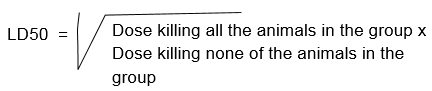
The toxicity study of the leaves Gangronema latifolium and the pulp of carica papaya were studied using albino Wistar mice and Lorke’s method (1983). Albino mice (30-50g) were fasted overnight for 12 hours and doses of the extract (10mg/kg) was administered intraperitoneally to the groups of mice (n=3) and observed for 24-48hrs when no death occurred, subsequent doses (15mg/kg) 29mg/kg body weight) were administered to fresh groups of mice (n=3) and observed for another 24-48hrs. The mice that served as control received normal saline only. The LD50 for the extract was calculated by geometric mean of the dose killing none of the three rats in the group and dose killing all the animals in the group.
Phytochemical Analysis:
The presence of various elements present in the pulp of carica papaya and the leaves Gangronema latifolium were determined using the method of Trease and Evans (1983). Harbourne (1996).
Determination of some haematological and biochemical indices:
Blood samples from the four (4) groups A, B, C and D subjects were collected into EDTA and plain bottles through their cubital fossa.
The haematological and biochemical analysis were carried out within hours of blood sample collection. The biochemical analysis were done by the method of colorimetry using diazo method (Donmas, 1985) for liver function values during crisis, while ion selective electrode, enzymatic method and urease-kinetic UV methods were used to determine the concentrations of electrdytes urea and creatinine during crisis (Buck, 1978). The haematological values were determined using the methods described by Alexander and Griffits (1993).
Statistical Analysis
The results obtained in the research study were represented as mean and standard deviation (Mean ± S.D), while student’s t-test was used to compare the result of the control and the test samples. A P-value of less than (P<005) or equivalent to (P=0.05) was considered statistically significant.
RESULTS
Table 1: Phytochemical analysis of pulp of carica papaya
|
Constituents of Carica Papaya Fruit |
||||||||
|
|
Alkaloid |
Calcuim |
Carbohy drates |
Reducing sugar |
Saponin |
Tannins |
Caro tenicids |
Terpenoids Glycoside fats and oils resins |
|
Degree of concentration |
+ |
++ |
+++ |
+++ |
++ |
++ |
++ |
- |
Key: (-) Negative (absent)
(+) Present in small concentration
(++) Present in moderate concentration
(+++) Present in high concentration
Table 2: Phytochemical analysis of Gangronema latifolium (utazi) leaves.
|
Constituents of Gangronema latifolium |
||||||||
|
|
Fats and oils |
Saponins |
Flavenoids |
Glycosides |
Tannins |
Phenols, Terpenoids |
Alkaloid |
Carbohy drates |
|
Degree of concentration |
+ |
++ |
+++ |
+++ |
++ |
++ |
++ |
- |
Key: (-) Negative (absent)
(+) Present in small concentration
(++) Present in moderate concentration
(+++) Present in high concentration
Table 3: Biochemical and haematological values of sicklers on Gangronema latifolium leaves and carica papaya fruits before and during crisis.
|
Groups |
T.B mg/dl± S.D |
C.B mg/dl± S.D |
Alk.Plis iu/L± S.D |
Asp.Trans iu/L± S.D |
Ala.Trans iu/L± S.D |
HB g/dl ±S.D |
PVC% ±S.D |
WBC x103/ mm±S.D |
|
Control Group A n = 8 |
0.6± 0.1 |
0.3± 0.1 |
75±12 |
12±1.8 |
12±2.0 |
15.3± 0.6 |
45±8 |
6,400±203 |
|
Group B before G.latifolium n = 8 |
2.06± 0.4 |
1.8 ± 0.2 |
90.0±12 |
50±2.5 |
32±0.7 |
8.5±0.6 |
25±3.0 |
3,100±50 |
|
Group B during crisis and consumption of G.latifolium n = 8 |
4.1± 0.2 |
1.2 ± 0.3 |
92.0±8 |
58±12 |
34±0.8 |
7.0±1.0 |
22.0±0.5 |
12,500±14 |
|
Group C before Carica papaya n = 8 |
2.4 ± 0.2 |
1.9 ± 0.1 |
90±12 |
52±1.0 |
32±0.6 |
8.0±0.8 |
24±0.2 |
3,000±61 |
|
Group C during crisis and consumption of C. papaya n = 8 |
4.5± 0.5 |
1.4 ± 0.3 |
92.0±9 |
59±0.7 |
33±0.7 |
6.0±0.4 |
18.0±0.6 |
12,200± |
|
Group D before crisis n = 8 |
2.2 ± 0.2 |
1.8 ± 0.3 |
90±6.0 |
51±7.0 |
31±0.8 |
8.5 ± 0.7 |
25 ± 4.2 |
3,1000±50 |
|
Group D during crisis n = 8 |
10.2 ± 4.0 |
8.0 ± 2.5 |
260 ± 30 |
280 ± 50 |
150 ± 20 |
2.0 ± 0.3 |
6.0 ± 0.2 |
16,000 ± 72 |
|
P value |
P<0.05 |
P<0.05 |
P<0.05 |
P<0.05 |
P<0.05 |
P<0.05 |
P<0.05 |
P<0.05 |
Table 4: Biochemical values of sicklers on carica papaya fruits and Gangronema latifolium leaves before and during crisis.
|
Groups |
Sodium mmol/L+S.D |
Potassium mmol/L±S.D |
Bicarbonate mmol/L±S.D |
Chlorde mmol/L ±S.D |
Urea mg/dl ± S.D |
Creature mg/dl ±S.D |
|
Control Group A n = 8 |
141±24 |
4.2± 0.5 |
25±0.7 |
103±1.6 |
18± 3.0 |
0.8±0.3 |
|
Group B before G.latifolium n = 8 |
140± 22 |
4.0 ±0.3 |
24±0.5 |
104±2.0 |
22±3.0 |
0.9±0.2 |
|
Group B during crisis and consumption of G.latifolium n = 8 |
141±22 |
4.0 ±0.3 |
24±0.5 |
1.4±2.0 |
23±2.9 |
0.8±0.2 |
|
Group C before Carica papaya n = 8 |
140 ±23 |
4.0 ± 0.3 |
25±0.6 |
101±1.2 |
18.0±2.5 |
0.9±0.2 |
|
Group C during crisis and consumption of C. papaya n = 8 |
140±23 |
4.0 ±0.3 |
25±0.6 |
102±1.2 |
20.0±2.0 |
0.9±0.2 |
|
Group D before crisis n = 8 |
138 ±21 |
4.0 ± 0.2 |
24±0.6 |
101±0.9 |
22±2.0 |
0.8±0.3 |
|
Group D during crisis n = 8 |
138±21 |
6.2±0.7 |
22±0.3 |
105±0.8 |
58±6.0 |
3.8±0.6 |
|
P value |
P>0.05 |
P>0.05 |
P>0.05 |
P>0.05 |
P>0.05 |
P>0.05 |
Figure 1: The Lethality studies (LD50) of G. latifolium
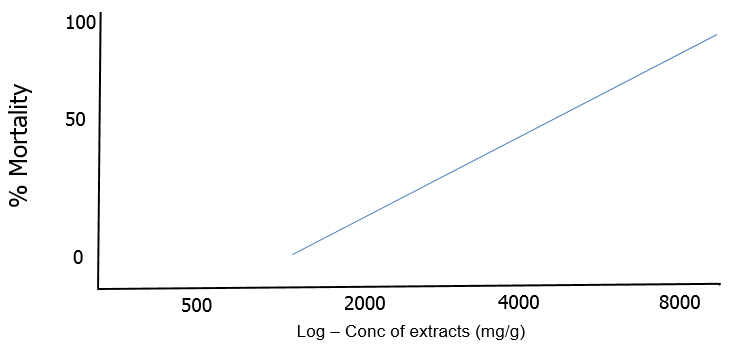
Figure 1. The lethality studies (LD50) of G. latifolium leave showing the effect of administering graded doses (500-8000mg/g1.p) in rats against the percentage mortality. LD50 is 5,500mg/g.
Figure 2: The lethality studies (LD50) of C. papaya
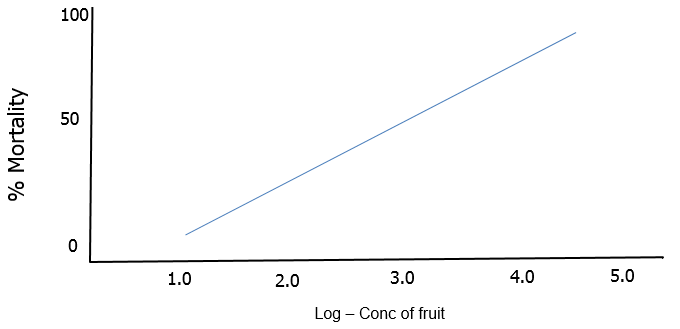
Figure 2: The lethality studies (LD50) of Carica papaya fruit showing the effect of administering graded doses (1000 – 5,000mg/g 1.p) in rats against the percentage mortality. LD50 is 4,000mg/g.
DISCUSSION
Sickle cell disease (SCD) is a serious inherited condition affecting the blood and various organs in the body. It affects the red blood cells, causing episodes of sickling, which produce episodes of pain and other symptoms (Patient. Co.uk, 2026). Hence the curiosity in finding a solution to ameliorating the sickling crisis that makes the subjects miserable under the attack.
The study centred towards evaluation of the principle elements in Gangronema latifolium (utazi) and carica papaya (paw-paw) ameliorating sickling crisis and the knowledge of how the these principles strengthens some haematological and biochemical profile during crisis was embarked upon to profer immediate remedy to sicklers in our society.
Crude extracts of plants have been found very useful in ethnomedial practice as part of the process for the treatment of diseases (Iwu, 1982). It was shown from the phytochemical studies of the two plants that there is presence of typical plant constituents (Okoli, 2007) such as calcium, carbohydrates, tannins, sapenins, fats, reducing sugars. Phytochemical investigation carried out on the fresh leave (G. latifolium) and pulp of unripe fruit (C.papaya) using the methods of Trease and Evans (1983), Harboune (1983) indicated the presence of the following principles and their concentrations in the two plants. In G. latifolium, fats and oil was present (trace) saponins, tannins, phenol, terpenoids, alkaloids were moderately (++) present, flavonoids and glycosides were present in high concentration (+++) while there is absence of carbohydrates. In the pulp of unriped carica papaya, it was discovered that the principle elements present are alkaloid, reducing sugar, and carbohydrates (trace), tannins, carotenoids, were moderately present (++), calcium, saponin, were highly present (+++) while terpenoids, glycosides, resins, fats and oil were absent. Flavenoids are polyphenol, that is plant component with multiple ring structures. They are found in high concentration in G. Latifolium when the tables of results (Tables 3 and 4) are examined with reference to the intake of leaves of Gangronema latfolium (Group B), the intake of carica papaya (Group 3) and the sicklers that did not take any of the plants (Group C), it will be seen that the plants principles played a major role in stabilizing the haematological and biochemical profiles of the sicklers even under crisis as though they were in between their healthy states before crisis.
The haemoglobin concentration remained in the normal concentration (Table 3) with a value of 7.0± 1.0g/dl, during crisis (group B) compared to those in group D with value of 2.0±0.3g/dl, PCV 6.0±0.2, WBC 16,000±72.
Flavenoids as a principle in Gangronema latifolium and carica papaya prevent oxidative damage to RBC membrane, sickle RBCs’ produce excess free radicals called lipid peroxidation causing more sickling, with the presence of flavonoids and phenols (Mpiana, et al, 2007), the reactive oxygen species (ROS) produced by sickle cell (which damages hemoglobin and membrane lipids), inserted into Rbc membrane, they reduce Rbc membrane fragility and oxidative damage, so fewer cells sickle or lyse hence keeping the subject under sickle cell healthy state.
Also flavonoids like quercetin and rutin can bind to hemoglobin S. This may prevent Hbs molecules from stacking into rigid polymers under low oxygen, which makes Rbcs sicle. Papain in carica papaya may help break down damaged proteins and reduce vaso-occlusive pain.
The saponins found in both plants has a direct antisickling role played in groups B and C of tables 3 & 4. It intercalates into RBC membrane, improve membrane flexibility and reduce polymerization of Hbs (Akinsulie et al, 2005)
The LD50 in rats gave 5,500mg/g in Gangronema latifolium and 4,000mg/g but in human there is no toxic or mortality value for 30 days or constant consumption. It could be concluded from the study that daily intake of G.latifolium leaves and unripe carica papaya fruit by sickle cell disease subjects can ameliorate their sickle cell crisis and maintain them in a stable sickle cell health status.
REFERENCES
1. Guyton A.C, Hall J.E, (2011) Formation of haemoglobin. Textbook of Medical Physidogy, 11th Edition, published by Else veir, a division of Reed Elseveir, India Private Limited, Sri Pratap Udyog, 274 Captain Gaur Marg, Sriniwaspuri, New delhi P8 424 vol.
2. Moinudin Amrelia (2022). Nutritive and medicinal value of Gangronema latifolium benth (Asclepiadaceae) centre for pharmacognosy and phytotherapy. School of Pharmacy, University College London, 29-39 Brunswick sq. wc INIAX London, United Kingdom.
3. Antai A.B (2009). Phytochemistry and some haematological changes following oral administration of ethanolic root extract of Gangronema latifolium. Nigeria Journal of Physiological sciences 24(i): 79-83
4. Sonibare M.A, Gbile R.O (2008). Ethnomedical survey of anti-asthmatic plants in South Eastern Nigeria. African Journal of Traditional complimentary and alternative medicine 5(4):340-345.
5. Beckstrom S, Stephen M, James A, Wain K.K (1994) The ethno-botany-Database http://probe.Nalusada.Gov 8300kg:bin//browse/ethnobotab (ACE DB version.3 data version)
6. Lorke D, (1983). A new approach to practical acute toxicity testing. Arch. Toxicol, 54:275.278.
7. Trease G.E and Evans W.C (1996). Textbook of pharmacognosy, 14th Ed., W.B Saunders, London Pil.
8. Harbourne J.B.C (1973). Phytochemical method chapinon and Hall, London p279.
9. Doumas B.T, (1985). Measurement of bilirubin clinical chemistry, 1985.
10. Buck R.P, (1978). Ion-selective electrodes Anal. Chemistry, 1978.
11. Alexander R.R and Grifiths J.M (1993). Haematological in: Basic biochemical methods 2nd Ed., John Willey and sons inc. Publication New York. Pp 186 -187
12. Patient. Co. Uk, 2026.
13. Iwu M, (1982). African ethno-medicine seminars delivered at Institute of Medical Research Yaba, Lagos Nigeria Pg. 1.
14. Okoli C.O, Akah P.A, Okoli A.S (2007). Potentials of leaves of Aspillia Africana (compositae) in ward care. An experimental evaluation BMC complement. Allern Med. 2007:7:24.
15. Mpiana P.T, Tshibangu D.S.T, Shetonde O.M, & Ngbolua K.N, (2007). In vitro antidrepanocytary activity (anti-sickle cell anaemia) of some Congolese plants. Phytomedicine, 14 (2-3), 192-195. Elsevier publisher.
16. Akinsulie A.O Temiye E.O, Akanmu A.S, Lesi F.E, and Whyte C.O (2005). Clinical evaluation of extract of Cajanus cajan (ciklavit) in sickle cell anaemia. Journal of Tropical Pediatrics 51(4) 200-205.
|
Cite this Article: Igwedibia CP; Ekekwe EN; Akudu LS; Ifemeje MO; Ezejiegu CO; Abasili EN; Anusiem CC; Okeke BC; Oguwike FN (2026). Evaluation of principle elements in Gongronema Latifolium (utazi) and Carica papaya (Pawpaw) ameliorating sickling crisis, haematological and biochemical profile of female sicklers in Anambra State. Greener Journal of Biomedical and Health Sciences, 9(1): 187-193. https://doi.org/10.15580/gjbhs.2026.1.092526163. |