Greener Journal of Biomedical and Health Sciences
Vol. 9(1), pp. 206-213, 2026
ISSN: 2672-4529
Copyright ©2026, Creative Commons Attribution 4.0 International.

|
Greener Journal of Biomedical and Health Sciences Vol. 9(1), pp. 206-213, 2026 ISSN: 2672-4529 Copyright ©2026, Creative Commons Attribution 4.0 International. |
|
Prevalence and Body Regions Affected by Work-Related Musculoskeletal Disorders among Female Lecturers at Rivers State University, Nigeria: A Cross-Sectional Study
Idowu Barididum Vivian*; Cookey-Gam Idawarifa Frank
1Department of Public Health Sciences, Rivers State University, Port Harcourt, Nigeria
|
ABSTRACT |
|||
|
Background: Work-related musculoskeletal disorders (WRMSDs) are a leading cause of pain, disability and reduced productivity among workers. Evidence on female university lecturers in Nigeria is scarce. This study determined the prevalence of WRMSDs and identified the body regions most affected among female lecturers at Rivers State University.
Methods: A descriptive cross-sectional study was conducted among female lecturers selected by multistage sampling from eight faculties of Rivers State University. The sample size, calculated with Cochran’s formula and adjusted for 10% non-response, was 273. Data were collected using a structured questionnaire adapted from the Standardized Nordic Musculoskeletal Questionnaire. Data were analyzed in SPSS version 26 using frequencies, percentages, means and standard deviations.
Results: Of 273 questionnaires administered, 262 were retrieved (response rate 95.97%). The 12-month prevalence of work-related musculoskeletal pain, discomfort or injury was 78.6%, and 46.6% reported symptoms in the previous 7 days. Symptoms recurred in 74.4% and began after taking up lecturing in 58.4%; 72.5% had sought treatment, while 32.1% had been prevented from carrying out normal academic duties. The most affected body regions were the ankles/feet (77.1%), lower back (67.2%), wrists/hands (64.1%), neck (59.2%), hips/thighs (57.6%) and knees (55.7%). Shoulders (48.1%), upper back (34.0%) and elbows (20.2%) were less frequently affected.
Conclusion: WRMSDs are highly prevalent among female lecturers at Rivers State University, with symptoms spread across the lower limbs, spine and wrists/hands. Ergonomic interventions, periodic musculoskeletal screening and workplace wellness programmes are recommended.
|
|||
|
ARTICLE’S INFO |
|||
|
Article No.: 110126178 Type: Research Full Text: PDF, PHP, HTML, EPUB, MP3 DOI: 10.15580/gjbhs.2026.1.110126178
Accepted: 06/11/2026 Published: 16/11/2026
Keywords: Work-related musculoskeletal disorders, Prevalence, Body regions, Female lecturers, Occupational health, Nigeria.
|
*Corresponding Author
Idowu Barididum Vivian
|
Article’s QR code
|
|
|
|
|
|
|
1. INTRODUCTION
Musculoskeletal conditions affect more than 1.7 billion people worldwide and are among the leading causes of disability and work limitation [1]. Work-related musculoskeletal disorders (WRMSDs) commonly affect the neck, shoulders, back, wrists, hips and lower limbs, and are linked to repetitive tasks, prolonged standing or sitting, awkward postures, excessive workload and poor ergonomics. Their consequences include absenteeism, presenteeism, reduced productivity and poorer quality of life.
Academic work exposes lecturers to many of these hazards, including long hours of lecture delivery, sustained computer use, script marking, supervision and administrative paperwork. A systematic review and meta-analysis of teachers reported a high pooled prevalence of musculoskeletal disorders, with the neck and lower back most often affected [2]. Women appear to carry a greater symptom burden than men [3].
In sub-Saharan Africa, high WRMSD burdens have been reported among university teaching staff and workers [4, 5]. Nigerian studies have documented substantial prevalence among office workers in higher education, civil servants and schoolteachers [6, 7, 8]. In Port Harcourt, musculoskeletal symptoms linked to work posture have been reported among university staff [9], and ergonomic problems at university workstations have been described [10]. However, few studies have focused on female university lecturers, and none had described the prevalence and distribution of WRMSDs among female lecturers at Rivers State University.
This study therefore aimed to (i) determine the prevalence of work-related musculoskeletal disorders and (ii) identify the body regions commonly affected by musculoskeletal injuries among female lecturers at Rivers State University.
2. METHODS
Study Design
This study adopted a descriptive cross-sectional design, in which data are collected from a defined population at a single point in time to determine the prevalence of a condition [11].
Study Area
The study was conducted at Rivers State University, a public university established in 1980 in Nkpolu-Oroworukwo, Port Harcourt, Nigeria. Port Harcourt is a highly urbanized city in the oil and gas sector.
Study Population
The study population comprised female academic staff in eight faculties: Basic Medical Sciences, Communication and Media Studies, Engineering, Environmental Sciences, Humanities, Law, Management Sciences and Sciences. Lecturers with at least one year of service who were active in teaching and research during data collection were included. Pregnant lecturers, those on annual, maternity, study or sabbatical leave, and those too ill to participate were excluded.
Sample Size
Because the number of female lecturers was not available, the sample size was calculated with Cochran’s formula, n = Z²pq/d², using Z = 1.96, d = 0.05 and an assumed prevalence of 80% [12], giving 246. Adding a 10% non-response allowance gave a final sample of 273.
Sampling Technique
A multistage sampling technique was used.
Stage 1: Eight of the university’s 14 faculties were selected by simple random sampling (balloting).
Stage 2: Three departments were selected by balloting from each selected faculty, giving 24 departments.
Stage 3: Eligible female lecturers were selected by simple random sampling within the departments; where eligible lecturers were few, all consenting lecturers were recruited.
Method of Data Collection
Data were collected with a structured questionnaire in English. Section A covered socio-demographic and job characteristics (age, marital status, educational qualification, academic rank, faculty, years of teaching experience, weekly lecture hours, daily computer use and any musculoskeletal condition diagnosed before joining the university). Section B assessed the prevalence of WRMSDs using items adapted from the Standardized Nordic Musculoskeletal Questionnaire [13], covering symptoms in the previous 12 months and 7 days, onset, recurrence, treatment seeking and functional limitation (Yes/No). Section C assessed the body regions affected (neck, shoulders, upper back, lower back, elbows, wrists/hands, hips/thighs, knees and ankles/feet; Yes/No).
Face and content validity were established through expert review by specialists in occupational health and safety, public health and research methodology. Reliability was assessed by test-retest at a four-week interval among 20 female lecturers from faculties not included in the main study. Spearman’s rho between test and retest scores was 0.816 for the prevalence section and 0.905 for the body regions section, with an overall reliability index of 0.864 for the full questionnaire.
Method of Data Analysis
Data were checked, coded and analyzed with the Statistical Package for the Social Sciences (SPSS) version 26. Frequencies, percentages, means and standard deviations summarized the data. For Yes/No items, a mean of 0.50 or above was taken as agreement. Overall prevalence was the proportion of respondents reporting symptoms in the previous 12 months. Aggregate prevalence scores were categorized as low (≤2), moderate (3–5) or high (≥6).
Ethical Considerations
Ethical approval for the study was obtained from the Research Ethics Committee of the Faculty of Basic Medical Sciences, College of Medical Sciences, Rivers State University (approval reference number RSU/FBMS/REC/25/327) before the commencement of the study. Permission was also obtained from the heads of the selected faculties and departments. Verbal informed consent was obtained from all respondents after the purpose, procedures, expected duration and voluntary nature of the study had been explained, and respondents were told they could decline or withdraw at any stage without penalty. Confidentiality and anonymity were maintained: no names or staff identification numbers were collected, questionnaires were coded, and completed questionnaires and electronic data were securely stored and accessible only to the researcher and supervisor. Participation posed minimal risk because data were collected by questionnaire only, and all eligible lecturers had an equal opportunity to participate irrespective of rank, marital status, ethnicity, religion or years of experience. The study followed the principles of the Declaration of Helsinki [14].
3. RESULTS
3.1 Demographic and job characteristics of respondents
Of 273 questionnaires distributed, 262 were retrieved (response rate 95.97%). The mean age was 42.9 years; 55.7% were aged 41–55 years and 41.6% were aged 26–40 years. Most respondents were married (64.5%) and half held a doctorate (50.4%). Lecturer I was the commonest rank (30.5%) and 36.6% had 5–10 years of teaching experience. Respondents were spread fairly evenly across the eight faculties, from Engineering (6.5%) to Sciences (15.6%), Humanities (14.9%) and Basic Medical Sciences (14.5%). Most lectured 11–20 hours per week (70.2%), and 80.5% used a computer for academic work for five or more hours daily. A large majority (84.4%) reported a musculoskeletal condition diagnosed before joining the university (Table 1; Figures 1 and 2).
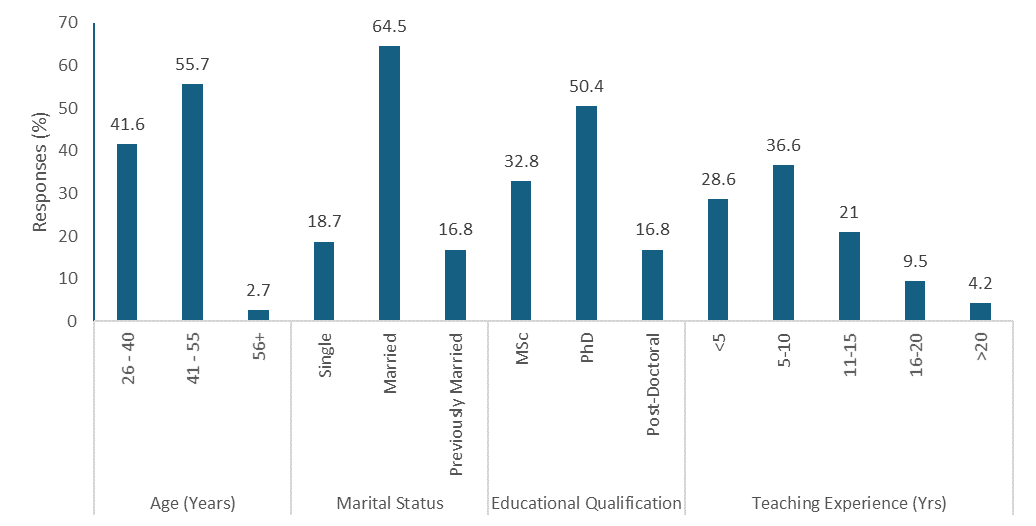
Figure 1: Socio-demographic distribution of respondents
Table 1: Socio Demographic and job characteristics of respondents (n = 262)
|
Variable |
Frequency(n) |
Percentage (%) |
|
Age |
|
|
|
26–40 |
109 |
41.6 |
|
41–55 |
146 |
55.7 |
|
56years and above |
7 |
2.7 |
|
Marital status |
|
|
|
Single |
49 |
18.7 |
|
Married |
169 |
64.5 |
|
Previously married |
44 |
16.8 |
|
Level of education |
|
|
|
MSc |
86 |
32.8 |
|
PhD |
132 |
50.4 |
|
Post-doctoral |
44 |
16.8 |
|
Teaching experience |
|
|
|
Less than 5 years |
75 |
28.6 |
|
5–10 years |
96 |
36.6 |
|
11–15 years |
55 |
21.0 |
|
16–20 years |
25 |
9.5 |
|
More than 20 years |
11 |
4.2 |
|
Academic rank |
|
|
|
Graduate Assistant |
25 |
9.5 |
|
Assistant Lecturer |
42 |
16.0 |
|
Lecturer II |
34 |
13.0 |
|
Lecturer I |
80 |
30.5 |
|
Senior Lecturer |
37 |
14.1 |
|
Reader/Associate Professor |
25 |
9.5 |
|
Professor |
19 |
7.3 |
|
Faculty |
|
|
|
Basic Medical Sciences |
38 |
14.5 |
|
Engineering |
17 |
6.5 |
|
Environmental Sciences |
37 |
14.1 |
|
Management Sciences |
36 |
13.7 |
|
Law |
26 |
9.9 |
|
Humanities |
39 |
14.9 |
|
Communication and Media Studies |
28 |
10.7 |
|
Sciences |
41 |
15.6 |
|
Lecture hours |
|
|
|
Less than 5 hours |
13 |
5.0 |
|
5–10 hours |
62 |
23.7 |
|
11–15 hours |
85 |
32.4 |
|
16–20 hours |
99 |
37.8 |
|
More than 20 hours |
3 |
1.1 |
|
Daily usage of computer |
|
|
|
Less than 2 hours |
2 |
0.8 |
|
2–4 hours |
49 |
18.7 |
|
5–7 hours |
126 |
48.1 |
|
More than 7 hours |
85 |
32.4 |
|
Musculoskeletal condition diagnosis before joining the University |
|
|
|
Yes |
221 |
84.4 |
|
No |
41 |
15.6 |
Note: MSc- Master of Science; PhD- Doctor of Philosophy
3.2 Prevalence of work-related musculoskeletal disorders
A total of 206 respondents (78.6%) reported work-related musculoskeletal pain, discomfort or injury in the previous 12 months, and 122 (46.6%) in the previous 7 days. Symptoms began after starting lecturing for 58.4% of respondents, recurred more than once in 12 months for 74.4%, led to treatment seeking in 72.5% and were attributed to lecturing by 72.9%. Functional impact was lower: 32.1% had been prevented from carrying out normal academic duties and 29.0% had taken rest or leave (Table 2). Figure 3 showed the distribution of respondents by the level of prevalence of work-related musculoskeletal disorders (MSDs). A high prevalence score (≥6) was recorded among 42.7% (n = 112) of respondents, followed by a moderate score (3–5) among 35.5% (n = 93) and a low score (≤2) among 21.8% (n = 57). Overall, 78.2% of respondents fell within the moderate or high prevalence categories of work-related MSDs.
Table 2: Prevalence of work-related musculoskeletal disorders (n = 262)
|
Statement |
Yes n (%) |
No n (%) |
Mean |
SD |
Decision |
|
Experienced work-related pain, discomfort or injury in the last 12 months |
206 (78.6) |
56 (21.4) |
0.79 |
0.411 |
Agreed |
|
Pain, discomfort or injury began after starting lecturing or academic duties |
153 (58.4) |
109 (41.6) |
0.58 |
0.494 |
Agreed |
|
Experienced pain, discomfort or injury in the last 7 days |
122 (46.6) |
140 (53.4) |
0.47 |
0.500 |
Disagreed |
|
Symptoms occurred more than once in the last 12 months |
195 (74.4) |
67 (25.6) |
0.74 |
0.437 |
Agreed |
|
Ever prevented from normal academic duties because of the pain or injury |
84 (32.1) |
178 (67.9) |
0.32 |
0.468 |
Disagreed |
|
Ever sought treatment for work-related musculoskeletal pain or injury |
190 (72.5) |
72 (27.5) |
0.73 |
0.447 |
Agreed |
|
Ever taken rest or leave from work because of the pain or injury |
76 (29.0) |
186 (71.0) |
0.29 |
0.455 |
Disagreed |
|
Thinks the pain or injury is related to work as a lecturer |
191 (72.9) |
71 (27.1) |
0.73 |
0.445 |
Agreed |
|
Total |
1217 (58.1) |
879 (41.9) |
0.58 |
0.494 |
Agreed |
Note:SD = standard deviation.
Figure 3: Level of prevalence of work-related musculoskeletal disorders
.
3.3 Body regions commonly affected by musculoskeletal injuries
The findings showed that the prevalence of work-related musculoskeletal disorders (MSDs) varied across body regions. The highest prevalence was reported in the ankles/feet (77.1%), followed by the lower back (67.2%), wrists/hands (64.1%), neck (59.2%), hips/thighs (57.6%), and knees (55.7%). In contrast, the prevalence was lower in the shoulders (48.1%), upper back (34.0%), and elbows (20.2%). Overall, 53.7% of the reported body-region responses indicated the presence of musculoskeletal complaints, while 46.3% indicated their absence. The mean score across the body regions was 0.54 (SD = 0.50), indicating that reports of MSDs were more frequent than reports of no MSDs.
Table 3: Body regions commonly affected by musculoskeletal injuries (n = 262)
|
Body region |
Yes n (%) |
No n (%) |
Mean |
SD |
Decision |
|
Ankles/feet |
202 (77.1) |
60 (22.9) |
0.77 |
0.42 |
Agreed |
|
Lower back |
176 (67.2) |
86 (32.8) |
0.67 |
0.47 |
Agreed |
|
Wrists/hands |
168 (64.1) |
94 (35.9) |
0.64 |
0.48 |
Agreed |
|
Neck |
155 (59.2) |
107 (40.8) |
0.59 |
0.49 |
Agreed |
|
Hips/thighs |
151 (57.6) |
111 (42.4) |
0.58 |
0.50 |
Agreed |
|
Knees |
146 (55.7) |
116 (44.3) |
0.56 |
0.50 |
Agreed |
|
Shoulders |
126 (48.1) |
136 (51.9) |
0.48 |
0.50 |
Disagreed |
|
Upper back |
89 (34.0) |
173 (66.0) |
0.34 |
0.48 |
Disagreed |
|
Elbows |
53 (20.2) |
209 (79.8) |
0.20 |
0.40 |
Disagreed |
|
Overall |
1266 (53.7) |
1092 (46.3) |
0.54 |
0.50 |
Agreed |
Note:SD = standard deviation.
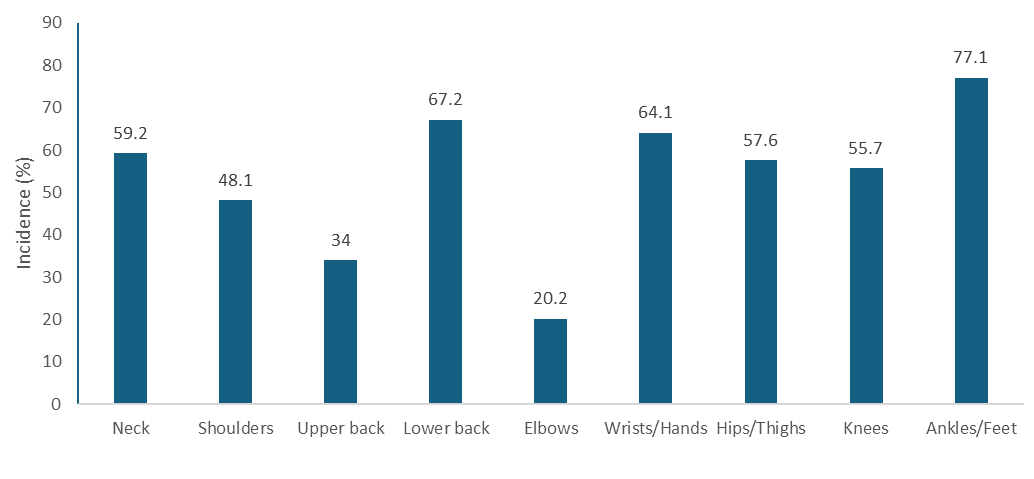
Figure 4: Body regions commonly affected by musculoskeletal injuries (%)
4. DISCUSSION
The findings of this study revealed a high burden of work-related musculoskeletal disorders (WRMSDs) among female lecturers at Rivers State University. The high burden of WRMSDs observed in this study may be associated with the physical and ergonomic demands of academic work. Lecturers routinely engage in prolonged standing during lectures, extended sitting while preparing instructional materials, repetitive computer use, script marking, student supervision, research activities, and administrative duties.
The findings are consistent with the Job Demands–Resources (JD–R) theory adopted for this study. The theory proposes that excessive job demands, when not adequately balanced by available resources, can contribute to physical and psychological strain [15]. In the context of university teaching, sustained physical demands, repetitive tasks, prolonged postures, and insufficient recovery periods may increase the risk of musculoskeletal complaints, particularly where appropriate ergonomic facilities and institutional support are limited.
Compared with previous studies, the burden observed in this study appeared higher than the pooled prevalence reported among teachers globally by [2] and the prevalence documented among schoolteachers in Cairo, Egypt, by [16]. Differences in study populations, assessment methods, occupational demands, and workplace conditions may partly explain these variations. The additional responsibilities that some female lecturers manage outside the workplace may also contribute to their overall physical demands, although this explanation requires further investigation. The study findings are aslo comparable to those reported among teaching staff at the University of Douala, Cameroon, by [4]. This similarity suggests that university lecturers in sub-Saharan African settings may experience common occupational challenges, including prolonged sitting, lecture delivery, administrative responsibilities, and sustained computer use.
Similarly, the burden observed in this study was higher than that reported among office workers in higher education institutions by [6] and schoolteachers in Enugu by [17]. However, it was comparable to findings reported among physiotherapy and architecture undergraduates in Nigeria by [12]. In contrast, the burden observed in this study was higher than that reported among staff of the University of Port Harcourt by [9] but lower than that documented among doctors at the University of Port Harcourt Teaching Hospital.
Furthermore, the lower back, neck, shoulders and upper back were the body regions most affected by work-related musculoskeletal disorders (WRMSDs) among female lecturers at Rivers State University, with the lower back being the most frequently affected. This pattern may reflect the ergonomic demands of academic work, including prolonged sitting or standing, computer use and sustained postures. The findings support the Job Demands–Resources theory, which explains how persistent job demands without adequate workplace resources may contribute to occupational strain [15].
Globally, the findings agree with [2, 3, 16] who identified the lower back, neck and shoulders as common sites of musculoskeletal symptoms among teaching populations. Similarly, [4] and [5] reported comparable patterns among university staff in Cameroon and Zimbabwe, respectively. However, upper limb and wrist symptoms were more common among Ghanaian teachers, suggesting that occupational activities and ergonomic conditions may influence the distribution of musculoskeletal symptoms [18].
In Nigeria, the findings are consistent with [8, 6, 9] who reported frequent lower back and neck complaints among teachers and university staff. Conversely, knee and lower limb complaints were more common among some categories of university workers [19]. These differences may reflect variations in occupational responsibilities and physical demands. The findings underscore the need for ergonomic assessments, appropriate office furniture, regular work breaks and workplace exercise programmes to reduce musculoskeletal strain among academic staff.
LIMITATION
i. The cross-sectional design limited the ability to establish causal relationships between occupational risk factors and musculoskeletal disorders.
ii. The use of self-reported questionnaire responses may have introduced recall bias or underreporting of symptoms.
iii. The study was restricted to female lecturers in selected faculties at Rivers State University, limiting the generalisability of the findings to other staff groups and universities.
Author’s contribution
The author(s) contributed to the study conception and design, data collection, analysis and interpretation of findings, and preparation of the manuscript.
Funding
This study received no specific funding from any public, commercial or not-for-profit funding agency.
Declaration of Conflicting Interest
The author(s) declares no conflict of interest.
REFERENCES
1. World Health Organization. (2022). Musculoskeletal conditions