Greener Journal of Educational Research
Vol. 16(1), pp. 1-6, 2026
ISSN: 2276-7789
Copyright ©2026, Creative Commons Attribution 4.0 International.

|
Greener Journal of Educational Research Vol. 16(1), pp. 1-6, 2026 ISSN: 2276-7789 Copyright ©2026, Creative Commons Attribution 4.0 International. |
|
The Roles of Local Games in Stimulating and Sustaining Secondary School Students’ Interest in Mathematics: A Systematic Review
Umakalu, C. P.*
Department of Mathematics and Computer Science Education, ESUT
|
ABSTRACT |
|||
|
Mathematics remains one of the most challenging and anxiety-provoking subjects for secondary school students worldwide, often resulting in low engagement, negative attitudes, and poor academic performance (Ashcraft & Moore, 2009). Interest has been identified as a central motivational construct influencing persistence, conceptual understanding, and academic success (Hidi & Renninger, 2006). Game-based learning has emerged as a promising instructional strategy capable of transforming passive classrooms into interactive learning environments (Plass, Homer, & Kinzer, 2015). While digital games dominate much of the literature, local and culturally relevant games represent accessible, low-cost alternatives with significant educational potential. This systematic review examines the roles of local games in stimulating and sustaining students’ interest in mathematics at the secondary school level. A structured literature search was conducted across Google Scholar, ERIC, Scopus, and African Journals Online covering studies published between 2005 and 2024. Twenty-six studies met the inclusion criteria and were thematically synthesized. Findings indicate that local games enhance learner motivation, reduce mathematics anxiety, improve conceptual understanding, and foster collaborative learning. However, challenges such as teacher preparedness, curriculum rigidity, and assessment misalignment persist. The review concludes that culturally responsive game-based learning offers a sustainable pathway for improving mathematics engagement, particularly in resource-constrained contexts.
|
|||
|
ARTICLE’S INFO |
|||
|
Article No.: 020226022 Type: Research Full Text: PDF, PHP, HTML, EPUB, MP3 DOI: 10.15580/gjer.2026.1.020226022
Accepted: 05/02/2026 Published: 28/02/2026
Keywords: Mathematics, Interest, and Local games
|
*Corresponding Author
Umakalu, C. P.
E-mail: Precious.umakalu@esut.edu.ng |
Article’s QR code |
|
|
|
|
|
|
1. INTRODUCTION
Mathematics plays a foundational role in scientific literacy, technological innovation, and economic development (UNESCO, 2020). Despite its global importance, mathematics remains one of the most feared and disliked school subjects, particularly at the secondary level. Many students perceive mathematics as abstract, difficult, and disconnected from everyday experiences, which contributes to disengagement and declining achievement (Ma & Kishor, 1997; Ashcraft & Kirk, 2001).
Interest is a psychological construct that influences attention, curiosity, persistence, and willingness to learn (Hidi & Renninger, 2006). Students who develop situational and individual interest in mathematics are more likely to engage deeply with content, seek challenges, and achieve higher academic outcomes. Unfortunately, conventional teacher-centered instructional methods often fail to stimulate sustained interest, especially in overcrowded classrooms and under-resourced schools (Obodo, 2004).
In response to these challenges, educators have increasingly turned to innovative pedagogical strategies that promote active learning. Among these, game-based learning has gained prominence for its ability to combine enjoyment with cognitive engagement (Gee, 2007). Games naturally incorporate challenge, feedback, competition, and collaboration—elements that support motivation and conceptual learning.
While much research focuses on digital and commercial educational games, local and traditional games offer culturally relevant alternatives that align with students’ lived experiences. These games often involve counting, strategic planning, spatial reasoning, probability, and logical thinking, making them inherently mathematical (Zaslavsky, 1999). Moreover, they require minimal financial investment, making them suitable for low-resource educational settings.
This systematic review synthesizes empirical and theoretical literature on the use of local games in mathematics education, exploring their impact on students’ interest, engagement, emotional responses, and cognitive development. It also identifies implementation challenges and future research needs.
Types of local games used in teaching and learning of mathematics
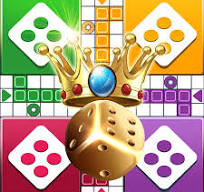
Figure 1: Dice or ludo game for teaching probability
.
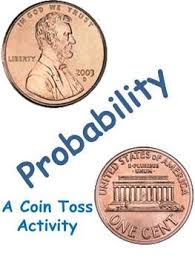
Figure 2: Coin game for teaching probability
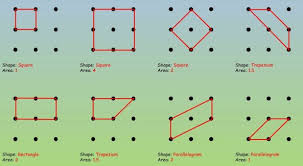
Figure 3: Geoboard games for geometric concepts, for angles, identifying and differentiating polygons

Figure 4: Coordinate game for Cartesian plane and coordinates
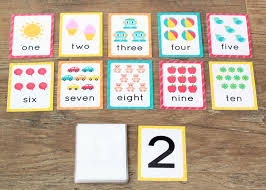
Figure 5: Card game for elementary number concepts

Figure 6: Ayo African Board
2. OBJECTIVES OF THE REVIEW
The objectives of this review are to:
1. Examine the influence of local games on students’ interest in mathematics
2. Identify cognitive and affective learning benefits associated with game-based instruction
3. Analyze challenges and limitations in classroom implementation
4. Highlight research gaps and propose future directions
3. METHODOLOGY
3.1 Search Strategy
The review followed systematic procedures recommended by Kitchenham (2004) and PRISMA guidelines (Moher et al., 2009). Literature searches were conducted in:
 Google Scholar
ERIC
Scopus
African Journals Online (AJOL)
Search strings included:
“local games AND mathematics learning,”
“traditional games AND student interest,”
“game-based learning AND mathematics education,”
“play-based instruction AND secondary schools.”
3.2 Inclusion Criteria
Studies were included if they:
Focused on secondary or upper primary students
Examined local or traditional games in mathematics instruction
Reported outcomes related to interest, motivation, engagement, or achievement
Were published between 2005 and 2024
3.3 Exclusion Criteria
Studies were excluded if they:
Focused exclusively on commercial entertainment games
Lacked academic rigor or peer review
Addressed non-mathematics subjects
3.4 Data Analysis
A thematic synthesis approach was employed (Braun & Clarke, 2006). Key findings were coded and grouped into major themes including motivation, emotional response, cognitive development, social interaction, and pedagogical challenges.
4. FINDINGS AND THEMATIC SYNTHESIS
4.1 Enhancement of Student Interest and Motivation
Across the reviewed studies, local games consistently increased students’ enthusiasm toward mathematics. Learners exhibited greater participation, curiosity, and willingness to attempt challenging problems (Ke, 2008; Plass et al., 2015). Teachers reported improved classroom energy and reduced disengagement.
Culturally familiar games fostered emotional connection, making learning feel relevant and enjoyable (Zaslavsky, 1999). Students perceived mathematics as playful rather than intimidating, sustaining interest across multiple lessons.
4.2 Reduction of Mathematics Anxiety
Mathematics anxiety negatively affects working memory and problem-solving performance (Ashcraft & Moore, 2009). Game-based learning environments lowered stress by reframing problem solving as exploration rather than evaluation (Kebritchi et al., 2010).
Students felt more comfortable making mistakes and learning collaboratively, which enhanced confidence and perseverance.
4.3 Development of Cognitive Skills
Local games supported conceptual understanding through experiential learning. Studies documented improvements in:
Number sense
Logical reasoning
Probability reasoning
Spatial visualization
Strategic planning
(Ernest, 2016; Ke & Grabowski, 2007)
Hands-on interaction enabled learners to construct meaning rather than memorize procedures.
4.4 Promotion of Social and Collaborative Learning
Many games required teamwork, negotiation, and rule interpretation, aligning with Vygotskian social constructivism (Vygotsky, 1978). Peer collaboration strengthened problem-solving skills and communication abilities (Johnson & Johnson, 2009).
Students who were previously passive became active contributors.
5. CHALLENGES IN IMPLEMENTATION
5.1 Teacher Preparedness
Many teachers lacked training in pedagogical integration of games (Ertmer & Ottenbreit-Leftwich, 2010). Without guidance, games were sometimes used as entertainment rather than instructional tools. Most students see games as relevant entertainment medium rather than teaching instruction, this because most mathematics teachers lacked the tenacity to integrate the games where appropriate.
5.2 Curriculum Constraints
Rigid syllabi limited time for interactive learning. Teachers feared falling behind examination requirements.
5.3 Classroom Management
Large class sizes made monitoring game activities challenging and sometimes noisy.
5.4 Assessment Misalignment
Standardized tests emphasized procedural knowledge over conceptual understanding developed through games.
6. DISCUSSION
The review confirms that local games significantly enhance both affective and cognitive dimensions of mathematics learning. By embedding mathematical concepts within culturally meaningful experiences, games promote intrinsic motivation and sustained engagement.
The emotional benefits—particularly anxiety reduction—are crucial, as negative emotions are major barriers to mathematical success. Cognitive gains further demonstrate that playful learning does not compromise academic rigor.
However, systemic support is essential for scalability. Teacher professional development, curriculum flexibility, and assessment reform are necessary to integrate game-based learning effectively.
7. RESEARCH GAPS AND FUTURE DIRECTIONS
Key gaps include:
Limited longitudinal impact studies
Few large-scale randomized experiments
Insufficient focus on teacher training models
Lack of standardized game-based curricula
Future research should explore:
Long-term academic outcomes
Comparative digital vs. local games
Policy-level implementation strategies
Cultural adaptability across regions
8. EDUCATIONAL IMPLICATIONS
Educational systems should:
Embed culturally responsive games in curricula
Train teachers in game-based pedagogy
Align assessment with conceptual learning
Encourage participatory classroom practices
Local games represent scalable, low-cost innovations capable of transforming mathematics education.
9. CONCLUSION
This systematic review demonstrates that local games play a powerful role in stimulating and sustaining students’ interest in mathematics. They enhance motivation, reduce anxiety, foster conceptual understanding, and promote collaboration. Despite implementation challenges, their cultural relevance and accessibility make them especially valuable in developing educational contexts.
Transforming mathematics classrooms requires moving beyond passive instruction toward interactive, learner-centered approaches. Integrating local games within structured curricula offers a sustainable pathway for improving engagement, interest and achievement.
REFERENCES
Ashcraft, M. H., & Kirk, E. P. (2001). The relationships among working memory, math anxiety, and performance. Journal of Experimental Psychology, 130(2), 224–237.
Ashcraft, M. H., & Moore, A. M. (2009). Mathematics anxiety and the affective drop in performance. Journal of Psychoeducational Assessment, 27(3), 197–205.
Braun, V., & Clarke, V. (2006). Using thematic analysis in psychology. Qualitative Research in Psychology, 3(2), 77–101.
Deterding, S., Dixon, D., Khaled, R., & Nacke, L. (2011). From game design elements to gamefulness. Proceedings of the 15th ACM Conference on Human Factors in Computing Systems, 2425–2434.
Ernest, P. (2016). Games in mathematics education. International Journal of Mathematical Education in Science and Technology, 47(2), 293–306.
Ertmer, P. A., & Ottenbreit-Leftwich, A. (2010). Teacher technology change. Journal of Research on Technology in Education, 42(3), 255–284.
Gee, J. P. (2007). What video games have to teach us about learning and literacy. Palgrave Macmillan.
Hidi, S., & Renninger, K. A. (2006). The four-phase model of interest development. Educational Psychologist, 41(2), 111–127.
Johnson, D. W., & Johnson, R. T. (2009). Cooperative learning methods. Educational Researcher, 38(5), 365–379.
Ke, F. (2008). Computer games in math learning. British Journal of Educational Technology, 39(4), 1–16.
Ke, F., & Grabowski, B. (2007). Game playing for math learning. Educational Technology Research and Development, 55(3), 263–276.
Kebritchi, M., Hirumi, A., & Bai, H. (2010). The effects of modern math games on student learning. Computers & Education, 55(2), 427–443.
Kitchenham, B. (2004). Procedures for systematic reviews. Keele University Technical Report.
Ma, X., & Kishor, N. (1997). Assessing the relationship between math anxiety and achievement. Journal for Research in Mathematics Education, 28(1), 26–47.
Moher, D., et al. (2009). Preferred reporting items for systematic reviews. PLoS Medicine, 6(7), e1000097.
Obodo, G. C. (2004). Principles and practice of mathematics education in Nigeria. Enugu: Floxtone Press.
Plass, J. L., Homer, B. D., & Kinzer, C. K. (2015). Foundations of game-based learning. Educational Psychologist, 50(4), 258–283.
UNESCO. (2020). Global education monitoring report. Paris: UNESCO.
Vygotsky, L. S. (1978). Mind in society. Harvard University Press.
Zaslavsky, C. (1999). Africa counts: Number and pattern in African cultures. Chicago Review Press.
|
Cite this Article: Umakalu, CP (2026). The Roles of Local Games in Stimulating and Sustaining Secondary School Students’ Interest in Mathematics: A Systematic Review. Greener Journal of Educational Research, 16(1): 1-6, https://doi.org/10.15580/gjer.2026.1.020226022. |