Amaranth has extra ordinary nutritional benefits and contains full
range of essential amino acids in very balanced amounts. Proper irrigation
scheduling or efficient water management practices can reduce loss of water
and amaranth gets the required amount of water for its growth therefore
reducing its current production decline in Nigeria. In this work, pot
experiment was carried out at Kogi State
Polytechnic, Itakpe campus, Nigeria, to determine
the effects of irrigation rates and irrigation frequency on the growth of
amaranth. Three levels of irrigation rate (10%, 20% and 30%) and three
levels of irrigation frequency (1, 2 and 3 per day) were laid out in a
completely randomized design (CRD) giving a total of nine treatments and
replicated thrice, totaling 27 samples. Amaranth seeds were planted through
broadcasting at the nursery and transplanting was done 7 days after
planting. One amaranth was transplanted per pot. The physico-chemical
properties of the soils were determined prior to planting. Data collected
were subjected to the analysis of variance using Genstat-17-Edition.
Significant differences in means were separated using Fischer’s least
significant difference F-LSD. Results indicated that irrigation rates and
frequency significantly influenced the area of the leaves produced and the
height of the plant. Similarly, the length of the plant roots show to be
influenced by the irrigation rates and frequency. Irrigation rate of 20%
with 1 application per day however gave the best yield and was therefore
recommended for the production of amaranth in the study area.
Accepted:03/06/2023
Published: 15/06/2023
*Corresponding Author
Hope Ogbaje
E-mail: hopeogbaje@ gmail.com
Keywords: irrigation,
scheduling, amaranth, growth parameters, itakpe,
Nigeria.
1.0INTRODUCTION
Amaranth (AmaranthushypochondriacusL)
belongs to the family Amaranthaceae. The genus Amaranthus include other
species of grain type amaranth viz: A peneculatus, A cruentus and Acaudatus. The grain types of amaranthus
are thought to be of Central American origin. In Central America, European
settlers introduced these to the old world during the 19th century.
Literature has shown that its protein is of higher quality than cow's milk
protein [1]. Amaranth has many nutritional benefits and contains full range of
essential amino acids in very balanced amounts [1]. Findings of Wu Leung et al.
[2,3] showed 15 to 16% protein and 6.9 to 8.3% lipid in
amaranth seeds dry matter and it indicated better calorific value (430 cal / 100 g) than maize.
With all
these potentials, amaranth is very sensitive to water stress. It is a plant
requiring some water quantity for growth and development. Foregoing research
highlighted a reduced amaranth growth due to water deficit [4], while Ejieji and Adeniran [5] reported
a reduced amaranth yield for treatment under water stress. In general, Soil
water deficit is a principal biotic factor that limits plant growth and
development. Jomo et al [4] affirmed a reduced
amaranth leaf area and dry matter due to water stress, whereas Meyers [6]
concluded a reduced amaranth growth and yield due to water deficit.
Irrigation scheduling is considered as a vital component
of water management to produce higher irrigation efficiency under any
irrigation system, as excessive or sub-optimum irrigation both have detrimental
effects on productivity parameters of amaranth [4].
In almost all regions of the world, water supply is the
major constraint to crop production due to water demand for rapid
industrialization and high population growth. Agricultural sector consumes
about 83% of water whereas; about 50-70% of water is wasted through conveyance,
evaporation, field application, and distribution losses in conventional method
of irrigation. These losses can be reduced by proper irrigation scheduling or
efficient water management practices [7].In Nigeria, a higher reduction in amaranth production has been recorded
while information is limited concerning effective irrigation level for
improving its growth and yield [8]. Therefore, there is a need of a study
regarding amaranth efficient irrigation scheduling to enhance its growth and
production in Itakpe, Kogi
State.
The aim of this work was to study the effect of
irrigation scheduling on the growth parameters of amaranth in Itakpe, Kogi State.
2.0MATERIALS AND METHODS
2.1Study Area
The
experiment was conducted in school of Agricultural technology experimental farm
in Kogi state Polytechnic campus, Itakpe
where the maximum temperature varies between 29oC and 35oC,
while the annual volume of precipitation is always less that 1900mm with an
average of 1000mm. The site is located on latitude 7.658889oN and
longitude 6.362253oE on an altitude of about 195m above the sea
level. Figure 1 show the map of the experimental site (Itakpe,
Kogi State, Nigeria).
Figure 1: Map of Kogi State Showing the Study Area (Itakpe,
Kogi State, Nigeria)
2.2Experimental Design
The
experiment was undertaken in pots and nine different treatments of irrigation
levels were considered. These agents were in completely randomized design with
three replications for each, giving a total of twenty-seven samples. The rates
and frequencies of irrigation are shown in Table 1.
Table 1: Irrigation Rates and Frequency of
Irrigation
Treatments
Irrigation Rates (%)
Irrigation Frequencies (per
day)
T1
10
1
T2
10
2
T3
10
3
T4
20
1
T5
20
2
T6
20
3
T7
30
1
T8
30
2
T9
30
3
2.3Planting
Soil Auger
was used to collect soil samples from the field using simple random method at
the depth of 0 – 15 cm before planting. Various soil samples were collected at
six different spots to arrive at a composite sample. Some portion of the
composite sample was introduced into the 27 experimental pots while the
remaining soil sample was taken to the laboratory for physico-chemical
analysis of the soils.
Planting
of Amaranth was done on the 5th September, 2022. The seeds were
planted first at the nursery and transplanting was done after 7 days, 1 plant
per pot was planted at a depth of 2.5 cm. The seeds were locally sourced from
International Market in Lokoja, Kogi
State.
2.4Data sampling and Analysis
2.4.1Soil Data
Soil
samples were bulked for analysis. The soil samples were air dried, crushed and
sieved using 2mm sieve. The soil analysis was carried out at Soil Science
Laboratory, Department of Soil science and Environmental Management, Prince AbubakarAudu University, Anyigba, Kogi State.
i.Particle Size Distribution
This was
determined using Bouyoucous (Hydrometer) method as
described by Udoet
al. [9], fifty grams (50g) of the soil sample were
stirred for 15 minutes. The dispersed suspension was then transferred into a
glass cylinder and the cylinder tilled with distilled water to mark. After
that, the top of the cylinder was covered with hand and inverted several times
until the dispersion was properly mixed. A plunger was also used to ensure
proper stirring of the suspension. Hydrometer and thermometer determine the
percentage composition of the suspended materials. The first hydrometer reading
was taken at 40 seconds and this measured the amount of silt and clay in
suspension. The Second reading was taken after 3 hours and this indicated the
percentage of total clay suspension. The percentage composition of sand, silt
and clay was determined using the formula below
The soil
pH was determined in 1:1 soil-water suspension by glass electrode method [10].
Ten Grams (10g) of air dried soil sample (passed through 2mm sieve was measured
into a 50ml plastic beaker.
Twenty
(20) ml of water was added and the suspension was allowed to stand for about 30
minutes and stirred occasionally with glass rod, after which the suspension was
allowed to settle and electrode of the pH meter was inserted to measure the
active acidity at a 1:1 ratio. This procedure was repeated using 0.01ml Calcium
chloride solution at a ratio of 1:2.
iii.Organic Carbon
This was
determined by the modified walking-black method as describe by Nelson and sommers, [11] which involves the oxidation of soil samples
with dichromate and tetraoxasulphate (iv) acid. Two gram of sieved soil was mixed with 10ml of distilled
water was added. Three drops of Phenolphthalein indicator was added and
titrated against ferrous Sulphate. A blank solution was prepared without soil
samples and their readings were taken. The Organic carbon was then calculated
using the relationship
% Organic
matter in soil = % organic carbon x 1.729
iv.Organic Matter
The
organic matter was determined using the chronic acid oxidation produce of Walkley and Black using the formula.
% OM = % OC
x1.729 [12]------------------- (equation 3)
v.Total Nitrogen
Total Nitrogen
was determined by Macro- Kjeldahl digestion and
distillation method as described by Bremmer, [13].
This method makes use of mercury catalyst Tablets to aid the digestion. The
soil sample was digested with concentrated tetraoxosulphate
(iv) acid after addition of excess caustic soda. Ten
grams (10g) of sample was weighed into a dry 500ml conical flask, 20ml of
distilled water was added. The flask was then swirled for few minutes and then
allows standing for about 30 minutesthen
was added. Then 30mls of concentrated Sulphuric acid was added through a
measuring cylinder. The flask was allowed to cool, and then 100mls of distilled
water was added slowly. The digest was transferred to a clean 250mls volumetric
flask with caution. The stand particles were then washed with distilled water
and flask mark with distilled water. The samples were then distilled with boric
acid using 10 ml NaOH.
vi.Available Phosphorus
The
molybdenum-blue method as described by IITA [10] was in the determination of
phosphorus content in the soil sample. One gram (lg)
of air dried sample was taken into a 15ml centrifuge tube and 7ml extraction
solution (NH4F + HCl) was added. The
suspension was shaken on a mechanical shaker for 1 minute and centrifuged at
2000 rpm for 15 minutes. Two milliliters of the clear
supernatant solution were poured into a 20ml test tube and 5ml of distilled H2O
and 2ml of ammonium molybdate were added to the
solution. The content was mixed properly after which 1ml of the dilute stannous
chloride solution was added. The percentage transmittance of the sample content
solution was measured on the electrophotometer at
600microwavelength. The available phosphorus of the sample was calculated using
standard curve of transmittance
against known concentration of phosphorus (Rpm)
vii.Exchangeable Bases
This was
determined by the ammonium acetate extraction method as described by IITA [10],
the soil sample were shaken for two hours then centrifuged at 2000rmp for 5-10
=110 minutes after decanting into a volumetric flack. Ca
and Mg were then determine using the atomic absorption spectrometer (AAS) while
the EDTA extracts Na and K was determined using flame photometer.
viii.Cation Exchange Capacity
(CEC)
The CEC of
the sample was determined using the procedures as described by IITA [10] and
modified by Anderson and Ingram [14]. The principle involves the solution of
the exchange salt of the soil with a known salt solution and displacement of
the salt to determine the soil colloids. Potassium chloride (KCl) and neutral NH4O AC solutions were use in
this saturation displacement method.
A 2.5g of
sample was taken into a 50ml centrifuge tube, 33ml of 1mlkcl was added and the
suspension was shaken for five minutes. The tube was centrifuged to get a clear
supernatant discarded. The saturation with KCl and
discarding the supernatant solution was obtained.
This was
also discarded. The washing with alcohol was repeated two times to remove
excess K, 33ml of 1ml NH4O AC was added to the tube and shaken for 5
Minutes. The suspension was centrifuged to obtain a clear supernatant solution
to make up the volume to the 100ml mark and the solution was thoroughly mixed
by swirling. The concentration in the flask was determined graphically. The CEC
(Cmol/kg) is equal to mg kg/100 soil. This is numerically
equal to Cmol/kg soil.
2.4.2Crop data collection
The
following agronomic data were collected at 12 d, 19
d, 26 d, and 33 d (d means the days numbers after transplanting) and
recorded as follows;
a.Growth parameters of Amaranth
i. Plant
Height
The plant
heights were taken using a 30 cm meter rule by placing the meter rule at the
base of the amaranth plant measuring up to the last node of the plant.
ii. Number
of leaves
The number
of leaves was taken by manual counting of the leaves
iii. Leaf
Area
A 30 cm
meter rule was used to take the leaves area by measuring the length and the
breath of the leaf (A=LxB)
iv.Root Length
The root
length were taken using a 30 cm meter rule by placing the meter rule at the
base of the amaranth plant measuring down to the tip of the root of the plant.
2.4.3Data Analysis
The
data were analyzed statistically with Genstat discovery software edition 4. A comparison among
treatments were conducted (P<0.05) by using least significant difference
(LSD) at 5% level, Duncan multiple test was used for mean separation.
3.0RESULTS
3.1Physical and Chemical Properties of the Experimental Soils
The
results obtained for physical and chemical properties of the soil are presented
in Table 2.The result shows that the pH
of the soil was 6.00 and 5.30 in water and KCL respectively. Sand, silt and
clay contents were 71.80, 13.00 and 15.20 respectively,
therefore the soil was classified as sandy loam. Organic carbon content was
1.38; the soil had 0.069% nitrogen and 4.87 mgkg-1
available phosphorus. Exchangeable cations
which included K, Na, Mg and Ca were 2.11, 0.39, 2.28
and 4.22 cmolkg-1 respectively. The TEB, EA
and CEC were 9.00, 1.10 and 10.10 cmolkg-1 respectively.
Table 2: Physical and Chemical Properties of the Soil
Parameters
Values
Sand (%)
71.80
Silt (%)
13.00
Clay (%)
15.20
Textural class
Sandy Loam
Organic Carbon (%)
1.38
Organic Matter (%)
2.38
Total Nitrogen (%)
0.069
Available phosphorus (mgkg-1)
4.87
pH in water
6.00
pH in KCL
5.30
Exchangeable cation
K (cmol/kg)
2.11
Na (cmol/kg)
0.39
Mg (cmol/kg)
2.28
Ca (cmol/kg)
4.22
Total Exchangeable Bases (cmol/kg)
9.00
Exchangeable anion (cmol/kg)
1.10
Cation Exchange Capacity (cmol/kg)
10.10
3.2Effect of Irrigation Rate and Frequency on the Leaf Area of
Amaranth
The
influence of irrigation rate and frequency on leaf area is presented in Table
3. The result shows that there are significant differences (P<0.05) in the
leaf area at 12, 19 and 26 days after transplanting. At 12, 19 and 26 days
after transplanting, the leaf area increased as the frequency increases at 10%
rate. But as the irrigation rate was increased to 20%, there was a sharp
increase in the leaf area across the various days after transplanting. However,
as the rate and frequency increases further, a decrease in leaf area was
observed. The highest leaf area was observed with T4 (5.613cm2)
while the least was with T6 (1.080 and 2.140 cm2) at 12
and 19 days after transplanting respectively and at 26 days after planting, the
least was observed with T7 (3.367 cm2).
Table 3: The Influence of
Irrigation Rate and Frequency on Leaf Area of Amaranth(cm2)
TREATMENTS
12 days
19 days
26 days
T1
1.887b
2.937ab
3.737b
T2
2.660ab
3.447ab
3.583b
T3
3.297ab
4.433ab
4.867ab
T4
5.613a
6.333a
7.037a
T5
2.217ab
2.867ab
3.600b
T6
1.080b
2.140b
3.433b
T7
2.293ab
2.867ab
3.367b
T8
3.680ab
4.333ab
4.963ab
T9
1.930b
3.067ab
3.833b
LSD (P<0.05)
3.204
3.344
2.895
LSD
= Least Significant Difference
Means
in the same column with the same superscript are not significantly different at
5% level of probability.
3.3Effect of Irrigation Rate and Frequency on the Plant Height
of Amaranth
The
influence of irrigation rate and frequency on plant height of amaranth is
presented in Table 4. The result shows that there were no significant
difference (P<0.05) on plant height among the treatments at 12 days after
transplanting, but at 19 and 26 days after transplanting, the plant height is
significant among the treatments. At 12, 19 and 26 days after transplanting,
the plant height increased across the treatments, until a decrease was observed
from T5. The highest height was observed with treatment T4
(5.667 cm, 7.000 cm and 7.833 cm) at 12, 19 and 26 days after transplanting
respectively, while the lowest was observed with treatment T6 (2.400
cm, 3.333 cm and 4.333 cm) at 12, 19 and 26 days after transplanting
respectively.
Table 4: Effect of Irrigation
Rate and Frequency on the Plant Height of Amaranth (cm)
TREATMENTS
12 days
19 days
26 days
T1
4.500a
5.333ab
6.500ab
T2
4.500a
5.167ab
5.833ab
T3
4.167a
5.000ab
5.333ab
T4
5.667a
7.000a
7.833a
T5
3.267a
3.833ab
5.167ab
T6
2.400a
3.333b
4.333b
T7
3.200a
3.667ab
4.333b
T8
4.333a
5.000ab
5.833ab
T9
4.167a
5.000ab
6.000ab
LSD (P<0.05)
NS
3.209
2.968
NS
= Not significant
LSD = Least Significant Difference
Means
in the same column with the same superscript are not significantly different at
5% level of probability.
3.4Effect of Irrigation Rate and Frequency on the Number of
Leaves of Amaranth
Table
5 presents the effect of irrigation rate and frequency on the number of leaves
of amaranth. The result shows that there is no significant difference
(P<0.05) on number of leaves among the treatments at 12 and 19 days after
transplanting, but at 26 days after transplanting, significant difference was
observed between treatments T4 and T5. Treatment T4
was observed with the highest number of leaves (7, 8 and 9) at 12, 19 and 26
days after transplanting respectively.
Table 5: Effect of Irrigation Rate
and Frequency on the Number of Leaves of Amaranth
TREATMENTS
12 days
19 days
26 days
T1
4.667a
7.000a
7.000ab
T2
6.333a
6.667a
7.000ab
T3
6.000a
7.333a
7.667ab
T4
7.000a
8.000a
8.667a
T5
4.000a
4.333a
4.667b
T6
4.333a
5.333a
6.000ab
T7
4.000a
4.333a
5.000ab
T8
5.333a
6.000a
6.333ab
T9
5.000a
5.000a
5.333ab
LSD
NS
NS
3.387
NS
= Not significant
LSD = Least Significant Difference
Means
in the same column with the same superscript are not significantly different at
5% level of probability.
3.5Effects of Irrigation Scheduling on Root length (cm)
The
effects of irrigation rate and frequency on the root length of amaranth are
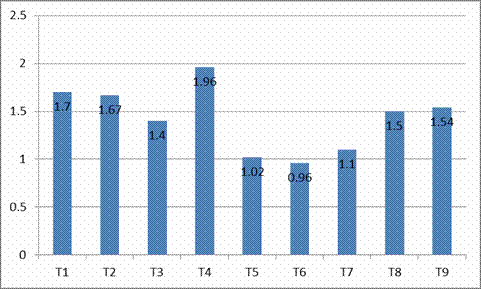
presented in Figure 2. From the figure, the results highlighted
treatment T4 as the most effective treatment in enhancing the root
length of amaranth plant comparatively to other treatments. It was observed to
have the highest value of 1.96 cm and significantly differed from others
(P<0.05). It was followed by treatment T1 with 1.70 cm, whereas T6 of 0.96
cm got the shortest roots.
Figure 2: Effects of Irrigation
Rate and Frequency on Root length (cm)
4.0DISCUSSION
The
effects of irrigation rate and frequency on the leaf area of amaranth gotten in
this study support those ofKwizera Chantal et. al. [1] who reported
improved leaf area for irrigated treatments at a medium level comparatively to
those under stress. The improved and unique leaf area for treatment T4,
(that is, 20% irrigation rate for ones in a day) could be that field capacity
was achieved at that level and the capillary water available for the plant
growth was sufficient to meet the need of the plant, thus enhanced performance.
Further increment of irrigation rate and frequency would have led to saturation
which caused a decline in leaf area from T5 beyond. The lower leaf
area observed from T1 – T3, as compared to T4
could be that there was no sufficient water to meet the daily water need of the
crops as compared to T4.
Observation
from the effect of irrigation rate and frequency on the height of amaranth
shows that
improvement of the plant growth with applied higher irrigation rate on 12d, 19d
and 26d was due to the higher temperature in these days resulting in increased
evapotranspiration whence higher irrigation water for compensation to promote transplanted
seedlings root system establishment. This supports the results of Zhongping [15] who found an improved growth due to the use
of higher irrigation water during periods of high temperatures. Likewise, these
results endorse the outcomes of Leban [16] which
revealed an improved plant height for normally irrigated treatments than those
under stress. However, the reduced plant height for treatments T6
and T7 could be attributed to the reduced cell turgor which affect
cell division and expansion as affirmed by Jomo et
al. [4] and also limited nutrient uptake [17].
Results
of the number of leaves of amaranth are in accordance with the results of Pincard [18] and those of Kramer and Boyer [19] who both
affirmed an increased leaves number for normally irrigated treatments than
those under stress. In addition, these results endorse those of Bouchabke et al. [20] who reported an increased leaves
number for irrigated treatments than those under stress.
The effects of irrigation rate and frequency
on the root length of amaranth with T4 (that is, 20%
irrigation rate for ones in a day) as the most
effective treatment in enhancing root length of amaranth plant was due to
medium irrigation level as this has also been reported by Gajri
et al. [21].
5.0CONCLUSION
The
study showed that among the growth parameters, irrigation scheduling
significantly influenced leaf area and plant height. Number of leaves was not
significantly different at 12 and 19 days. The result
highlighted treatment T4 (20% irrigation rate and 1 irrigation
frequency) as the most effective treatment in enhancing the root length of
amaranth plant comparatively to other treatments.
Scheduling of 20% irrigation rate, once in a day which gave the highest growth
of amaranth is therefore recommended for the production of the amaranth in Itakpe, Kogi State.
CONFLICT
OF INTEREST
The
author(s) declare no conflict of interest.
REFERENCES
1.Kwizera C., Basil T.I, Niyonzima
H, Ntunzwenimana M. and Bucumi
E (2018). Effects of Different Irrigation Rates on Growth and Yield Parameters
of Amaranth. International Journal of
Advances in Scientific Research and Engineering. 4(9):93 – 99.
2.W.
Wu Leung, , F. Busson et C. Jardin, (1968a)“Food composition table for use in
Africa". FAO, Rome.
3.W.
Wu Leung, F. Bussonet C. Jardin. (1968b) “Food composition table for use in Latin
America". FAO, Rome.
4.Jomo, O. M. Netondo,
G.W. Musyimi, D. M. (2015).“Growth
Changes of Seven Amaranthus (spp)
During the Vegetative and Reproductive Stages of Development as Influenced by
Variations in Soil Water Deficit". International Journal of Research and
Innovations in Earth Science, 2015, Volume 2, Issue 6, ISSN (Online) : 2394-1375.
5.Ejieji, C.J.andAdeniran, K.A.
(2010). “Effects of water and fertilizer stress on the yield, fresh and dry
matter production of grain Amaranth (Amaranthuscruentus)". Australian Journal of Agriculture
Engineering 1(1):18-24. ISSN:1836-9448.
6.Meyers,
R.L. (1996).“ Amaranth New crop opportunity" . In: J. Janick (ed.),
Progress in new crops. ASHS Press, Alexandria, VA. Pp. 207-220.
7.Schahbazian N. Kamkar B, Iran-Nejad H. (2006).
Evaluation of amaranth production possibility in arid and semi
arid regions of Iran. Asian
Journal of Plant Sciences 5:580 – 585.
8.Oniango, R.K.(2001).
“ Enhancing people’s nutritional status through
revitalization of agriculture and related activities in Africa”. Food and
Nutritional Screening, 2001, 1: 43-49.
9.Udo, E. J., Ibia, T.
O., Ogunwale, J. A. Ano, A.
O., and Esu, I. E. (2009). Manual of Soil, Plant and WaterAnalysis, 1st Edition, Sidon Book Ltd,
Lagos. Pp. 17 – 76.
10.IITA
(1979). Selected methods for soil and plant analysis. IITA (International
Institute of Tropical Agriculture).Manual Series No. 1, Ibadan.
11.Nelson,
D.. W. and Sommer, L. E.
(1982). Total carbon, organic carbon and organic matter. Methods of soil
analysis, Part 2. Chemical and microbiological properties, 2nd
Edition. ASA – SSSA, Madison, 595 – 579.
12.Black,
C.A. (1965) Methods of Soil Analysis: Part, Physical and Mineralogical American
Society of Agronomy, pp.1912–1921, Was Consin,
Madison.
13.Bremner, J. M. (1965). Inorganic forms of
Nitrogen. In: black, C. A. Eds., Methods of Soil Analysis,:
part 2 Agronomy Monograph No. 9, AsA and SSSA,
Madison, 1179 – 1237.
14.Anderson,
J.M. and Ingram, J.S.I. (1989) Tropical Soil Biology and Fertility: A Handbook
of Methods, CAB International, Wallingford.
15.Zhongping Li, (2013).“ Modeling of plant growth in interaction with the water
resource and optimal control of irrigation". Other. Paris Central School,
2013. Francais. Modélisation
de la croissance des plantes
en interaction avec la ressource en eau etcontrôle optimal de l’irrigation. Autre. EcoleCentrale de Paris, 2013. Français
16.Leban, E. (2006).“
Effect of vine water deficit on couver function,
yield and quality formation ". INERA sup Agro, UMR, ecophysiologylabolatory of plants under environmental stress,
2006, 4p Effet du stress hydrique
de la vignesur le fonctionnement du couvert, l’élaboration du rendement et la qualité". INERA sup Agro, UMR, laboratoired’écophysiologie des plantes
sous stress environnementaux, 2006, 4P 15.
17.Wu,
F., Yang, W., Zhang, J. and Zhou, L., (2011). “ Growth
responses and metal accumulation in an ornamental plant (Osmanthusfragrans var. thunbergii)
submitted to different Cd levels". International Scholarly Research
Network ISRN, 2011, Ecology:1-7.
18.Pincard , (2000).“ Water
stress and yield relation; what spacialisation
perspective? Usage of crop simulator ( STICS) ".
Memory of Ingineer. National College of Dijon higher
Agronomic education ( France), 2000, 61P. La relation
stress-hydrique-rendement; quelle perspective de la spatialisation ?utilisation d’un simulateur de cultures (STICS). Mémoired’Ingénieur. Etablissement
National d’EnseignementsupérieurAgronomique de Dijon (France). 2006, 61P.
19.Kramer
J.P. Boyer, J.S (1995) “ Water relation of plants and
soil". Academic press. Inc .A Divion of Harcourt Brace and company 525B street, suite
1900, son Diego, California 92101-4495. 482P.
20.Bouchabke, O. Tardieu F.Simonneau, T.
(2006). “ Leaf growth and turgor in growing cells of maizeZea mays L. respond to evaporative demand under
moderate irrigation but not in water saturated soil". Plant cell and
Environment, 2006, 29(6) 1138 1148p.
21.Gajri., P.R. Prihar, S. S. Cheema, H. S. and Kapoor, A. (1991).“ Irrigation and tillage effects on root
development, water use and yield of wheat on coarse textured soils ". IrrigSci, 1991, 12: 161.
Cite this Article: Ogbaje, H; Adede,
AC; Sule, Y (2023). Effects of Irrigation
Scheduling on the Growth Parameters of Amaranth in Itakpe,
Kogi State, Nigeria. Greener Journal of Science, Engineering and Technological Research,
12(1): 26-33. https://doi.org/10.5281/zenodo.8043708.