Chemical modification of coconut shell using acetic anhydride has
been investigated. Batch mode experiments were carried out to study the
effects of time, temperature and catalyst on extent of acetylation. The
kinetic data obtained at different temperatures were analysed with pseudo
first-order, second-order and intra-particle diffusion model. The
experimental data fitted very well the pseudo first-order kinetic model.
Thermodynamic models used enabled the evaluation of activation energy, heat
of acetylation, critical temperature, critical degree of acetylation, heat
capacity, entropy changes, Gibbs free energy and showed that under standard
conditions that the acetylation of coconut shell occurs spontaneously.
Chemical characterization by FTIR, X-ray diffraction (XRD) and Scanning
electron microscope (SEM) showed clear evidence of acetylation. Swellability
studies showed that the raw coconut shell had its swelling capacity reduced
after treatment indicating a considerable increase in hydrophobicity, and
thereby enhancing its potentials for use in oil spill remediation.
Accepted:18/03/2024
Published:
02/04/2024
*Corresponding
Author
Onyebuchi Nwadiogbu
E-mail:
onyebuchinwadiogbu@ yahoo.com
Phone:
+2348037573741
Keywords:
Chemical
modification; Acetylation; Kinetics; Thermodynamics; Hydrophobic; Coconut
shell
1.0INTRODUCTION
A wide variety of natural organic products such as rice straw, corn
cobs, peat moss, wood, cotton, milkweed floss, kapok, kenaf and wool fibers are
presently attracting attention for development as sorbents for oil spill
cleanup applications [1]. These wood-based residues represent an abundant,
inexpensive and readily available source of renewable lignocellulosic biomass.
One of the features of these agro-wastes is that they can absorb by capillary
forces an amount of fluid/liquid like: oil; and water, greater than its own
weight [2]. In addition, this natural material can be completely degraded in
nature by biological, physical, chemical and photochemical processes [3].
The main drawbacks of these plant-derived sorbents are: relatively low
oil sorption capacities, low hydrophobicity, and poor buoyancy compared to
synthetic sorbents such as polypropylene [4,5].
Once plant-derived sorbents are applied to saturated environments,
preferential water sorption is favoured over the sorption of oil because they
are generally hydrophilic in nature. These materials have a well-documented
problem of water sorption and lack of dimensional stability, due to associated
hydroxyl functionalities. These groups are abundantly available in all the
three major chemical components (cellulose, hemicellulose and lignin) of plant
based materials and are responsible for their hydrophilicity [2].
Hydrophobicity (oleophilicity) is one of the major determinants of
sorbents properties influencing the effectiveness of oil sorption in the
presence of water. The effectiveness of the sorbents in saturated environments
would be enhanced if the density of the hydroxyl functionality is decreased [2].
The hydroxyl functionality of these fibers can be reduced by chemical
modification such as acetylation, methylation, cyanoethylation, benzoylation,
acrylation, acylation [6].
The acetylation reaction is one of the most common techniques used for
hydrophobic treatment of lignocellulosic materials (eg. wood) by a substitution
reaction of a hydroxyl group (hydrophilic) with an acetyl group (hydrophobic).
This reaction is usually carried out by heating lignocellulosic material in the
presence of acetic anhydride with or without catalyst [7].
Coconut shell is an agricultural waste abundantly found in Enugu
metropolis, Enugu state, Nigeria. As a result of its abundance and easy
accessibility, this material when modified can be used as a cheap adsorbent for
crude oil in aqueous environment.
To the best of our knowledge, there is no known work on the mechanism
and thermodynamics of the acetylation of coconut shell. This paper reports the
effects of temperature, time and catalyst (NBS) on the acetylation of coconut
shell in view of its application for non-aqueous absorptions. The changes
before and after treatment were investigated using Fourier transform infrared
spectroscopy (FTIR), X-ray diffraction (XRD) and Scanning electron microscope
(SEM). Respectively kinetics and thermodynamic investigations were done to
understand the nature and mechanism of the modification process.
2.0MATERIAL
AND METHODS
2.1Material preparation
Coconut shells used were collected from a coconut plantation in Enugu
metropolis, Nigeria. They were thoroughly washed with water to remove dust,
fungus, foreign materials and soluble components. The washed shells were dried
properly in sunlight for 12 h (4 h for three days) and then left to dry at 65 oC
in the oven. They were size reduced and sieved through number 20 and 25 British
Standard Sieve (BSS Sieves). Reagents and Chemicals used were from British Drug
House (BDH) and include acetic anhydride, N-bromosuccinimide, acetone, ethanol
and n-hexane, and were used without further purification.
2.2Soxhlet extraction
To reduce the influence of fibre extractibles on acetylation, 10g of
the sieved materials was extracted with a mixture of acetone and n-hexane (4:1
v/v) for 5 h. The extracted samples were left to dry in a laboratory oven for
16 h. The extractible content was calculated on a percentage of the oven-dried
test samples.
The acetylation of the coconut shell under mild conditions, in the
presence of NBS, using acetic anhydride was carried out using the method of Sun
et al., [6] for acetylation in a
solvent free system. The amount of substrate and reactant were combined in a
ratio of 1:20 (g dried coconut shell/ mL acetic anhydride). The reaction
temperature, time and amount of catalyst were varied respectively from 30 oC
to 130 oC, 1 to 3 h and 0 to 4%. The mixture of raw coconut shell,
acetic anhydride and catalyst was placed in a round bottom flask fitted to a
condenser. The flask was placed in an oil bath on top of a thermostatic heating
device, thereafter, the flask was removed from the bath and the hot reagent was
decanted off. The coconut shell was thoroughly washed with ethanol and acetone
to remove unreacted acetic anhydride and acetic acid by-products. The new
products were dried in an oven at 60 oC for 16 h prior to analysis.
The extent of acetylation was estimated from the infrared spectra by
calculating the ratio of the absorption intensities (I) for the vibration
signal of C=O (around 1740-1745 cm-1) and C-O (about 1020-1040 cm-1)
as shown below [1]:
The properties of raw and acetylated samples were characterized using
FT-IR Shimadzu 8400s spectrophotometer in the range of 4000-400 cm-1.
Samples were run using the KBr pellet method.
2.5X-ray Diffraction (XRD)
The x-ray
patterns of the untreated and treated coconut shell were obtained using
Phillips analytical diffractometer. The scanning region of the diffraction
angle 2q was from 5o to 45o. The crystallinity index (Ic)
was determined using equation 2 below;
Crystallinity Index (Ic)=2
Where I(002)
is the counter reading at peak intensity at 2q angle close
to 22o, I(am) is the amorphous counter reading at 2q angle of about 18o.
2.6Scanning electron microscopy
The
morphological changes before and after acetylation reaction was examined using
a Phenomprox electron microscope. Samples were prepared by attaching individual
fibres with carbon tape and coated with gold to be conductive.
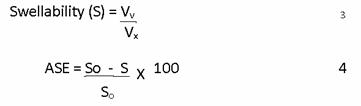
2.7Dimensional Stability/Swellability
Swellability
(S) and anti-swelling efficiency (ASE) test was estimated as described by
Nwankwere et al., [8] with slight modification. In this method, the tapped
volume of 15 g of the shell (Vx) was noted and the shell was dispersed in 70 mL
of water and the volume made up to 100mL with water. The samples were allowed
to stand and the volume of sediment (Vv) was measured every 24 hrs for a five
days period. The S and ASE were calculated thus:
Where So
= volumetric swelling of raw sample and S = volumetric swelling of
acetylated sample.
2.8Statistical Analyses
Minitab
statistical package was used to analyze the experimental data.
3.0RESULT
AND DISCUSSION
3.1Infrared spectroscopic studies
Fig. 1a.FTIR
spectra of raw coconut shell
Fig. 1b.FTIR
spectra of acetylated coconut shell
Figs. 1a and 1b illustrates the infra-red spectra for untreated and
treated coconut shells respectively. The major changes before and after
treatment are increased carbonyl absorption peak at 1735cm cm-1 (C=O
ester), C-H absorption peaks at 1371 cm-1 (-C-CH3) and
-C-O stretching band at 1239 cm-1 which confirmed the formation of
ester band [1]. The reduction in intensity of –OH stretching band at 3400-3600
cm-1 showed that some hydroxyl group contents were reduced after the
reaction. These changes in the FT-IR spectra are consistent with those of
acetylated cellulosic materials reported by other researchers [1,2,6]. These
results indicate that some acetyl functional group has been attached to the
coconut shell at the expense of the hydroxyl group.The absence of the absorption band at
1840-1760 cm-1 in all the treated samples indicated that the
acetylated products were free of unreacted acetic anhydride [1,9]. The absence
of the peak at 1700cm-1 for a carboxylic group in all the spectra of
acetylated samples also indicated that the acetylated products were free of
acetic acid by-product.
3.2X-ray Diffraction studies
The x-ray diffraction spectra of the untreated and treated coconut
shell are presented in Figs 2a and 2b respectively. The three broad peaks 12o,
18o and 20o that appeared in the crystalline pattern of
the untreated coconut shell are typical pattern of α-cellulose [6].
Significantly reduced intensity peaks are observed in the crystalline pattern of
the acetylated coconut shell. The crystallinity index recorded in this study
was 71.34% for untreated coconut shell and 19.85% for treated coconut shell.
High crystallinity indicates an ordered compact molecular structure, while
lower crystallinity implies a more disordered structure, resulting in amorphous
powder [10]. Acetylation of cellulose material causes decrease in crystallinity
[6,10,11,]. The major part of cellulose is in the crystalline form (about two
third) due to intra and intermolecular hydrogen bonding of hydroxyl group [9].
These crystallites mainly have hydrogen bonding with the hydroxyl group and are
attacked by acetic anhydride to form acetylated cellulose in the amorphous
structure. The substitution of an acetyl group for a hydroxyl group reduces the
density of hydrogen bonding because an acetyl group offers a more bulky branch
(lower ability to form hydrogen bonding) than a hydroxyl group [12].
Figure 2a.XRD pattern of raw coconut shell
Figure 2b.XRD
pattern of acetylated coconut shell
3.3Scanning electron microscopic studies
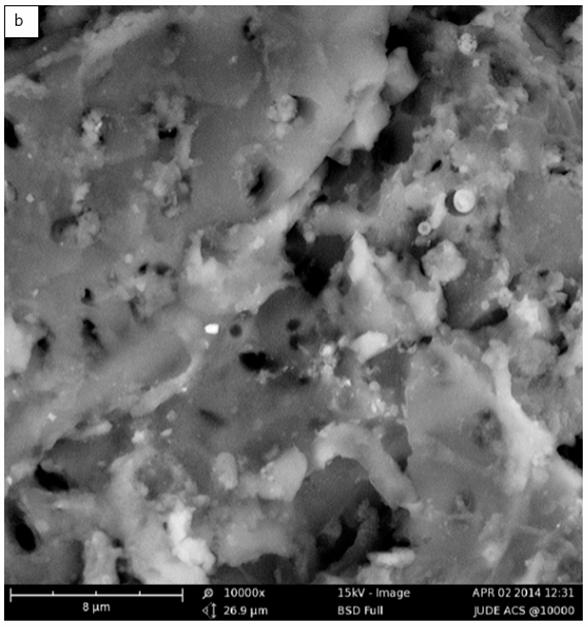
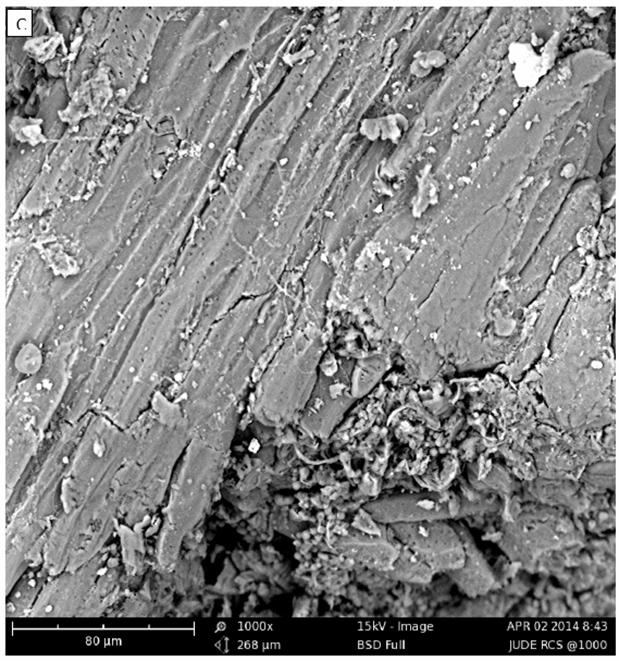
The SEM
micrographs illustrating the morphology of untreated and treated coconut shell
are presented in Fig 3 a-d. In Figs. 3a and 3c, it was observed that the
surface of the untreated fibre is rough, non-homogenous and also exhibited waxy
and protruding parts. The surface morphology of the treated fibre (Fig. 3b and
3d) showed that after acetylation, the wax in the surface were reduced by
interaction with acetyl groups resulting in a smoother surface. The
fibrillations, which appear as the binding materials were reduced and some
micro-pores appeared in the treated fibres. Fibre cracks and damages were also
observed in the micrograph of the treated sample (Fig. 3d), indicating the
presence of disordered cellulose region. The activity of the chemicals (acetic
anhydride and acetic acid) caused swelling of the lumens and is possibly
responsible for the cracks and damages on the treated shell [13]. The cracks on
the surface and/or swelling of the lumens would increase the surface area of
the treated shell.
Figure
3a:SEM micrograph of raw coconut
shell
Figure
3b:SEM micrograph of treated
coconut shell
Figure 3c:SEM
micrograph of raw coconut shell
Figure
3d:SEM micrograph of treated coconut
shell
3.4Coconut
shell- Extent of Acetylation
The effects of temperature, time and catalyst
are shown in Fig. 4(a) – (c). The trends observed in Figs. 4 are not steady
(neither decreasing nor increasing) in the variations of the extent of
acetylation with reaction time, catalyst and temperature and may be due to
de-acetylation mechanism [14]. Acetylation reaction is an equilibrium reaction
just like other esterification reactions, such that de-acetylation reaction can
occur under appropriate reaction conditions [1].
Figure
4a:Effect of time on the degree
of acetylation of coconut shell
Figure
4b: Effect of temperature on the degree of coconut shell acetylation
Figure
4c:Effect of catalyst on the
degree of coconut shell acetylation
In addition to the
effect of de-acetylation mechanisms, the complications in the variations of the
extent of acetylation (EA) with reaction time, temperature and amount of
catalyst may also be due to the complex nature of coconut shell. Evidence from
Husseinyah and Mostapha, [15] revealed that coconut shell consists of cellulose
(26.6%), lignin (29.7%) and pentosans (27.7%). Furthermore, Phenolic, benzylic or
alcoholic (primary and secondary) hydroxyl groups are present in the lignin
region while only the alcoholic hydroxyl groups are found in the carbohydrate.
Phenolic hydroxyl groups are attached to aromatic ring containing various
substituents [16].
The different types
of hydroxyl groups will therefore undergo different reactivity with acetic
anhydride. For example, in the study of the acetyl distribution in acetylated
whole wood and reactivity of isolated wood cell wall components to acetic
anhydride, Rowell et al., [17]
observed the order of reactivity to be lignin > hemicelluloses
>>holocellulose (the remaining product after removal of lignin from
wood). Cellulose was observed not to react with acetic anhydride in the absence
of a catalyst.
The shown effects of
temperature, time and catalyst on extent of acetylation were tested for
statistical difference. ANOVA results are presented in Table 1, 2 and 3. In the
listed tables, significant contribution/effect were taken when Fcal>Fsig.
Results presented in Table 2 and 3 showed that time and catalyst effects were
not significant on the extent of acetylation of coconut shell, whereas
temperature (Table 1) had significant effect.
Table 1:
ANOVA results on the effect of temperature on EA
df
SS
MS
F
Significance
F
Regression
1
0.000164
0.000164
3.14081
0.174474
Residual
3
0.000156
5.21E-05
Total
4
0.00032
Table 2:
ANOVA results on the effect of catalyst on EA
df
SS
MS
F
Significance
F
Regression
1
0.00036
0.00036
0.125
0.74706
Residual
3
0.00864
0.00288
Total
4
0.009
Table 3:
ANOVA results on the effect of time on EA
df
SS
MS
F
Significance
F
Regression
1
4E-05
4E-05
0.061224
0.820539
Residual
3
0.00196
0.000653
Total
4
0.002
The quantitative contribution of catalyst,
temperature and time on extent of acetylation were determined using the
statistical predictive tool- regression [14] and gives the following
expression.
EA = 0.938 + 0.006CAT5
EA = 0.952 + 0.0002TEMP6
EA = 0.988 – 0.00006TIME7
EA represents extent of acetylation, CAT
means catalyst, TEMP stands for temperature and TIME represents time. Eq. 5, 6
and 7 could be explained thus: increase in amount of catalyst by 1% g/mL
brought about 0.6% increase in EA, increase in temperature by 1 K brought about
0.02% increase in EA and increasing time had a negative influence on EA. This
implies that increasing time will cause de-acetylation reaction and the extent
of acetylation will reduce by 0.006%, suggesting that long reaction times will
not favour the acetylation of coconut shell.
3.5Kinetics of coconut shell acetylation
The kinetics of coconut shell acetylation was
studied by fitting obtained data in rate curves of pseudo first order, second
–order and intra-particle diffusion models.
The pseudo
first-order kinetic model is expressed as [14].
ln[EA]t = ln[EA]o – kt8
Plot of equation 8 were performed and the
following equations were obtained:
at 353Kel:Y = 0.3034X – 0.5276, R2 = 0.59139
at 333Kel:Y = -0.0054X – 0.041, R2 = 0.102710
at 303 Kel:Y = -0.0116X – 0.02,R2
= 0.69511
Coefficients of
regression values (R2) are within 0.43 ≤ R2≤ 0.83,
for 303 and 353 Kel, which are moderate and high [18]. This therefore implies
that coconut shell acetylation at 303 and 353 Kel are due to surface reactions,
considering the R2 values presented in equations 7 and 9. Data
obtained at 333 Kel has low R2 value, therefore, the mechanism
involved could not be accounted for.
Equation
representing second order is [14,16].
1/[EA]t = 1/[EA]o + kt12
Plots of equation 12 were performed and the
following equations were obtained:
At 353 Kel:Y = -0.008X + 1.035, R2 = 0.355613
At 333 Kel:Y = 0.0055X + 1.042, R2 = 0.09814
At 303 Kel:Y = 0.0106X + 1.023, R2 = 0676915
Likewise coefficients
of regression values (R2) are within 0.43 ≤ R2≤
0.83, for 303 Kel, which are moderate and high [18]. From the equations derived
from plots of pseudo first-order and second order kinetic expressions, it was
observed that pseudo first-order model produced a better fit to the
experimental data. It can therefore be concluded that the mechanism of
acetylation of coconut shell conforms with pseudo first-order kinetic
expression.
Use was also made with intra-particle
diffusion model to further study the mechanism of coconut shell acetylation.
Equation
representing intra-particle diffusion is [19]
[EA]t = ki
√t + C16
Plots of equation 16 were performed and the
following equations were obtained:
At 353 Kel: Y = 0.008X + 0.965, R2
= 0.355617
At 333 Kel: Y = -0.005X + 0.96, R2
= 0.09818
At 303 Kel: Y = -0.011X + 0.98, R2
= 0.691419
Likewise
coefficient of regression values are within 0.43 ≤ R2≤
0.83, for 303 Kel, which are moderate and high [18]. This therefore implies
that coconut shell acetylation mechanism at 303 Kel is due to intra-particle
diffusion. Data obtained at 333 and 353 Kel has low R2 value, therefore,
we cannot say for sure the mechanism involved. It is expected that the plot of
EA versus t1/2 would give linear relationship when intra-particle
diffusion is involved in the biosorption processes and that intra-particle
diffusion would be the controlling mechanism if the line passed through the
origin [18,19,20]. However for the case where the plots do not pass through the
origin, the reason has been suggested that the intra-particle diffusion is not
the only mechanism involved in the biosorption process due to some degree of
boundary layer control [21].
Results from our kinetic studies
reveal therefore that acetylation of coconut shell is by surface reaction and
diffusion into the pores of coconut shell. This is in agreement with results
elsewhere [16].
Activation
Energy
The
activation energy for reactions can be determined by measuring the rate
constant at different temperatures and evaluating using the Arrhenius
expression:
K
= A exp (-Ea/RT)20
Where
Ea is the activation energy of the process, R is the gas constant, T is the
absolute temperature and A is the collision factor. The plot of the natural
logarithm of the rate constant against the reciprocal of absolute temperature,
will yield a straight line of slope –Ea/R, if Arrhenius expression is obeyed.
Although
the rate constants cannot be determined for the acetylation process [16], it is
still possible to evaluate the activation energy for surface reactions by using
the method of initial rates developed for the determining the Ea of the swelling
of wood by various solvents [16,22]. This method relies upon determining the
gradient of the rate curve at zero time to give the initial rate (Ro).
This initial rate can be substituted for K in the Arrhenius expression. Thus
equation 18 can be rewritten as:
lnRo
= A exp (-Ea/RT)21
The
variation of the initial rates obtained from the pseudo first-order model with
temperature in the region of 303-353 Kel was used for the evaluation of Ea.
Plots
of equation 21 were performed and the equation obtained is thus:
Y
= -1.6334x – 0.3555; R2 = 0.582222
From
the slope of the straight line, the value of Ea, 13.58KJ/mol was obtained for
the reaction before diffusion begins to influence the reaction profile. This
value is slightly lower than the value (41.6KJ/mol) reported by Hill et al [16]
for the acetylation of wood using the methods of initial rates. The difference
between the activation energies obtained by Hill et al [16] and in our work may
be due to difference in material and the dimension of the material.
Diffusion
The
activation energy of the reaction as diffusion takes control is [16].
ln(a)
= ln(A) – Ea/RT23
Where
a is the gradient of the linear plot of extent of acetylation against the
square root of time.
Plot
of equation 23 were performed and the following equation were obtained:
Y
= 0.16x – 5.2; R2 = 0.162124
Coefficient
of regression values are not within 0.43≤R2≤0.83 [18].
Therefore, we cannot say for sure the activation energy of the diffusion
process because of very low R2 values.
3.6Thermodynamics of coconut shell
acetylation
The
thermodynamics of coconut shell was studied with the methods derived from
Nwadiogbu et al., [14].
lnEAt
= -ΔH/RT + ΔH/RTo + lnEAo25
Equation
25 allows the plot of lnEAt versus T-1 such that
–ΔH/R is the slope, intercept at/on Y axis (lnEA) gives lnEAo,
and intercept at/on X axis (T-1) gives ΔH/RTo.
ΔH is the heat of coconut shell acetylation, To is the critical
temperature of acetylation (below which acetylation is not feasible), and EAo
is the critical degree of acetylation.
Equation 26 presents the obtained
expression for plot using equation 25.
Y
= -0.0041 – 0.0225; R2 = 0.481926
It should be noted
that we assumed the acetylation of coconut shell to be an equilibrium surface
reaction. Obtained value of slope allowed the calculation of heat of coconut
shell acetylation (0.034 Jmol-1). From intercepts on x and y axes,
the critical temperature of acetylation (-0.006 K) and critical degree of
acetylation (0.98) values were determined respectively. Positive value of heat
of coconut shell acetylation and very low critical temperature value suggests
that coconut shell acetylation is a process which proceeds easily (spontaneous)
by absorbing heat from the environment. A general trend also exists such that
high heat of acetylation of a substance/material means more difficulty in
acetylating the material; therefore, very low heat of acetylation value implied
the ease at which coconut shell can be acetylated. The critical degree of
coconut shell acetylation represents values which obtained explains the
mechanism of acetylation of coconut shell (values above it suggest diffusion
mechanism and vales below it suggest surface adsorption mechanism).
The heat capacity () of coconut shell acetylation at constant pressure was be
obtained using
27
represents the quantity of heat needed to acetylate coconut
shell whenever a degree rise in temperature occurs. Value of obtained was Jmol-1K-1.
The change in entropy of acetylation () was obtained using the following equation:
28
The second term in
the right-hand side of the equation vanishes because the process was performed
at the same pressure conditions. Therefore at the studied temperature
conditions, value of change in entropy of coconut shell acetylation obtained is
Jmol-1K-1.
The value of is positive and
suggests a degree of disorderliness during the acetylation process. Below is an
equation which describes the acetylation of coconut shell and shows that acetic
anhydride (larger molecule) ‘disintegrates’ into acetic acid (smaller
molecule). This accounts for the positive value of entropy change obtained.
An important thermodynamic parameter, change
in Gibb’s free energy (), was calculated using
29
At the studied temperature conditions, values
of was -0.147 Jmol-1
(303 K), -0.156 Jmol-1 (318 K), -0.165 Jmol-1 (333),
-0.177 Jmol-1 (353) and -0.189 Jmol-1 (373 K). The values
are negative and suggest that, at all temperatures, coconut shell acetylation
was spontaneous.
3.7Swellability and Dimensional Stability
The essence of water absorption experiment is
to observe whether the modification of coconut shell (by acetylation) can alter
its water absorption capacity, thereby increasing the hydrophobic properties.
Fig. 5 presents the swellability pattern of unmodified and modified coconut
shell during five days experiment. Fig. 5 reveals that at all times; the
swellability of coconut shell was highest for unmodified and lowest for the
acetylated material. To understand the direction of these effects, regression
analysis was performed and gives the following equations
Where RCS is raw coconut shell and ACS is
acetylated coconut shell. Eq. (30 & 31) shows that for every increase in
soaking period would cause RCC and ACC to swell by 0.9% and 0.4% respectively.
It also reveals that if 1g of coconut shell used were acetylated, a 10.7%
reduction/decrease in swellability would be obtained. These results are
interesting in that much less water can be absorbed by acetylated coconut
shell, thereby reducing the swellability at a given soaking period. The
reduction in swellability of the materials increases the dimensional stability
of the acetylated products. The dimensional stability is expressed as anti
shrinking efficiency (ASE). When wood is acetylated, it is far less susceptible
to swelling and shrinking in the presence of varying atmospheric conditions [8].
This is because the cell wall is now filled with chemically bonded acetyl
groups which take space within the cell wall. As a consequence the shell is
already in a swollen form, the extent of which depends on the level of
modification. The dimensional stability of ACS derived in this study was found
to be 10.4 %. This result is in line with the reduction in swellability
predicted by linear regression and with works elsewhere [7,8].
Figure
5: Swellability pattern of raw and acetylated coconut shell
4.0CONCLUSION
This work suggests that coconut shell
acetylation is affected by temperature.Acetylation of coconut shell has been found to occur by surface (30 oC
and 80 oC) and intra-particle diffusion (30 oC) mechanisms,
involving substitution of –OH groups by acetate groups. The activation energy
has been evaluated as 13.58KJ/mol. Heat of acetylation and critical degree of
acetylation values of 0.034 Jmol-1 and -0.006 K respectively,
suggest that acetylation of coconut shell can take place under mild temperature
and ordinary (atmospheric) pressure conditions.FT-IR and XRD spectra confirmed that acetate groups were successfully
introduced to the fibre. SEM analysis revealed that the acetylated shell
exhibited more porous surface as a result of disruption of the inter-molecular
and intra-molecular hydrogen bonds. Swellability tests confirmed an increase in
dimensional stability, thereby increasing hydrophobic properties of the shell.
These features could enhance the industrial application of acetylated coconut
shell in non-aqueous absorptions processes, considering that it is cheap and
readily available.
REFERENCES
[1] M.O. Adebajo, R.L. Frost. Acetylation of Raw Cotton for
Oil Spill Cleanup Application: an FTIR and 13C MAS NMR Spectroscopic
Investigation. Spectrochim Acta A. 60(2004)
2315-2321.
[2] R. Bodirlau, C.A. Teaca. Fourier Transform
Infrared Spectroscopy and Thermal Analysis of Lignocellulosic Fillers Treated
With Organic Anhydride, Rom Journ Phys. 2009; 54 (2009) 93-104.
[3] E.C. Tronc, C.A.
Hernandez-Escobar, R.A. Ibarra-Gomez, A. Estrada-Monje, J. Navarette-Bolanos,
E.A. Zaragoza-Contreras. Mechanical and thermal properties of chemical
treated kenaf fibres. Carbohyd Polym.2006; 67(3): 245-252.
[4] T.R. Anunciado, T.H.D. Sydenstricker, S.C.
Amico. Experimental investigations of various vegetable fibres as sorbent
materials for oil spill. Mar Pollut Bull. 50(2005) 1340-1346.
[5] A. Bayat, S.F. Aghamiri, A.A. Moheb, G.R. Vakili-Nezhaad.
Oil spill cleanup from seawater by sorbent materials. Chem Eng Technol. 28
(2005): 1525-1528.
[6] X.F. Sun, R. Sun, J.X. Sun.
Acetylation of Sugarcane Bagasse Using NBS as a
Catalyst Under Mild Reaction Conditions for the Production of Oil
Sorption-Active Materials. Bioresource Technol. 95 (2004) 343-350.
[7] R.M. Rowell, S. Simonsen, A.M. Tillman. Acetyl
Balance for the Acetylation of Wood Particles by a Simplified Procedure.
Holzforschung. 44 (1990) 263-269.
[8] E.T. Nwankwere, J.A. Omoloaye, J.O. Nwadiogbu,
B.Y. Nale. Thermal and dimensional stability of nbs-catalysed acetylated rice
husks. Der Chemica Sinica. 2 (2011) 189-196.
[9] X.F. Sun, R. Sun, J.X. Sun. Acetylation of Rice
Straw for Oil Sorption: With or Without Catalysts. J Agri Food Chem. 50 (2002)
6428-6433.
[10] G.A. Breitenbeck, B. Grace, Holiday M.
Louisiana Applied Oil Spill Research and Development Program. OSTRADP Technical
Report Series. (1997) 96-001.
[11] C.N. Saikia, F. Ali, T. Goswami, A.C. Ghosh.
Esterification of high αcellulose extracted from hibiscus cannabinus L.
Ind Crop Prod. 4 (1995) 233-239.
[12] K.A. Connors, K.S. Albert. Determination of
hydroxyl compounds by 4- dimethylaminopyridine-catalysed acetylation. J pharm
Sci. 62 (1973) 845-6.
[13] C. Seungoon, T.S. Makram, D.V. Albert.
Partially Acetylated Sugarcane Bagasse for Wicking Oil from Contaminated
Wetlands. Chem Eng Technol. 34 (2011):1989-1996.
[14] J.O. Nwadiogbu, P.A.C Okoye, V.I.E Ajiwe,
N.J.N. Nnaji. Hydrophobic Treatment of Corn Cob: Kinetic and Thermodynamic
Studies. J of Environmental Chem Eng. 2 (2014) 1699-1705.
[15] S. Husseinyah, M. Mostapha. An Effect of Filler
Content on Properties of Coconut Shell Filled Polyester Composites. Malaysian
Polymer Journal. 6 (2011) 87-97.
[16] C.A.S. Hill, D. Jones, G. Strickland, N.S.
Cetin. Kinetic and mechanistic aspects of the acetylation of wood with acetic
anhydride. Holzforschung. 52 (1998) 623-629.
[17] R.M. Rowell, S. Simonson, S. Hess, D.V.
Placket, D. Cronshaw, E. Dunningham.Swelling of Acetylated Wood in Organic Solvent. Wood Fiber Sci. 26 (1994)
11-18.
[18] N.M. Dowine, R.W. Heath. Basic Statistical
Methods. fourth ed. Harper and Row, New York, 1974.
[19] M. VenkataSubbaiah, S. Kalyani, G. Sankara
Reddy, M. Veera-Boddu, A. Krishnaiah. Biosorption of Cr (VI) from aqueous
solution using trametesvesicolorpolyporous fungi, E-Journal of Chemistry. 5 (2008)
499-510.
[20] A.O. Okhamafe, A. Igboechi, T.O. Obaseki.
Celluloses extracted from groundnut shell and rice husk 1: preliminary
physicochemical characterization. Pharm World J. 8 (1991) 120-130.
[21] E. Bulut, M. Ozacar, I.A. Sengil. Adsorption of
malachite green onto bentonite: equilibrium and kinetic studies and process
design. Micro Meso Mat. 115 (2008) 234-236.
[22] H. West. Kinetics and mechanism of wood-isocyanate
reactions. PhD Thesis, University of Wales Bangor, 1988.
Cite this Article:Nwadiogbu,
JO; Agu, CC; Onwuka, JC; Ikeh, OA; Nwankwo, NV; Anarado, IL (2024).
Hydrophobic Treatment of Coconut Shell by Acetylation: Kinetics and
Thermodynamic Studies. Greener Journal
of Science, Engineering and Technological Research, 13(1): 25-39.







 ) of coconut shell acetylation at constant pressure was be
obtained using
) of coconut shell acetylation at constant pressure was be
obtained using

 ) was obtained using the following equation:

 ), was calculated using