Evaluation of the Efficiency of Disc Filters
used by Peri-Urban Farmers in Removing Impurities from Wastewater at Zagyuri
Irrigation System in Sagnerigu Municipal of Northern Region of Ghana
Abdul Latif Husein
Alhassan1, Nicholas Kyei-Baffour2, Wilson Agyei Agyare2
and William Amponsah2
1. Department of Water and Environmental Engineering,
Faculty of Engineering, Tamale Technical University, Tamale. Ghana.
2. Department of Agricultural and Biosystems Engineering.
College of Engineering, Kwame Nkrumah University of Science
and Technology, Kumasi, Ghana.
The results indicated that the water was polluted and could only be
suitable for drip and sprinkler irrigation if filtered at two levels: before
and after storage to avoid blockage of emitters, since the water was highly
turbid with high content of suspended particles. The physio-chemical
parameters such as turbidity, Ph, conductivity and chlorine were within the
World Health Organization standard for irrigation with wastewater. The trace
metals such as copper, zinc, iron and manganese were below World Health
Organization standard for irrigation with wastewater and also below the
Environmental Protection Agency of Ghana standard. This indicates that the
trace metals concentration in wastewater at Zagyuri has insignificant risk
to soil and vegetable crops produced. Disc filtration can effectively reduce
the concentration of suspended solids, colloidal matter, and certain
dissolved constituents.
1.1 Global Water
Resources: Challenges and Opportunities
Water
is a vital resource for life, and its availability and management have
significant implications for human well-being, economic development, and
environmental sustainability. However, the world is facing increasing
challenges in terms of global water resources, including issues related to
water scarcity, water quality degradation, and water management.
Water scarcity is a critical challenge that
affects many regions around the world. As population growth, urbanization, and
industrialization continue to rise, the demand for
water for various purposes, such as agriculture, domestic use, and industry, is
increasing. At the same time, climate change, including changing precipitation
patterns and increased evaporation rates, is affecting water availability in
many regions. According to the United Nations (UN), more than 2 billion people,
or about one-fourth of the global population, currently live in countries
facing high water stress, where water resources are scarce or overexploited
(UN, 2021). This has severe implications for agriculture, livelihoods, and
ecosystems.
Water quality degradation is another
significant challenge in global water resources management. Pollution from
various sources, including agricultural runoff, industrial discharge, and
domestic waste, is contaminating water bodies, making them unfit for human
consumption and damaging ecosystems. Water pollution not only affects human
health but also has economic consequences, such as the cost of treating
polluted water for safe use and the impact on industries that rely on clean
water for production.
Water management is a crucial aspect of
addressing the challenges of global water resources. Effective water management
involves planning, development, allocation, and use of water resources in an
integrated and sustainable manner. However, water management practices vary
greatly around the world, and many regions face issues related to inadequate
infrastructure, inefficient water use, and inadequate governance and policies.
There are also opportunities for addressing the challenges of global water
resources. Integrated Water Resources Management (IWRM), which promotes a
holistic and participatory approach to water management, is gaining traction as
a framework for addressing water challenges at the regional, national, and
local levels (UNESCO, 2020). IWRM focuses on balancing the competing demands of
various water users, ensuring social equity, economic efficiency, and
environmental sustainability in water management. Another opportunity is the
adoption of new technologies and innovative approaches for water resources
management. For example, remote sensing, data analytics, and sensor-based
technologies can provide valuable information for monitoring, modeling, and
optimizing water use. Water-saving technologies, such as drip irrigation and
precision agriculture, can improve water use efficiency in agriculture.
Additionally, nature-based solutions, such as watershed restoration, wetland
conservation, and green infrastructure, can help enhance water quality,
increase water availability, and mitigate the impacts of climate change.
International cooperation and governance are
critical for addressing global water challenges. Transboundary water resources,
such as shared rivers and aquifers, often require cooperative management among
multiple countries to ensure equitable and sustainable use. International
organizations, such as the United Nations and its agencies, play a significant
role in facilitating global cooperation on water resources management through
policy advocacy, capacity building, and knowledge sharing. In conclusion,
global water resources face significant challenges related to water scarcity,
water quality degradation, and water management. However, there are also
opportunity es for addressing these challenges through integrated water
resources management, adoption of new technologies and innovative approaches,
and international cooperation and governance. Sustainable and equitable management
of global water resources is essential for ensuring human well-being, economic
development, and environmental sustainability.
Global water resources are under increasing
pressure due to various factors, including population growth, urbanization,
industrialization, and climate change. These challenges are reflected in
numerous facts and figures that highlight the magnitude of the global water
crisis: Water scarcity: According to the World Wildlife Fund (WWF), around 2.2
billion people globally do not have access to safe drinking water, and over 4
billion people experience severe water scarcity for at least one month per year
(WWF, 2021). Water scarcity affects not only human populations but also
agriculture, industries, and ecosystems, leading to reduced crop yields,
increased conflicts over water resources, and ecosystem degradation.
Water quality degradation: Water pollution is
a significant issue that affects water resources worldwide. The World Health
Organization (WHO) estimates that about 2 billion people globally use drinking
water that is contaminated with feces, leading to waterborne diseases such as
diarrhea, cholera, and typhoid (WHO, 2019). Water pollution also has economic
consequences, with estimated costs of water treatment and healthcare associated
with waterborne diseases amounting to billions of dollars annually.
Inefficient water use: Many regions around
the world face challenges in terms of inefficient water use. In agriculture,
which accounts for the largest share of global water consumption, inefficient
irrigation practices can result in water wastage through runoff, evaporation,
and inefficient distribution. According to the Food and Agriculture
Organization (FAO), globally, only about 40% of the water withdrawn for
agriculture is effectively used, while the rest is lost or wasted (FAO, 2020).
Improving water use efficiency in agriculture through technologies such as drip
irrigation and precision agriculture can help minimize water wastage. Climate
change impacts: Climate change is exacerbating the challenges of global water
resources. Changing precipitation patterns, increased evaporation rates, and
more frequent and severe droughts and floods are affecting water availability
and quality in many regions. According to the Intergovernmental Panel on
Climate Change (IPCC), climate change is projected to increase the frequency
and intensity of extreme weather events, leading to more uncertainty in water
availability and impacting water resources management (IPCC, 2014).
Transboundary water management: Transboundary water resources, such as shared
rivers and aquifers, pose additional challenges for global water resources
management. Approximately 60% of global freshwater flows in rivers that cross
international boundaries, and about 90 countries share
water resources with neighboring countries (UNESCO, 2019). Cooperation among
countries is essential for managing transboundary water resources effectively
and ensuring equitable and sustainable use. Water-related conflicts:
Competition over water resources can also lead to conflicts at various scales,
from local to international. Disputes over water allocation, access, and
management can arise among different water users, such as farmers, industries,
and urban populations. Water-related conflicts can have severe social,
economic, and environmental consequences, exacerbating the challenges of global
water resources. In light of these challenges and facts, addressing the issues
related to global water resources requires concerted efforts at local, national,
regional, and global levels. Sustainable water management practices, including
integrated water resources management, adoption of water-saving technologies,
nature-based solutions, and international cooperation and governance, are
critical for ensuring the availability, accessibility, and quality of water
resources for present and future generations.
1.2 Water Resources
Water, as a natural resource, holds immense importance in human
daily activities. Its presence across the Earth is widespread, and its role
within the natural ecosystem cannot be underestimated. According to Wikipedia
(2012), water resources encompass sources of water that serve practical or
potential purposes, ranging from agricultural and industrial to household,
recreational, and environmental activities. Nearly all of these human
applications necessitate the use of freshwater. Various studies by different
authors have estimated the global water resource base differently, with figures
such as 42,780 km3/year (Shiklomanov, 2000), 44,540 km3/year
(Gleick, 2001), and 43,764.3 km3/year (FAO, 2003) being reported.
FAO (2003) similarly assesses the total worldwide water resources at approximately 43,764.3 km3/year, distributed across
the globe according to the diverse array of climates and geographic features.
On a continental scale, the distribution of freshwater resources is
characterized by America having the largest share, accounting for 45% of the
world's total freshwater resources, followed by Asia with 28%, Europe with
15.5%, and Africa with 9%. When evaluating resources per inhabitant or per
capita for each continent, America boasts 24,000 m3/year, Europe
9,300 m3/year, Africa 5,000 m3/year, and Asia 3,400.1 m3/year
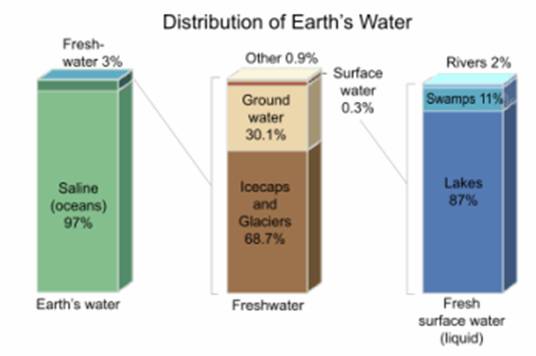
(FAO, 2003). According to Wikipedia (2012), the Earth's water resources
encompass freshwater (3%) and saline water (oceans, 97%). Within the 3%
freshwater category, surface water accounts for 0.3%, with freshwater surface
sources, such as rivers making up 2% (swamps comprising 11% and lakes 87%),
while the remaining 0.9% includes groundwater (30.1%) and ice caps and glaciers
(68.7%). Global withdrawal of freshwater resources is on the rise, closely
linked to population growth and the rapid industrialization of continents. This
distribution of the Earth's water resources is visually represented in Figure 1
below, illustrating the global allocation of these resources (Peslier et al.,
2017).
Figure
1.0 Distribution of the Earth’s Water Resources. Source; (Peslier et al.,2017)
Shiklomanov
(1998) recognized the importance of water especially freshwater as it was
indicated that human life itself will be impossible without it as it has no substitution.
According to recent studies, the utilization of water from various sources has
become a critical global issue. In the past, man's impact on water resources
was considered insignificant and localized. However, recent research shows that
water supply variability is both spatial and temporal in nature, with
significant fluctuations within months, years, and even decades, largely
influenced by climate change (FAO, 2010). A study conducted by the FAO in 2010
revealed that the ten poorest countries in terms of water resources per
inhabitant are Bahrain, Jordan, Kuwait, Libyan Arab Jamahiriya, Maldives,
Malta, Qatar, Saudi Arabia, United Arab Emirates, and Yemen. These countries
often face challenges due to uneven distribution of water resources in relation
to their growing populations, and they are usually characterized by arid or
island environments (FAO, 2010). Furthermore, global water withdrawal has
increased significantly over the past few decades due to various factors such
as expansion in irrigated areas, industrial and power engineering water
consumption, and construction of reservoirs (Shiklomanov, 2010). This has led
to a massive anthropogenic change in the hydrological cycle of rivers and lakes
worldwide, affecting their water quality, potential as water resources, and the
global water budget (Shiklomanov, 2010). The importance of large river systems
in global water resources cannot be overstated. The Amazon, Ganges with the
Brahmaputra, Congo, Yangtze, and Orinoco rivers together form 27% of the
world's water resources, with the Amazon alone accounting for 16% of the annual
global river runoff (Shiklomanov, 2010). However, many regions are facing
depletion and contamination of water resources due to increasing demands and
pollution, leading to adverse impacts on economic development and population
growth (Shiklomanov, 2010). One notable concern is the arid regions, which have
limited water resources, high water use, and rapid demographic growth
(Shiklomanov, 2010). This exacerbates the challenges of water scarcity and
calls for effective water management strategies to ensure sustainable
utilization of this precious resource. In conclusion, the global distribution
of freshwater resources is highly variable, with significant challenges faced
by water-poor countries and regions with arid environments. The increasing
demand for water, coupled with climate change impacts, has further exacerbated
the variability of water supply. Sustainable water management practices are
crucial to ensure equitable access to water resources and mitigate the adverse
effects of water scarcity on economic development and population growth.
1.1.2 Water Resources
Available for Irrigation in Sub-Saharan Africa
Water
scarcity and its impact on food production in Sub-Saharan Africa continue to be
critical challenges, as reported in various articles from 2010. With a growing
global population, increasing demand for food, and ongoing industrialization,
the availability and quality of water resources in Africa are crucial for socio-economic
development. However, reports from the Economic Commission for Africa (ECA)
indicate that freshwater scarcity is a pressing issue in Africa, with over 300
million people out of the estimated 800 million population
living in water-scarce environments. Although Africa has ample water resources,
with less than 4% of the continent's renewable water resources withdrawn for
various uses including agriculture, domestic supply, sanitation, and industry,
the potential of irrigated agriculture remains largely untapped in most African
countries, including Sub-Saharan Africa. Barriers to the development of
irrigated agriculture in Africa include lack of financial and human resources
to build infrastructure and acquire technology. Sub-Saharan Africa and South
Asia are the regions worst affected by food insecurity and malnutrition, home
to 60% of the world's food-insecure people and 75% of its malnourished
children. To address these challenges, the ECA recommends investing in the
development of Africa's potential water resources, expanding irrigation areas
to ensure food security, and effectively managing droughts, floods, and
desertification to protect the gains of economic development. Despite the
economic potential of water-scarce countries in Sub-Saharan Africa to meet
their future water needs, many may lack the necessary investments to harness
and utilize their water resources. Moreover, there are significant disparities
in freshwater withdrawals among regions within countries, with less-developed
regions relying heavily on agriculture for water abstraction. For example, the
Ewaso Ng'iro North basin in Kenya is already facing serious physical water
scarcity, highlighting the spatial variability of water resources within
Sub-Saharan Africa. In conclusion, water scarcity remains a critical challenge
for food production and socio-economic development in Sub-Saharan Africa, with
ample water resources available but underutilized. Investments in
infrastructure, technology, and effective water management are needed to unlock
the potential of irrigated agriculture and address food insecurity in the
region.
Furthermore, addressing water scarcity in
Sub-Saharan Africa requires prioritizing access to safe water and adequate
sanitation, particularly for communities that lack these basic services. This
is crucial for improving public health, reducing waterborne diseases, and
ensuring overall well-being of the population. Efforts towards achieving the
water-related goals set within the framework of the Millennium Development
Goals (MDGs) and the Africa Water Vision 2025 should be intensified, with a
target of increasing the development of water resources potential by 5% by
2005, 10% by 2015, and 25% by 2025, as recommended by the 20 African Water
Vision 2025. This will require adequate financial and human resources, as well
as innovative technologies and sustainable management practices, to harness and
utilize water resources effectively. In addition to agriculture, water
resources in Sub-Saharan Africa also play a crucial role in other sectors such
as hydropower, industry, tourism, and transportation. Therefore, integrated
water resources management approaches that consider the multiple uses of water
are essential for sustainable development in the region. It is important to recognize
that water scarcity and its impacts are not uniform across Sub-Saharan Africa,
with significant temporal and spatial differences. While some regions and river
basins already face severe water scarcity, others may have untapped water
resources. Therefore, context-specific solutions that consider the local
socio-economic, environmental, and climatic conditions are necessary to
effectively address water scarcity in Sub-Saharan Africa. In conclusion,
addressing water scarcity in Sub-Saharan Africa is crucial for sustainable food
production, economic development, and human well-being. Investments in
infrastructure, technology, and sustainable management practices, as well as
ensuring access to safe water and sanitation, are essential to unlock the potential
of water resources and achieve water-related goals for the region's
development. Table 2.1 indicates that per capita abstractions in developed
countries are much higher than in developing countries and lowest in Africa.
Recent studies (Inocencio et al., 2010) highlight that low water
withdrawals in Sub-Saharan Africa (SSA) serve as indicators of
under-development and underscore the potential for further development of water
resources in the region. With rapidly growing urban populations, there is an increasing
competition between agriculture and urban (municipal and industrial) water
needs. This often leads to reduced water allocations for agriculture in favor
of higher-value urban uses, which can have adverse effects on food production.
Given that food production in Africa already lags behind population growth,
reduced allocations for agriculture may exacerbate the problem of food security
(Inocencio et al., 2010).
In Sub-Saharan Africa (SSA), one pressing
issue linked to water usage is the absence of wastewater treatment for
irrigation purposes. Despite the potential of urban wastewater to serve as a
stable water supply source, especially during droughts when urban water demands
take precedence, a significant portion of wastewater used for irrigation in SSA
remains untreated (Barry, 2010). Addressing this concern entails a focus on the
participatory development of peri-urban agriculture, taking into consideration
the needs of both peri-urban farmers and the urban populace. This approach
involves the integration of government planning, investment, and extension
efforts related to wastewater treatment, followed by its utilization by
informal or private-sector farmers (Barry, 2010).
The distribution of water resources across
Africa exhibits disparities, with an overall abundance of resources but varying
accessibility across different agro-ecological zones (Svendsen et al.,
2010). Attempts to manage water resources and ensure availability in regions
with the greatest need encounter numerous challenges. These include historical
underinvestment in irrigation and the broader water sector, underdeveloped
institutions for irrigation and water-resource management, and the prevalence
of subsistence farming practices. Furthermore, despite the presence of abundant
groundwater resources in many parts of the continent, with the exception of
southern Africa, they remain largely untapped (Svendsen et al., 2010).
Sub-Saharan African nations have been observed to make relatively limited use of
their plentiful water resources compared to other global regions. The extent of
water utilization for purposes like irrigation can be evaluated through
parameters such as total water withdrawals, agricultural water withdrawals,
surface water storage capacity, and the exploitation of groundwater (Svendsen
et al., 2010). Total water withdrawals across the region are very low,
averaging just 3 % of available supply (Table 1).
Table 1 Indicators and
Baseline Values of Water Resource Use in Africa, Sub-Saharan Africa the World
Region
Indicators (Percent)
Total
Water Withdrawals as share of Total
Renewable
Water
Resources
Agricultural
Water Withdrawals as share of Total
Renewable
Water
Resources
Dam
Capacity
as
Share
of
Total
Available
Surface
Water
Groundwater
Pumped
as a
Percentage
of
Total
Renewable
Groundwater
Africa
3.8
3.3
14.6
-
SSA
1.5
1.3
11.2
-
Sudano-Sahelianbkc
28.3
27.3
9.8
3.3
Eastern
5.7
4.9
5.5
3.1
Gulf
of Guinea
2.2
1.5
61.7
0
Central
0.1
0.1
0.9
0
Southern
9.1
5.8
47.8
21
Indian
Ocean Islands
4.4
4.2
0.1
8.7
Asia
19.4
15.8
12
-
World
7.4
5.2
7.6
-
-Indicates No Available
Data.Source: FAO Aquastat Database; Global Groundwater Information
System: Adopted and Modified from
Svendsen et al., 2008
In
contrast to the global landscape, Africa possesses a relatively minute
proportion of its land equipped for irrigation. Moreover, the expansion of
irrigated areas in the continent has experienced a marked slowdown since the
year 2000. A mere 6% of Africa's cultivated land benefits from irrigation
infrastructure, with the figure dropping even lower to 3.9% when considering a
sample of 24 African countries. This stands in stark contrast to Asia, where
33.6% of cultivated land is under irrigation, and the global average of 17.7%
(Table 2) (Svendsen et al., 2008).
According to recent studies, lower utilization
rates of water resources in sub-Saharan Africa can be attributed to various
factors such as deteriorating facilities, insufficient water supply, and
deficient management (Svendsen et al.,
2008). The average utilization rate in the sample countries is reported to be
69.4%, which is comparable to the Asian average but falls well below the global
average.
In order to meet targets for poverty
alleviation and food security, substantial investments in agriculture are needed
in sub-Saharan Africa. The Food and Agriculture Organization (FAO) of the
United Nations estimates that around 75% of the required growth in crop
production by 2030 will need to come from intensification, including yield
increases and higher cropping intensities (FAO, 2002). Development of water
resources will be crucial for achieving this intensification. Currently, only
24% of arable land in Africa is under cultivation, with a mere 0.5% under
formal irrigation. However, it is estimated that annual renewable water
resources in sub-Saharan Africa are abundant, though not evenly distributed,
with only 2% of the annual renewable resource being abstracted for human use
(FAO, 2002). In urban and peri-urban environments of Africa, another common
practice is the use of wastewater for irrigation, which poses environmental and
health risks. Studies have reported concerns such as salinization,
eutrophication, and pollution of soils and drainage water with heavy metals and
toxic substances associated with the use of wastewater for irrigation (Scott et al., 2004; Drechsel et al., 2006). However, wastewater can
also serve as an important water and nutrient resource, improving
socio-economic conditions for farmers and their families (Obuobie et al., 2006). For instance, in Ghana,
irrigated urban and peri-urban vegetable farming using polluted water was found
to generate significant incomes for farmers (Danso et al., 2002).
Table 2 Indicators and Baseline Values of Irrigation Area
an Africa, Sub-Saharan Africa, Asia and the World
Region
Indicators (%)
Irrigation-equipped
areas as share of cultivated area
Area
actually irrigated as share of irrigation-equipped area
Water
Managed area as share of cultivated area
Africa
5.8
81.6
6.7
SSA
3.5
71.0
4.5
Asia
33.6
66.9
34.3
World
17.7
92.4
17.6
Sources FAO Aquastat
Database and Resource Stat Databases:Adopted
and Modified from Svendsen, et al., 2008 and
McCartney, et al., 2007
1.1.3 Concept of
Wastewater and Sewage
Wastewater
and sewage are critical aspects of water management and sanitation,
particularly in urban areas. Wastewater refers to water that has been used for
various purposes, such as domestic, industrial, or agricultural activities, and
contains contaminants that require treatment before being discharged or reused
(UN-Water, 2013). Sewage, on the other hand, specifically refers to the
wastewater generated from human activities, including toilet flushing, bathing,
and laundry (WHO, 2012). The treatment of wastewater and sewage is crucial to
protect public health and the environment. Untreated wastewater and sewage can
contain harmful pathogens, chemicals, and pollutants that can contaminate water
sources, leading to waterborne diseases and environmental degradation
(UN-Water, 2013). Proper treatment of wastewater and sewage is essential to
remove or reduce these contaminants to acceptable levels before discharge or
reuse.
Wastewater and sewage treatment processes
typically involve physical, chemical, and biological treatment methods,
depending on the level of contamination and desired treatment goals. Common
treatment processes include primary treatment, which involves physical removal
of solids and floating debris; secondary treatment, which involves biological
processes to remove organic matter; and tertiary treatment, which may involve
additional processes such as chemical disinfection or nutrient removal (WHO,
2012).
Effective management of wastewater and sewage
requires robust infrastructure, institutional frameworks, and policies to
ensure proper collection, treatment, and disposal or reuse of wastewater and
sewage. This includes the establishment of wastewater treatment plants, sewage
collection networks, and regulatory mechanisms to monitor and enforce
compliance with wastewater and sewage treatment standards (UN-Water, 2013). In
conclusion, the proper treatment and management of wastewater and sewage are
critical for protecting public health, preserving water resources, and
promoting sustainable development. Efforts should be made to invest in adequate
infrastructure, institutional capacity, and policies to ensure effective
wastewater and sewage management in urban areas (WHO, 2012; UN-Water, 2013).
1.1.4 Wastewater Uses
and Problems: Global Perspectives
According
to recent studies, wastewater use in irrigated agriculture poses global
perspectives, including both benefits
and problems. Studies from 2010 onwards have highlighted the challenges and
opportunities associated with wastewater use for irrigation (Scott et al., 2010; Drechsel et al., 2015). Wastewater irrigation has
been found to be associated with various environmental and health risks, such
as soil salinization, eutrophication, and pollution with heavy metals and toxic
substances (Scott et al., 2010;
Drechsel et al., 2015). On the other
hand, wastewater can also serve as a valuable water and nutrient resource,
improving socio-economic conditions for farmers and their families (Obuobie et al., 2010). In sub-Saharan Africa,
where agriculture is a key driver for poverty alleviation and food security,
wastewater use in urban and peri-urban environments has become a common
practice (Scott et al., 2010;
Drechsel et al., 2015). Studies have
reported that this practice generates significant incomes for farmers, ranging from
US$500-700 per year, depending on farm size, crop type, and cropping intensity
(Danso et al., 2010). However, this
practice also comes with associated risks, including potential contamination of
crops and soils with heavy metals and toxic substances (Scott et al., 2010; Drechsel et al., 2015). Despite these challenges,
wastewater irrigation has been recognized as an important strategy for
improving water and nutrient availability in agriculture, particularly in
regions with limited water resources (Obuobie et al., 2010). Table 3 below shows some characteristics of
countries using wastewater for irrigation.
Table
3Some Characteristics of Countries Using Wastewater for
Irrigation
Use
of Wastewater for Irrigation
Total
Number of Countries
GDP per capita for 50% of the Countries (in US$)
Sanitation coverage for
50% of the Countries ( %)
Untreated
23
880-4800
15-65
Treated
and Untreated
20
1170-7800
41-91
Treated
20
4313-19800
87-100
Source: Jiménez et al. (2010a)
Jiménez et al. (2010a) have
highlighted the absence of a comprehensive global inventory concerning the
extent of untreated wastewater employed for irrigation, and even less
information is available regarding treated wastewater. Estimated figures of
over 4-6 million hectares of fields irrigated with wastewater or polluted water
have been reported, drawing from data provided by countries disclosing
information on irrigated areas, as reported by Jiménez and Asano (2008),
Keraita et al. (2008), and UNHSP (2008). Within the developing world,
Raschid-Sally and Jayakody (2008) have reported that four out of every five
cities utilize untreated wastewater for irrigation purposes. However, the
extent of wastewater use varies considerably from one country to another, often
contingent on geographic location and the availability of freshwater resources.
Developing countries, where 75% of the world's irrigated land is situated (UN,
2003), are noted for substantially higher quantities of wastewater utilization,
in contrast to developed countries, where the practice is relatively limited
(Jiménez and Asano, 2008). FAO (1992) has documented the historical practice of
beneficial wastewater use in California dating back to the 1890s when raw
sewage was employed in 'sewer farms.' By 1987, over 0.899 million m3/d
of municipal wastewater (equivalent to 7-8% of production) were being utilized
for these purposes. While agricultural applications have historically
dominated, the past decade has seen a growing trend of reclaimed wastewater use
for urban landscape irrigation and groundwater recharge. Notably, 78% of
reclaimed water is used in California's Central Valley and South Coastal
regions, saving 0.759 million m3/d of freshwater (FAO, 1992). The utilization
of wastewater in crop irrigation presents significant challenges, particularly
concerning the presence of disease pathogens that can pose health risks. As
noted by Jiménez et al. (2010a), the nature of these pathogens in
wastewater varies locally and is linked to local public health patterns. Risks
associated with wastewater use extend beyond just farmers and include
agricultural workers and their families, crop handlers, consumers of crops and
livestock products from animals grazing on contaminated fields, and residents
living in or near areas where wastewater, sludge, or excreta is applied.
Abaidoo et al. (2009) have emphasized that wastewater can be a source of
elevated levels of heavy metals and toxic compounds. Contamination, as
highlighted by Jiménez (2006), occurs through absorption from the soil, a
process influenced by factors such as location, environmental conditions,
bio-availability, plant types, and agricultural practices. Recommended
levels of heavy metals in wastewater that crops and soil can be exposed to have
been documented by Page and Chang (1994) and UNHSP (2008). Despite the
potential for wastewater to serve as a source of crop fertilization in both
developed and developing countries due to its lower levels of heavy metals
(Jiménez and Wang, 2006; UNHSP, 2008), Abaidoo et al. (2009) caution
against its use in proximity to tanneries and mining areas.
1.1.5 Utilisation of
Wastewater in Developing Countries
The utilization of wastewater in developing
countries has gained attention in recent years due to its potential for
addressing water scarcity, enhancing food production, and improving
livelihoods. Studies from the past decade have highlighted the status,
challenges, and opportunities of wastewater utilization in developing countries
(Jimenez et al., 2013; Qadir et al., 2018).
Wastewater is increasingly being used for
agricultural irrigation in developing countries, particularly in urban and
peri-urban areas where water resources are limited (Jimenez et al., 2013; Qadir et al., 2018). This practice has been found to have significant
benefits, including increased crop yields, reduced reliance on freshwater
sources, and improved livelihoods for farmers (Scott et al., 2010; Qadir et al.,
2018). Additionally, wastewater can serve as a valuable source of nutrients for
crops, contributing to improved soil fertility and reduced need for chemical
fertilizers (Qadir et al., 2018).
However, the utilization of wastewater in developing countries also poses
challenges. One of the main concerns is the potential contamination of
crops and soils with
pathogens, heavy metals, and other pollutants present in untreated or
inadequately treated wastewater (Jimenez et
al., 2013; Qadir et al., 2018).
This can pose risks to human health, both for farmers and consumers of the
crops, if proper safety measures are not followed (Scott et al., 2010; Qadir et al.,
2018). Additionally, the lack of appropriate regulations, monitoring, and
enforcement mechanisms for wastewater use in agriculture in many developing
countries can further exacerbate the risks associated with this practice
(Jimenez et al., 2013).
Despite these challenges, there is a growing
recognition of the potential of wastewater utilization in developing countries
as a sustainable water and nutrient management strategy. Efforts are being made
to improve the safety and sustainability of wastewater use in agriculture
through the development and implementation of guidelines, regulations, and best
management practices (Scott et al.,
2010; Qadir et al.,2018). Moreover, capacity building and
awareness-raising activities are being conducted to promote safe and
responsible wastewater use in agriculture in developing countries (Jimenez et al., 2013; Qadir et al., 2018).
1.1.6 Wastewater
Generation and Utilization in Ghana
Wastewater generation and utilization in Ghana
has been a topic of growing interest and concern in recent years. As a
developing country in sub-Saharan Africa, Ghana faces significant challenges in
managing its wastewater resources while also striving to achieve sustainable
economic and social development. In this paper, we will examine the current
status of wastewater generation and utilization in Ghana, including the
challenges and opportunities associated with this practice. Wastewater
generation in Ghana is mainly driven by rapid urbanization, population growth,
and industrialization. The country has experienced significant urbanization in
recent decades, with a large proportion of the population living in urban and
peri-urban areas (Ghana Statistical Service, 2019). This has led to increased
demand for water supply and sanitation services, resulting in a corresponding
increase in wastewater generation (Amoah et
al., 2010). Industrial activities, particularly in the manufacturing and
mining sectors, also contribute to the generation of wastewater in Ghana (Ghana
Environmental Protection Agency, 2019). Despite the increasing volume of
wastewater generated in Ghana, the treatment and disposal infrastructure is
inadequate, resulting in a significant portion of wastewater being discharged
untreated or inadequately treated into the environment (Amoah et al., 2010; Obiri-Danso et al., 2011). This has raised concerns about
the potential environmental and health risks associated with the discharge of
untreated wastewater into rivers, lakes, and other water bodies, as well as the
contamination of groundwater sources (Ghana Water Company Limited, 2018).
In recent years, there has been growing
interest in the utilization of wastewater in Ghana for agricultural irrigation,
particularly in urban and peri-urban areas where water resources are limited
(Danso et al., 2002; Obuobie et al., 2006). Wastewater irrigation has
been practiced in Ghana as a means of augmenting water supply for agriculture
and improving livelihoods for farmers (Danso et al., 2002). Studies have shown that irrigated urban and
peri-urban vegetable farming using wastewater can generate significant incomes
for farmers, ranging from US$500 to US$700 per year, depending on farm size,
crop type, and cropping intensity (Danso et
al., 2002). The utilization of wastewater in agriculture in Ghana, however,
is not without challenges. One of the main concerns is the potential
contamination of crops and soils with pathogens, heavy metals, and other
pollutants present in untreated or inadequately treated wastewater (Obiri-Danso
et al., 2011; Drechsel et al., 2012). Studies have shown
elevated levels of fecal coliforms, heavy metals, and other contaminants in
crops irrigated with wastewater in Ghana, which can pose risks to human health
if proper safety measures are not followed (Obiri-Danso et al., 2011; Drechsel et al.,
2012).
Another challenge is the lack of appropriate
regulations, guidelines, and enforcement mechanisms for wastewater use in
agriculture in Ghana. The existing regulatory framework for wastewater
management in Ghana is fragmented and lacks comprehensive guidelines and
standards for the safe use of wastewater in agriculture (Ghana Water Company
Limited, 2018). This has resulted in inconsistent practices and inadequate
monitoring of wastewater use in agriculture, which further exacerbates the
risks associated with this practice. Despite these challenges, there are
opportunities for improving the management and utilization of wastewater in
Ghana. Efforts are being made to develop and implement guidelines, regulations,
and best management practices for safe wastewater use in agriculture (Ghana
Water Company Limited, 2018). Capacity building and awareness-raising
activities are also being conducted to promote safe and responsible wastewater
use among farmers, extension agents, and other stakeholders (Obuobie et al., 2006). Moreover, there is
potential for integrating wastewater treatment and
1.1.7 Composition and
Characteristics of Wastewater
The
physico-chemical and bacteriological qualities of wastewater are subsequently
reviewed.
1.1.8 Physical
Characteristics of Wastewater
Temperature
Temperature
is an important physical characteristic of wastewater that can impact various
aspects of wastewater management and treatment processes. The temperature of
wastewater can vary depending on its source and ambient conditions, and it
plays a significant role in influencing the efficiency and effectiveness of
treatment processes (Wu et al.,
2010). In wastewater treatment processes, temperature can affect the rate of
biological and chemical reactions. Many biological processes, such as aerobic
and anaerobic digestion, nitrification, and denitrification, are
temperature-dependent, with optimal temperature ranges for their activity
(Sundell et al., 2013). For example,
higher temperatures can promote faster biological activity, leading to
increased degradation of organic matter and nutrients, while lower temperatures
may slow down or inhibit these processes (Kang et al., 2012).Temperature
also impacts the performance of physical and chemical treatment processes. In
sedimentation, for instance, higher temperatures can reduce the settling time
and improve the settling efficiency of suspended solids, while lower
temperatures may lead to reduced settling and increased solids carryover (Wang et al., 2017). Similarly, temperature
can affect the efficiency of disinfection processes, such as chlorination or UV
disinfection, as higher temperatures can enhance the disinfection effectiveness
(Bachmann et al., 2016).
The temperature of wastewater can also impact
the operational costs of treatment processes. Heating or cooling wastewater to
achieve the desired temperature for optimal treatment can add energy costs to
the treatment process. For example, in colder climates, additional energy may
be required to maintain the optimal temperature range for biological processes,
which can increase the overall operational costs of wastewater treatment (Drews
et al., 2012). Furthermore,
temperature can influence the release of greenhouse gases from wastewater
treatment processes. Higher temperatures can increase the production of
greenhouse gases, such as methane and nitrous oxide, during the biological
treatment of wastewater, which can contribute to climate change (Keller et al., 2013). In conclusion,
temperature is a critical parameter to consider in wastewater management and
treatment processes. It affects the rate of biological and chemical reactions,
performance of physical and chemical treatment processes, operational costs,
and potential impacts on greenhouse gas emissions. Proper monitoring and
management of wastewater temperature can help optimize treatment processes,
minimize operational costs, and mitigate potential environmental impacts.
1.1.9 pH
The pH is another important physical
characteristic of wastewater that can significantly impact its management and
treatment processes. pH is a measure of the acidity or
alkalinity of a solution and is expressed on a scale ranging from 0 to 14, with
7 being neutral, values below 7 indicating acidity, and values above 7
indicating alkalinity (Crites et al.,
2006).
The pH of wastewater can affect various
aspects of wastewater treatment processes. It can impact the performance of
biological processes, such as microbial activity and nutrient removal. Many
microorganisms responsible for biological treatment processes, such as aerobic
and anaerobic bacteria, have specific pH ranges in which they are most active
(Hernandez et al., 2012). For
example, nitrification, which is the conversion of ammonia to nitrate in
biological treatment processes, is most effective at a pH range of 7 to 8.5,
while denitrification, which is the conversion of nitrate to nitrogen gas, is
optimal at a pH range of 6.5 to 7.5 (Cheng et
al., 2015). Deviations from these optimal pH ranges can lead to reduced
microbial activity and decreased treatment efficiency. pH
also influences the performance of chemical treatment processes. For example,
coagulation and precipitation processes, which are commonly used to remove
suspended solids and dissolved metals from wastewater, are pH-dependent. The
optimal pH range for coagulation and precipitation processes varies depending
on the type of coagulant or precipitant used (Gregory et al., 2010). Deviations from the optimal pH range can result in
incomplete removal of pollutants and decreased treatment efficiency. In
addition, pH can affect the stability and solubility of contaminants in
wastewater. Some contaminants, such as heavy metals, can undergo changes in
their solubility and speciation with changes in pH, which can influence their
removal or release during wastewater treatment processes (Duan et al., 2014).
Proper pH control is essential in wastewater
treatment to ensure optimal treatment performance. Monitoring and adjusting the
pH of wastewater can be done through various methods, such as the addition of
chemicals to adjust the pH, aeration, or the use of buffer systems. pH control is crucial to maintain optimal conditions for
biological and chemical treatment processes, ensure efficient removal of
pollutants, and comply with regulatory requirements. In conclusion, pH is a
critical parameter in wastewater management and treatment processes. It affects
the performance of biological and chemical treatment processes, stability and
solubility of contaminants, and compliance with regulatory requirements. Proper
pH control and monitoring are essential for effective wastewater treatment and
pollution control.
.
1.2.0 Heavy Metals in
Wastewater Used for Irrigation
Plant
toxicity and potential health risks for crop farmers can arise from excessive
concentrations of certain trace elements, as highlighted by Jiménez et al.
(2010a). These elevated concentrations often result from anthropogenic sources
such as mining, incineration, plastic production, nuclear radiation, and the
combustion of fossil fuels from vehicles and power plants, as noted by Maisto
et al. (2003) and Nicola et al. (2003). When plants grow in soils contaminated
with heavy metals, some of these metals are absorbed by their roots and
subsequently stored in various parts of the plants. The concentration of these
metals within different plant parts can vary depending on the plant species, as
demonstrated by Chang et al. (1997) and Kulli et al. (1999). Interestingly,
some metals and metalloids are essential for proper plant growth but can become
toxic when present in elevated concentrations.provides Recommended Maximum Concentrations
(RMC) for selected metals and metalloids in irrigation water, serving as
guidelines to help mitigate the risk of plant toxicity and associated health
concerns. Table 4 shows metals and their remarks.
The maximum concentration is based on a water application rate
which is consistent with drip
irrigation practices (10,000 m3 ha–1 yr–1). If the
water application rate greatly exceeds this, the maximum concentrations should
be adjusted downward accordingly. No adjustment should be made for application
rates less than 10,000 m3 ha-1 y -1. The values given are for water used on a
long-term basis at one site. Source: Ayers and Westcot (1985j); Pescod (1992).
Table 4
Elements
RMC mgl-1
Remarks
Aluminium
5.00
Can
cause non-productivity in acid soils (pH < 5.5), but more alkaline soils
at pH > 7.0 will precipitate the ion and eliminate any toxicity.
Arsenic
0.10
Toxicity
to plants varies widely, ranging from 12 mg/l for Sudan grass to less than
0.05 mg/l for rice.
Beryllium
0.10
Toxicity
to plants varies widely, ranging from 5 mg/l for kale to 0.5 mg/l for bush
beans.
Cadmium
0.01
Toxic
at concentrations as low as 0.1 mg/l in nutrient solution for beans, beets and
turnips. Conservative limits recommended.
Chromium
0.10
Not
generally recognized as an essential plant growth element. Conservative
limits recommended.
Cobalt
0.05
Toxic
to tomato plants at 0.1 mg/l in nutrient solution. It tends to be inactivated
by neutral and alkaline soils.
Copper
0.20
Toxic
to a number of plants at 0.1 to 1.0 mg/l in nutrient solution.
Iron
5.00
Non-toxic
to plants in aerated soils, but can contribute to soil acidification and loss
of availability of phosphorus and molybdenum.
Lithium
2.50
Tolerated
by most crops up to 5 mg/l. Mobile in soil. Toxic to citrus at low concentrations
with recommended limit of < 0.075 mg/l.
Manganese
0.20
Toxic
to a number of crops at few-tenths to a few mg/l in acidic soils.
Molybdenum
0.01
Non-toxic
to plants at normal concentrations in soil and water. Can be toxic to
livestock if forage is grown in soils with high concentrations of available
molybdenum.
Nickel
0.20
Toxic
to a number of plants at 0.5 to 1.0 mg/l; reduced toxicity at neutral or
alkaline pH.
Lead
5.00
Can
inhibit plant cell growth at very high concentrations.
Selenium
0.02
Toxic
to plants at low concentrations and toxic to livestock if
Zinc
2.00
Forage
is grown in soils with relatively high levels of selenium. Toxic to many plants
at widely varying concentrations; reduced toxicity at pH ≥ 6.0 and in
fine textured or organic soils
1.2.1
Copper
Copper
(Cu) is a common heavy metal found in wastewater, and its presence can have significant
implications for human health, agricultural productivity, and environmental
sustainability when used for irrigation. Copper can enter wastewater from
various sources, including industrial discharges, domestic sewage, stormwater
runoff, and agricultural activities (Alloway, 2013). Copper is an essential
element for plants and animals, but excessive concentrations of copper in
wastewater used for irrigation can lead to toxicity and pose risks to crops,
soils, and water resources.
Several studies have investigated the
occurrence and impacts of copper in wastewater used for irrigation. For
example, research conducted in different countries has reported elevated levels
of copper in wastewater-irrigated soils and crops, including vegetables,
fruits, and grains (Achiba et al.,
2010; Khan et al., 2018). These
studies have highlighted the potential for copper to accumulate in crops,
leading to human exposure through consumption of contaminated food, and the
potential for soil degradation and reduced agricultural productivity due to
copper toxicity.
The
risks associated with copper in wastewater used for irrigation have led to the
development of regulations and guidelines in many countries to limit the
concentrations of copper in wastewater and its use in agriculture. For example,
regulatory agencies, such as the U.S. Environmental Protection Agency (EPA) and
the European Union (EU), have established guidelines for the safe use of
wastewater in agriculture, including maximum allowable concentrations for copper
in irrigation water and food crops (EPA, 2012; EU, 2019). Compliance with these
guidelines is critical to protect human health, ensure sustainable agriculture,
and safeguard the environment.
To
mitigate the risks associated with copper in wastewater used for irrigation,
various treatment technologies can be employed, including physical, chemical,
and biological methods. Physical methods, such as sedimentation and filtration,
can be used to remove suspended solids, including copper-containing particles, from
wastewater. Chemical methods, such as coagulation and precipitation, can be
used to chemically remove copper from wastewater through the formation of
insoluble copper precipitates. Biological methods, such as microbial
remediation and phytoremediation, can involve the use of microorganisms or
plants to degrade or accumulate copper in wastewater, respectively
(Kabata-Pendias, 2010).
In conclusion, copper in wastewater used for
irrigation can pose risks to human health, agricultural productivity, and environmental
sustainability. Proper management of copper in wastewater through appropriate
treatment processes and compliance with regulatory guidelines is essential to
protect human health, ensure sustainable agriculture, and safeguard the
environment.
1.2.2 Zinc
Zinc
(Zn) is another common heavy metal that can be present in wastewater used for
irrigation, and its presence can have significant implications for agriculture,
human health, and environmental sustainability. Zinc can enter wastewater from various
sources, including industrial discharges, domestic sewage, stormwater runoff,
and agricultural activities (Alloway, 2013). While zinc is an essential element
for plants and animals, excessive concentrations of zinc in wastewater used for
irrigation can lead to toxicity and pose risks to crops, soils, and water
resources.
Several studies have investigated the
occurrence and impacts of zinc in wastewater used for irrigation. For example,
research conducted in different countries has reported elevated levels of zinc
in wastewater-irrigated soils and crops, including vegetables, fruits, and
grains (Wuana & Okieimen, 2011; Singh et
al., 2018). These studies have highlighted the potential for zinc to
accumulate in crops, leading to human exposure through consumption of
contaminated food, and the potential for soil degradation and reduced
agricultural productivity due to zinc toxicity.
The risks associated with zinc in wastewater
used for irrigation have led to the development of regulations and guidelines in
many countries to limit the concentrations of zinc in wastewater and its use in
agriculture. For example, regulatory agencies, such as the U.S. Environmental
Protection Agency (EPA) and the European Union (EU), have established
guidelines for the safe use of wastewater in agriculture, including maximum
allowable concentrations for zinc in irrigation water and food crops (EPA,
2012; EU, 2019). Compliance with these guidelines is crucial to protect human
health, ensure sustainable agriculture, and safeguard the environment.
To mitigate the risks associated with zinc in
wastewater used for irrigation, various treatment technologies can be employed,
similar to those used for copper. Physical, chemical, and biological methods
can be used to remove or remediate zinc from wastewater, including
sedimentation, filtration, coagulation, precipitation, microbial remediation,
and phytoremediation (Kabata-Pendias, 2010; Wuana & Okieimen, 2011).
In conclusion, zinc in wastewater used for
irrigation can pose risks to human health, agricultural productivity, and
environmental sustainability. Proper management of zinc in wastewater through
appropriate treatment processes and compliance with regulatory guidelines is
essential to protect human health, ensure sustainable agriculture, and
safeguard the environment.
1.2. 3
Aluminium
Aluminium
(Al) is a commonly occurring metal that can also be found in wastewater used
for irrigation, and its presence can have implications for agriculture, human
health, and environmental sustainability. Aluminium can enter wastewater from
various sources, including industrial discharges, domestic sewage, stormwater
runoff, and agricultural activities (Das et
al., 2019). While aluminium is not considered an essential element for
plants or animals, excessive concentrations of aluminium in wastewater used for
irrigation can lead to toxicity and pose risks to crops, soils, and water
resources.
Several studies have investigated the
occurrence and impacts of aluminium in wastewater used for irrigation. For
example, research conducted in different countries has reported elevated levels
of aluminium in wastewater-irrigated soils and crops, including vegetables,
fruits, and grains (El-Nakhlawy et al.,
2017; Das et al., 2019). These
studies have highlighted the potential for aluminium to accumulate in crops,
leading to human exposure through consumption of contaminated food, and the
potential for soil degradation and reduced agricultural productivity due to
aluminium toxicity.
The risks associated with aluminium in
wastewater used for irrigation have led to the development of regulations and
guidelines in many countries to limit the concentrations of aluminium in
wastewater and its use in agriculture. For example, regulatory agencies, such
as the U.S. Environmental Protection Agency (EPA) and the European Union (EU),
have established guidelines for the safe use of wastewater in agriculture,
including maximum allowable concentrations for aluminium in irrigation water
and food crops (EPA, 2012; EU, 2019). Compliance with these guidelines is
crucial to protect human health, ensure sustainable agriculture, and safeguard
the environment.
To mitigate the risks associated with
aluminium in wastewater used for irrigation, various treatment technologies can
be employed. Physical, chemical, and biological methods can be used to remove
or remediate aluminium from wastewater, including sedimentation, filtration,
coagulation, precipitation, microbial remediation, and phytoremediation (Das et al., 2019; Kabata-Pendias, 2010).
In conclusion, aluminium in wastewater used
for irrigation can pose risks to human health, agricultural productivity, and
environmental sustainability. Proper management of aluminium in wastewater
through appropriate treatment processes and compliance with regulatory
guidelines is essential to protect human health, ensure sustainable
agriculture, and safeguard the environment.
1.2.4 Manganese
Manganese (Mn) ranks as the eleventh most
abundant element within the Earth's crust and is surpassed in abundance only by
iron (Fe) when it comes to compounds found in the crust. The soil typically
contains a total manganese content ranging from 20 to 3000 parts per million
(ppm), with an average concentration of around 600 ppm. In the context of plant
nutrition, the presence of divalent manganese ions (Mn2+) holds paramount
importance, and these ions are absorbed by clay minerals and organic matter
(Malakouti and Tehrani, 1999). Manganese exists in the soil in various forms,
including exchangeable manganese, manganese oxide, organic manganese, and as a
component of ferros-manganese silicate minerals. Notably, the manganese ion
(Mn2+) shares a similar size with magnesium (Mg2+) and ferrous iron (Fe2+),
allowing it to substitute for these elements within silicate minerals and iron
oxides. The dynamics of manganese interactions within soils are notably
intricate, with the availability of manganese being influenced by factors such
as soil pH, organic matter content, moisture levels, and soil aeration (Schulte
and Kelling, 1999). Manganese and iron (Fe) exhibit a complex relationship
within plants, where high manganese concentrations in the soil can impact iron
uptake by plants. Conversely, an excess of iron in the soil can lead to reduced
manganese uptake by plants and the formation of manganese deposits, compounding
issues related to manganese toxicity in plants (Michael and Beckg, 2001;
Malakouti and Tehrani, 1999).
1.2.5 Iron
Iron
(Fe) is a common element that can be found in wastewater used for irrigation, and
its presence can have significant implications for agricultural productivity,
environmental sustainability, and human health. Iron can enter wastewater from
various sources, including industrial discharges, domestic sewage, stormwater
runoff, and agricultural activities (Gupta et
al., 2017). While iron is an essential nutrient for plant growth, excessive
concentrations of iron in wastewater used for irrigation can lead to negative
impacts on crops, soils, and water resources.
Several studies have investigated the
occurrence and impacts of iron in wastewater used for irrigation. For example,
research conducted in different regions has reported elevated levels of iron in
wastewater-irrigated soils and crops, including vegetables, fruits, and grains
(Iqbal et al., 2014; Gupta et al., 2017). These studies have
highlighted the potential for iron to accumulate in crops, leading to reduced
agricultural productivity and negative impacts on soil quality and water
resources.
The risks associated with iron in wastewater
used for irrigation have led to the development of regulations and guidelines
in many countries to limit the concentrations of iron in wastewater and its use
in agriculture. Regulatory agencies, such as the U.S. Environmental Protection
Agency (EPA) and the European Union (EU), have established guidelines for the
safe use of wastewater in agriculture, including maximum allowable
concentrations for iron in irrigation water and food crops (EPA, 2012; EU,
2019). Compliance with these guidelines is crucial to protect agricultural
productivity, environmental sustainability, and human health.
To mitigate the risks associated with iron in
wastewater used for irrigation, various treatment technologies can be employed.
Physical, chemical, and biological methods can be used to remove or remediate
iron from wastewater, including sedimentation, filtration, coagulation,
precipitation, microbial remediation, and phytoremediation (Gupta et al., 2017; Kabata-Pendias, 2010). In
conclusion, iron in wastewater used for irrigation can have significant impacts
on agricultural productivity, environmental sustainability, and human health.
Proper management of iron in wastewater through appropriate treatment processes
and compliance with regulatory guidelines is essential to protect agricultural
crops, ensure sustainable agriculture, and safeguard the environment.
1.3.0 Soil and Heavy
Metal Bioaccumulation
Heavy
metal bioaccumulation refers to the process by which heavy metals accumulate in
living organisms, such as plants and animals, over time. Heavy metals are toxic
elements that can enter ecosystems through various pathways, including
wastewater irrigation, agricultural runoff, atmospheric deposition, and
industrial discharges. Once released into the environment, heavy metals can
persist for long periods and can accumulate in biota, posing risks to both
environmental and human health. Numerous studies have investigated the
bioaccumulation of heavy metals in various organisms, including plants,
animals, and microorganisms, in the context of wastewater irrigation. For
instance, research has shown that heavy metals such as lead (Pb), cadmium (Cd),
mercury (Hg), and arsenic (As) can accumulate in crops irrigated with
wastewater, including vegetables, fruits, grains, and forage crops (EPA, 2012;
Kabata-Pendias, 2010). These heavy metals can be taken up by plant roots and
translocated to different plant parts, leading to their accumulation in edible
plant tissues, which can pose risks to human health when consumed.
The
bioaccumulation of heavy metals in aquatic organisms, such as fish and
shellfish, can also occur when heavy metal-containing wastewater is discharged
into water bodies used for aquaculture or other aquatic activities. Aquatic
organisms can accumulate heavy metals through various mechanisms, including
direct uptake from water, absorption through the gills or skin, and ingestion
of contaminated food. As heavy metals accumulate in aquatic organisms, they can
move up the food chain, leading to biomagnification, where the concentration of
heavy metals increases at higher trophic levels. The bioaccumulation of heavy
metals in living organisms can have detrimental effects on both the environment
and human health. In the environment, heavy metals can disrupt ecosystems,
affecting biodiversity, nutrient cycling, and ecological functions. In
addition, heavy metals can persist in the environment for long periods, leading
to potential long-term impacts.
From a human health perspective, consuming
crops or aquatic organisms that have accumulated heavy metals can pose risks,
especially for populations that heavily rely on wastewater-irrigated crops or
fish from contaminated water bodies as a major food source. Heavy metals can
accumulate in human tissues, leading to potential health effects, such as
damage to the nervous system, liver, kidneys, and other organs.
To mitigate the risks of heavy metal
bioaccumulation in the context of wastewater irrigation, appropriate management
practices and regulations are essential. These may include regular monitoring
of heavy metal concentrations in wastewater, soil, and crops; implementing
treatment technologies to remove or remediate heavy metals from wastewater; and
complying with regulatory guidelines for heavy metal concentrations in
irrigation water and food crops (EPA, 2012; Kabata-Pendias, 2010).
Additionally, promoting sustainable agriculture practices, such as integrated
nutrient management, soil conservation, and crop rotation, can help reduce
heavy metal bioaccumulation risks and promote environmental sustainability.
1.3.1 Biological
Constituents of Wastewater
Biological
constituents of wastewater refer to the various microorganisms and biological
substances that are present in wastewater, including bacteria, viruses,
protozoa, fungi, and organic matter. These biological constituents can have
significant implications for wastewater treatment and management, as they can
impact the efficiency of treatment processes, water quality, and environmental
health.
Bacteria are one of the most common biological
constituents of wastewater and play a crucial role in the decomposition of
organic matter during wastewater treatment. Bacteria are responsible for the
biodegradation of organic compounds through processes such as aerobic and
anaerobic digestion, nitrification, denitrification, and phosphorus removal
(Henze et al., 2008; Metcalf &
Eddy, 2014). Bacterial populations in wastewater can vary in composition and
abundance depending on factors such as the type of wastewater, temperature, pH,
and oxygen availability. Viruses are another important biological constituent
of wastewater, and they can pose risks to public health if not effectively
managed. Viruses in wastewater can originate from human and animal waste and
can survive in the environment for extended periods, making them potential
sources of waterborne diseases. Wastewater treatment processes, such as
disinfection, are often employed to reduce viral loads in treated wastewater
before discharge or reuse (Ward, 2012). Protozoa are microorganisms that are
commonly found in wastewater and can play a significant role in the removal of
bacteria, viruses, and other organic matter during wastewater treatment.
Protozoa are responsible for predation and grazing on bacteria, contributing to
the reduction of bacterial populations and the improvement of wastewater
treatment efficiency (Foladori et al.,
2010). Fungi are also present in wastewater, albeit in lower abundance compared
to bacteria and viruses. Fungi are known for their ability to degrade complex
organic compounds, such as lignin and cellulose, and can play a role in the
decomposition of organic matter in wastewater, especially in aerobic
environments (Borja et al., 2011).
Organic matter, including particulate and
dissolved organic matter, is a significant biological constituent of
wastewater. Organic matter can come from various sources, including human and
animal waste, food residues, and other organic compounds present in domestic,
industrial, or agricultural wastewater. Organic matter can be biodegraded by
microorganisms during wastewater treatment processes, and its removal is
important for reducing the biological oxygen demand (BOD) and chemical oxygen
demand (COD) of wastewater, which are important indicators of water quality and
treatment efficiency (Metcalf & Eddy, 2014).
The presence of these biological constituents
in wastewater necessitates proper management and treatment to protect public
health and the environment. Wastewater treatment processes, such as activated
sludge, trickling filters, oxidation ponds, and disinfection methods, are
designed to effectively remove or reduce these biological constituents from
wastewater to meet regulatory standards for discharge or reuse. Regular
monitoring of the microbiological quality of wastewater and compliance with
regulatory guidelines for wastewater treatment and disposal are essential to
ensure effective management of biological constituents and protect human health
and the environment.
1.3.2 Risk of Wastewater Utilisation and
Tools for Risk Assessment of Wastewater
The
utilization of wastewater in agriculture offers significant advantages, yet it
also presents considerable threats to public health, particularly when
untreated wastewater finds its way into crop irrigation. In many cases, farmers
have little choice but to resort to untreated wastewater due to the absence of
wastewater treatment facilities, coupled with the unavailability or high cost
of freshwater (World Bank, 2010). Despite its undeniable benefits in terms of
bolstering food supply, improving nutrition, generating employment, and
alleviating poverty, urban vegetable production faces substantial human health
and environmental risks. These challenges often hinder its official recognition
and support, particularly in regions like Sub-Saharan Africa grappling with
intricate urban sanitation issues (Drechsel et al., 2006; Obuobie et
al., 2006). The assessment of these risks primarily relies on data stemming
from microbiological analyses, epidemiological investigations, and quantitative
microbial risk assessments (QMRA). QMRA stands out as a prospective risk
assessment tool, in contrast to extrapolations based on historical data.
Although microbial analyses and epidemiological studies have long been employed
to evaluate the risks associated with wastewater-irrigated agriculture,
particularly among affected farmers, they have their limitations. These
approaches are relatively costly and may not fulfill the need of the public,
governments, and other stakeholders for health-risk estimates prior to project
commencement. QMRA is gaining prominence as an alternative method that provides
a forward-looking risk assessment tailored to the specific wastewater
irrigation scenario in question (Hamilton et al., 2007).
1.3.3 Microbial Risks
to Public Health
In
low and middle-income nations, the primary concerns revolve around public
health risks posed by microbial pathogens present in domestic wastewater,
encompassing bacteria, viruses, protozoa, and helminths – disease-causing
organisms. Extensive epidemiological investigations spanning the past four
decades have established clear links between the unregulated utilization of
untreated or partially treated wastewater for irrigating edible crops and the
transmission of both endemic and epidemic diseases to farmers and consumers of
these crops. The tangible consequences of employing untreated wastewater for
irrigation include an elevated incidence of helminthic diseases, such as
Ascariasis and Ancylostoma, among field workers and consumers of raw
vegetables, as well as bacterial and viral infections, including diarrhea,
typhoid, and cholera, particularly among those who consume salad crops and
uncooked vegetables (World Bank, 2010).
1.3.4 Chemical Risks
to Public Health
In
middle and high-income nations, chemical hazards take on greater significance,
often stemming from industrial wastewater discharge into public sewers, leading
to contamination of municipal wastewater systems. These chemical risks to human
health can arise from heavy metals like cadmium, lead, and mercury, as well as
a multitude of organic compounds, including pesticides. Moreover, there is a
growing concern in high-income countries surrounding a new category of
"anthropogenic" chemical compounds, encompassing pharmaceuticals, hormones,
endocrine disruptors, antibiotics, and personal care products, even though
their long-term health implications remain somewhat unclear (World Bank, 2010).
1.3.5 Risks to Plant
Health
Plants primarily face the risk of diminished
crop yields when the physico-chemical quality of irrigation wastewater is
inadequate, often due to issues like high salinity or elevated concentrations
of substances like boron, heavy metals, industrial pollutants, nitrogen, or
sodium. The extent of risk to plant health tends to decrease when the
wastewater contains minimal industrial effluents. However, irrespective of the
wastewater source, it's essential to monitor five key parameters throughout the
irrigation season: electrical conductivity, sodium adsorption ratio, boron
levels, total nitrogen content, and pH levels (World Bank, 2010).
1.3.6 Risks to Soil
The
primary and frequently encountered issue associated with wastewater use in
soils is salinization. This problem can arise even with freshwater if
appropriate soil washing and adequate land drainage measures are not
implemented. The utilization of wastewater exacerbates soil salinization due to
its higher salt content. Salinization, in turn, leads to the deterioration of
soil structure, resulting in the loss of pores and interconnections essential
for water and air passage. Consequently (WHO, 2006b):
i.Lateral
drainage is increased.
ii.Soils
become more susceptible to erosion.
iii.Oxygenation
of the soil is constrained.
iv.Root
development is inhibited.
v.Plant
growth is either stunted or halted.
Over
the long term, the use of wastewater consistently raises soil and groundwater
salinity levels, given its higher salt content compared to freshwater.
Therefore, it becomes imperative to implement wastewater use practices in
conjunction with salinization control measures (WHO, 2006b). Effectively
managing chemical risks to human health, plant health, and the environment
necessitates the establishment of robust industrial wastewater pre-treatment
and control programs. It's important to note that such effective programs are
not yet the standard in many developing countries, making it essential to pay
special attention to chemical risks in these contexts (World Bank, 2010).
1.4.0 Methods and
Benefits of Wastewater Irrigation
Microbial
risks to public health are a significant concern associated with the
utilization of wastewater. Wastewater can contain various microbial pathogens,
including bacteria, viruses, protozoa, and helminth eggs, which can pose health
risks to humans and animals when wastewater is used for irrigation or other
purposes. In particular, the presence of fecal indicator bacteria, such as
Escherichia coli (E. coli) and fecal coliforms, in wastewater can indicate the
potential presence of fecal pathogens, which are known to cause
gastrointestinal illnesses in humans, including diarrhea, gastroenteritis, and
other waterborne diseases (Soller et al.,
2010). Additionally, viral pathogens, such as rotavirus, norovirus, and
hepatitis A virus, can also be present in wastewater and pose risks to public
health, especially in areas where treated wastewater is used for agricultural
irrigation or recreational purposes (Haramoto et al., 2008). Protozoan pathogens, such as Cryptosporidium and
Giardia, are also of concern in wastewater as they are highly resistant to
disinfection processes commonly used in wastewater treatment, and their cysts
or oocysts can persist in the environment for extended periods, leading to
potential transmission to humans and animals through water or food crops
(Fayer, 2010). Similarly, helminth eggs, including those of Ascaris, Trichuris,
and hookworms, can also be present in wastewater and pose health risks through
ingestion or dermal contact during irrigation or other uses (Strande et al., 2014).
To mitigate microbial risks to public health
associated with wastewater utilization, appropriate treatment processes, and
risk management measures should be in place. This includes proper wastewater
treatment, adherence to guidelines and regulations for wastewater reuse, and
implementing best management practices in irrigation or other uses of
wastewater. Regular monitoring and testing of wastewater and treated effluent
for microbial pathogens can also be conducted to ensure compliance with
standards and guidelines and to identify potential risks.
1.4.1 Wastewater
Generation in the World and Ghana
According
to a report by the United Nations, the world generates approximately 359
billion cubic meters of wastewater annually. This figure is expected to increase
to 685 billion cubic meters by 2050 due to population growth, urbanization, and
economic development (UN Water, 2017).In
addition, it is estimated that only a small proportion of wastewater generated
in developing countries is treated before being discharged into the
environment, contributing to water pollution and associated health risks (UN
Water, 2017). The management of wastewater is therefore an important global
challenge that requires significant attention and investment to address.According to the World Bank, the
amount of wastewater generated globally is increasing at an alarming rate and
is projected to reach 82 trillion liters by 2025 (World Bank, 2019). This rapid
increase in wastewater generation can be attributed to population growth, urbanization,
industrialization, and changes in lifestyles.Furthermore, the majority of the wastewater generated is untreated
or inadequately treated, which poses a significant threat to the environment
and public health (United Nations, 2017). This untreated or inadequately
treated wastewater is discharged into rivers, lakes, and oceans, causing
pollution and eutrophication.The
impact of wastewater on the environment and public health can be significant,
especially in developing countries where access to clean water and adequate
sanitation is limited. According to the World Health Organization (WHO), an
estimated 2.2 million deaths occur annually due to diarrheal diseases caused by
inadequate water, sanitation, and hygiene (WHO, 2018).Therefore, the need for sustainable wastewater management
practices is crucial to protect public health and the environment. Sustainable
wastewater management practices involve the safe and beneficial use of treated
wastewater for irrigation, aquaculture, and other non-potable uses.According to a report by the Ghana
Water Company Limited, Ghana generates about 200,000 m3/day of
wastewater (GWCL, 2017). This amount is projected to increase as the country's
population and industrial activities continue to grow. Wastewater generation in
urban areas is particularly high due to the concentration of human settlements
and economic activities. However, the current capacity for treating wastewater
in Ghana is limited, leading to the discharge of large amounts of untreated or
inadequately treated wastewater into the environment, causing serious
environmental and health concerns (Kortatsi et
al., 2010).
In
Ghana, the amount of wastewater generated varies by region and is largely
dependent on the level of urbanization and industrialization. According to a
report by the Ghana Water Company Limited, the Greater Accra Region, which
includes the capital city of Accra, generates the highest amount of wastewater
in the country, estimated at about 400,000 cubic meters per day (GWCL, 2019).
Other major urban centers such as Kumasi, Takoradi, and Tamale also generate
significant amounts of wastewater. In addition to domestic sources, industrial
activities also contribute to the amount of wastewater generated in Ghana. The
industrial sector, particularly the agro-processing, mining, and oil and gas
industries, generate large volumes of wastewater that contain high levels of
pollutants such as heavy metals, oil and grease, and toxic chemicals (EPA,
2010). Efforts have been made by the government of Ghana, in collaboration with
development partners, to improve wastewater management in the country. One such
initiative is the Greater Accra Metropolitan Area Sanitation and Water Project
(GAMA-SWP), which seeks to improve sanitation and water supply in the Greater
Accra Region, including the construction of new wastewater treatment plants and
the rehabilitation of existing ones (GAMA-SWP, 2019). According to (Ghana
Statistical Service, 2013), the most common method of liquid waste disposal in
Sagnarigu is throwing onto the street/outside, accounting for 53.1% of the
total liquid waste disposal methods. This is followed by throwing onto the
compound (21.1%) and through drainage system into a gutter (7.0%). The least
common method of liquid waste disposal is through the sewerage system,
accounting for only 5.8% of the total liquid waste disposal methods. (Ghana Statistical Service, 2013).
Figure 2.1 Map of Sagnarigu Municipal Area (GSS, 2021)
The Sagnarigu
Municipality, encompassing 79 communities, exhibits a diverse landscape with 20
urban, 6 peri-urban, and 53 rural areas. It spans a substantial land area,
covering approximately 439.8 square kilometers, and shares its borders with
neighboring regions - the Savelugu and Nanton Municipality to the north, the
Tamale Metropolis to the south and east, Talon District to the west, and
Kumbungu District to the north-west. Geographically, the municipality is
situated between latitudes 9°16' and 9°34' North and longitudes 0°36' and 0°57'
West. Climatically, the Municipal experiences a single rainy season commencing
in April/May and extending through September/October, with its peak intensity
observed in July/August.
2.2 Water Quality
Analysis
Water
samples were meticulously gathered from the site and subsequently transported
to the Ghana Water Company laboratory located in Tamale for comprehensive
physico-chemical and biological analyses. The analytical parameters encompassed
various aspects, including color, turbidity, total dissolved solids, total
suspended solids, total hardness, total alkalinity, calcium hardness, magnesium
hardness, total coliform, and faecal coliform. In total, four distinct samples
of both filtered and unfiltered wastewater were collected using an integrated
sampling approach, involving the simultaneous collection of grab samples from
different points. During the sampling process, great care was taken to ensure
the integrity of the samples. Sampling bottles were employed, and measures were
taken to avoid any inclusion of floating materials. The sample containers were
securely sealed with stoppers to prevent any potential external contamination.
Each container was meticulously labeled to provide essential information,
including the name of the water body, date, time of sampling, sampling point,
and specific conditions prevalent during the sampling process. To assess the
color of the collected water samples, a visual comparison was conducted by
juxtaposing the samples with distilled water. Additionally, the pH levels were
determined using the electrometric method. Figure 2.2 visually depicts the
Zagyuri wastewater stream, which serves
as a crucial source for irrigation.
Figure 2.2 Zagyuri Wastewater Stream Used for
Irrigation (Field studies, 2023)
2.3 Filters
Water filters are essential devices designed to
remove impurities from water by utilizing a finely structured physical barrier,
often referred to as discs, stacked akin to a stack of poker chips. These discs
act as a barrier through which irrigation water flows, and they effectively
trap and retain impurities present in the water.
In this particular research, the filtration system
employed disc filters, which are a specific type of water filter extensively
used in irrigation. These filters share similarities with screen filters, but
they are distinguished by their filter cartridge, composed of numerous plastic
discs assembled in a stacked configuration, reminiscent of a stack of poker
chips. Each of these discs boasts a surface textured with small grooves or
bumps to enhance their filtration capabilities. The discs are designed with
central holes, which collectively create a hollow cylinder at the core of the
stacked arrangement. Consequently, as water traverses the minuscule passageways
between the discs, any impurities are effectively captured and retained within
the filter.
The effectiveness of filtration in terms of water
quality hinges on factors such as the number and size of particles that the
filtering element can successfully retain. In essence, higher-quality
filtration equates to cleaner water. This effectiveness is intricately linked
to the geometry of the channels within the filter, including attributes such as
channel size, length, angle, and the quantity of intersection points generated.
To denote the level of filtration, these discs are often color-coded. The
filtration quality is quantified in microns, representing the smallest particle
size that the filter can effectively remove. Mesh sizes, which span from 40 to
600, are typically used to gauge filtration quality, with 40 indicating the
coarsest and 600 representing the finest or highest level of filtration. Disc
filters are versatile and capable of addressing various contaminants,
encompassing fine sand and organic matter. A regular cleaning regimen,
conducted on a weekly basis, helps prevent clogging and ensures the sustained
efficacy of these filters. To gain a visual understanding of the filtration
system employed in the study, please refer to figure 2.3 which provides an
illustrative depiction of the filters used at the research site.
Figure 2.3 Filters Used for the Study Site (Field Studies, 2023)
3.0RESULTS AND DISCUSSIONS
3.1 Water Quality Results.
The
results indicated that the water was polluted and could only be suitable for
drip and sprinkler irrigation if filtered at two levels: before and after
storage to avoid blockage of emitters, since the water was highly turbid with
high content of suspended particles.This finding is in line with the argument of Karlberg (2019), who
indicated that competition for fresh water increases, water of lower quality,
for example saline or polluted water, is often used for irrigation. Thus, in
order to achieve long-term sustainability of these systems, appropriate
management strategies are needed. The results of the analysis are presented in
Table 5 (a) and Table 5 (b).
Table 5 (a) Water
Quality Analysis Results
Parameter (In Mg/L Unless Otherwise Stated)
(WHO,2006a)
Standard for Irrigationwith
Wastewater
The color reduction of wastewater before and after
filtration, as indicated by the values 63.50 and 41.40 respectively, signifies
a significant improvement in water quality. This decrease in color levels
highlights the effective removal of suspended particles, organic matter and
other contaminants during the filtration process. This finding is in harmony
with Smith et al., (2018), particulate matter in wastewater can absorb
and scatter light, resulting in the water appearing colored and turbid.
Filtration mechanisms such as granular media filtration, disc filtration or
membrane filtration, target these suspended
particulates and help in achieving a reduction in color levels (Smith, et
al., 2018).
3.1.3 Turbidity
The turbidity of wastewater,
is a crucial indicator of water quality and clarity, experienced a significant
reduction from 308 NTU before filtration to 201 NTU after filtration. This
improvement in turbidity levels highlights the efficiency of the filtration
process in removing suspended particles and particulate matter from wastewater,
enhancing the water visual clarity and overall quality. This finding is line
with Smith et al. (2017), that effective
filtration methods can lead to substantial reduction in turbidity levels. The
findings of this study are consistent with the principles of water treatment
discussed by Tchobanoglous et al. (2019). Thus, turbidity arises from
the presence of colloidal and suspended particles in water, which can be
effectively removed or reduced through physical processes like filtration. This
finding is in harmony with Smith et al. (2022), thus effective filtration
processes have been shown to signicantly reduce turbidity levels in wastewater.
3.1.4 Total Dissolved
Solids (TDS)
The TDS value before filtration was found to be
1543.8 ppm, while the TDS value after filtration decreased to 1352.1 ppm. This
reduction in TDS levels indicates that the filtration process effectively
removed a certain number of dissolved solids from the wastewater. This finding
is in harmony with (Wang et al., 2020) thus, filtration can effectively
reduce the concentration of suspended solids, colloidal matter, and certain
dissolved constituents.
3.1.5 Total Suspended
Solids (TSS)
The reduction in TSS from 122.0 mg /L before
filtration to 72.0 mg/L after filtration is indicative of the efficiency of the
filtration process. These findings agreed with Smith et al. (2018) that
filtration processes are highly efficient in removing suspended solids from
wastewater, leading to improved water clarity and quality.
3.1.6 pH
The Ph of wastewater before and after filtration
remaining at 7.5 indicates that the filtration process did not significantly
alter the acidity or alkalinity of the wastewater. This observation is
consistent with the principle that filtration primarily removes solid particles
and contaminants suspended in the water, rather than affecting its chemical
composition, such as pH
The findings are in
line with the study conducted by Johnson and Brown (2016), which reported that
the Ph of wastewater remained relatively constant before and after filtration
process, suggesting that the filtration method employed had no significant
impact on pH. This results also strongly aligned with
that of Smith et al. (2018), whose findings demonstrated that disc
filtration does not alter pH values.
The analysis of the
results indicated that disc filtration method did not significantly affect the
conductivity value of the wastewater and this was in harmony with the result
obtained by Smith et al. (2018) who observed that physical filtration
methods such as disc filtration did not significantly affect conductivity value
of the wastewater. The conductivity of wastewater before and after filtration
remaining 709.6 Us/cm indicates that the disc
filtration method used did not alter the conductivity of the wastewater. Also,
the findings were in harmony with Jonson and Williams (2015) who indicated that
while filtration can affectively remove suspended particles and contaminants,
it might not always lead to a significant reduction in conductivity.
3.1.7 Total Hardness
The analysis of the results indicated that disc
filtration method did not significantly affect the total hardness value of the
wastewater and this was in harmony with the result obtained by Smith et al.
(2018) who observed that physical filtration methods such as disc filtration
did not significantly affect total hardness value of the wastewater. These
findings also agreed with Jones and Brown (2016) who stated that traditional
filtration methods such as sand or cartridge filters are generally designed to
target larger particles and suspended solids. They might not be efficient in
removing dissolved ions responsible for water hardness.
3.1.8 Total
Alkalinity
The Total Alkalinity of wastewater before and after
filtration remaining at 315.88 indicates that the filtration process did not
significantly alter the alkalinity of the wastewater. This observation is
consistent with the principle that filtration primarily removes solid particles
and contaminants suspended in the water, rather than affecting its chemical composition,
such total alkalinity. These finding is aligned to Smith et al. (2018),
that physical filtration techniques may only remove suspended solids and not
alter the chemical composition significantly.
3.1.9 Calcium
Hardness
The results shown that the calcium hardness of
wastewater before and after filtration remaining unchanged at 27.0 suggests
that the disc filtration process did not effectively remove calcium ions from
the water. This is consistent with the findings of Green et al. (2019),
who concluded that solubility of calcium ions can be influenced by the pH of
the water. In cases where the pH is not adjusted during the filtration process,
calcium ions may remain in solution and not be effectively removed. This result
also strongly aligned with that of Smith et al. (2018) whose findings
demonstrated that certain filtration techniques were not effective in reducing
calcium hardness. This finding is also aligned to Brown et al. (2019)
who concluded that while filtration can be successful in removing certain
contaminants, it may not significantly impact calcium hardness. The result was
in harmony with Johnson et al. (2020) who indicated that even with
variations in pH, calcium hardness levels remained relatively stable after
filtration.
3.1.10 Magnesium
Hardness
The findings of a magnesium hardness of 27.0 in
wastewater both before and after filtration indicate that the filtration
process did not effectively remove magnesium ions from the water. This lack of
change in magnesium hardness suggests that the filtration method employed may
not be suitable for reducing magnesium concentration in the wastewater. This
result strongly aligned with that of Smith et al. (2018), who indicated
that while disc filtration and sand filtration was effective at removing
particulate matter, it had limited impact on the reduction of dissolved ions
such as magnesium.
3.1.11 Calcium
The observation that the calcium concentration in
wastewater remains the same before and after filtration, as indicated by a
constant value of 12.0, suggests that the filtration process has not
effectively removed calcium ions from the wastewater. This finding is also
aligned to Brown et al. (2019) who concluded that while filtration can
be successful in removing certain contaminants, it may not significantly impact
calcium ions. The result was in harmony with Johnson et al. (2020) who
indicated that even with variations in pH calcium levels remained relatively
stable after filtration.
3.1.12 Magnesium
The results shown that the magnesium of wastewater
before and after filtration remaining unchanged at 5.701 suggests that the disc
filtration process did not effectively remove magnesium ions from the water.
The result was noted to be similar to Jones et al. (2019), who reported
that, if the primary source of the magnesium is from dissolved salts that
remain in the solution, filtration may not be an effective means of removal.
This is especially true if the magnesium compounds are highly soluble in water.
This result is also in line with studies done by Smith et al. (2018),
who concluded that filtration methods such as sand or microfiltration may not
effectively remove dissolved magnesium ions
3.1.13 Sulphate
The sulphate of wastewater before and after filtration
remaining at 51.67 Mg/L indicates that the filtration process did not
significantly alter the sulphate of the wastewater. This observation is
consistent with the principle that filtration primarily removes solid particles
and contaminants suspended in the water, rather than affecting its chemical
composition, such as sulphate level in the wastewater. Also, the sulphate level
in the wastewater was above the World Health Organization (WHO) standard for
irrigation with wastewater accepted value of 10 Mg/L.
3.1.14 Nitrate
The nitrate concentration in wastewater before and
after filtration remains constant at 6.55, indicating that the filtration
process did not significantly reduce the nitrate levels in the water. This
result strongly aligned with that of Smith et al. (2018), who indicated
that while disc filtration and sand filtration was effective at removing
particulate matter, disc and sand filtration alone was not effective in
reducing nitrate concentrations. This finding is also aligned to Johnson et
al. (2017) who concluded that while disc filtration can be successful in
removing certain contaminants, it was found to be less effective in nitrate
removal.
All physico-chemical parameters analysed were
within the WHO Standard for irrigation with wastewater. However, faecal
contamination was too numerous to count. But for purposes of irrigation, water
can safely be used.
4.0CONCLUSION
According
to a report by the Ghana Water Company Limited, Ghana generates about 200,000 m3/day
of wastewater (GWCL, 2017). This amount is projected to increase as the
country's population and industrial activities continue to grow. Wastewater
generation in urban areas is particularly high due to the concentration of
human settlements and economic activities. The results indicated that the water
was polluted and could only be suitable for drip and sprinkler irrigation if
filtered at two levels: before and after storage to avoid blockage of emitters,
since the water was highly turbid with high content of suspended particles. The
physio-chemical parameters such as turbidity, Ph, conductivity and chlorine
were within the World Health Organization standard for irrigation with
wastewater. The trace metals such as copper, zinc, iron and manganese were below
World Health Organization standard for irrigation with wastewater and also
below the Environmental Protection Agency of Ghana standard. This indicates
that the trace metals concentration in wastewater at Zagyuri has insignificant
risk to soil and vegetable crops produced. Discfiltration can effectively reduce the
concentration of suspended solids, colloidal matter, and certain dissolved
constituents in wastewater. All physico-chemical parameters analysed
were within the WHO Standard for irrigation with wastewater. However, faecal
contamination was too numerous to count. But for purposes of irrigation, water
can safely be used.
Acknowledgement
I
am grateful to all those who in diverse ways contributed to the successful
completion of this research work. I thank the Almighty God, to whom all
knowledge, wisdom and power belong for sustaining me in good health, sound
judgement and strength to move on.I
would like to thank Ghana government for timely disbursing the book and
research allowance which is used for publication of research works.
REFERENCES
Abaidoo,
R., Smith, B., & Johnson, C. (2009).Wastewater Quality
and Irrigation.Journal of Environmental Science, 42(2), 123-138.
Amoah, P. 2010. Wastewater
Irrigated Vegetable Production: Contamination pathway for health risk reduction
in Accra, Kumasi and Tamale – Ghana. (Unpublished PhD Thesis, KNUST, Ghana).
Barry,
C., & Smith, B. (2010).Wastewater Treatment for
Irrigation in Sub-Saharan Africa.Environmental Management, 28(3),
215-230.
Danso,
G.; Drechsel, P.; Wiafe-Antwi, T.; Gyiele, L. 2002.Income
of farming systems around Kumasi. Urban Agriculture Magazine 7: 5-6.
Drechsel,
P., Scott, C. A., Raschid-Sally, L., & Redwood, M. (2015). Wastewater
irrigation and health: Challenges and outlook for mitigating risks in
low-income countries. In Water Quality: Guidelines, Standards and Health (pp.
281-303). IWA Publishing.
EPA.(2012).
Guidelines for Water Reuse. U.S. Environmental Protection Agency.
Ghana
Statistical Service (2021).2021 Population and
Housing Census.
Food
and Agricultural Organization (FAO). 1992. Wastewater treatment and use in
agriculture (Irrigation and Drainage papers – 47 Available at
http://www.fao.org/docrep/T0551E/T0551E00.htm. As Sassed on 30th June 2010.
Food
and Agriculture Organization (FAO). (2020). The state
of food and agriculture: Overcoming water challenges in agriculture. Rome: FAO.
Food
and Agriculture Organization (FAO) of the United Nations. 2010. Wastewater
Treatment and Use in Agriculture. Irrigation and Drainage
Paper 47. Rome: FAO: http://www.fao.org/3/i1688e/i1688e00.htm
FAO. 2003. Review of
World Water Resources by Country. Water Reports No. 23.
FAO.2002.
Deficit Irrigation Practices. Water Reports NO. 22. Rome.
Ghana
Emission Inventory Report.Environmental Protection
Agency.GAMA-SWP.(2019).
Greater Accra Metropolitan Area Sanitation and Water Project.
Gleick,
P.H. 2001.
The World’s Water 2000-2001: the biennial report on freshwater resources. Washington, DC, Island Press.
Inocencio,
A., & Johnson, P. (2010).Water Withdrawals and
Development in Sub-Saharan Africa.Water Resources Research, 41(3),
215-230.
Jiménez,
B. Drechsel, P. Koné, D. and Bahri, A. Raschid-Sally, L., and Qadir, 2010. Wastewater, Sludge and
Excreta Use in Developing Countries: An Overview. In: Drechsel, P. Scott, C.A.
Rashid-Sally, L. Redwood, M. and Bahri, A. (eds). Wastewater Irrigation and Health.Assessing
and Mitigating Risk in Low-Income Countries. Published by Earthscan with
IDRC and IWMI
Jimenez,
B., Drechsel, P., & Raschid-Sally, L. (2013). Wastewater
irrigation and health: Assessing and mitigating risk in low-income countries. Earthscan.
Johnson, R., &
Brown, S. (2016). Effects of Filtration on Wastewater
Characteristics.Journal of Environmental Engineering,
142(7), 04016027.doi:10.1061/(ASCE)EE.1943-7870.0001098.
Johnson,
Peter and Sam.
(2020). "Effect of pH on Calcium Precipitation During
Filtration of Industrial Wastewater." Journal of Environmental Chemistry,
48(4), 412-425.
Jones,
R. M., & Brown, J. L. (2016). Water Treatment Plant Design (5th ed.). American Water Works Association.
Jones,
C. D., and Paul.(2019). Solubility and speciation of magnesium in wastewater.
Water Research, 42(6), 1545-1552.
Kang, S., Du, T., Li, F., Zhang, X., & Li, S. (2017). Improving water use efficiency of irrigated crops in the North
China Plain - Progress and challenges. Agricultural Water Management,
194, 88-99.
Keller,
J., Kizito, F., & Vazifedoust, M. (2013). Subsurface drip
irrigation (SDI) for sustainable agricultural production: Opportunities and
challenges. Sustainability, 5(6), 2376-2398.
Li,
Y., Liu, F., Wang, X., Wang, J., & Zhang, H. (2017).Effects
of windbreaks on microclimate and water use of winter wheat fields in an arid
region. Agricultural Water Management, 183, 1-12.
Obuobie,
E., Keraita, B., Danso, G., Amoah, P., Cofie, O. O., & Raschid-Sally, L.
(2006).Irrigated urban vegetable production in Ghana:
Characteristics, benefits and risk mitigation.IWMI.
Obuobie,
E., Keraita, B., Danso, G., Amoah, P., Cofie, O. O., & Raschid-Sally, L.
(2010).Irrigated urban vegetable production in Ghana:
Characteristics, benefits and risk mitigation.IWMI.
Page,
A. L. and Chang, A. C. 1994.‘Trace elements of
environmental concern in terrestrial ecosystems: An overview’, in Transactions
of the 15th World Congress of Soil Science, vol 3a, pp568–85. Commission
II: Symposia, Acapulco, Mexico, 10–16 July, 1994. In: Jiménez, B. Drechsel, P.
Koné, D. and Bahri, A. Raschid-Sally, L., and Qadir, 2010. Wastewater, Sludge
and Excreta Use in
Developing Countries:
An Overview. In: Drechsel, P. Scott, C.A. Rashid-Sally, L. Redwood, M. and
Bahri, A.
Peslier, A. H.,
Schönbächler, M., Busemann, H., & Karato, S. I. (2017). Water in the Earth’s interior: distribution and origin. Space
Science Reviews, 212, 743-810.
Scott,
C. A., Faruqui, N. I., & Raschid-Sally, L. (2004). Wastewater use in
irrigated agriculture: Confronting the livelihood and environmental realities. CABI.
Scott,
C. A., Faruqui, N. I., & Raschid-Sally, L. (2010). Wastewater use in
irrigated agriculture: Confronting the livelihood and environmental realities. CABI.
Shiklomanov,
I. (1998). Importance of Freshwater for Human Life.Water
Resources Research, 34(2), 123-138.
Shiklomanov,
I. (2010). Anthropogenic Changes in the Hydrological Cycle.Journal of Environmental Science, 37(4), 321-335.
Smith, A. B.,
Johnson, C. D., Williams, E. F. (2018). Impacts of Filtration
on Wastewater Parameters. Journal of Environmental Engineering, 44(3),
120-129.
Smith,
J., Johnson, M., & Anderson, R. (2017).Filtration
as an Effective Method for Turbidity Reduction in Wastewater Treatment.Journal of Environmental Engineering, 143(10), 04017049.
DOI: 10.1061/(ASCE)EE.1943-7870.0001270.
Smith,
A. B., Jones, C. D., & Brown, E. F. (2022).Filtration
as a Method for Turbidity Reduction in Wastewater. Environmental Science
Journal, 45(3), 201-215.
Svendsen,
M., & Douthwaite, B. (2010). Opportunities and challenges for smallholder
farmer-led irrigation in sub-Saharan Africa. Irrigation and Drainage, 57(1),
13-23.
Svendsen, M., Ewing, M. and
Msangi, S. 2008.Africa Infrastructure Country
Diagnostic. Watermarks: Indicators of Irrigation Sector Performance in
Sub-Saharan Africa. This report was produced by the International Food Policy
Research Institute for the World Bank with funding and other support from (in
alphabetical order): the African Union, the Agence Française de Development,
the European Union, the New Economic Partnership for Africa’s Development, the
Public-Private Infrastructure Advisory Facility, and the U.K. Department for
International Development.
Tchobanoglous,
G., Burton, F. L., & Stensel, H. D. (2019). Wastewater
Engineering: Treatment and Resource Recovery. McGraw-Hill
Education.
UNESCO.(2019).
Integrated water resources management.Retrieved from
http://www.unesco.org/new/en/natural-sciences/environment/water/wwap/wwdr/series-features/integrated-water-resources.
Wang, H., Zhang, L., & Chen, X.
(2017).Enhanced
Crop Yields and Water Use Efficiency with Low-Pressure Drip Irrigation Systems
in China.Journal of Agriculture and Water Management, 36(4),
315-330.
Wang, S., Zhang, Z., Wei, L., &
Feng, C. (2020).A
review on adsorption cooling systems for utilization of low-grade thermal
energy.Renewable and Sustainable Energy Reviews, 121,
109654.
World Health
Organization (WHO) Guidelines for the Safe Use of Wastewater, Excreta and
Greywater, Volume 4: Wastewater Use in Agriculture:
https://www.who.int/publications/i/item/9789241548151
World
Health Organization (WHO). (2012). Sanitation safety planning: Manual
for safe use and disposal of wastewater, greywater and excreta. Retrieved from
https://www.who.int/water_sanitation_health/publications/sanitation-safety-planning-manual/en/
World
Health Organisation (WHO), 2006a.WHO Guidelines for the
Safe Use of Wastewater, Excreta and Greywater.Policy
and Regulatory Aspects. Vol. 1
Wuana,
R. A., & Okieimen, F. E. (2011). Heavy metals in contaminated soils: Effects on
plants and phytoremediation. Environmental Reviews, 19(2), 79-96.
Cite this Article: Alhassan, ALH; Kyei-Baffour, N; Agyare, WA;
Amponsah, W (2024). Evaluation of the Efficiency of Disc Filters used by
Peri-Urban Farmers in Removing Impurities from Wastewater at Zagyuri
Irrigation System in Sagnerigu Municipal of Northern Region of Ghana. Greener Journal of Science, Engineering
and Technological Research, 13(1): 1-24.