Greener Journal of Agricultural Sciences
ISSN: 2276-7770
Vol. 16(2), pp. 78-88, 2026
Copyright ©2026, Creative Commons Attribution 4.0 International.

|
Greener Journal of Agricultural Sciences ISSN: 2276-7770 Vol. 16(2), pp. 78-88, 2026 Copyright ©2026, Creative Commons Attribution 4.0 International. |
|
Effects of Woody Plant Media (WPM) and Plant Growth Regulators (PGRs’) on Micropropagation of Morinda lucida Benth., Using Shoot Systems and Seeds.
Ajongbolo Febisola Bukola2 , Oyetunji Olusola Jacob1
1 Department of Botany, University of Ibadan, Ibadan, Nigeria.
2 Department of Biotechnology, National Centre for Genetic Resources and Biotechnology (NACGRAB), Moor Plantation, Ibadan, Nigeria.
|
ABSTRACT |
|||
|
Morinda lucida is an economic plant of medicinal properties. Its overexploitation, limited propagation rate and dormant nature of its embryo are of major concern. This study was designed to establish the best protocol for in-vitro propagation of M. lucida using shoot systems and seeds. Woody Plant Medium was supplemented with two cytokinins [Benzene Amino Purine (BAP) and Kinetin (KIN)] varied from 1.0, 2.0, 3.0, 4.0 and 5.0mg/L for shoot formation, with constant concentration of 0.5mg/L Auxins (Indole -3-Acetic Acid and Naphthalene Acetic Acid) for root induction and 2mg/L Gibberellic Acid (GA3) for shoots elongation respectively. Shoot systems (nodes, shoot tips and leaves) and seeds were collected, disinfected and inoculated on the prepared media, under aseptic condition. Breaking of seed dormancy was attained using scarification and hormone (30mg/L GA3). Hardening of fully grown plantlets was achieved, using standard concentration of (2:2:1v/v/v) sterile soil components (top soil, coconut fiber and river sand). The experiment was a completely randomized design with five replicates. Results showed that excised seeds with cotyledon propagated on woody plant media supplemented with 1mg/L Kinetin+ 0.5mg/L Indole-3-Acetic Acid+ 2mg/L GA3 showed optimum germination and growth rate with high significant difference among other treatments at (P≤0.05), while node and shoot tips cultures showed regeneration of new shoots, using 4 and 5mg/L BAP with constant concentration of 0.5mg/L IAA and 2mg/L GA3. Leaf cultures had callus formation which inhibited growth performance. This showed that woody plant media augmented with plant growth regulators are effective constituents for in-vitro propagation of M. lucida.
|
|||
|
ARTICLE’S INFO |
|||
|
Article No.: 061226081 Type: Research Full Text: PDF, PHP, HTML, EPUB, MP3 DOI: 10.15580/gjas.2026.2.061226081
Accepted: 18/06/2026 Published: 22/06/2026
Keywords: In-vitro propagation, Woody plant media, Shoot systems, Seeds, Plant Growth Regulators.
|
*Corresponding Author
Ajongbolo Febisola Bukola
E-mail: ajongbolofebi@gmail.com;
Phone: +2348038459639. |
Article’s QR code
|
|
|
|
|
|
|
INTRODUCTION
Morinda lucida Benth is commonly known as Brimstone tree. Its a tropical plant that can be found in the Africa rainforest. The plant belongs to the family of Rubiaceae (Adewole et al., 2021). It is one of the most widely used plants in this region for medicinal purposes (Zapfack and Ngobo, 2002). It is an evergreen shrub of small to medium-sized tree measuring up to 18-25 m tall, with bole and branches often crooked or gnarled; bark smooth to roughly scaly, grey to brown, often with some distinct purple layers. It grows in grassland, exposed hillsides, thickets, forest, often on termite mounds, sometimes in areas which are regularly flooded, from sea level up to 1300m altitude (Ken, 2023).
Propagation of M. luicda is possible by seeds and cuttings, but no details are known (Jansen and Cardon, 2015). Low viability of the seeds limits natural reproduction and commercial propagation of the plant (Zimudzi and Cardon, 2005). Previous study on breaking of the seeds dormancy revealed that propagation can be attained via seeds with the pre-treatment applications of chemical (30mg/L GA3) coupled with mechanical scarification (nicking) but no report on propagation techniques (Ajongbolo et al., 2018).
Several reports describe the application of Morinda species; in production of anthraquinones, using cell suspension cultures (Hagendoom et al.,1994), (Bassetti et al., 1995). However, no previous experience on the in-vitro propagation of M. lucida has been recorded (Elio et al., 2011). Morinda lucida plant has numerous richness in medicinal properties and health benefits. The leaves can be used to treat and manage several health problems. Several benefits and usefulness are associated with the Leaves, roots and stem bark of Morinda lucida , such as; Anti-inflammatory, Antibacterial, and Antiviral proper (Christian and Newman , 2013), Anti-anemia properties (Joppa et al., 2019), Antipyretic properties (Nwobodo et al., 2021), Anti-malarial Properties (Joseph et al., 2016), and so on. The interest of the Scientific community for the use of M.lucida has increased, hence there is need for scaling up via in-vitro propagation technique to enhance mass production for field establishment (Wilken et al., 2005).
MATERIALS AND METHODS
Study Location
The study was carried out in the Tissue Culture Laboratory of National Centre for Genetic Resources and Biotechnology (NACGRAB), Moor Plantation, Ibadan, Nigeria (Lat. 7023’37.69944”N and Log. 3050’22.58916” E). The Herbarium Voucher number of the mother plant was done at the Herbarium Unit of Botany Department, University of Ibadan Nigeria, with Herbarium Voucher number; (UIH-23264).
Explant Collection
Three major shoot systems of M. lucida plant (Shoot tips, Nodes, Leaves) and Seeds were collected from NACGRAB medicinal gardens inside vials, containing water as transport media and brought to the Laboratory. Thorough rinsing of the explants was attained, using running tap water with tween twenty.
Shoot Systems Disinfection
Disinfections of Shoot tips, Leaves and Nodes were achieved by double disinfection techniques, using 70% ethanol for 5minutes as surface sterilization and later used 3% and 1% w/v sodium hypochlorite (NaOCl) for 20 and 10minutes respectively, with final rinsing in sterile water for 3 to 4 times prior excising, under the Laminar flow cabinet. Each disinfected shoot system were inoculated on the prepared media supplemented with different concentrations of cytokinins (Benzene Amino Purine and Kinetin) and constant concentration of Auxins (Indole-3- Acetic Acid and Naphthalene Acetic Acid) and Gibberellic acid (GA3). They were later transferred to the growth room for further growth and development. Some were cultured on ordinary Woody Plant Media without any plant growth regulators (PGR’s), as controls.
Seeds Disinfection and Pre-treatment Application
The seeds were subjected to different disinfection protocols, but the best was attained by using 2% w/v disinfectant (NaOCl), with 70% ethanol and was later rinsed thrice, with sterile water. Thereafter, the seeds were soaked in 30mg/L Gibberellic Acid (GA3) for 5minutes prior inoculation to break the seed dormancy. The disinfected seeds soaked with Gibberellic Acid (GA3) were divided into two fractions;
The first fraction was scarified prior inoculation (Nicking method).
The second fraction was not scarified prior inoculated (without Nicking)
These were cultured on Woody Plant (WP) media supplemented with Plant growth regulators, while some were cultured on ordinary Woody Plant media as controls.
Media Constituents and Plant Growth Regulators
In-vitro propagation of M. lucida was achieved, using the modified method described by (Elio et al., 2011), on Morinda royoc. Media preparation for propagation of Morinda lucida shoot systems (Nodes ,Shoot tips and Leaves) and Seeds were achieved with the usage of Woody Plant Media basal constituents; WPM powder (2.30g/L), inositol (10mg/L), vitamin (5ml /L), sucrose (3%w/v), gelling agent (0.5% /w/v), plant preservative mixture (2.5mls/L) , pH (5.7) supplemented with two major cytokinins (Benzyl Amino purine and Kinetin) respectively, at different standard concentrations, varying from 1.0mg/l to 5.0mglL, with Auxins (Indole-3-Acetic Acid and Naphthalene Acetic Acid) at a constant concentration of 0.5mg/l, 2mg/L constant concentration of GA3 and control, which was ordinary WP media without adding plant growth regulators. Sterilization was achieved at 1210C for 15 minutes at 1.05kg/cm2.
Inoculation of Explants and Growth Room Condition
Morinda lucida explants were excised and cultured on prepared media under the Laminar flow cabinet prior proper arrangement inside growth room condition. This was a controllable environment with photoperiods of 16hrs day light and 8hrs darkness. Temperature is 250C±20C, relative humidity of 50-55% and illumination was between 3000 to 4000 lux. The cultures were subjected to this condition for proper growth and development.
Data collection and Experimental Design
M. lucida seeds and shoot systems cultured and excised via in-vitro propagation were monitored on daily basis and the data were recorded fortnightly. Experimental design was a Completely Randomized Design with five replicates.
Statistical Analysis
Data collected were subjected Analysis of Variance (ANOVA), using Statistical Tool for Agriculture and Research (STAR). Means were separated by Duncan Multiple Range Test (DMRT) at 5% significant level.
RESULTS
Effect of Woody Plant Media (WPM) Fortified with Plant Growth Regulators on In-Vitro Propagation of M. lucida Shoot Systems and Seeds.
The Woody Plant media basic constituents augmented with Plant growth regulators (PGRS), revealed effects of different concentrations of cytokinins (BAP and KIN) Gibberellic acid (GA3) and auxins (NAA and IAA) on growth performances and morphological characterization of in-vitro propagated M. lucida shoot systems and seeds (Table 1). The highest growth performance of plantlets propagated was obtained in seeds propagated on Woody Plant media, fortified with (1mg/LKIN+2mg/LGA3+0.5mg/LIAA), as shown in (Plate 1b). M. lucida shoot systems and seeds propagated on ordinary Woody Plant media (control) did not respond to regeneration. Instead of growth, virtually all the cultures turned brownish and contaminated. It was observed that shoot tips, nodes, leaves and seeds of M. lucida can’t be propagated in-vitro on ordinary Woody Plant media, compared to media fortified with plant growth regulators.
Analysis of variance for morphological characters of the in-vitro propagated shoot systems and seeds of M. lucida, using Woody Plant media augmented with Plant growth regulators (PGRs’).
The result of analysis of variance shown in Table 1.1 revealed that, there were significant differences among the morphological characters of propagated shoot systems and seeds via in-vitro technique at P≤0.05 (Table 1.1).
Correlation Associated with morphological characters of the in-vitro propagated shoot systems and seeds of M. lucida, using Woody Plant media augmented with Plant growth regulators (PGR’s).
The result of the correlation associated with the morphological characters of propagated shoot systems and seeds propagated via in-vitro technique, using woody Plant media with Plant growth regulators indicated positive responses and effects with significant differences (P≤0.05) as shown in (Table 1.2). There were strong correlation among the morphological characters.
Hardening and Transplanting of in-vitro Propagated M. lucida Plantlets.
Plates 2a shown successful hardening technique of fully grown in-vitro propagated plantlets under ex-vitro condition with no mortality rate, while plate 2b indicated effective transplanting procedure in screen house condition prior field establishment for further utilization. Both hardening and transplanting techniques gave positive effects under ex-vitro condition Plates 2a and 2b.
Table 1. Effect of Woody Plant Media (WPM) Fortified with Plant Growth Regulators on In-Vitro Propagation of M. lucida Shoot Systems and Seeds.
|
Treatment |
Plant Height (cm) |
Number Of New Shoot |
Height Of New Shoot (cm) |
Number Of Leaf |
Number Of Root |
Callus Formation |
|
1mg/LBAP+2mg/LGA3+0.5mg/LIAA (NODE) |
0.98±0.11b |
0.00±0.00f |
0.00±0.00g |
0.00±0.00e |
0.00±0.00g |
0.00±0.00f |
|
1mg/LBAP+2mg/LGA3+0.5mg/LIAA (SHT TIPS) |
0.00±0.00h |
0.00±0.00f |
0.00±0.00g |
0.00±0.00e |
0.00±0.00g |
0.00±0.00f |
|
1mg/LBAP+2mg/LGA3+0.5mg/LIAA (LEAF) |
0.00±0.00h |
0.00±0.00f |
0.00±0.00g |
0.00±0.00e |
0.00±0.00g |
0.00±0.00f |
|
1mg/LBAP+2mg/LGA3+0.5mg/LIAA (SEED) |
0.00±0.00h |
0.00±0.00f |
0.00±0.00g |
0.00±0.00e |
0.00±0.00g |
0.00±0.00f |
|
2mg/LBAP+2mg/LGA3+0.5mg/LIAA (NODE) |
0.62±0.10d |
0.36±0.10bc |
0.07±0.02f |
0.00±0.00e |
0.00±0.00g |
0.00±0.00f |
|
2mg/LBAP+2mg/LGA3+0.5mg/LIAA (SHT TIPS) |
0.18±0.05fg |
0.32±0.10c |
0.07±0.02f |
0.00±0.00e |
0.00±0.00g |
0.00±0.00f |
|
2mg/LBAP+2mg/LGA3+0.5mg/LIAA (LEAF) |
0.56±0.09de |
0.00±0.00f |
0.00±0.00g |
0.00±0.00e |
0.00±0.00g |
0.48±0.10c |
|
2mg/LBAP+2mg/LGA3+0.5mg/LIAA (SEED) |
0.00±0.00h |
0.00±0.00f |
0.00±0.00g |
0.00±0.00e |
0.00±0.00g |
0.00±0.00f |
|
3mg/LBAP+2mg/LGA3+0.5mg/LIAA (NODE) |
0.13±0.05fg |
0.08±0.06e |
0.01±0.01f |
0.00±0.00e |
0.00±0.00g |
0.00±0.00f |
|
3mg/LBAP+2mg/LGA3+0.5mg/LIAA (SHT TIPS) |
0.08±0.05gh |
0.04±0.04e |
0.01±0.01f |
0.00±0.00e |
0.00±0.00g |
0.00±0.00f |
|
3mg/LBAP+2mg/LGA3+0.5mg/LIAA (LEAF) |
0.00±0.00h |
0.00±0.00f |
0.00±0.00g |
0.00±0.00e |
0.00±0.00g |
0.16±0.07de |
|
3mg/LBAP+2mg/LGA3+0.5mg/LIAA (SEED) |
0.60±0.26d |
0.32±0.10c |
0.59±0.26d |
0.24±0.12cd |
0.00±0.00g |
0.24±0.09d |
|
4mg/LBAP+2mg/LGA3+0.5mg/LIAA (NODE) |
0.48±0.09e |
0.48±0.10ab |
0.08±0.02f |
0.00±0.00e |
0.00±0.00g |
0.48±0.10c |
|
4mg/LBAP+2mg/LGA3+0.5mg/LIAA (SHT TIPS) |
0.36±0.10ef |
0.16±0.07de |
0.10±0.05ef |
0.00±0.00e |
0.00±0.00g |
0.00±0.00f |
|
4mg/LBAP+2mg/LGA3+0.5mg/LIAA (LEAF) |
0.20±0.08f |
0.00±0.00f |
0.00±0.00g |
0.00±0.00e |
0.00±0.00g |
0.20±0.08d |
|
4mg/LBAP+2mg/LGA3+0.5mg/LIAA (SEED) |
0.70±0.26cd |
0.32±0.10c |
0.70±0.26cd |
0.28±0.10cd |
0.32±0.15ef |
0.00±0.00f |
|
5mg/LBAP+2mg/LGA3+0.5mg/LIAA (NODE) |
0.12±0.04fg |
0.00±0.00f |
0.00±0.00g |
0.00±0.00e |
0.00±0.00g |
0.00±0.00f |
|
5mg/LBAP+2mg/LGA3+0.5mg/LIAA (SHT TIPS) |
0.36±0.08ef |
0.32±0.10c |
0.12±0.04ef |
0.00±0.00e |
0.00±0.00g |
0.00±0.00f |
|
5mg/LBAP+2mg/LGA3+0.5mg/LIAA (LEAF) |
0.46±0.08e |
0.00±0.00f |
0.00±0.00g |
0.00±0.00e |
0.00±0.00g |
0.60±0.10bd |
|
5mg/LBAP+2mg/LGA3+0.5mg/LIAA (SEED) |
0.26±0.08f |
0.32±0.10c |
0.22±0.08e |
0.16±0.10d |
0.24±0.12ef |
0.32±0.10cd |
|
1mg/LBAP+2mg/LGA3+0.5mg/LNAA (NODE) |
0.29±0.09f |
0.00±0.00f |
0.00±0.00g |
0.00±0.00e |
0.00±0.00g |
0.00±0.00f |
|
1mg/LBAP+2mg/LGA3+0.5mg/LNAA (SHT TIPS) |
0.00±0.00h |
0.00±0.00f |
0.00±0.00g |
0.00±0.00e |
0.00±0.00g |
0.00±0.00f |
|
1mg/LBAP+2mg/LGA3+0.5mg/LNAA (LEAF) |
0.44±0.10e |
0.00±0.00f |
0.00±0.00g |
0.12±0.07d |
0.00±0.00g |
0.00±0.00f |
|
1mg/LBAP+2mg/LGA3+0.5mg/LNAA (SEED) |
0.00±0.00h |
0.00±0.00f |
0.00±0.00g |
0.00±0.00e |
0.00±0.00g |
0.00±0.00f |
|
2mg/LBAP+2mg/LGA3+0.5mg/LNAA (NODE) |
0.21±0.09f |
0.08±0.06e |
0.02±0.01f |
0.00±0.00e |
0.00±0.00g |
0.00±0.00f |
|
2mg/LBAP+2mg/LGA3+0.5mg/LNAA (SHT TIPS) |
0.14±0.07fg |
0.08±0.06e |
0.02±0.01f |
0.00±0.00e |
0.00±0.00g |
0.00±0.00f |
|
2mg/LBAP+2mg/LGA3+0.5mg/LNAA (LEAF) |
0.44±0.10e |
0.00±0.00f |
0.00±0.00g |
0.12±0.07d |
0.00±0.00g |
0.00±0.00f |
|
2mg/LBAP+2mg/LGA3+0.5mg/LNAA (SEED) |
0.00±0.00h |
0.00±0.00f |
0.00±0.00g |
0.00±0.00e |
0.00±0.00g |
0.00±0.00f |
|
3mg/LBAP+2mg/LGA3+0.5mg/LNAA (NODE) |
0.25±0.09f |
0.00±0.00f |
0.00±0.00g |
0.00±0.00e |
0.00±0.00g |
0.24±0.09d |
|
3mg/LBAP+2mg/LGA3+0.5mg/LNAA (SHT TIPS) |
0.08±0.04gh |
0.00±0.00f |
0.00±0.00g |
0.00±0.00e |
0.00±0.00g |
0.00±0.00f |
|
3mg/LBAP+2mg/LGA3+0.5mg/LNAA (LEAF) |
0.20±0.08f |
0.00±0.00f |
0.00±0.00g |
0.04±0.04de |
0.00±0.00g |
0.00±0.00f |
|
3mg/LBAP+2mg/LGA3+0.5mg/LNAA (SEED) |
0.00±0.00h |
0.00±0.00f |
0.00±0.00g |
0.00±0.00e |
0.00±0.00g |
0.00±0.00f |
|
4mg/LBAP+2mg/LGA3+0.5mg/LNAA (NODE) |
0.00±0.00h |
0.00±0.00f |
0.00±0.00g |
0.00±0.00e |
0.00±0.00g |
0.00±0.00f |
|
4mg/LBAP+2mg/LGA3+0.5mg/LNAA (SHT TIPS) |
0.14±0.06fg |
0.00±0.00f |
0.00±0.00g |
0.00±0.00e |
0.00±0.00 |
0.00±0.00f |
|
4mg/LBAP+2mg/LGA3+0.5mg/LNAA (LEAF) |
0.23±0.09f |
0.00±0.00f |
0.00±0.00g |
0.00±0.00e |
0.00±0.00g |
0.00±0.00f |
|
4mg/LBAP+2mg/LGA3+0.5mg/LNAA (SEED) |
0.00±0.00h |
0.00±0.00f |
0.00±0.00g |
0.00±0.00e |
0.00±0.00g |
0.00±0.00f
|
|
5mg/LBAP+2mg/LGA3+0.5mg/LNAA (NODE) |
0.16±0.07fg |
0.00±0.00f |
0.00±0.00g |
0.00±0.00e |
0.00±0.00g |
0.00±0.00f |
|
5mg/LBAP+2mg/LGA3+0.5mg/LNAA (SHT TIPS) |
0.04±0.03gh |
0.00±0.00f |
0.00±0.00g |
0.00±0.00e |
0.00±0.00g |
0.00±0.00f |
|
5mg/LBAP+2mg/LGA3+0.5mg/LNAA (LEAF) |
0.16±0.07fg |
0.00±0.00f |
0.00±0.00g |
0.00±0.00e |
0.00±0.00g |
0.00±0.00f |
|
5mg/LBAP+2mg/LGA3+0.5mg/LNAA (SEED) |
0.00±0.00h |
0.00±0.00f |
0.00±0.00g |
0.00±0.00e |
0.00±0.00g |
0.00±0.00f |
|
1mg/LKIN+2mg/LGA3+0.5mg/LIAA (NODE) |
0.30±0.08ef |
0.24±0.09cd |
0.05±0.02f |
0.00±0.00e |
0.00±0.00g |
0.00±0.00f |
|
1mg/LKIN+2mg/LGA3+0.5mg/LIAA (SHT TIPS) |
0.14±0.06fg |
0.12±0.07de |
0.02±0.01f |
0.00±0.00e |
0.00±0.00g |
0.00±0.00f |
|
1mg/LKIN+2mg/LGA3+0.5mg/LIAA (LEAF) |
0.00±0.00h |
0.00±0.00f |
0.00±0.00g |
0.00±0.00e |
0.00±0.00g |
0.00±0.00f |
|
1mg/LKIN+2mg/LGA3+0.5mg/LIAA (SEED) |
1.49±0.36a |
0.64±0.10a |
1.49±0.36a |
1.04±0.39a |
3.28±0.93a |
0.00±0.00f |
|
2mg/LKIN+2mg/LGA3+0.5mg/LIAA (NODE) |
0.14±0.05fg |
0.00±0.00f |
0.00±0.00g |
0.00±0.00e |
0.00±0.00g |
0.00±0.00f |
|
2mg/LKIN+2mg/LGA3+0.5mg/LIAA (SHT TIPS) |
0.00±0.00h |
0.00±0.00f |
0.00±0.00g |
0.00±0.00e |
0.00±0.00g |
0.00±0.00f |
|
2mg/LKIN+2mg/LGA3+0.5mg/LIAA (LEAF) |
0.08±0.06gh |
0.00±0.00f |
0.00±0.00g |
0.00±0.00e |
0.00±0.00g |
0.04±0.04e |
|
2mg/LKIN+2mg/LGA3+0.5mg/LIAA (SEED) |
0.94±0.31bc |
0.36±0.10bc |
0.94±0.31b |
0.60±0.24b |
2.24±0.87b |
0.00±0.00f |
|
3mg/LKIN+2mg/LGA3+0.5mg/LIAA (NODE) |
0.12±0.04fg |
0.00±0.00f |
0.00±0.00g |
0.00±0.00e |
0.00±0.00g |
0.00±0.00f |
|
3mg/LKIN+2mg/LGA3+0.5mg/LIAA (SHT TIPS) |
0.00±0.00h |
0.00±0.00f |
0.00±0.00g |
0.00±0.00e |
0.00±0.00g |
0.00±0.00f |
|
3mg/LKIN+2mg/LGA3+0.5mg/LIAA (LEAF) |
0.58±0.09de |
0.00±0.00f |
0.00±0.00g |
0.00±0.00e |
0.00±0.00g |
0.64±0.10b |
|
3mg/LKIN+2mg/LGA3+0.5mg/LIAA (SEED) |
0.87±0.25c |
0.40±0.10b |
0.87±0.25c |
0.28±0.12cd |
1.84±0.76c |
0.00±0.00f |
|
4mg/LKIN+2mg/LGA3+0.5mg/LIAA (NODE) |
0.17±0.05fg |
0.04±0.04e |
0.00±0.00g |
0.00±0.00e |
0.00±0.00g |
0.32±0.10cd |
|
4mg/LKIN+2mg/LGA3+0.5mg/LIAA (SHT TIPS) |
0.23±0.06f |
0.20±0.08cd |
0.06±0.03f |
0.00±0.00e |
0.00±0.00g |
0.44±0.10c |
|
4mg/LKIN+2mg/LGA3+0.5mg/LIAA (LEAF) |
0.64±0.10d |
0.00±0.00f |
0.00±0.00g |
0.00±0.00e |
0.00±0.00g |
0.64±0.10b |
|
4mg/LKIN+2mg/LGA3+0.5mg/LIAA (SEED) |
0.73±0.22cd |
0.48±0.10ab |
0.73±0.22cd |
0.44±0.20bc |
1.56±0.50cd |
0.00±0.00f |
|
5mg/LKIN+2mg/LGA3+0.5mg/LIAA (NODE) |
0.17±0.06fg |
0.00±0.00f |
0.00±0.00g |
0.00±0.00e |
0.00±0.00g |
0.24±0.09d |
|
5mg/LKIN+2mg/LGA3+0.5mg/LIAA (SHT TIPS) |
0.00±0.00h |
0.00±0.00f |
0.00±0.00g |
0.00±0.00e |
0.00±0.00g |
0.00±0.00f |
|
5 g/LKIN+2mg/LGA3+0.5mg/LIAA (LEAF) |
0.76±0.07cd |
0.00±0.00f |
0.00±0.00g |
0.00±0.00e |
0.00±0.00g |
0.72±0.10a |
|
5mg/LKIN+2mg/LGA3+0.5mg/LIAA (SEED) |
0.34±0.19ef |
0.16±0.07de |
0.34±0.19e |
0.20±0.12cd |
0.12±0.09f |
0.00±0.00f |
|
1mg/LKIN+2mg/LGA3+0.5mg/LNAA (NODE) |
0.00±0.00h |
0.00±0.00f |
0.00±0.00g |
0.00±0.00e |
0.00±0.00g |
0.00±0.00f |
|
1mg/LKIN+2mg/LGA3+0.5mg/LNAA (SHT TIPS) |
0.00±0.00h |
0.00±0.00f |
0.00±0.00g |
0.00±0.00e |
0.00±0.00g |
0.00±0.00f |
|
1mg/LKIN+2mg/LGA3+0.5mg/LNAA (LEAF) |
0.11±0.06fg |
0.00±0.00f |
0.00±0.00g |
0.00±0.00e |
0.00±0.00g |
0.00±0.00f |
|
1mg/LKIN+2mg/LGA3+0.5mg/LNAA (SEED) |
0.13±0.07fg |
0.12±0.07de |
0.13±0.07ef |
0.20±0.12cd |
0.60±0.34e |
0.00±0.00f |
|
2mg/LKIN+2mg/LGA3+0.5mg/LNAA (NODE) |
0.00±0.00h |
0.00±0.00f |
0.00±0.00g |
0.00±0.00e |
0.00±0.00g |
0.00±0.00f |
|
2mg/LKIN+2mg/LGA3+0.5mg/LNAA (SHT TIPS) |
0.20±0.08f |
0.00±0.00f |
0.00±0.00g |
0.00±0.00e |
0.00±0.00g |
0.00±0.00f |
|
2mg/LKIN+2mg/LGA3+0.5mg/LNAA (LEAF) |
0.00±0.00h |
0.00±0.00f |
0.00±0.00g |
0.00±0.00e |
0.00±0.00g |
0.00±0.00f |
|
2mg/LKIN+2mg/LGA3+0.5mg/LNAA (SEED) |
0.00±0.00h |
0.00±0.00f |
0.00±0.00g |
0.00±0.00e |
0.00±0.00g |
0.00±0.00f |
|
3mg/LKIN+2mg/LGA3+0.5mg/LNAA (NODE) |
0.00±0.00h |
0.00±0.00f |
0.00±0.00g |
0.00±0.00e |
0.00±0.00g |
0.00±0.00f |
|
3mg/LKIN+2mg/LGA3+0.5mg/LNAA (SHT TIPS) |
0.00±0.00h |
0.00±0.00f |
0.00±0.00g |
0.00±0.00e |
0.00±0.00g |
0.00±0.00f |
|
3mg/LKIN+2mg/LGA3+0.5mg/LNAA (LEAF) |
0.00±0.00h |
0.00±0.00f |
0.00±0.00g |
0.00±0.00e |
0.00±0.00g |
0.00±0.00f |
|
3mg/LKIN+2mg/LGA3+0.5mg/LNAA (SEED) |
0.00±0.00h |
0.00±0.00f |
0.00±0.00g |
0.00±0.00e |
0.00±0.00g |
0.00±0.00f |
|
4mg/LKIN+2mg/LGA3+0.5mg/LNAA (NODE) |
0.00±0.00h |
0.00±0.00f |
0.00±0.00g |
0.00±0.00e |
0.00±0.00g |
0.00±0.00f |
|
4mg/LKIN+2mg/LGA3+0.5mg/LNAA (SHT TIPS) |
0.00±0.00h |
0.00±0.00f |
0.00±0.00g |
0.00±0.00e |
0.00±0.00g |
0.00±0.00f |
|
4mg/LKIN+2mg/LGA3+0.5mg/LNAA (LEAF) |
0.00±0.00h |
0.00±0.00f |
0.00±0.00g |
0.00±0.00e |
0.00±0.00g |
0.00±0.00f |
|
4mg/LKIN+2mg/LGA3+0.5mg/LNAA (SEED) |
0.26±0.13f |
0.16±0.07de |
0.26±0.13e |
0.32±0.16c |
0.72±0.36e |
0.00±0.00f
|
|
5mg/LKIN+2mg/LGA3+0.5mg/LNAA (NODE) |
0.14±0.05fg |
0.08±0.06e |
0.01±0.01f |
0.00±0.00e |
0.00±0.00g |
0.00±0.00f |
|
5mg/LKIN+2mg/LGA3+0.5mg/LNAA (SHT TIPS) |
0.15±0.08fg |
0.12±0.07de |
0.04±0.02f |
0.00±0.00e |
0.00±0.00g |
0.00±0.00f |
|
5mg/LKIN+2mg/LGA3+0.5mg/LNAA (LEAF) |
0.32±0.11ef |
0.16±0.07de |
0.12±0.06ef |
0.00±0.00e |
0.00±0.00g |
0.00±0.00f |
|
5mg/LKIN+2mg/LGA3+0.5mg/LNAA (SEED) |
0.00±0.00h |
0.00±0.00f |
0.00±0.00g |
0.00±0.00e |
0.00±0.00g |
0.00±0.00f |
|
WPM ONLY control(NODE) |
0.00±0.00h |
0.00±0.00f |
0.00±0.00g |
0.00±0.00e |
0.00±0.00g |
0.00±0.00f |
|
WPM ONLY control(SHT TIPS) |
0.00±0.00h |
0.00±0.00f |
0.00±0.00g |
0.00±0.00e |
0.00±0.00g |
0.00±0.00f |
|
WPM ONLY control(LEAF) |
0.00±0.00h |
0.00±0.00f |
0.00±0.00g |
0.00±0.00e |
0.00±0.00g |
0.00±0.00f |
|
WPM ONLY control(SEED) |
0.00±0.00h |
0.00±0.00f |
0.00±0.00g |
0.00±0.00e |
0.00±0.00g |
0.00±0.00f |
Values are means and standard errors of five replicates. Values with different letters are significantly different at P≤0.05, using Ducan Multiple Range Test.
BAP= Benzene Amino Purine, KIN= Kinetin, IAA=Indole Acetic Acid, NAA=Napthaline Acetic Acid, WPM= Woody Plant Media
Table 1.1 Analysis Of Variance For In-Vitro Propagation of M. lucida Shoot systems and Seeds, Using Woody Plant Media Fortified With Plant Growth Regulators (PGRs’).
|
Parameter |
Sources |
Df |
Sum Of Square |
Mean Of Square |
F-Value |
Pr (>F) |
|
Plant Height (Cm) |
Treatment Error Total |
83 2016 2099 |
167.5836 462.6116 630.1652 |
2.0187 0.2295 |
8.80 |
0.0000 |
|
Number Of New Shoot |
Treatment Error Total |
83 2016 2099 |
14.0381 25.2000 39.2381 |
0.1691 0.0125 |
13.53 |
0.0000 |
|
Height Of New Shoot |
Treatment Error Total |
83 2016 2099 |
47.3424 102.1600 142.7067 |
0.4885 0.0507 |
9.54 |
0.0000 |
|
Number Of Leaves |
Treatment Error Total |
83 2016 2099 |
47.3424 212.8000 260.1424 |
0.5704 0.1056 |
5.40 |
0.0000 |
|
Number Of Root |
Treatment Error Total |
83 2016 2099 |
530.7100 1652.8000 2183.5100 |
6.3941 0.8198 |
19.69 |
0.0000 |
|
Callus Formation |
Treatment Error Total |
83 2016 2099 |
60.0457 74.0800 134.1257 |
0.7234 0.0367 |
19.69 |
0.0000
|
Table 1.2 Correlation Of Characters Associated with In-Vitro Propagation Of M. lucida, Using Woody Plant Media With Plant Growth Regulators (PGRs’).
|
Parameter |
Plant Height |
Number Of New Shoot |
Height Of New Shoot |
Number Of Leave |
Number Of Root |
|
|
|
|
|
|
|
|
|
|
Number Of New Shoot |
0.67⃰ ⃰ |
|
|
|
|
|
|
Height Of New Shoot |
0.76⃰ ⃰ |
0.80⃰ ⃰ |
|
|
|
|
|
Number Of Leave |
0.72⃰ ⃰ |
0.68⃰ ⃰ |
0.95⃰ ⃰ |
|
|
|
|
Number Of Root |
0.70⃰ ⃰ |
0.64⃰ ⃰ |
0.92⃰ ⃰ |
0.97⃰ ⃰ |
|
|
|
Callus Formation |
0.41 |
0.26 |
0.14 |
0.09 |
0.09 |
|
Correlation of growth parameters associated with in-vitro propagation of M. lucida, using shoot systems and seeds.
Highly significant at P≤0.01 and significant at P≤0.05.
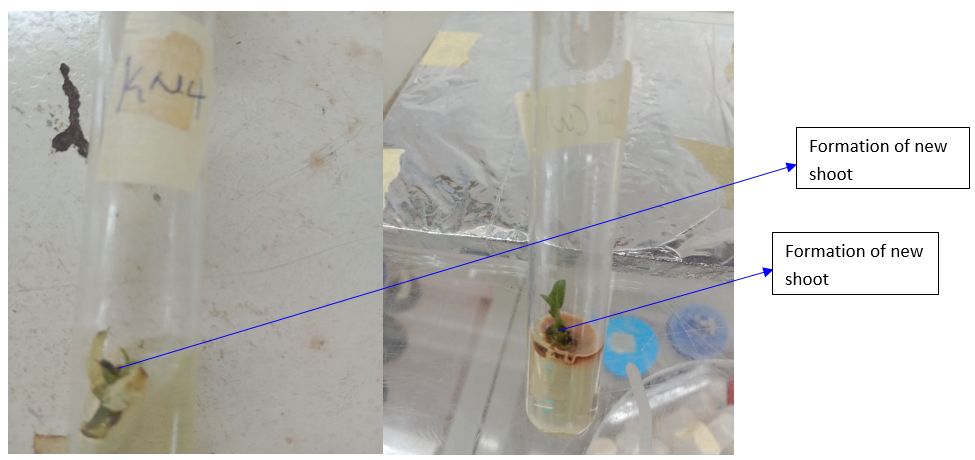
Plate 1a: Morinda lucida Node and Shoot tips cultures, propagated on Woody Plant Media augmented with Plant growth regulators (PGR’s).
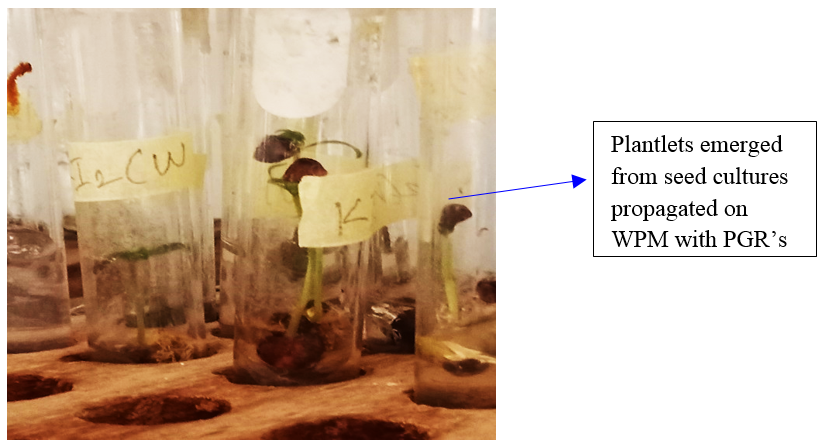
Plate 1b: Plantlets emerged from M. lucida seed cultures propagated on Woody Plant Media, supplemented with KIN, GA3 and IAA (PGR’s).WPM=Woody Plant Media, PGR’s=Plant growth regulators, KIN=Kinetin, GA3= Gibberellic Acid, IAA=Indole -3-Acetic Acid.
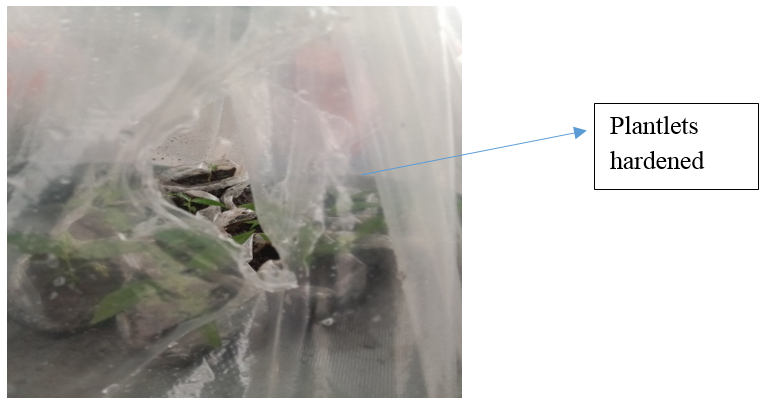
Pla 2a: Hardening of fully grown in-vitro propagated plantlets of M. lucida, under acclimatization chamber.
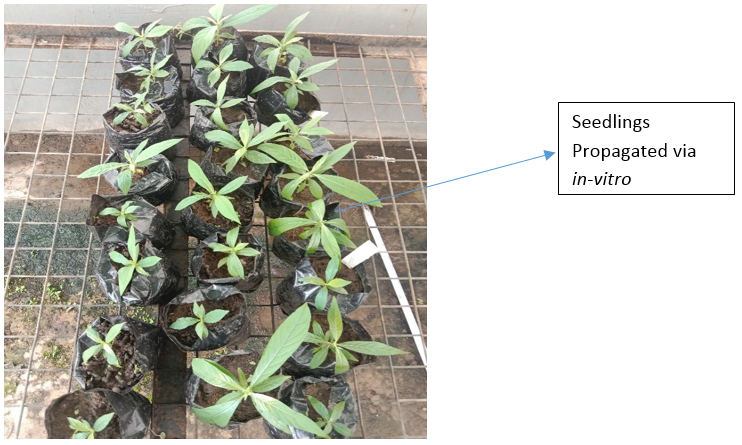
Plate 2b: Transplanted seedlings of M. lucida propagated via in-vitro techniques.
DISCUSSION
In-vitro propagation of M. lucida shoot systems and seeds, using Woody Plant media (WPM) as basic constituents, revealed high significant differences in plant height, number of shoot, number of leaf and number of root in treatment KI1 ( 1mg/L KIN +2mg/L GA3+ 0.5mg/L IAA). This was similar to the report of Afolabi et al. (2020), which stated that best shoot regeneration was obtained from Noni plant (Morinda citrifolia) at the presence of 1.0 to 2.0mg/L BAP/KIN.
The leaf cultured on Woody Plant media did not response to noticeable regeneration but rather induced callus at higher concentrations of Plant growth regulators. This report was concurred with the observation of De-Klerk (2002), on callus formation as a mechanical barrier to nutrient and water uptake for in-vitro cultures.
In-vitro propagation of shoot tips, node and leaf on ordinary Woody Plant Media showed no response to regeneration, this might be as a result of inadequate chemical nutrients in the media. This supported the observation affirmed by Shahina and Anwar (2014), in their report which stated that nutrients composition and other factors have influence on the induction and proliferation of multiple shoots.
Highest germination and growth performance was obtained from M. lucida seeds cultured on WPM fortified with lower concentration of Kinetin(1mg/L), GA3(2mg/L) and IAA(0.5mg/L). This was in agreement with the findings of Fletcher et al., (2000) and Redemacher (2000) which stated that plant growth hormones are known to stimulate seed germination.
Also, the result gotten from the study showed that Woody Plant media, supplemented with kinetin and Indole-3- Acetic Acid are good plant growth regulators for the germination of M. lucida seed cultures. This was concurred with the work reported by Fletcher et al., (2000), that growth influences in plant may be explained with Indole-3-Acetic Acid (IAA), which had the highest germination percentage.
The M. lucida (seed cultures) excised embryo with cotyledon propagated on Woody Plant Media basic constituents with different concentrations of Plant Growth Regulators (PGRs’) revealed good and better germination with growth performance compared to the one propagated on ordinary Woody Plant media. This report was in accordance with the report of Afolabi et al. (2023), which stated that higher germination of cultured matured Noni embryo was favored by high levels of KIN and BAP combinations.
For seeds cultured on ordinary Woody Plant Media, the study showed that both scarified and not scarified seeds has no suitable basic constituents and appropriate plant growth regulators that can enhance germination and growth. This may be as a result of exposure of seeds to improper chemical constituents in-vitro (https;//www. Plant Cell Technology.Com, (2022). Woody Plant Media basic constituent supplemented with Plant Growth Regulators revealed optimum regeneration, germination and growth performance of seeds and shoot systems via in-vitro technique. This showed that Woody Plant media was very effective for propagation of M. lucida shoot systems and seeds. This was in agreement with the report of Takuya et al., 2008 which stated that Woody Plant Media is more effective for propagation of tree plants.
Hardening and transplanting of fully grown in-vitro propagated plantlets of M. lucida were successful with no mortality rate via ex-vitro condition. This was in accordance with the previous study on hardening of in-vitro propagated wine Grape by Rahul et al. (2019) and Ajongbolo et al. (2024).
CONCLUSION AND RECOMMENDATIONS
In-vitro propagation technique can be utilized as alternative means of conservation and mass production for M. lucida shoot systems and seeds. This technique will also enhance all year propagation of M. lucida within a short period of time for future availability and utilization. Woody Plant media fortified with 1mg/LKIN+2mg/LGA3+0.5mg/LIAA are recommended with pretreatment applications (scarification and soaking in 30mg/L GA3) for propagation of M. lucida seeds. Propagation of nodes and shoot tips are also attainable via in-vitro technique, using Woody Plant media augmented with 4 and 5mg/LBAP with constant concentration of GA3 (2mg/L) and 0.5mg/L IAA.
REFERENCES
Adewole K.E., Attah A.F., Adebayo J.O. (2021). Morinda lucida Benth. (Rubiaceae): A review of it’s ethnomedicine, phytochemistry and Pharmacology. Journal of Ethnopharmacology. Volume 276,10 August 2021, 114055. https://doi.org/10.1016/j.jep.2021.114055.
Afolabi J.O., Akinrinde E.A. and Akinrinola T.B. (2023). Germination of Noni (Morinda citrifolia L.,) seeds as influenced by pre-treament and sowing media. Journal of Tropical Agriculture, Food, Environment and Extension. Volume 22 number4 (October 2023) pp. 1-6.
Afolabi J.O., Olayinka O. and Akala A.O. (2020). In-vitro Propagation of Noni (Morinda citrifolia L.) Through Embryo Culture. Journal of Plant Tissue Culture and Biotechnology. 30(2);199-207 DOI:10.3329/PTCB.V30i2.50690.
Ajongbolo F.B, Hassan K.O, Afolayan A.O, Lawyer E.F and Olowookere M.A (2004). Hardening of In-vitro Propagated Pineapple Plantlets (Ananas comosus L. Var. Smooth Cayene), To Ex-vitro Condition, Using Different Substrates in Ibadan, Nigeria. IORS Journal of Biotechnology and Biochemistry (IOSR-JBB). ISSN: 2455-264X, Volume 10, Issue 2 Series1 (Mar.-Apr., 2024), PP 14-17. www.iosrjounals.org.
Ajongbolo F.B., Oyetunji O.J., Jamaleddine Z.O. and Adedeji A.A. (2018). Breaking of Seeds Dormancy in Morinda lucida Benth. Greener Journal of Biochemistry and Biotechnology. Vol. 5(1), pp.001-008, 2018.
Balogun M., Maroya N., Taiwo J., Chukwunalu O., Ajayi A., Kumar P.Z., Pelemo O., Aighewi B., and Asiedu R. (2020). Clean Breeder Seed Yam Tuber Production,Using Temporary Immersion Bioreactors. Published by the International Institute of Tropical Agriculture (IITA) Ibadan, Nigeria.66pp.ISBN978-978-8444-89-3.
Bassetti L., Hagendoorn M. and Johannes T. (1995). Surfactant-induced non-lethal release of anthraquinones from suspension cultures of Morinda citrifolia. Journal of Biotechnology, 39:149-155.
Christian, A., and Newman, O. (2013). Anti-inflammatory and analgesic activities of African Medicinal Plants. Medicinal Plant Research in Africa; Pharmacology and chemistry, 2013, pages 725-752.
De-Klerk G. (2002). Rooting of micro-cuttings: Theory and practice. Journal of in-vitro cellular and developmental biology-plant. Vol 38(5). Pp415-422.
Elio, J., Carlos, R., Paslo, M., Naivy, P., Alina, C., Anabel, P. and Bettina, E. (2011). In-vitro propagation of the medicinal plant Morinda royoc L., Biotechnolojia vegetal (Vol., 11), No. 1:43-47, enero-marzo, ISSN 1609-1841.
Fletcher A., Gilley A., Sankhla N., Davies T. (2000). Triazoles as plant growth regulators and stress protectants. Hort. Rev. 24:55-138.
Gbadamosi I.T and Egunyomi A. (2010). Micropropagation of Plumbago zeylanica L. (Plumbaginaceae) in Ibadan, South- Western Nigeria. (2010). Journal of Medicinal Plants Research, Vol.4 (4) PP.293-297,18 February, (2010). ISSN 1996-0875@2010Academic Journals.http://wwwacademicjournals.org/JMPR.
Hagendoom, M., Van der plas, L., and Segers, G. (1994). Accumulation of anthraquinones in morinda citrifolia, cell susupensions. A model system for the study of the interaction between secondary and primary metabolism. Plant Cell Tiss., org Cult. 38;227-234.
Jansen P.C.M and Cardon D. (2015). PROTA; Plant Resources of Tropical Africa/ Resources Vegetales de i’ Afrique tropicale. Wageningen Netherlands. 16-25.
Joseph, M.A., Awodayo O., Adepiti A., Adedrii O.A. and Adesegun A. (2016). Antimalarial properties of Morinda lucida and Alstonia boonei on Sulpadoxine- pyrimethamine and Curcuma longa on Quinine in mice. Journal of Herbs species and medicinal plants, Volume 22, 2016-Issue 1.
Ken F. (2023). Tropical Plants Database: tropical the ferns. Info/view tropical. Php!-04-25.
Murashige T. and Skoog F. 1962. A revised medium for rapid growth and bioassays with tobacco tissue culture. Physiol. Plant 15:473-497.
Nwobodo, N., Igwe, S.A. and Agbata, C.A. (2021). Antinociceptive, Anti-inflammatory and Antipyretic Effects of Aqueous Extracts of Morinda lucida leaves in Experimental animals. Journal of Biomedicinal and pharmacology Journal, 2021.
Rahul D., Singh S.K., Vishambhar D., Kamlesh K. and Traloki S. (2019). Standardization of in-vitro Hardening Strategies for Tissue Cultured Wine Grape (Vitis vinifera L.) Genotypes. International Journal of Current Microbiology and Applied Sciences. ISSN: 2319-7706 Volume 8 Number 02 (2019). Journal homepage: http://www.ijcmas.com. https://doi.org/10.20546/ijcmas.2019.802.244.
Redemacher W. (2000). Growth retardants: effects on gibberellin biosynthesis and other metabolic pathways. Ann. Rev. Plant physiol. Plant Molec. Biol. 51:501-531.
Shahina P., and Anwar S. (2014). Factors affecting in-vitro plant regeneration from Cotyledonary node explant of Senna sophera (L.) Roxb- A highly medicinal legume. Plant Biotechnology Department of Botany, Aligarh muslim. University, Aligarh (up)- 202 002, India. Vol. 13(3), pp.413-422.
Takuya T., Yasuyo M., Makiko S., Chitose H., Kensuke Y., Haruki K., Yasuhiro S., and Hisato K. (2008). Evaluation of basal media for micropropagation of four highbush blueberry cultivars. Journal for Scientia Horticulturae, Volume 119, Issue1, 10 December 2008, pages 72-74. https://doi.org/10.1016/j.scienta.2008.06.028.
Waiken, D., Jimenez, E., Jordan, M., Gomez, R., Schmeda, G. and Gerth, A. (2005). Comparism of secondary plant metabolite production in cell suspension, callus culture and temporary immersion system; En; Hvoslef-Eide AK AND Preil W.(Eds) Liquid culture systems for in-vitro plant propagation , PP. 527-537. Springer Dardredt.
Wilken D., Jimenez E., Jordan M., Gomez R., Schmeda G., and Gerth A. (2005). Comparison of secondary plant metabolite production in cell suspension, callus culture and temporary immersion system. En: Hvoslef-Eide AK and Peril W(eds)Liquid Culture Systems for in-vitro Plant Propagation, pp.527-537. Springer, Dordrecht.
Zapfacks, L. and Ngobo, N.M. (2002). Inventaire participative des produits forestries non ligneux et ligeus de la region de djoum: Sud du cameroun; Rapport de ZAPFACK Louis and CARPE.
Zimudzi, C. and Cardon, D. (2005). Morinda lucida Benth. In: PROTA (Plant Resources of Tropical Africa/Ressources Vegetales de l'Afrique Tropicale), Jansen, P.C.M. and D. Cardon (Eds.). Wageningen, Netherlands.
|
Cite this Article: Ajongbolo, FB; Oyetunji, OJ (2026). Effects of Woody Plant Media (WPM) and Plant Growth Regulators (PGRs’) on Micropropagation of Morinda lucida Benth., Using Shoot Systems and Seeds. Greener Journal of Agricultural Sciences, 16(2): 78-88, https://doi.org/10.15580/gjas.2026.2.061226081 .
|